

Surging Rain Bombs the Storm Threat Nobody Talks About
Surging Rain Bombs the Storm Threat Nobody Talks About
Rain bombs are one of the most dramatic weather events you can witness. In just minutes, they can unleash walls of water that overwhelm streets, damage property, and disrupt daily life. These sudden downpours aren’t just surprising—they can also be dangerous. With extreme weather becoming more common worldwide, understanding what causes rain bombs and how they affect communities is more important than ever. By looking at the science, the risks, and the real-life impacts, you can better prepare for the next time the skies open up without warning.

What Are Rain Bombs and Why Are They Making Headlines?
If you’ve been watching the news lately, you may have noticed a new weather term popping up—rain bombs. The phrase sounds dramatic, and honestly, it is. These sudden bursts of heavy rain are intense, fast, and can cause serious damage in a very short amount of time.
So what exactly is a rain bomb? Meteorologists describe it as a microburst—an event where a huge amount of rain falls all at once from a thunderstorm. Instead of spreading out slowly, the rain crashes down in a concentrated area, almost like a water balloon bursting over a city. The result? Flash flooding, road chaos, and in some cases, damage to buildings and infrastructure.
Why This Term Matters Now
Rain bombs aren’t brand new. But what is new is how often we’re hearing about them. As weather patterns shift and storms grow more unpredictable, these sudden downpours are being reported more frequently around the world. Cities are struggling to manage the sudden floods, and the public is beginning to pay attention.
In a way, the name “rain bomb” helps capture the urgency of what’s happening. It’s not just a heavy shower—it’s an explosive event that can transform a neighborhood in minutes. And that’s why it’s making headlines.
The Science Behind Sudden Downpours Explained Simply
Have you ever stepped outside on a sunny day, only to be caught minutes later in a heavy rain shower? It feels like the sky flips a switch. These sudden downpours aren’t random accidents—they’re the result of fast-moving weather processes that scientists can explain clearly.
At the heart of it all is warm air and moisture. When the sun heats the ground, the air above it warms too. Warm air rises, carrying water vapor with it. The higher it goes, the cooler it gets, and eventually the water vapor turns into clouds. If the air is really humid and unstable, those clouds can quickly grow into tall, dark storm clouds. Once they can’t hold any more water, they release it all at once—sometimes in dramatic, short-lived bursts of rain.
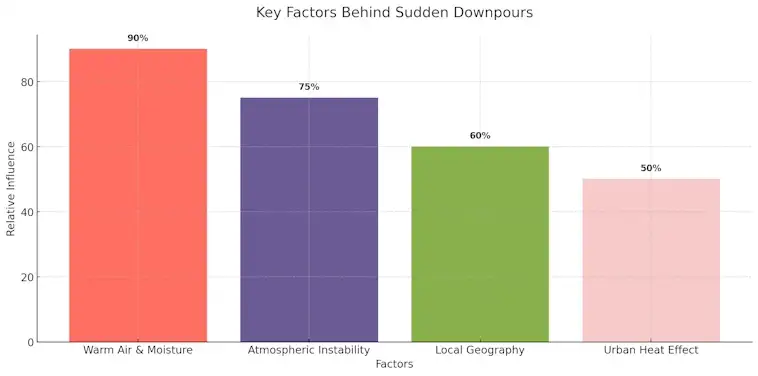
Another factor is atmospheric instability. Imagine shaking a soda can: the pressure builds until it bursts open. The atmosphere works in a similar way. When conditions are unstable, sudden storms can pop up fast, even when the day started calm.
Finally, local geography plays a big role. Cities, mountains, and even forests can influence how and where downpours happen. Urban areas, for example, trap more heat, which speeds up the rising of warm air. That’s why some cities experience sudden heavy showers more often than the countryside around them.
Put simply: sudden downpours are nature’s way of quickly balancing the atmosphere. Warm air, rising moisture, and a touch of instability all combine to make the skies open up—fast.
How Rain Bombs Impact Communities and Daily Life
When we think of heavy rain, we often imagine puddles, wet shoes, and maybe a few traffic delays. But a rain bomb is on a whole different level. These sudden downpours can dump massive amounts of water in a very short time. And when that happens, the effects ripple through entire communities.
Unlike a passing shower, rain bombs overwhelm cities, towns, and neighborhoods almost instantly. Roads flood, daily routines stop, and the cost of recovery can linger for months. The speed and intensity of these storms make them especially disruptive, often leaving people unprepared.
Here are some of the ways rain bombs affect everyday life:
- Flooded streets and homes – Water rises so quickly that cars, businesses, and houses can be damaged within minutes.
- Power outages – Heavy rain and strong winds often knock out power, leaving neighborhoods in the dark.
- Disrupted commutes – Public transport slows or shuts down, and driving becomes dangerous.
- School and workplace closures – Communities may have to pause normal activities until flooding clears.
- Economic losses – Shops, farms, and local businesses can lose income when operations are forced to stop.
- Emotional stress – The uncertainty and damage caused by sudden flooding can take a toll on mental health.
Rain bombs don’t just wash away a day’s plans—they reshape how communities prepare, respond, and recover from severe weather.
Why Extreme Weather Events Are Becoming More Frequent
Extreme weather used to feel like something rare—an out-of-the-blue hurricane or a once-in-a-lifetime flood. But today, it seems like we’re seeing record-breaking storms, wildfires, and heatwaves almost every year. The big question is: why is this happening?
The short answer is that our climate is changing. Rising global temperatures mean warmer oceans, shifting rainfall patterns, and longer droughts. All of these factors combine to make extreme weather events both more likely and more severe.

Another reason is that science and reporting have improved. We track and share data faster than ever before, so what might have gone unnoticed decades ago now makes headlines worldwide. Still, the actual numbers show a clear trend: these events are happening more often, not just being noticed more.
What You Can Do to Stay Safe During Severe Storms
Storms can be unpredictable. One moment the sky is calm, and the next, heavy rain and strong winds are rolling in. When severe weather strikes, safety should always come first. The truth is, a little preparation goes a long way in keeping you and your family out of harm’s way.
Rain Bombs Safety Tips You Should Know
Rain bombs are sudden, intense downpour that can cause flash flooding in minutes. If meteorologists warn of one, take it seriously. Move to higher ground if you live in a flood-prone area. Keep an eye on local alerts, and avoid driving on flooded roads—even shallow water can sweep a car away.
Smart Steps Before and During the Storm
Start by building a storm kit. Include bottled water, non-perishable snacks, flashlights, batteries, and a first-aid kit. Keep your phone charged and consider having a backup power bank ready.
During the storm, stay indoors and away from windows. If winds grow stronger, head to a basement or an interior room with no glass. Avoid using electrical appliances until the storm passes, and keep pets close so they feel safe too.
The key to storm safety is awareness. Weather apps and local broadcasts can give you vital updates in real time. Trust the warnings, and don’t wait until it’s too late to act. By preparing ahead and knowing what to do, you’ll feel more confident when the next storm rolls in.
Rain Bombs are Changing How We See Extreme Weather
Rain bombs aren’t just rare weather quirks—they’re a growing reminder of how powerful and unpredictable our climate has become. In seconds, a sunny sky can turn into a downpour strong enough to flood streets and disrupt daily life.
The good news is that awareness makes a difference. By learning what rain bombs are and preparing for sudden storms, we can reduce risks and stay one step ahead.
Remember, knowledge is the best tool we have to face tomorrow’s storms with confidence.