
Sinking Frontlines: How Island Nations Are Paying the Price for a Crisis They Didn’t Cause
How Island Nations Are Paying the Price for a Crisis They Didn’t Cause
Sea levels are rising faster than many feared. For small island nations, this isn’t just a projection on a chart—it’s an everyday reality. Homes are vanishing, coastlines are eroding, and entire communities are being forced to rethink their futures.
These countries, some of the world’s smallest contributors to global greenhouse gas emissions, are now among the hardest hit by the climate crisis. And while the world debates targets and pledges, island nations are already battling for survival.
As the world races to adapt to a rapidly warming planet, the question remains: why are those who contributed the least paying the highest price? And more critically—what can be done to support them before it’s too late?
The Unseen Casualties of the Climate Crisis
When we hear about climate change, the loudest voices often come from industrialized countries. The debates, the conferences, the headlines—they’re dominated by the world’s biggest economies. But beneath the noise, the most vulnerable are already living with the consequences. Small island nations, scattered across the oceans, are facing a harsh reality that many global powers only talk about as a distant future.
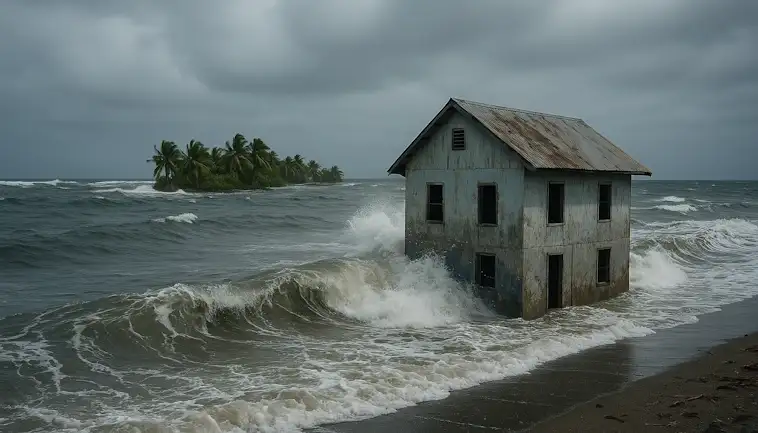
These island communities aren’t just on the frontlines of climate change—they’re already living through it. Rising seas, vanishing coastlines, and relentless extreme weather aren’t theories or predictions for them. They are daily life.
Why Island Nations Are Left Out of the Global Conversation
While industrialized countries argue over emissions targets and energy policies, the lived experiences of small island nations are often pushed to the sidelines. This invisibility is not just political—it’s personal.
- Small population, big problems: Island nations often have smaller populations and less economic clout, making it harder for them to command attention on the world stage.
- Far from media hubs: Many of these nations are geographically remote, which makes their struggles feel ‘out of sight, out of mind’ for global media.
- Complex, human stories are overlooked: The focus on data and targets often overshadows the human stories—communities losing their homes, cultures under threat, and families forced to migrate.
The Human Face of Climate Change
To truly understand the urgency of climate change, we need to listen to the people already living its worst effects.
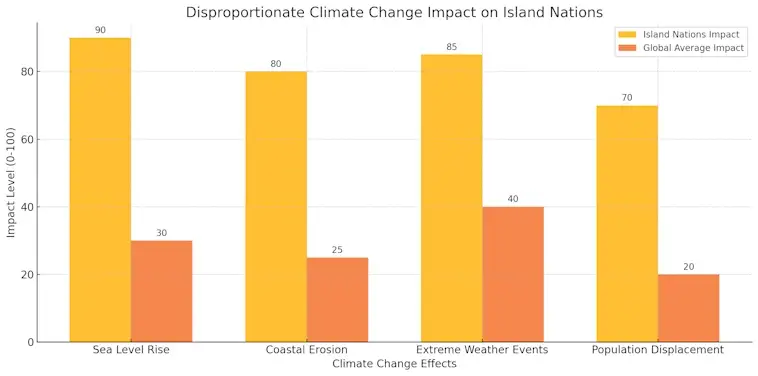
- In the Pacific Islands, entire villages are relocating inland because the sea is swallowing their homes.
- In the Caribbean, hurricanes are becoming stronger and more destructive, tearing apart towns and economies year after year.
- In the Maldives, residents see their islands shrinking, a daily reminder that their homeland may one day vanish beneath the waves.
These stories aren’t just environmental issues—they are about identity, heritage, and survival.
Why the World Needs to Listen
Ignoring island nations in climate debates is more than an oversight—it’s a dangerous blind spot. These communities have deep knowledge of their environments and have been adapting to change for generations. Their experiences and wisdom could guide more resilient, people-centered climate solutions.
Moreover, their plight is a warning to us all. What’s happening on their shores today could happen elsewhere tomorrow. The story of island nations is not a side chapter in the climate crisis—it’s the opening act.
It’s time to put island nations at the heart of global climate conversations. By amplifying their voices, we humanize the issue, making it about people, not just policies.
Climate change isn’t just about emissions—it’s about communities, families, and futures. And right now, some of those futures are already slipping away.
From Zero Emissions to Zero Options: The Climate Injustice Dilemma
When we talk about the climate crisis, images of towering smokestacks, congested highways, and sprawling industrial hubs often come to mind. Yet, in the middle of the vast oceans, tiny island nations—places most of us might only dream of visiting—are on the frontlines of climate change.
Ironically, these nations contribute almost nothing to the global pollution problem that drives the crisis. Still, they are the first to face its harshest consequences. This is a story of imbalance, injustice, and a call for fairness in how the world responds to climate change.
Small Carbon Footprint, Big Consequences
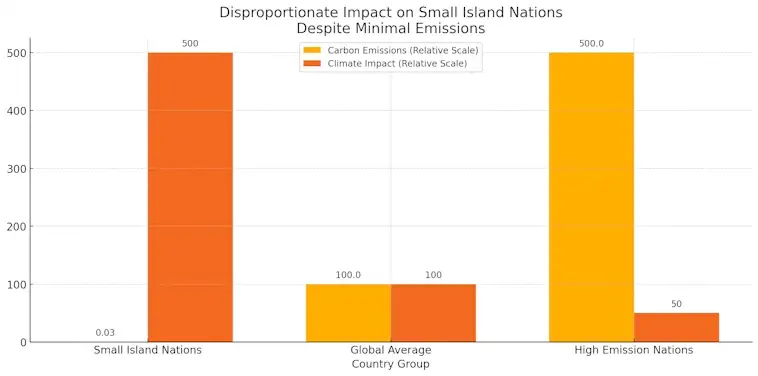
- Minimal Emissions: Island nations like Tuvalu, Kiribati, the Maldives, and others produce a fraction of global carbon emissions. Their economies are small, and their industries are few. In fact, most island nations combined contribute less than 1% of global emissions.
- Living Close to Nature: Many island communities have long depended on sustainable practices—fishing, farming, and respecting the rhythms of their natural surroundings. They have traditionally lived in harmony with their environment, not against it.
- But Facing Outsized Risks: Rising seas, stronger storms, coral bleaching, and food insecurity are hitting these nations hard. Some islands are seeing their shorelines vanish year by year. In the worst cases, entire nations are at risk of becoming uninhabitable within decades.
Climate Justice in Everyday Terms
The concept of climate justice can sound abstract, but it’s actually pretty simple. It’s about fairness.
- Who caused the problem? Big industrial countries, both wealthy and emerging economies, have contributed the lion’s share of carbon pollution since the start of the Industrial Revolution.
- Who’s suffering first? Small island nations that had almost no part in causing the problem are bearing the brunt. Their homes, cultures, and futures are at stake.
- Why is this unfair? It’s like being forced to pay for someone else’s mess. These nations didn’t create the pollution, yet they face the most extreme consequences.
The Global Responsibility
This isn’t just a local issue—it’s a global one. The struggles of island nations highlight why climate action needs to include fairness, support, and accountability.
- Wealthier, high-emission countries must not only cut emissions faster but also support vulnerable nations with resources, technology, and funding.
- Conversations about climate change must center voices from the frontlines—those living the reality of climate injustice.
Small island nations are resilient and full of hope. They are advocating, innovating, and speaking out on the world stage. But they can’t do it alone.
If the world acts with urgency and fairness, we can still rewrite this story. It’s not too late—but justice needs to be at the heart of every climate solution.
Sinking Economies, Drowning Cultures: The Costs Beyond Rising Seas
When people think of climate change, they often focus on rising temperatures or melting ice caps. But for small island nations, the impacts run far deeper. It’s not just about the physical land disappearing under the waves. It’s about losing homes, traditions, cultures, and entire ways of life.
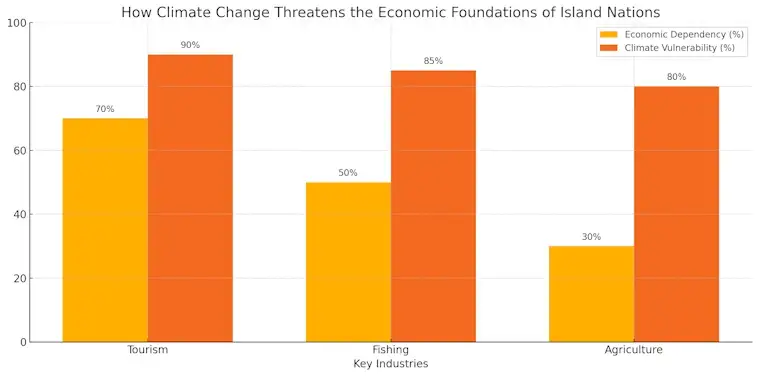
Many island communities rely on industries closely tied to nature, like tourism, fishing, and agriculture. These sectors are already feeling the heat from climate change. But the crisis also threatens something harder to measure: identity, heritage, and the bonds of community that have existed for generations.
Economic Lifelines at Risk
- Tourism Under Threat: Islands like the Maldives, Fiji, and the Bahamas depend heavily on tourism. White-sand beaches, coral reefs, and vibrant local cultures attract millions of visitors. But as beaches erode, corals bleach, and storms intensify, these attractions—and the jobs they create—are vanishing.
- Fishing and Food Security: Fishing isn’t just a business—it’s a way of life for many islanders. But warming oceans, acidification, and changing fish patterns are making traditional fishing practices harder, threatening both food security and cultural practices tied to the sea.
- Agriculture Facing New Challenges: Rising seas contaminate freshwater sources and salt the soil, making farming difficult. Crops that have fed communities for centuries are becoming harder to grow, forcing people to rely more on imported foods—at much higher costs.
More Than Money: The Loss of Identity and Heritage
- Displaced Communities: For many island nations, relocation is becoming an unavoidable conversation. Entire villages have already been moved in places like Fiji and the Solomon Islands. But moving isn’t just about finding new land—it means leaving behind sacred sites, burial grounds, and the places where stories and traditions were born.
- Lost Traditions: Climate change disrupts not only livelihoods but also ceremonies, art, and knowledge passed down through generations. From fishing techniques to songs, dances, and languages, the cultural fabric is fraying.
- Local Leaders Fighting Back: Despite the odds, many island leaders and communities are not giving up. They are advocating on global stages, reviving traditional knowledge to adapt to change, and creating innovative solutions to protect their ways of life.
Why This Matters to Everyone
The struggle of island nations isn’t just a distant, isolated story. It’s a warning for the world. Their fight to protect their cultures and economies is a mirror of what other communities may soon face as climate change accelerates.
Recognizing the cultural, social, and economic costs of climate change is essential for crafting fair, human-centered solutions. It’s about more than just cutting emissions—it’s about protecting people, their histories, and the places they call home.
Empty Promises and Slow Solutions: Where Is Global Action?
For decades, world leaders have gathered at climate summits, promising action, funding, and support. From the Kyoto Protocol to the Paris Agreement and the recent COP gatherings, the headlines often glow with optimism. But for small island nations facing rising seas, stronger storms, and vanishing lands, these promises have yet to turn into meaningful action.
Behind the speeches and pledges lies a harsher truth: bureaucracy, broken promises, and a lack of political will are leaving island nations stranded in a crisis they didn’t create. It’s a global failure that needs to be called out.
Decades of Pledges, Little Progress
- Summits but no safety net: Since the 1990s, island nations have been sounding the alarm. They’ve secured mention after mention in climate agreements. But the pace of real support has been painfully slow.
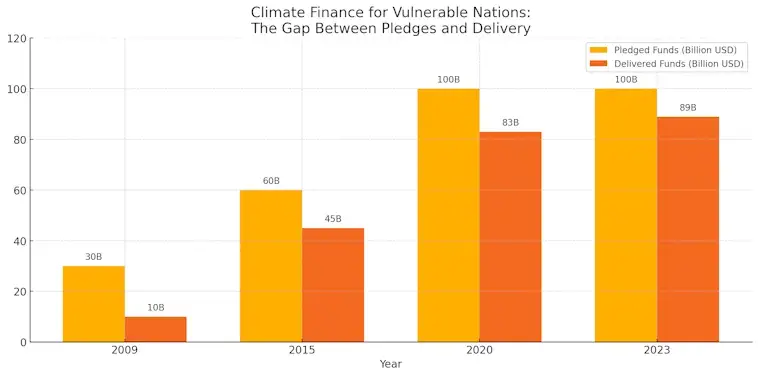
- Climate finance promises unmet: Back in 2009, wealthy nations pledged to mobilize $100 billion per year by 2020 to help vulnerable countries adapt and transition to greener economies. That deadline passed—without the target being met. Even now, the funds that do arrive often come as loans, adding debt to countries already struggling.
- Adaptation funds stuck in limbo: For island nations, adaptation isn’t optional—it’s about survival. But funding to build seawalls, secure freshwater, or relocate communities has been trickling in at best, tangled in red tape and complex application processes.
- Loss and Damage Compensation—still a fight: Perhaps the most contentious issue is compensation for loss and damage—the irreversible harms caused by climate change. Island nations have been fighting for this recognition for years. While there was a breakthrough agreement to create a Loss and Damage Fund, details remain vague, and wealthy nations continue to dodge firm commitments.
Bureaucracy, Delays, and the Missing Political Will
The gap between promises and action isn’t accidental. It’s often the result of:
- Bureaucratic delays: Even when funds are approved, the paperwork, conditions, and waiting times are immense. For small nations with limited administrative capacity, this is a heavy burden.
- Lack of urgency: For wealthy, high-emission countries, climate change still feels like a future problem. For island nations, it’s a now problem. This disconnect fuels inaction.
- Political foot-dragging: Many countries hesitate to accept the concept of loss and damage compensation fully, fearing it will open the door to endless liability claims.
Pulling Back the Curtain: A Call for Real Action
Island nations are doing everything they can. They are leading with ambition, setting bold net-zero targets, and speaking out in global forums. But they cannot fight this battle alone.
The world must:
- Turn pledges into real, accessible funding, not loans.
- Cut through the red tape and get resources directly to communities in need.
- Make loss and damage compensation clear, fast, and fair.
- Most importantly, show the political will to treat this crisis as the emergency it is.
Why This Matters Now
Island nations are the canaries in the climate coal mine. Their struggle is a glimpse into the future that could face many coastal and vulnerable regions worldwide.
If the world can’t muster the urgency to help them, what hope is there for the rest of us?
Charting a Future: What Island Nations Can Teach the World About Resilience
Too often, small island nations are framed solely as victims of climate change—powerless and waiting for help. But that’s only part of the story. In reality, these nations are showing the world what true climate leadership looks like.
From the Pacific to the Caribbean, island nations are not sitting idly by. They are innovating, advocating, and pushing the world toward justice. They are diplomats on the global stage, pioneers in sustainable living, and storytellers reminding the world of what’s at stake.
While the climate crisis is global, the voices and solutions leading the charge are rising from the frontlines.
Leading the Call for Climate Justice
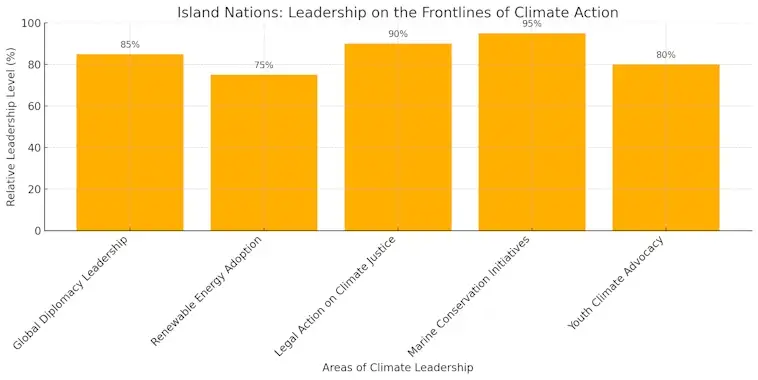
- Diplomats on the World Stage: Small island nations have been some of the most powerful voices at international climate summits. Countries like Tuvalu, the Marshall Islands, and Vanuatu have taken center stage, pushing for stronger agreements and legally binding commitments.
- Pushing for Legal Action: In a groundbreaking move, island nations are now turning to international law. Recently, Vanuatu led efforts to ask the International Court of Justice to clarify countries’ legal obligations on climate change. This could set a global precedent for climate accountability.
- Forming Alliances for Strength: Through groups like the Alliance of Small Island States (AOSIS), these nations have banded together to amplify their influence, ensuring their voices are heard in key climate negotiations.
Innovators in Sustainability
- Pioneering Green Solutions: Despite limited resources, many island nations are at the forefront of renewable energy, from solar microgrids in Tokelau to innovative seawater air conditioning in the Maldives.
- Blending Tradition with Innovation: Island communities are reviving traditional ecological knowledge, combining it with modern science to create resilient and sustainable practices, especially in agriculture and fisheries.
- Championing Ocean Conservation: Island nations have led the push for ocean protection, spearheading large marine protected areas and championing sustainable fishing practices on the global stage.
Storytellers of Hope and Urgency
- Voices that Inspire Action: Leaders, youth activists, and artists from island nations are using their platforms to tell stories of resilience, hope, and urgency. Their voices are powerful reminders of what’s at stake—not just for them, but for us all.
- Reframing the Narrative: By focusing on innovation, strength, and leadership, island nations are shifting the narrative from one of victimhood to one of agency and hope.
A Global Crisis, A Frontline Response
Island nations are proving that leadership doesn’t only come from the world’s biggest economies. It can come from the smallest nations, the ones with the most to lose—and the most to teach us about courage, justice, and solidarity.
Their message is clear: the time for action is now, and the world has much to learn from those living on the frontlines.
Conclusion
Small island nations may have contributed almost nothing to the climate crisis, but they are bearing its most brutal costs. Rising seas, eroded livelihoods, and shattered traditions are only part of the story. These communities are also showing the world what leadership, innovation, and resilience look like in the face of an unfolding disaster.
Their message is urgent and universal: climate change is not a distant threat—it’s happening now, and its most devastating impacts are already here.
Island nations are calling for climate justice, fair funding, and accountability. They are demanding that the world move beyond talk to real, lasting action. Their survival is tied to all of us. What happens to them today is a warning of what could happen everywhere tomorrow.
Listening to and supporting the leadership of island nations is not just the right thing to do—it’s essential for building a fairer, safer, and more sustainable future for the entire planet.