

Unveiling the Global Crisis of Illegal Logging
Unveiling the Global Crisis of Illegal Logging
Forests are falling quiet—and not in a good way. All over the world, illegal logging is tearing through ecosystems, destroying habitats, and threatening the health of our planet. From the Amazon to Southeast Asia, trees are being cut down faster than they can regrow, often under the radar of enforcement and out of sight from the public eye.
This global crisis fuels corruption, displaces communities, and accelerates climate change. Yet despite its massive impact, illegal logging often receives far less attention than it deserves. Behind every vanished tree lies a network of criminal activity and a trail of environmental destruction that affects everyone—whether you live in a city, a suburb, or deep in the countryside.
What’s happening to the world’s forests, and why should it matter to you? The answers are as complex as they are urgent.
What Is Illegal Logging and Why It’s a Global Threat
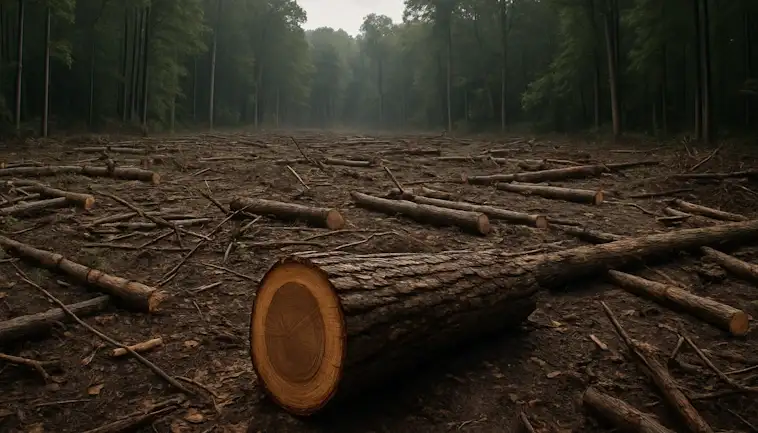
Illegal logging is the harvesting, transporting, buying, or selling of timber in violation of national or international laws. It often involves cutting down trees without permission, logging protected species, or operating in areas where forestry is restricted—like national parks or Indigenous lands.
But it’s more than just a crime against nature. Illegal logging is a major global threat. It fuels deforestation, drives biodiversity loss, and accelerates climate change. Forests are critical carbon sinks, and when they’re destroyed unlawfully, massive amounts of carbon are released into the atmosphere. This contributes directly to global warming.

The impact doesn’t stop there. Illegal logging is often linked to corruption, organized crime, and the exploitation of vulnerable communities. In many parts of the world, it undermines legal forestry businesses, creating unfair competition and stripping governments of valuable revenue that could be used for schools, healthcare, or forest protection.
In short, illegal logging isn’t just an environmental issue—it’s a social, economic, and global security issue. And unless stronger action is taken, the damage it causes could be irreversible.
How Illegal Logging Fuels Deforestation and Climate Change
Illegal logging is one of the biggest drivers of deforestation around the world. When trees are cut down without proper regulation, forests can’t regenerate fast enough. This leads to large-scale forest loss—especially in tropical regions like the Amazon, Southeast Asia, and Central Africa.
Healthy forests act like the planet’s lungs. They absorb carbon dioxide from the atmosphere and help keep global temperatures stable. But when forests are cleared illegally, that natural carbon storage is lost. Even worse, the process of cutting, burning, and clearing trees releases massive amounts of greenhouse gases into the air.
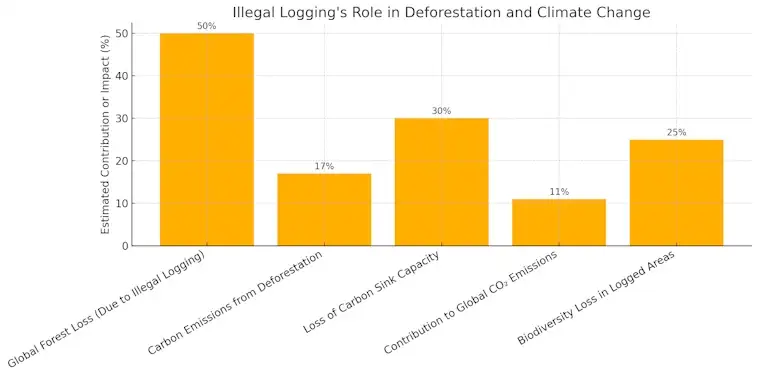
The connection to climate change is direct and dangerous. Illegal logging not only removes trees that absorb carbon, it also adds more carbon pollution. This double hit speeds up global warming and makes extreme weather more intense and unpredictable.
On top of that, illegal logging weakens ecosystems. It destroys habitats, threatens endangered species, and disrupts the water cycle—making some regions more prone to drought or flooding.
If we want to slow climate change and protect our environment, tackling illegal logging must be a global priority. Every tree lost illegally is a step backward in the fight against a warming planet.
Communities at Risk: The Human Cost of Forest Crime
Illegal logging isn’t just a threat to forests—it’s a direct danger to people. Around the world, millions of people depend on forests for their homes, food, medicine, and livelihoods. When forest crime takes over, entire communities are put at risk.
In many cases, illegal logging operations are backed by powerful criminal networks. These groups often use violence, intimidation, and corruption to gain control of forest lands. Indigenous peoples and local communities who try to protect their land are frequently threatened—or worse. Forest defenders have been attacked, displaced, or even killed for standing in the way.
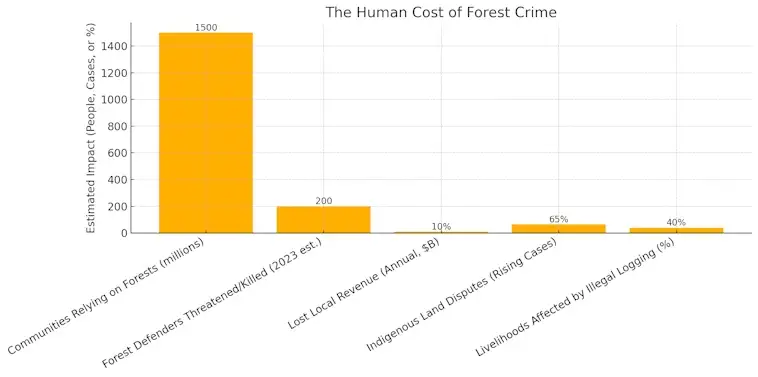
Beyond physical threats, there are economic costs. Illegal logging strips away resources that communities rely on. It pollutes rivers, destroys farmland, and reduces biodiversity—making it harder for people to grow food, earn income, or sustain their way of life. At the same time, governments lose out on billions in tax revenue that could be invested back into education, healthcare, and local infrastructure.
When forest crime goes unchecked, the damage spreads far beyond the trees. It deepens inequality, weakens local economies, and leaves the most vulnerable people without protection. Solving this crisis isn’t just about saving nature—it’s about defending human rights and building a safer, more just future.
Tracking the Timber Trade: Where Stolen Wood Ends Up
It’s easy to think of illegal logging as a problem deep in remote forests—but the truth is, stolen wood often ends up much closer to home. From furniture stores to construction sites, illegally harvested timber makes its way into the global supply chain more often than most people realize.
Once cut, this wood is often mixed with legal timber, repackaged with fake permits, and shipped across borders. It’s then processed into products like flooring, paper, furniture, and even musical instruments. Many of these items are sold in markets across North America, Europe, and Asia—often with no clear way for consumers to know their origin.
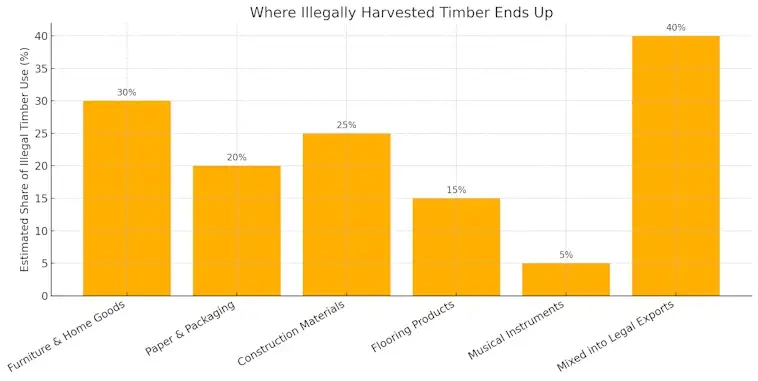
This global trade in stolen wood is worth billions each year. It’s fueled by weak regulations, poor enforcement, and growing consumer demand. Some countries have strong laws to block illegal timber imports, but loopholes and lack of transparency still allow bad actors to profit.
The biggest problem? Lack of traceability. Without reliable systems to track timber from forest to final product, illegal wood can easily blend into the legal market.
Stopping this cycle requires stronger international cooperation, better supply chain transparency, and responsible buying practices. When companies and consumers ask tougher questions about where their wood comes from, it creates pressure for change—and helps protect the world’s forests from being stolen in the first place.
What We Can Do: Global Solutions to Fight Illegal Logging
Illegal logging is a global problem—but it’s one we can solve. From stronger laws to smarter buying choices, there are real steps we can take to protect forests and the people who depend on them.
1. Strengthen Forest Laws and Enforcement
Governments play a key role. Stronger laws, better monitoring, and tougher penalties for forest crimes can stop illegal logging at its source. Satellite tracking and AI-powered surveillance tools are already helping some countries detect illegal activity in real time.
2. Support Indigenous Land Rights
Many of the world’s most intact forests are cared for by Indigenous peoples. Recognizing and protecting their land rights is one of the most effective ways to safeguard forests. When Indigenous communities have legal control, deforestation rates drop dramatically.
3. Promote Transparent Supply Chains
Companies must take responsibility for where their wood comes from. Certification programs like FSC (Forest Stewardship Council) and technologies like blockchain can help track timber from the forest to the final product—making it harder for illegal wood to slip through.
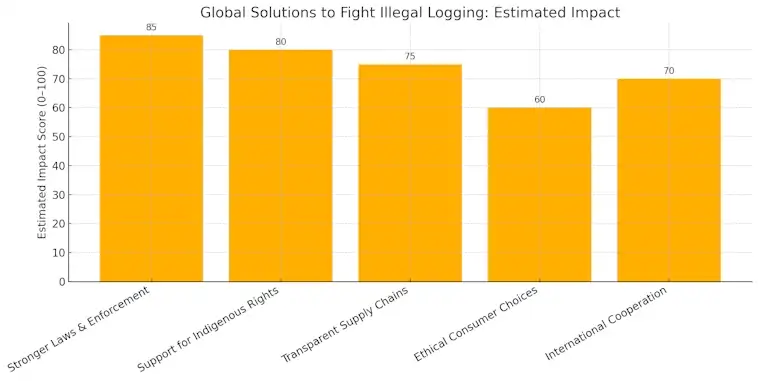
4. Encourage Ethical Consumer Choices
As consumers, we have power. Choosing certified wood products, asking questions about sourcing, and supporting brands with strong sustainability practices can create demand for legal and responsible forestry.
5. Boost International Cooperation
Forest crime doesn’t respect borders. That’s why global action is critical. Partnerships between countries, investment in forest protection, and trade regulations—like the EU Timber Regulation and the U.S. Lacey Act—help reduce the market for illegal wood.
Fighting illegal logging requires action at every level—from global policies to everyday purchases. With the right tools and the will to act, we can protect forests, fight climate change, and build a more just and sustainable future for all.
The Future of Our Forests Depends on Us
Illegal logging is more than an environmental crime—it’s a global crisis with deep human, economic, and ecological costs. As forests are stripped in silence, entire ecosystems collapse, communities suffer, and climate change accelerates.
But this future isn’t set in stone. Around the world, governments, Indigenous leaders, activists, and everyday people are standing up to protect what’s left. Smarter policies, stronger enforcement, ethical business practices, and informed consumer choices can all help turn the tide.
Forests are not just a natural resource—they are life-givers, climate stabilizers, and home to millions. Protecting them means protecting our shared future.
The time to act is now. Every tree saved, every law strengthened, every voice raised makes a difference. Because in the fight against illegal logging, silence is not an option—and neither is standing still.