
Sensational Ice Retreat Brings Painful Reality Home
Why the Global Ice Retreat Is a Wake-Up Call We Can No Longer Avoid
Sensational shifts in our climate often feel distant, yet the rapid ice retreat makes the threat impossible to ignore. The shrinking of glaciers and polar ice has moved from a slow, far-off concern to a daily reminder that change is happening faster than expected. As frozen landscapes pull back, the fallout reaches coastlines, weather systems, food supplies, and the rhythms of everyday life.
The story unfolding is both urgent and deeply human. People living near melting ice fields are already adjusting to rising seas and unstable ground. Scientists tracking long-term trends warn that the next decade will bring even sharper consequences if global temperatures continue to climb. At the same time, breakthroughs in clean energy and community-led action offer a path forward.
Understanding these shifts helps build a clearer picture of where we are heading and how much power we still have to shape what comes next.
Ice Retreat Exposes the Alarming Speed of Climate Change
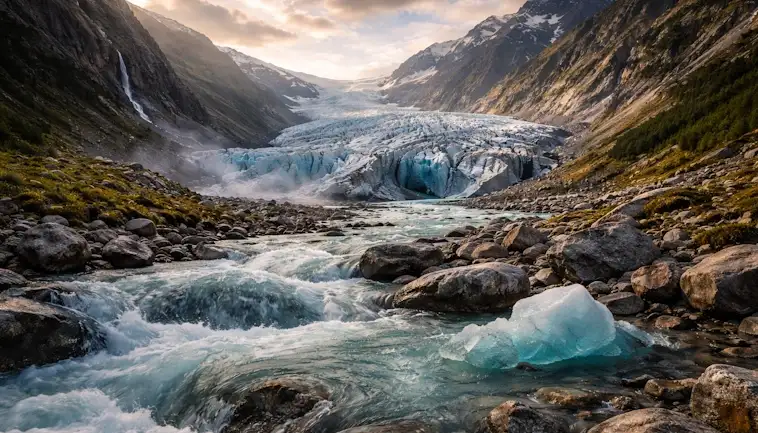
The pace of ice retreat today is faster than anything we once imagined. You can see it in shrinking glaciers, thinning sea ice, and the rising urgency in scientific reports. And while these changes may feel far away, they’re not. They shape weather patterns, disrupt ecosystems, and influence daily life in ways we’re only beginning to understand.
As the ice pulls back, it leaves behind a clear message: climate change is accelerating. We’re watching landscapes shift within a single generation. That alone makes this moment worth paying attention to. Yet it also gives us a chance to respond with clarity and purpose. When we understand what’s happening, we’re better equipped to act.
A Closer Look at What’s Melting Away
What’s striking is how consistent the trend is. Glaciers that once seemed permanent are now retreating year after year. Sea ice that held strong through past centuries is breaking up earlier each season. These changes don’t just reshape coastlines. They ripple outward, affecting food security, water supplies, and global weather systems.
And as more ice retreat is recorded, the evidence becomes harder to ignore. It’s a reminder that every fraction of a degree matters. But it’s also a reminder that solutions are within reach. Clean energy, conservation, and smarter policy choices can slow the pace. They can help stabilize the systems we all depend on.
In the end, the retreat of ice tells a story. It’s a stark, visual warning. Yet it’s also a call to focus on what we can still protect. When we pay attention to the signs, we give ourselves a better chance to change the outcome.
Communities Confront Rising Risks as Frozen Landscapes Vanish
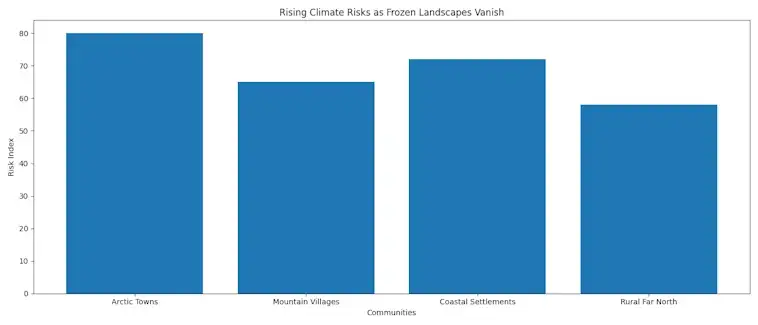
As frozen landscapes disappear, many communities are finding themselves on the front line of rising climate risks. This shift is happening fast, and it touches places that once relied on stable ice for everything from travel to food security. Now, those same places are navigating new threats. And even if you live far from these regions, the ripple effects reach you too.
What’s striking is how personal this story feels once you look closer. Entire towns must rethink how they live, work, and move. Roads buckle as permafrost thaws. Storm surges hit harder because sea ice no longer protects the shoreline. Meanwhile, traditional ways of life—passed down through generations—face sudden disruption.
Yet understanding these changes also opens the door to smarter choices. When we see how communities adapt, we can learn from their experience. And we can push for solutions that not only reduce harm but also build resilience for the long run. That’s why this moment matters so much.
Why Local Impacts Echo Globally
When frozen ground softens, it reshapes ecosystems and infrastructure. Food systems must adjust. Emergency planning becomes more complex. And migration pressures grow as some places become too costly—or too dangerous—to sustain.
But throughout these challenges, there’s also incredible innovation. Communities are redesigning buildings, improving early-warning systems, and experimenting with new energy solutions. These efforts remind us that even in the face of loss, there’s room to act boldly and protect what remains.
Below is a chart that highlights how different community types experience rising climate risks as frozen landscapes vanish.
Ice Retreat Reveals Hidden Costs for Wildlife and Ecosystems
As ice retreat accelerates, we’re beginning to see just how much wildlife depends on frozen landscapes to survive. At first glance, it might seem like only the poles are affected. Yet as more ice melts each year, entire ecosystems shift in ways that are easy to miss but impossible to ignore. These changes ripple outward, touching everything from predator–prey relationships to the timing of migrations.
What’s unfolding is both fascinating and worrying. Animals that rely on steady ice cover lose crucial habitat. Plants that once thrived in cold, stable conditions now struggle to keep up with rapid transitions. And while nature is resilient, it can’t always adapt at the speed the climate now demands. That’s why understanding these hidden costs is so important. It helps us see the bigger picture and take steps that actually make a difference.
Subtle Shifts With Big Consequences
Ice retreat doesn’t just reshape landscapes. It alters the balance of entire ecosystems. Some species gain new opportunities, but many face mounting pressure. And when one part of the system falters, others often follow. This is where the true cost becomes visible.
Here are a few of the impacts unfolding right now:
- Loss of stable breeding grounds for key Arctic species
- Disrupted migration patterns as habitats warm and shift
- Increased competition for food as ecosystems reorganize
- Higher stress levels in wildlife due to unpredictable conditions
- New predators entering previously inaccessible regions
Each of these challenges adds weight to an already fragile system. Yet by paying attention to these signals, we can support policies and practices that strengthen ecosystems rather than strain them.
In the end, the story of ice retreat is more than disappearing glaciers. It’s about the hidden pressures building beneath the surface—and our chance to respond while there’s still time.
How a Warming Planet Shapes Our Economic and Social Future
A warming planet isn’t just an environmental issue. It’s a story about how our daily lives, jobs, and communities will change in the years ahead. As temperatures rise, the economic and social landscape shifts with it. And while these changes can seem abstract at first, they show up in real ways—higher costs, new risks, and pressure on systems we rely on every day.
You can already see the early signals. Roads buckle during extreme heat. Health systems stretch thin during longer wildfire seasons. Farms face unpredictable growing conditions. And communities struggle with rising migration as people search for safer places to live. These are the kinds of challenges that shape the future for all of us. Yet they also give us a chance to rethink how we build resilience and invest in smarter solutions.
As we look ahead, it becomes clear that the choices we make now will influence not just the climate, but the economy and social stability for decades to come. That’s why understanding these trends matters so much. It helps us take proactive steps rather than reacting once costs spiral out of control.
Why the Economics of Climate Change Are Hard to Ignore
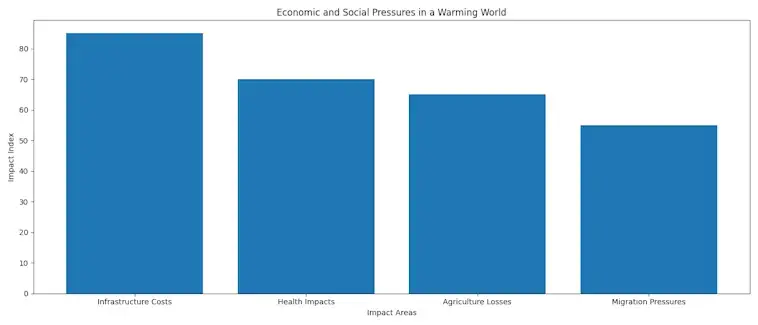
When warming accelerates, it affects every major sector. Some industries face rising operating costs. Others must redesign their entire business models. Meanwhile, governments shoulder heavier financial burdens as they repair damaged infrastructure and support vulnerable populations. And all of this adds pressure to social systems that are already stretched.
To help visualize these pressures, here’s a chart showing how different impact areas are affected as the planet warms:
What We Can Still Do to Slow the Loss and Protect Our World
Even with all the changes unfolding around us, there’s still so much we can do to protect the planet we call home. Yes, the challenges are big. And yes, the pace of environmental change can feel overwhelming at times. But when we break it down into steps we can take—both individually and collectively—the path forward becomes clearer. Small shifts add up. And when enough people pull in the same direction, momentum grows fast.
Right now, we’re living in a moment where every action matters. Cutting emissions, restoring habitats, and rethinking how we use energy aren’t distant goals anymore. They’re everyday opportunities to slow the pace of environmental loss and build a more resilient world. And the encouraging part? Many of the solutions already exist. We just need to back them, scale them, and stick with them.
How Ice Retreat Shapes the Future of Our Choices
One reason this work is so urgent is the rapid ice retreat happening across the globe. As ice disappears, ecosystems shift, sea levels rise, and weather patterns become more extreme. But these trends aren’t fixed. They’re influenced by the decisions we make today—what we consume, how we power our homes, and even how we vote.
To keep things actionable, here are a few meaningful steps that help slow the loss:
- Choose renewable energy options when available.
- Support policies that prioritize climate resilience.
- Reduce waste and rethink consumption habits.
- Back conservation projects that restore vulnerable ecosystems.
- Stay informed and share credible resources with others.
Each choice sends a signal. And when millions of signals align, they reshape what industries invest in and what governments prioritize.
For those that want to dive deeper into practical climate solutions backed by research, Project Drawdown is an excellent resource.
Conclusion: Why Ice Retreat Demands Our Attention Now
The speed of ice retreat is no longer a distant scientific warning. It’s something we can see, measure, and feel in real time. And as this dramatic shift reshapes coastlines, ecosystems, and daily life across the globe, it brings a painful reality closer to home. We’re living through a moment that asks us to look honestly at what’s changing—and to decide how we’ll respond.
Yet there’s room for hope. By paying attention, speaking up, and supporting smarter climate choices, we can help slow the pace of loss. We can protect the places we love and strengthen the communities that depend on stable environments. Most importantly, we can keep pushing for solutions that match the scale of the challenge.
In the end, ice retreat is more than a headline. It’s a call to action. And our response today will shape the story future generations inherit.