

Save Wildlife and Protect the Future We All Share
Save Wildlife Today and Protect the Future We All Share for a Thriving Planet
Saving nature now matters more than ever, and the call to save wildlife is growing louder each year. Across the globe, animals face shrinking habitats, rising temperatures, and human pressure. At the same time, more people are waking up to the role wildlife plays in clean air, healthy food systems, and balanced ecosystems. This shift is not just a trend. It is a turning point.
However, this moment also brings hope. New technology helps track endangered species. Communities are restoring forests. Young voices are leading bold action. As a result, the movement to protect wildlife feels stronger and more united than before. Meanwhile, simple choices at home can make a real difference. From eco-friendly products to mindful travel, small steps create lasting change.
Looking ahead, the future of our planet depends on what we do today. Therefore, understanding how to save wildlife is no longer optional. It is essential. And together, we can build a world where nature thrives for generations to come.
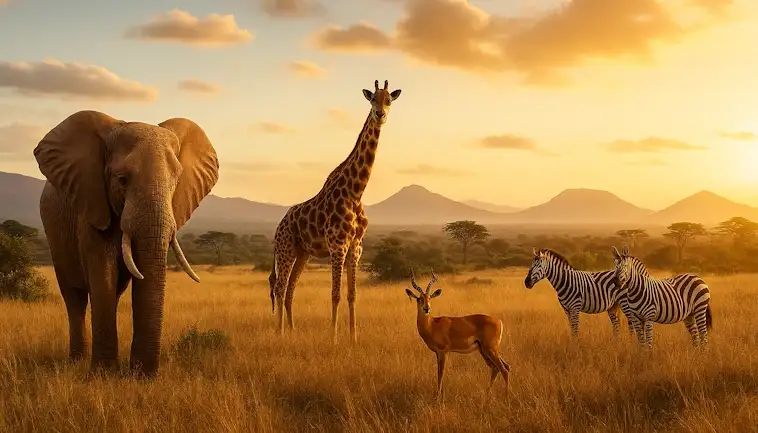
Why We Must Act Now to Save Wildlife for Future Generations
It’s easy to assume our natural world will always bounce back. Yet every year, we lose more species, more habitats, and more of the balance that keeps our planet stable. This isn’t a distant worry. It’s happening right now, often faster than scientists can track. That’s why taking steps to save wildlife is no longer optional. It’s essential.
When we protect wildlife, we protect ourselves. Healthy ecosystems help regulate climate, filter water, and support the food we eat. They also offer something harder to measure but deeply important—wonder, curiosity, and connection. Future generations deserve to feel that same sense of awe when they see a wild animal in its home, not in a photo of a vanished world.
A Tipping Point We Can’t Ignore
Today, even small actions matter. Supporting conservation groups, reducing waste, choosing sustainable products, and spreading awareness all add up. And as more people take part, change begins to build. It becomes easier to protect forests, restore wetlands, and rebuild populations of threatened species.
We’re standing at a turning point. If we act now, we can hand over a thriving planet filled with diverse life. If we wait, the losses will be permanent. So let’s choose action. Let’s choose a future where wild places and wild creatures still thrive.
For practical ways to get involved, you can explore resources from the World Wildlife Fund.
How Everyday Choices Shape the Survival of Our Most Vulnerable Species
Every choice you make matters. Even the small ones. What you eat. What you buy. How you travel. These daily habits quietly shape the future of the world’s most vulnerable species.
Right now, many animals and plants face pressure from climate change, pollution, and habitat loss. Yet there is hope. Simple lifestyle changes can slow this damage and even help nature bounce back.
For example, cutting down on plastic helps protect sea turtles and seabirds. They often mistake plastic for food. Choosing sustainable seafood also reduces harm to fragile ocean life. It supports fishing methods that protect young and endangered species.
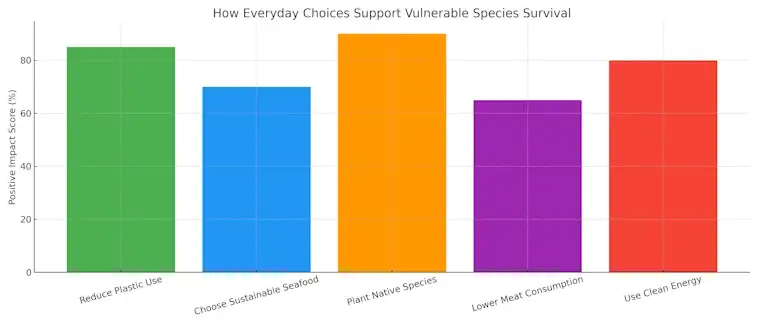
At home, planting native plants creates safe spaces for bees, birds, and butterflies. These species are vital for healthy ecosystems. In the same way, reducing meat consumption lowers demand for land and water. This gives forests and wild areas a chance to recover.
Switching to clean energy is another powerful step. It cuts air pollution and slows climate shifts that push many species toward extinction. When combined, these actions create real change. And even better, future trends show more people embracing eco-friendly living. This shift can drive stronger protection laws and smarter technology.
Simple Ways You Can Help Save Wildlife in Your Local Community
Saving nature does not have to feel big or hard. In fact, small choices close to home can help save wildlife every single day. And the best part? You are already in the perfect place to start.
When you support local animals, you also protect future generations. You help balance ecosystems. You keep green spaces alive. And over time, these simple steps create real change.
Here are easy, practical ways to save wildlife in your own community:
- Plant native flowers and shrubs that feed birds and pollinators
- Leave small wild areas in your yard for shelter and nesting
- Avoid chemical pesticides and choose natural options instead
- Keep pets indoors at night to protect small animals
- Pick up litter before it harms wildlife
- Support local rescue centres and conservation groups
- Install bird feeders and clean water sources
- Drive carefully in areas where animals cross
- Join community clean-ups and tree planting days
If you want to go one step further, trusted resources can guide you. A great place to start is the National Wildlife Federation, which offers tips and tools to help communities protect their native species.
Every action counts. And together, these small efforts help save wildlife today while shaping a healthier world for tomorrow. So keep going. Your local nature is counting on you.
The Hidden Links Between Healthy Ecosystems and Human Well-Being
When nature thrives, people thrive too. The connection is real. Yet many of us miss how deeply our health depends on the world around us.
Healthy ecosystems give us clean air to breathe. They filter water so it is safe to drink. They also grow the food we rely on every day. These natural systems work quietly. Still, their impact is powerful and personal.
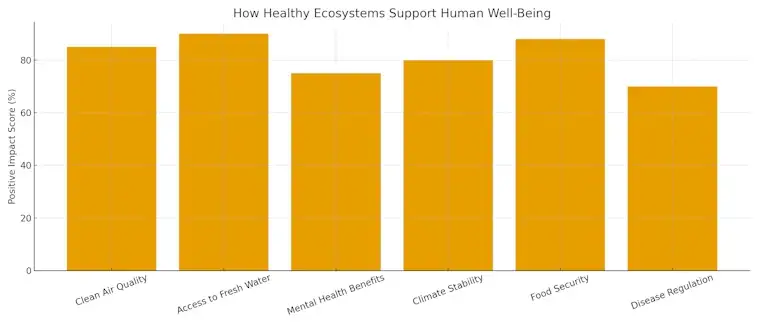
Spending time in green spaces lowers stress. It clears the mind. It helps improve mood and focus. At the same time, strong ecosystems reduce the spread of disease. They keep pests and harmful bacteria in check. This balance protects families and communities.
Now think about the future. As cities expand, the need for healthy ecosystems will only grow. More people will look for nature as a source of calm and recovery. Urban parks, restored wetlands, and clean rivers will shape how we live and heal. Therefore, protecting nature is also a smart investment in long-term well-being.
What a Wildlife-Friendly Future Could Look Like—and How We Get There
A wildlife-friendly future feels hopeful. It is green, connected, and full of life. Forests thrive. Rivers run clean. Animals move freely without fear. And people? We live in balance with the natural world.
Today, this vision feels closer than ever. New ideas are shaping how cities grow and how farms operate. For example, green bridges help animals cross highways safely. Urban parks create homes for birds and pollinators. Even rooftops now support native plants. These small changes add up fast.
So, how do we get there? First, it starts with smart choices. We protect habitats, restore damaged land, and reduce waste. Then, we support groups already doing the hard work, such as the global efforts led by the World Wildlife Fund. Their projects show what is possible when people act together.
Next, education plays a key role. When young people learn to respect nature, they grow into mindful leaders. Meanwhile, technology continues to open new paths. Drones track endangered species. AI helps stop illegal hunting. The future is not just wild. It is also wise.
Simple Ways to Save Wildlife and Shape Tomorrow
You do not need to be an expert to help save wildlife. Start small. Plant native flowers. Use less plastic. Choose products that protect forests. Also, speak up for nature in your community. Your voice matters more than you think.
Even better, when these actions spread, they create real change. Step by step, we move forward. And together, we build a world where wildlife not only survives but truly thrives.
Save Wildlife Today and Secure Tomorrow
In the end, the message is clear. We must save wildlife to protect the future we all share. Every species plays a role in keeping our planet balanced. When one disappears, the whole system feels the loss.
However, this is not just a problem for scientists or governments. It is a shared mission. Small choices matter. Choosing sustainable products, reducing waste, and supporting conservation groups all help save wildlife. Even simple actions can create real change.
Meanwhile, the world is moving fast. Climate shifts and habitat loss are growing concerns. Yet, there is hope. New technology, stronger laws, and rising public awareness show that progress is possible. If we act now, we can restore damaged ecosystems and give future generations a thriving planet.
So let’s move forward with purpose. Talk about it. Support it. Live it. When we save wildlife, we safeguard clean air, healthy oceans, and a stable climate. More importantly, we protect a future where nature and people grow together.