

The Urgent Battle Against Saltwater Intrusion
The Urgent Battle Against Saltwater Intrusion
Saltwater intrusion is no longer a distant concern. It’s already reshaping coastlines, threatening drinking water, and putting agriculture at serious risk. As sea levels rise and groundwater is over-pumped, saltwater is steadily seeping into freshwater sources — creating a slow-moving but dangerous crisis.
What’s at stake isn’t just coastal ecosystems, but the health and stability of entire communities. From farmers in low-lying deltas to city planners in coastal towns, more people are being forced to reckon with its growing impact.
This isn’t a problem to solve tomorrow. The time to act is now — while there’s still something to protect.
What Is Saltwater Intrusion and Why Is It Getting Worse?
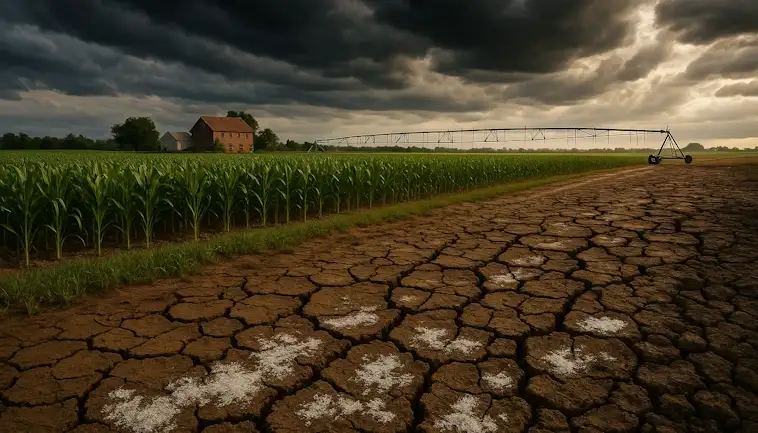
Saltwater intrusion happens when saltwater moves into freshwater areas—especially underground water sources, or aquifers. It’s most common near coastlines where the boundary between fresh and saltwater is naturally delicate. As sea levels rise and freshwater supplies shrink, this balance starts to tip. And when it does, communities that rely on groundwater for drinking, farming, or industry face serious risks.
So, why is it getting worse?
One major reason is climate change. As global temperatures rise, so do sea levels. That higher ocean water pushes saltwater farther inland, sometimes right into the wells people depend on. At the same time, extreme droughts are draining our freshwater reserves. With less rain and more people pumping water from underground, the pressure that normally keeps saltwater at bay disappears.
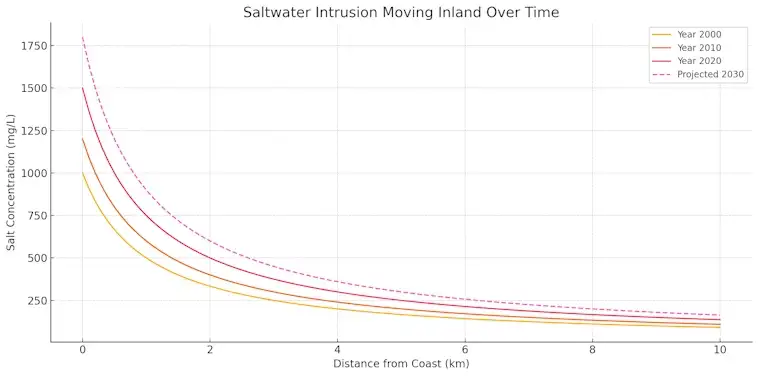
Another problem? Overdevelopment. Coastal cities are growing fast. More homes, more businesses, more roads—and a much greater demand for water. All of this adds stress to local aquifers, making them more vulnerable to saltwater intrusion.
In short, we’re seeing a perfect storm: rising seas, shrinking water supplies, and growing populations. Together, these forces are turning what used to be a manageable issue into a widespread and growing threat.
If you live near the coast—or if your water comes from underground—this isn’t just a future problem. It’s happening now. And it’s one more reason we need to think seriously about how we use, protect, and invest in our water systems.
How Climate Change and Overpumping Are Fueling the Crisis
Saltwater intrusion isn’t just a natural occurrence—it’s a growing crisis made worse by human activity. Two of the biggest drivers? Climate change and overpumping of groundwater.
Let’s start with climate change.
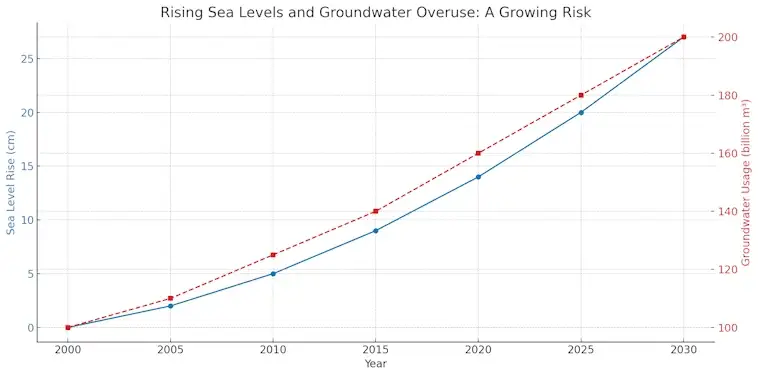
As global temperatures rise, so do sea levels. Warmer oceans expand and polar ice continues to melt, sending more saltwater inland. At the same time, climate change is disrupting rainfall patterns. That means longer droughts and less consistent freshwater to recharge our underground aquifers. Without that steady flow of fresh water pushing back, saltwater has an open door to move in.
Now add overpumping to the mix.
Many communities—especially in coastal areas—rely heavily on groundwater for drinking, farming, and industry. But we’re taking out water faster than nature can replace it. When aquifers are overdrawn, the water pressure drops. That’s like lowering the guardrails that keep saltwater from seeping in. And once saltwater enters an aquifer, it’s incredibly hard—and expensive—to reverse.
The result? A growing number of wells are turning salty. Farmland becomes less productive. Drinking water becomes unsafe. And the costs to treat or replace that water climb higher every year.
This is a clear warning sign. We’re pushing natural systems past their limits. If we don’t take steps to slow the damage—by cutting emissions, protecting wetlands, and using water more wisely—we’ll face even bigger water security challenges in the years ahead.
Communities on the Frontline of Saltwater Intrusion
Saltwater intrusion isn’t just a distant environmental issue—it’s already hitting home for many communities around the world. From small coastal towns to major cities, people are feeling the pressure as their once-reliable water supplies become contaminated by salt.
In South Florida, for example, cities like Miami are battling rising seas and sinking land. As sea levels rise, saltwater seeps into the Biscayne Aquifer—a major source of drinking water for millions. Some wells have already been shut down, and the region is investing heavily in advanced water treatment and alternative sources just to keep up.
In California’s Central Coast, the agricultural heartland is under threat. Overpumping to grow crops during long droughts has allowed saltwater to creep into underground aquifers. This not only hurts farm productivity but also risks long-term damage to the region’s freshwater reserves.
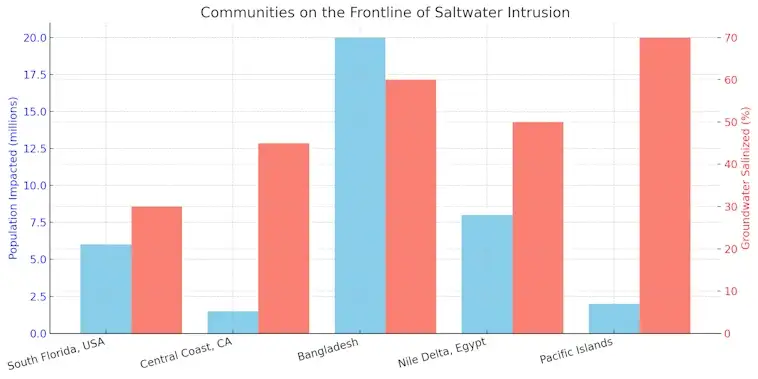
Globally, places like Bangladesh, the Nile Delta in Egypt, and Pacific Island nations are facing even more dramatic impacts. In some cases, saltwater intrusion is forcing families to relocate, abandon farmlands, or spend more of their income on bottled water and filtration systems.
What all these communities have in common is this: they’re on the frontline of a growing crisis. They’re adapting, innovating, and pushing for stronger protections—but they can’t do it alone. The rest of the world needs to pay attention, because what’s happening at the coast today could happen elsewhere tomorrow.
Saltwater intrusion is no longer a future risk. It’s a present reality. And the stories of these frontline communities are a powerful reminder of why action can’t wait.
The Hidden Costs: Agriculture, Drinking Water, and Economic Risks
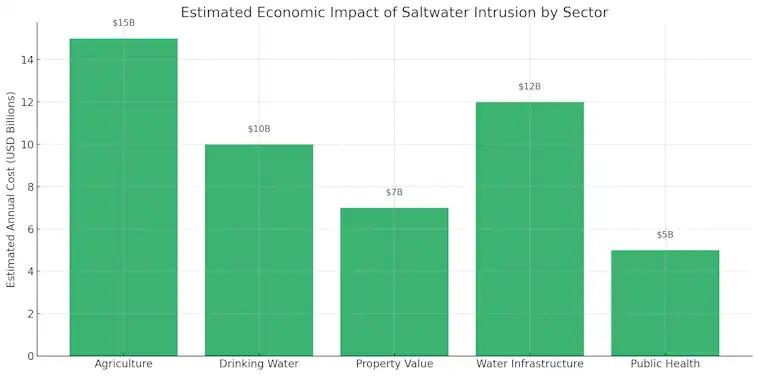
Saltwater intrusion doesn’t just affect water quality—it quietly impacts entire economies, food systems, and public health. The damage often starts underground, but the ripple effects are felt everywhere. Let’s break down some of the most serious hidden costs.
1. Agriculture Under Threat
Farmland near coastlines is especially vulnerable. When saltwater seeps into the soil or irrigation wells, crops struggle to grow. Salt damages root systems, reduces yields, and can make entire fields unusable. Farmers face rising costs to find cleaner water or switch to salt-tolerant crops—if they can. Over time, saltwater intrusion can turn once-productive land into dry, unworkable soil.
2. Drinking Water Gets Pricier—and Riskier
As salt invades freshwater aquifers, drinking water becomes unsafe without treatment. Removing salt is expensive and energy-intensive. Some communities must dig deeper wells or import water from far away. Others are forced to rely on bottled water or costly filtration systems. For low-income families, this creates a financial burden that adds to existing inequalities.
3. Rising Economic Risks
The long-term economic impacts are harder to see—but just as real. Saltwater intrusion can reduce property values in affected areas, raise insurance costs, and make coastal development riskier. Water-dependent businesses, like food processing or tourism, may also suffer. And for cities, investing in new water infrastructure often means higher taxes or budget cuts elsewhere.
These costs add up fast—and they’re often not included in traditional damage estimates. That’s what makes saltwater intrusion such a dangerous, slow-moving threat. It creeps in quietly but leaves lasting damage.
The good news? These risks aren’t unavoidable. With smart planning, investment, and better water management, we can reduce the impact—and protect both people and the economy from this growing crisis.
Solutions and Strategies to Stop Saltwater Intrusion Now
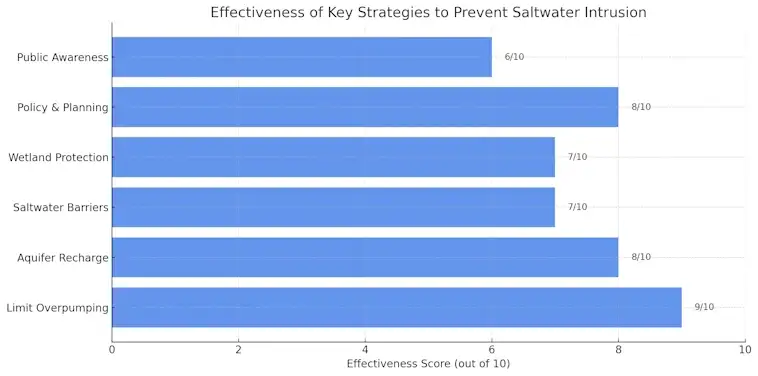
Saltwater intrusion is a serious problem—but it’s not a hopeless one. With the right mix of smart strategies, policy changes, and community action, we can protect our freshwater supplies and stop the spread of saltwater. Here’s how:
1. Limit Overpumping of Groundwater
The fastest way to slow saltwater intrusion is to reduce how much water we pull from underground aquifers. That means setting pumping limits, using smarter irrigation techniques, and encouraging conservation. In many areas, switching to drip irrigation or rainwater harvesting can make a big difference.
2. Invest in Recharge Projects
Aquifer recharge is a powerful tool. By directing excess rainwater or treated wastewater back into the ground, we help rebuild underground water levels. This creates pressure that pushes saltwater back toward the ocean—exactly where it belongs.
3. Build Saltwater Barriers
Some regions are installing underground walls or pumping systems to physically block saltwater from moving inland. These barriers can be costly, but in high-risk zones, they’re proving to be an effective line of defense.
4. Protect Coastal Wetlands
Healthy wetlands act as natural buffers. They absorb storm surges, slow erosion, and help maintain the freshwater-saltwater balance. Restoring and preserving wetlands isn’t just good for the environment—it’s a direct investment in water security.
5. Strengthen Policy and Planning
Local governments have a big role to play. Better zoning, stronger building codes, and sustainable water-use regulations can all help prevent long-term damage. The key is planning ahead—before saltwater intrusion becomes too advanced to fix.
6. Raise Public Awareness
People can’t act on what they don’t know. Public education campaigns, community workshops, and school programs can help raise awareness about saltwater intrusion and what individuals can do to help.
Stopping saltwater intrusion isn’t about one big fix. It’s about many smart, local actions working together. And the time to act is now—before this slow-moving threat becomes a full-blown water crisis.
The Urgent Battle Against Saltwater Intrusion
Saltwater intrusion is a growing threat that’s already affecting millions of people, from farmers and coastal homeowners to entire cities. As sea levels rise and freshwater demand increases, this silent crisis is accelerating—putting our drinking water, food supply, and local economies at serious risk.
But there’s still time to change course.
By acting now—reducing groundwater overuse, protecting wetlands, investing in smart infrastructure, and raising awareness—we can protect vital water sources and build long-term resilience. The solutions are within reach. What matters most is the urgency to act.
Communities that take saltwater intrusion seriously today will be better prepared for tomorrow’s challenges. And with the right strategies, we can turn the tide and secure a safer, more sustainable future for everyone.