

Exploring the Impact and Mysteries of Ocean Currents
Exploring the Impact and Mysteries of Ocean Currents
Change is constant, especially in the world’s oceans. Currents beneath the surface shape our climate, influence marine life, and even guide global shipping routes. Yet, much about them remains a mystery. From the warming Atlantic to the shifting Pacific, these powerful flows are more than just moving water—they are nature’s hidden engine.
Understanding how ocean currents work and what influences them can reveal a lot about the future of our planet. From melting ice caps to rising sea levels, these vast underwater rivers are responding in real time to a warming world.
As sea temperatures rise and polar regions change, ocean currents are adapting—and fast. What happens next could reshape coastlines, economies, and everyday life.
What Are Ocean Currents and Why Do They Matter?
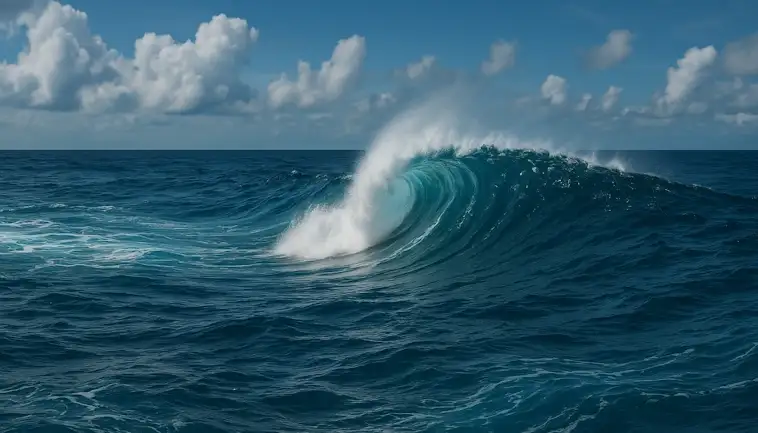
If you’ve ever stood on a beach and watched waves roll in, you’ve already seen a small piece of a much larger story—ocean currents. But ocean currents aren’t just surface ripples. They’re massive, moving rivers of water that travel through the world’s oceans. And they play a critical role in shaping the planet’s climate, weather patterns, and even the air we breathe.
So, What Exactly Are Ocean Currents?
Ocean currents are continuous, directed movements of seawater, powered by a mix of factors like:
- Wind patterns – surface winds push water across the ocean.
- Earth’s rotation – the Coriolis effect makes currents curve rather than flow in straight lines.
- Water density – changes in temperature and salinity cause water to rise or sink, driving deep ocean circulation.
- Tides and gravitational pull – mostly from the moon and sun.
Together, these forces create a global system often called the “ocean conveyor belt” or thermohaline circulation, which moves water (and heat) around the world.
Why Do Ocean Currents Matter?
Ocean currents might be invisible from space, but their impact is enormous:
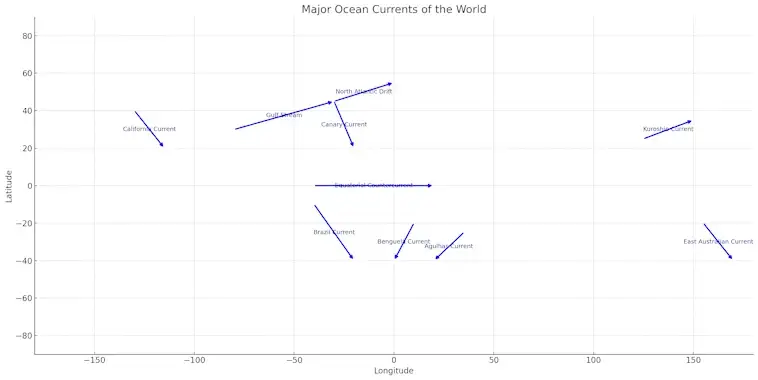
- They regulate global climate: Warm-water currents like the Gulf Stream bring heat from the tropics toward the poles, helping to warm places like Europe. Cold currents do the opposite, cooling down coastal areas.
- They support marine life: Currents carry nutrients that feed plankton, which supports entire food chains—from tiny fish to whales.
- They impact weather systems: El Niño and La Niña, which are shifts in ocean currents and temperatures, can cause droughts, floods, and other extreme weather.
- They influence human activity: From shipping routes to fishing grounds, ocean currents affect global economies and coastal communities.
As the climate changes, so do the currents. Scientists are already seeing shifts in speed and direction, and these changes could disrupt weather patterns, melt ice faster, and threaten marine ecosystems.
Understanding ocean currents isn’t just for scientists. It’s for all of us. These powerful flows are part of Earth’s life-support system, silently shaping our world every day.
How Ocean Currents Shape Weather and Climate
You might not see them, but ocean currents are some of the most powerful forces behind the weather you experience every day. Whether it’s a calm sunny afternoon or a destructive storm, chances are ocean currents have played a part in shaping it.
A Hidden Engine Beneath the Waves
Ocean currents act like conveyor belts, moving warm and cold water across the planet. This constant movement redistributes heat, balances temperatures, and helps regulate Earth’s climate system.
Here’s how they make a difference:
1. Fueling Weather Systems
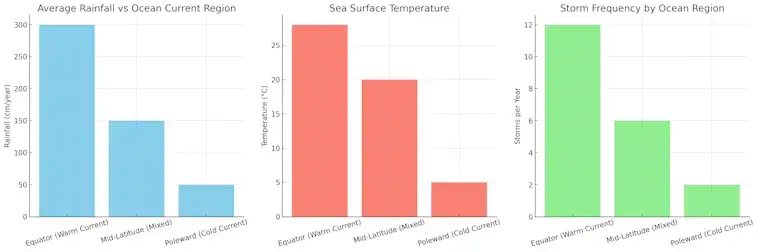
- Warm currents, like the Gulf Stream or Kuroshio Current, heat the air above the ocean. This warm, moist air can rise quickly, helping to form clouds and, sometimes, powerful storms like hurricanes or typhoons.
- Cold currents, like the California or Humboldt Current, cool the air and reduce moisture. This tends to create drier conditions along nearby coastlines.
2. Controlling Rainfall Patterns
- Regions near warm ocean currents tend to get more rainfall. Think of the lush rainforests of the Amazon, which are influenced by Atlantic currents.
- Areas near cold currents are often more arid. For example, the Atacama Desert in South America lies next to the cool Humboldt Current, one of the driest places on Earth.
3. Driving Climate Events
Two of the most well-known examples of ocean current-driven climate events are:
- El Niño – when warm water spreads across the Pacific, leading to wetter winters in the Americas and droughts in places like Australia and Indonesia.
- La Niña – the opposite phase, with cooler Pacific waters, often causing dry conditions in the Americas and heavy rains in Asia.
These patterns don’t just affect local weather—they ripple across the globe, influencing harvests, water supplies, and even energy demand.
A Delicate Balance at Risk
As global temperatures rise, ocean currents are changing. Some are slowing down. Others are shifting course. These changes could:
- Alter storm paths and intensity
- Shift growing seasons for crops
- Bring more extreme weather to previously stable regions
Ocean currents are more than just moving water—they’re a key part of Earth’s natural thermostat. Understanding how they work helps us better predict and prepare for weather changes around the world.
The Hidden Highways Beneath the Sea
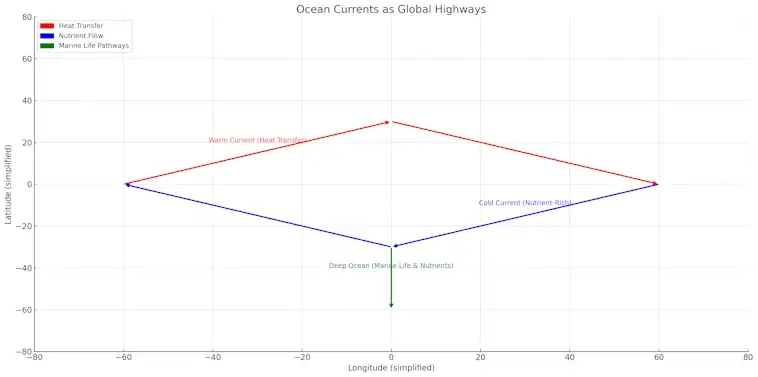
Imagine a network of invisible highways that stretch across the globe, moving not cars or people, but water. These are ocean currents—vast, powerful streams that flow through the sea like conveyor belts. But they don’t just move water. They also carry heat, nutrients, and even marine life across entire ocean basins.
Moving More Than Just Water
Ocean currents are constantly on the move, and they have a lot of company. Here’s what they carry with them:
1. Heat Transfer
- Warm ocean currents near the equator absorb massive amounts of solar energy.
- These currents then transport heat to higher latitudes, helping to warm cooler coastal regions.
- This heat exchange helps regulate global temperatures, keeping climates more stable and predictable.
For example, without the Gulf Stream, parts of Europe would be much colder—even as far south as Spain and Italy.
2. Nutrient Distribution
- As currents move, they stir the ocean, bringing nutrients up from the deep in a process called upwelling.
- These nutrients—like nitrogen and phosphorus—are essential for tiny organisms like phytoplankton, the base of the marine food web.
- More nutrients mean more fish, whales, and seabirds, all feeding off this underwater feast.
Some of the world’s richest fisheries, like those off Peru or the coast of California, exist because of nutrient-rich cold currents.
3. Highways for Marine Life
- Many species of fish, sea turtles, and even plankton rely on currents to migrate or spread their young.
- Ocean currents act as natural transportation systems, carrying larvae and juveniles to new habitats.
- Some animals, like the leatherback sea turtle, follow these currents on migrations that span thousands of miles.
Currents help maintain healthy biodiversity across ocean ecosystems by keeping populations connected and food sources plentiful.
Why It Matters
Disruptions in these hidden highways—due to climate change or pollution—can ripple through the entire marine system. Less upwelling, for example, means fewer nutrients, which can lead to fishery collapses and food shortages for wildlife.
So the next time you look out at the ocean, remember: beneath the surface, an incredible system is always at work. These deep, powerful currents are part of what makes Earth not just livable, but beautifully interconnected.
Climate Change and the Shifting Flow of Ocean Currents
Beneath the surface of the sea, something profound is happening. The oceans—our planet’s climate regulators—are warming. And as they heat up, the ancient and reliable systems of ocean currents are beginning to shift. The consequences of this disruption could ripple through weather patterns, ecosystems, and economies worldwide.
Why Ocean Currents Are Changing
Ocean currents are powered by differences in water temperature, salt content, wind patterns, and the rotation of the Earth. But climate change is throwing these factors out of balance.
Here’s how:
- Warming waters reduce the temperature difference between the equator and the poles, weakening the engine that drives major currents.
- Melting ice sheets, especially in Greenland and Antarctica, release massive amounts of freshwater. This makes polar waters less salty and less dense, slowing down deep water formation.
- Shifting wind patterns, linked to a warming atmosphere, are altering surface currents and seasonal flow.
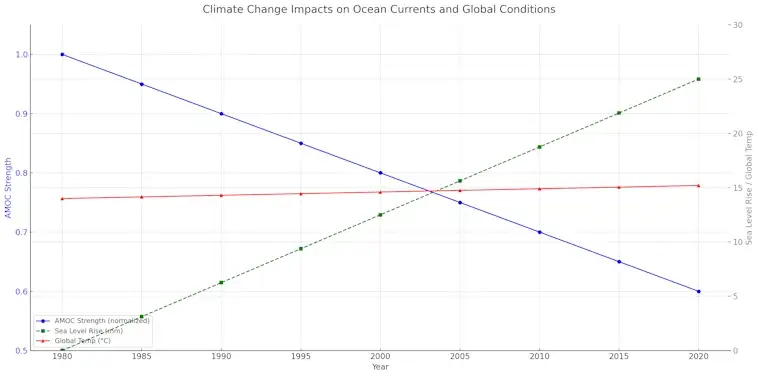
One of the most concerning developments is the potential slowdown of the Atlantic Meridional Overturning Circulation (AMOC), which includes the Gulf Stream. Some scientists warn that it could weaken significantly—or even collapse—within this century if warming continues unchecked.
Why This Matters
The global system of ocean currents affects almost everything:
1. Weather Extremes
- Slower currents mean more intense heatwaves in Europe and colder winters in North America.
- Storms may linger longer over coastlines, increasing the risk of flooding and damage.
2. Rising Sea Levels
- A weakened Gulf Stream leads to higher sea levels along the U.S. East Coast.
- Warmer waters expand, further pushing up sea levels in vulnerable regions.
3. Disrupted Ecosystems
- Marine species that depend on stable currents for migration and breeding could be displaced.
- Cold-water fisheries may collapse while warm-water species move into new regions, disrupting local economies and food chains.
4. Global Inequality
- Countries that rely on predictable rainfall for farming could face droughts or floods.
- Coastal and island nations are especially at risk, with fewer resources to adapt to sudden changes.
Ocean currents may seem like something distant and unchangeable, but they are part of a delicate system already feeling the strain of climate change. The good news? Reducing greenhouse gas emissions and protecting our oceans can help stabilize these vital flows.
The oceans are speaking—and we need to listen.
Future Frontiers: Can We Predict the Next Big Shift?
As the climate warms and the oceans transform, one big question looms: Can we predict what comes next? Ocean currents have been shaping our planet for millions of years, but rapid changes are pushing scientists to unlock new tools and insights to understand what the future holds.
The Cutting Edge of Ocean Science
Thanks to advances in technology and data modeling, researchers are now better equipped than ever to monitor and forecast changes in ocean currents. Here’s a look at what’s emerging:
1. Satellite Monitoring
- New generations of satellites provide real-time, high-resolution images of sea surface temperatures, currents, and salinity.
- These insights help scientists track shifting current patterns and detect anomalies—before they become climate crises.
2. Autonomous Ocean Robots
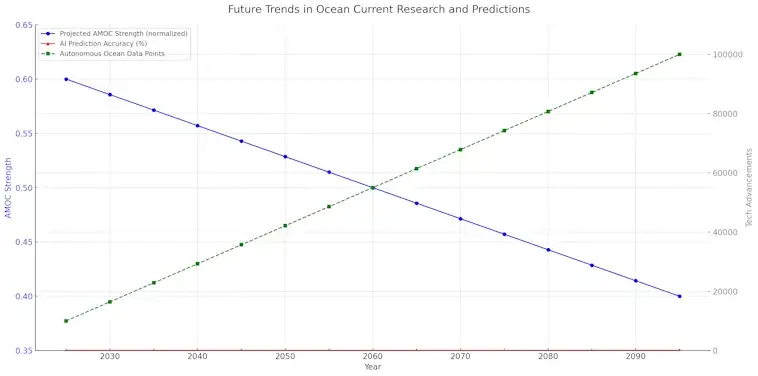
- Devices like Argo floats and deep-sea gliders are collecting data from places humans can’t easily reach.
- They’re mapping how water moves through the depths and helping refine climate models with ground-level insights.
3. AI-Powered Forecasting
- Artificial intelligence is helping to analyze massive amounts of ocean data quickly and with greater accuracy.
- Machine learning models can now identify patterns and tipping points, offering early warnings about changes in major currents like the Gulf Stream or the Indian Ocean Dipole.
What Might Change in the Years Ahead?
With so many moving parts, predicting the exact future is difficult—but scientists are making educated projections. Here are some likely scenarios:
- Northern Europe may get colder if the Gulf Stream slows significantly.
- Tropical regions could face more extreme heat, as ocean heat becomes more concentrated.
- Marine life could relocate, disrupting global fisheries and coastal economies.
- Weather extremes will become more frequent, especially in regions already vulnerable to droughts, floods, and hurricanes.
Why This Matters Now
Understanding ocean currents isn’t just about academic curiosity. It’s about preparing for a future that’s already unfolding. The more we know, the better we can adapt—whether that means updating infrastructure, planning for agricultural shifts, or protecting vulnerable ecosystems.
The future of our oceans is uncertain, but not unwritten. With global collaboration, cutting-edge research, and climate action, we still have time to steer the course. The currents may shift—but so can we.
Conclusion
Ocean currents may flow quietly beneath the surface, but their influence is anything but subtle. They shape our weather, nourish marine life, and carry the heat that keeps our planet livable. As climate change accelerates, these powerful currents are shifting—reshaping coastlines, ecosystems, and the future of life on Earth.
Understanding how ocean currents work isn’t just a scientific curiosity—it’s a key to predicting what comes next. With cutting-edge research, advanced technology, and global cooperation, we can better prepare for the changes ahead and protect the delicate balance that supports us all.
The seas may be changing, but with knowledge, innovation, and action, we can chart a smarter, safer course forward. After all, the ocean connects us—and its currents are the lifeblood of a living planet.