

How Ecosystem Revival Can Heal Our Planet
How Ecosystem Revival Can Heal Our Planet
Our planet is facing rising temperatures, vanishing forests, and declining wildlife. Yet, there is a powerful solution gaining momentum, ecosystem revival. By restoring damaged habitats, reintroducing native species, and repairing natural cycles, we can bring balance back to Earth’s most vulnerable landscapes. This effort not only helps nature thrive but also protects human health, food security, and future generations.
Healthy ecosystems filter our water, store carbon, and shield communities from extreme weather. When they are revived, the benefits ripple far beyond the environment. From wetlands that prevent flooding to forests that cool our air, each restoration effort helps heal the planet while creating a more resilient world.

Why Ecosystem Revival Matters for a Sustainable Future
Our planet’s health is tied directly to the health of its ecosystems. Forests, wetlands, oceans, and grasslands don’t just exist for beauty—they provide clean air, fresh water, food, and climate stability. When these systems break down, everything from local economies to global weather patterns suffers. Reviving ecosystems is not just about saving nature. It’s about protecting our future.
The Hidden Benefits of Healthy Ecosystems
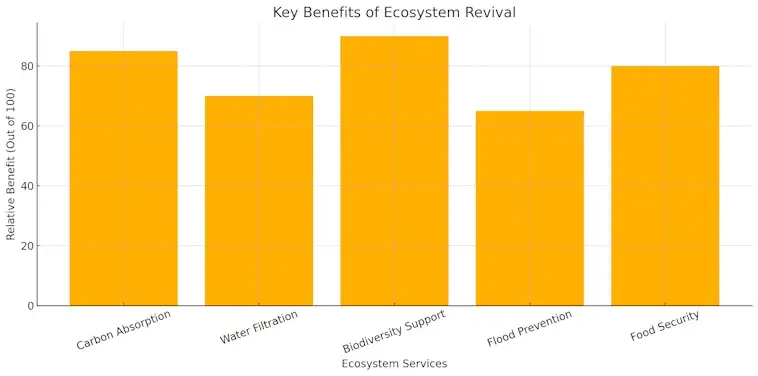
Thriving ecosystems are silent workers. Forests absorb carbon, slowing climate change. Wetlands filter water, reducing pollution. Pollinators like bees and butterflies support crops, ensuring food security. When we allow habitats to recover, these natural systems bounce back, saving us billions in environmental damage. In fact, restoring degraded land can boost agricultural productivity and reduce the risks of floods and droughts.
A Path to Climate Resilience
Ecosystem revival is one of the most effective tools to fight climate change. Healthy forests and oceans act as carbon sinks, locking away greenhouse gases. Rewilding efforts, such as replanting native trees and restoring coral reefs, not only capture carbon but also protect communities from extreme weather events. Investing in ecosystem restoration today builds resilience, helping us adapt to rising seas, heatwaves, and storms.
In the end, reviving ecosystems is not just an environmental choice. It’s a practical solution for a more sustainable, stable, and prosperous future. By repairing what’s broken, we create a planet that supports both people and nature for generations to come.
The Key Benefits of Ecosystem Revival for Our Planet
Reviving ecosystems is more than just repairing nature. It’s about restoring the balance that keeps our planet thriving. Healthy ecosystems provide clean air, fertile soil, safe water, and a natural defense against climate change. When we protect and restore these systems, we protect ourselves too.
How Nature Strengthens Our Future
Ecosystem revival helps slow global warming. Forests, wetlands, and oceans act as powerful carbon sinks, trapping greenhouse gases and keeping our atmosphere stable. Reforestation and wetland restoration can significantly reduce carbon levels while also preventing soil erosion and improving water quality. These efforts not only help the planet but also strengthen local communities by creating jobs in conservation and sustainable land use.

Protecting Biodiversity and Human Health
A healthy ecosystem supports biodiversity, which in turn supports humanity. Pollinators like bees ensure our food supply, while forests and grasslands protect watersheds that provide safe drinking water. Reviving degraded land also reduces the spread of diseases by creating natural buffers between humans and wildlife. When ecosystems are restored, they become more resilient, protecting us from floods, droughts, and other extreme weather events.
Ultimately, ecosystem revival is an investment in our collective future. It boosts food security, fights climate change, and protects millions of species, including our own. The benefits go beyond the environment. They extend to economies, health, and the quality of life for generations to come.
By committing to restoration today, we can build a planet that is not only sustainable but also abundant, resilient, and capable of supporting life for centuries.
How Communities Drive Ecosystem Revival Efforts
Communities play a powerful role in restoring our planet’s ecosystems. Local action, when scaled, can create lasting environmental change. From planting trees to protecting wetlands, these efforts not only heal the environment but also strengthen the communities themselves.
Local Leadership Creates Lasting Impact
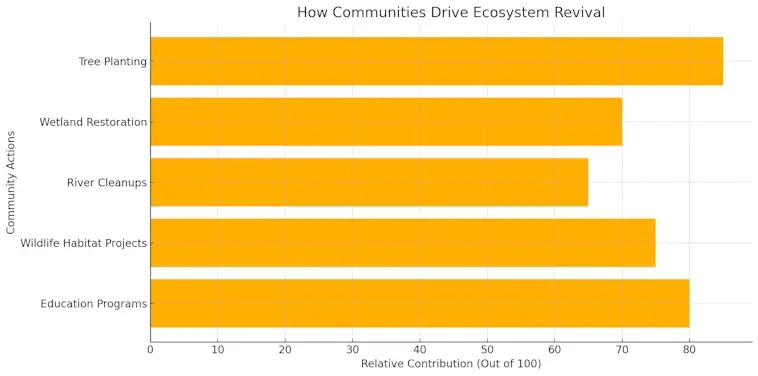
When people work together to revive natural spaces, they create solutions that last. Community-led projects often involve planting native trees, cleaning up rivers, and restoring habitats for wildlife. These efforts not only improve local biodiversity but also boost the economy by creating jobs in conservation, eco-tourism, and sustainable farming. Local leadership also ensures that restoration aligns with the unique needs of each area, making the results more sustainable in the long term.
Education and Engagement Build Momentum
Education is a key driver of successful ecosystem revival. When people understand the benefits of healthy ecosystems—such as cleaner air, safer water, and protection from natural disasters—they are more likely to get involved. Workshops, school programs, and local campaigns help spread awareness, inspiring individuals to take action in their neighborhoods. These initiatives often spark larger regional or national projects, showing how small efforts can grow into major environmental gains.
Communities are at the heart of ecosystem revival. By taking ownership of local projects, they protect natural resources, build resilience against climate change, and improve their quality of life. These efforts show that big change often starts with small, local actions.
When communities act, ecosystems thrive—and when ecosystems thrive, so do we. Supporting and empowering these grassroots initiatives is essential for a sustainable, healthy future for everyone.
Ecosystem Revival Strategies That Actually Work
Restoring ecosystems is essential to building a sustainable planet. But not every approach delivers results. The most effective strategies combine science, community involvement, and long-term planning. These proven methods help repair damaged landscapes, protect biodiversity, and create lasting benefits for people and nature.
Rewilding and Native Plant Restoration
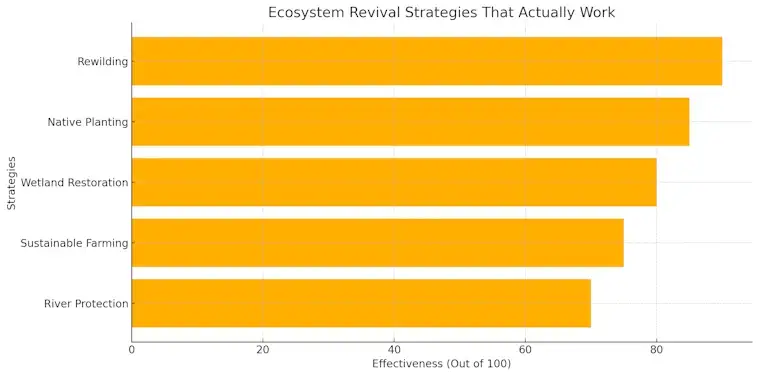
Rewilding is one of the most powerful tools for ecosystem recovery. It involves reintroducing native plants and wildlife to areas where they have disappeared. By planting native trees, restoring wetlands, and rebuilding natural habitats, we give ecosystems a chance to heal. Native plants attract pollinators, prevent soil erosion, and improve water quality. These efforts not only bring back balance but also make ecosystems more resilient to climate change.
Sustainable Land and Water Management
Human activity often drives ecosystem decline, so managing how we use land and water is key. Sustainable farming practices—such as crop rotation, agroforestry, and organic methods—reduce soil degradation and boost biodiversity. Protecting rivers through clean-up programs and natural buffers helps maintain healthy water systems. Combining these strategies with strong local and governmental support ensures ecosystems are protected for the long term.
These strategies work because they restore nature’s natural balance while involving the people who depend on it. Communities, scientists, and policymakers all play a role, turning restoration into a shared mission. When these efforts are done right, they not only heal nature but also create jobs, improve food and water security, and strengthen resilience against extreme weather.
Reviving ecosystems isn’t just about the environment—it’s about creating a healthier, more sustainable future for all of us.
The Future of Ecosystem Revival and Climate Action
The future of our planet depends on how we restore and protect its ecosystems. As climate change accelerates, ecosystem revival is emerging as one of the most powerful tools to fight back. Looking ahead, innovation, global collaboration, and community-driven action will be the key to building a sustainable and resilient world.
Technology and Nature Working Together
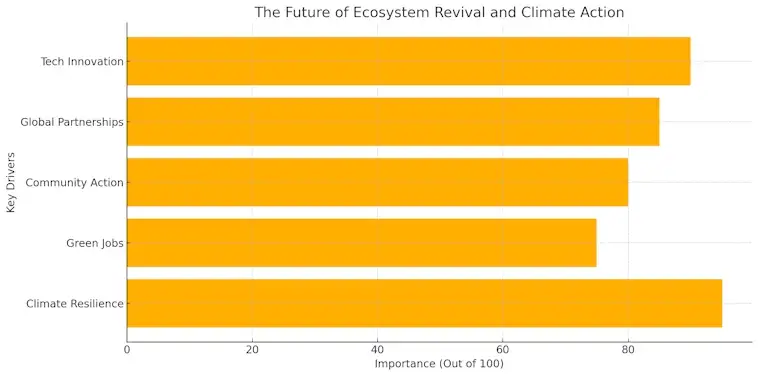
New technologies are transforming how we restore ecosystems. Drones now plant thousands of trees in minutes, while satellite monitoring tracks the health of forests and oceans. Artificial intelligence helps predict environmental threats, allowing for faster responses to deforestation, coral bleaching, and other crises. By combining modern tools with traditional conservation methods, we can accelerate restoration efforts on a scale never seen before.
Global Partnerships for a Greener Planet
Ecosystem revival is no longer a local issue—it’s a global mission. Governments, nonprofits, and businesses are working together to create large-scale restoration programs. Initiatives like the United Nations Decade on Ecosystem Restoration are inspiring countries to protect forests, rebuild wetlands, and restore marine life. These partnerships also open new opportunities for green jobs, sustainable industries, and climate resilience, benefiting people as much as the planet.
The future of ecosystem revival lies in combining innovation, collaboration, and local action. By embracing these strategies, we can slow climate change, protect biodiversity, and build a healthier planet for future generations.
Acting today means ensuring that tomorrow’s world is not just surviving, but thriving. When ecosystems thrive, humanity thrives alongside them.
Building a Thriving Future Through Ecosystem Revival
Ecosystem revival is more than a response to environmental damage—it’s a path toward a healthier, more balanced world. By restoring forests, wetlands, oceans, and grasslands, we give nature the tools it needs to protect us. These efforts reduce carbon in the atmosphere, protect biodiversity, and make communities more resilient to climate change.
Every action counts. Planting native trees, supporting sustainable farming, and backing global restoration initiatives all contribute to this shared goal. When ecosystems thrive, they provide clean air, safe water, abundant food, and natural defenses against extreme weather, benefiting both people and wildlife.
The future depends on choices made today. By committing to ecosystem revival, we can ensure that the planet remains vibrant and life-sustaining for generations to come. Healing our planet begins with restoring the natural systems that sustain it—and together, we have the power to make that vision a reality.