

Regenerative Agriculture Is Transforming Farming and the Future
Regenerative Agriculture Is Transforming Farming and the Future
Healthy soil is the foundation of a thriving food system. But after decades of intensive farming, pesticide use, and erosion, much of our land is depleted. Yields are dropping, biodiversity is shrinking, and climate extremes are making things worse. That’s where regenerative agriculture is making a difference.
This new approach to farming isn’t just about sustaining the land—it’s about healing it. By focusing on soil health, carbon capture, and natural cycles, regenerative practices are changing the way we grow food—and reshaping the future of farming.
Farmers, scientists, and innovators are working together to shift the system—from extractive to regenerative. The results are not just promising—they’re already visible, from healthier crops to cleaner waterways.
The momentum is growing. And it’s rooted in something as simple—and powerful—as the ground beneath our feet.
What Is Regenerative Agriculture and Why Does It Matter?
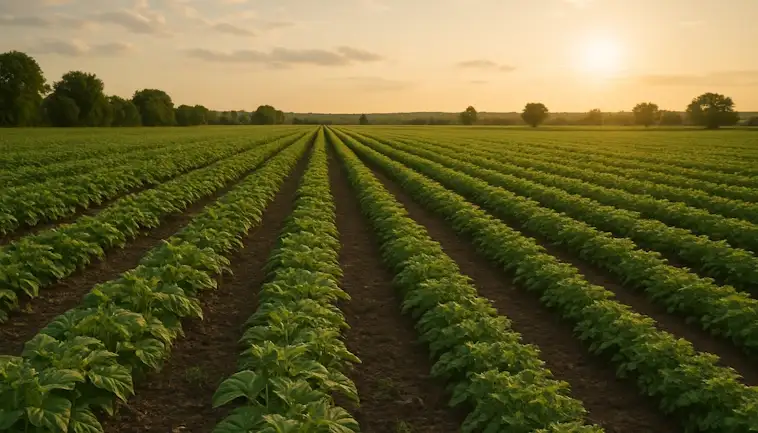
If you’ve been hearing more about regenerative agriculture lately, you’re not alone. This fast-growing movement is gaining attention for its promise to heal the land, improve food quality, and fight climate change—all at once.
So, what exactly is it?
Regenerative agriculture is a way of farming that goes beyond sustainability. Instead of just trying to “do less harm,” it aims to restore and improve the health of the land. That means building healthier soil, increasing biodiversity, and creating systems that work with nature, not against it.
At its heart, regenerative farming is about giving back more than you take.
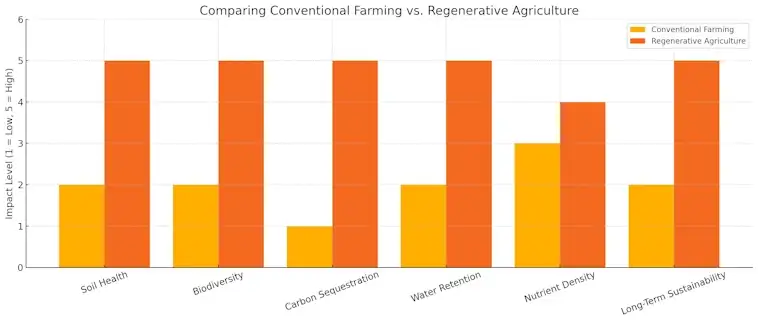
Core Principles of Regenerative Agriculture
While methods can vary by region or crop, most regenerative farms follow a few key principles:
- Soil health is everything: Farmers use cover crops, compost, and minimal tilling to build rich, living soil. Healthy soil captures carbon, holds water, and feeds plants more naturally.
- Diversity is a strength: Instead of growing just one crop, regenerative farms often rotate crops and include animals. This creates balance and resilience in the ecosystem.
- Minimal disturbance: By avoiding heavy plowing and synthetic chemicals, regenerative practices help soil organisms thrive—these are the hidden heroes that support plant growth.
- Living roots year-round: Keeping plants in the ground year-round helps prevent erosion, adds organic matter, and feeds soil microbes.
- Integration of livestock: Animals are rotated through pastures in a way that mimics natural grazing patterns. This helps fertilize the soil and keeps it healthy.
How It Differs from Conventional Farming
Conventional agriculture typically focuses on maximum yield, often relying on synthetic fertilizers, pesticides, and intensive machinery. These practices can deplete the soil, pollute waterways, and reduce biodiversity over time.
Regenerative farming flips that approach. It’s not just about producing food—it’s about regenerating the land in the process. The goal isn’t short-term gain, but long-term health and resilience.
This shift matters now more than ever. With climate change, water shortages, and soil degradation threatening the future of farming, regenerative agriculture offers a hopeful path forward—one that reconnects us with nature while growing better food.
The Soil Crisis: How Industrial Farming Depleted Our Land
Beneath our feet lies one of the most important resources on the planet—soil. But we’re losing it fast.
Over the past century, industrial farming has transformed the way we grow food. Large-scale monocultures, heavy tilling, and chemical inputs have boosted short-term yields. But they’ve also left a hidden cost: a slow and steady collapse of soil health.
The result? We’re facing a global soil crisis.
What’s Going Wrong with Our Soil?
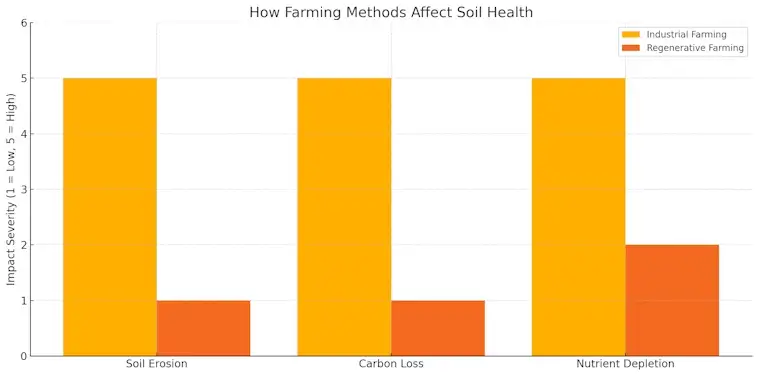
Soil isn’t just dirt—it’s a living ecosystem. Healthy soil is full of microbes, fungi, and organic matter that support plant life and store carbon. But industrial practices have stripped it of life. Here’s how:
- Soil erosion: Intensive tilling breaks up soil structure, leaving it vulnerable to wind and water. Around the world, we’re losing fertile topsoil faster than it can be replaced.
- Carbon loss: Disturbed soils release carbon dioxide into the atmosphere. Instead of acting as a carbon sink, degraded soil becomes a carbon source—fueling climate change.
- Nutrient depletion: Decades of chemical fertilizers have reduced the natural fertility of the land. Crops may still grow, but they often contain fewer nutrients. That means food with less flavor and less nutrition.
Why It Matters for the Future of Farming
If soil continues to degrade, it threatens our ability to grow food—especially in a changing climate. Scientists warn that we may have just 60 harvests left on some of the world’s most damaged lands if we don’t change course.
This is exactly the problem regenerative agriculture is designed to solve. By rebuilding soil health and working with natural systems, regenerative farmers are restoring life to the land—and helping to reverse decades of damage.
The good news? Soil can recover. With the right practices, we can bring it back to life—capturing carbon, holding water, and growing healthier food. The soil crisis is urgent, but it’s not hopeless. Regeneration is possible.
Regenerative Practices That Are Restoring Life to the Land
Regenerative agriculture isn’t just a hopeful idea—it’s a boots-on-the-ground movement changing the way we grow food. All over the world, farmers are turning away from extractive methods and choosing practices that work with nature, not against it.
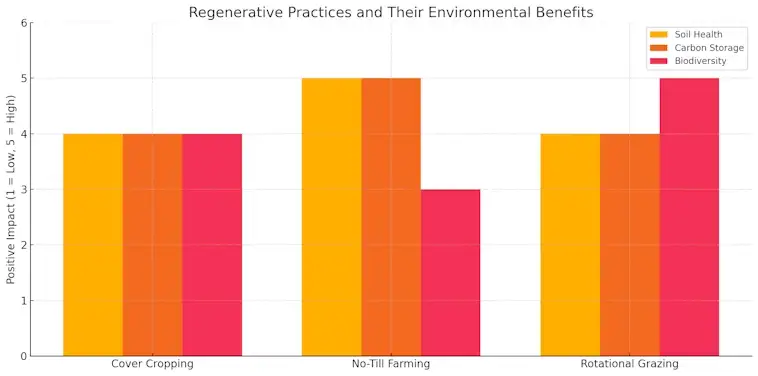
What’s exciting is that these methods are already proving effective. They’re rebuilding soil, capturing carbon, and bringing ecosystems back to life—all while producing healthy food. Here are some of the most powerful tools regenerative farmers are using right now.
1. Cover Cropping: Feeding the Soil Between Harvests
Traditional farming often leaves soil bare between growing seasons. That’s a missed opportunity—and a recipe for erosion.
Cover crops like clover, rye, and legumes are planted in the off-season to keep the soil covered and alive. They:
- Prevent erosion by shielding soil from wind and rain
- Add organic matter and nutrients back into the soil
- Support pollinators and beneficial insects
- Help control weeds naturally
By planting something when cash crops aren’t growing, farmers keep the land productive all year long.
2. No-Till Farming: Protecting Soil Structure
Tilling may seem like a normal part of farming, but it breaks up soil structure and destroys underground life. Over time, it leads to compaction, water runoff, and carbon loss.
No-till farming avoids mechanical disturbance and allows the soil to retain its natural layers. Benefits include:
- Improved water retention
- More microbial activity in the soil
- Reduced erosion
- Lower carbon emissions
No-till isn’t just about what farmers don’t do—it’s about letting the soil ecosystem do the work it was built for.
3. Rotational Grazing: Mimicking Nature with Livestock
Livestock can harm the land—or help heal it. It all depends on how they’re managed.
Rotational grazing involves moving animals through different pastures in planned sequences. This method:
- Prevents overgrazing
- Naturally fertilizes the soil with manure
- Encourages plant regrowth
- Increases biodiversity
By mimicking the way wild herds move across landscapes, regenerative farmers are using animals to regenerate grasslands and improve soil health.
These regenerative practices aren’t future dreams—they’re happening right now on farms of all sizes. Together, they’re helping to restore balance to the land, support rural economies, and produce food in a way that nourishes both people and planet.
Farming for the Future: Healthier Food, Healthier Planet
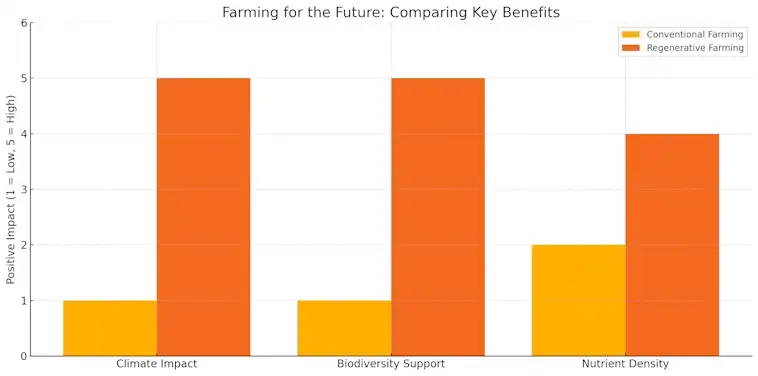
What if we could fight climate change, protect nature, and grow more nutritious food—all at the same time? That’s the promise of regenerative agriculture.
Unlike conventional farming, which often focuses on short-term yields, regenerative practices look ahead. They’re about building a food system that works for the long haul—for people, for the planet, and for generations to come.
Here’s how regenerative farming helps shape a better future.
Tackling Climate Change from the Ground Up
Farming is a major contributor to greenhouse gas emissions. But regenerative agriculture flips the script—it turns farms into carbon sinks.
By rebuilding soil with cover crops, compost, and no-till methods, regenerative farms:
- Store more carbon in the ground
- Reduce emissions from fertilizers and machinery
- Improve resilience to extreme weather like droughts and floods
In short, healthy soil holds carbon, holds water, and helps cool the planet.
Restoring Biodiversity Where It Matters Most
Modern agriculture has replaced diverse ecosystems with endless rows of the same crops. This loss of biodiversity makes food systems more fragile—and the environment more vulnerable.
Regenerative farming restores balance by:
- Planting a mix of crops and rotating them
- Integrating livestock with grazing systems
- Creating habitats for pollinators and beneficial insects
When the land thrives with life, it becomes stronger, more productive, and better able to adapt to change.
Growing Food That Truly Nourishes
Healthy soil doesn’t just grow food—it grows better food. Studies show that regenerative practices can lead to crops that are richer in vitamins, minerals, and antioxidants.
That means:
- More nutrient-dense produce
- Healthier livestock raised on diverse, natural forage
- Fewer chemical residues on what we eat
Regenerative agriculture reconnects the health of the land with the health of the people who eat from it.
In a world facing climate disruption, declining nutrition, and ecological loss, regenerative farming offers real solutions. It’s not just about farming differently—it’s about rethinking our entire relationship with the land.
The future of food is growing, and it’s rooted in regeneration.
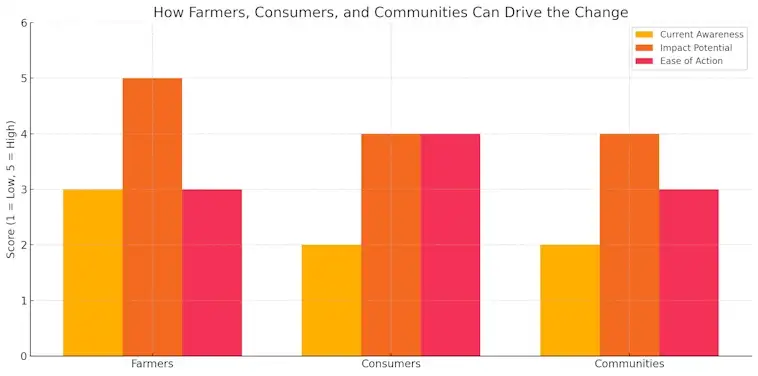
How Farmers, Consumers, and Communities Can Drive the Change
Regenerative agriculture is more than just a farming method—it’s a movement. And it’s growing because people are stepping up, asking questions, and choosing better.
The best part? You don’t have to be a farmer to make a difference.
Whether you grow food, buy food, or support local initiatives, your actions help shape the future of agriculture. Real change happens when farmers, consumers, and communities work together to build a healthier, more resilient food system.
What Farmers Can Do
More and more farmers are embracing regenerative practices—and seeing results. Here’s how they’re leading the way:
- Start small with cover crops, composting, or reducing tillage
- Learn from others through local workshops, online communities, or regenerative farming networks
- Measure progress using soil tests, biodiversity counts, or carbon tracking tools
- Tell their story to connect directly with consumers who care
Farmers are the front lines of change. When they regenerate the land, they’re not just feeding people—they’re restoring ecosystems.
What Consumers Can Do
You vote with your fork every day. By choosing food from regenerative or sustainable sources, you help grow demand for better farming.
Try these simple steps:
- Buy from local farms using regenerative or organic practices
- Look for labels like “regeneratively grown” or “grass-fed”
- Ask questions at farmers markets or grocery stores
- Support brands committed to transparency and soil health
- Waste less food—a powerful way to reduce environmental impact
Even small changes in your shopping habits send a strong message: healthier food and farming matter.
What Communities Can Do
Communities are the glue that holds the food system together. By working together, they can:
- Create or support farmers markets and community-supported agriculture (CSA) programs
- Start school or neighborhood gardens that teach the next generation about soil, food, and sustainability
- Advocate for policies that help regenerative farmers get funding and recognition
- Host educational events to spread awareness and inspire action
When communities invest in regenerative practices, they build stronger local economies and healthier environments.
Change doesn’t have to be overwhelming. It starts with one field, one meal, one choice at a time. By supporting regenerative agriculture, you’re helping to grow a future that’s rooted in health, resilience, and renewal.
Ready to be part of the movement? Every action counts.
The Future of Farming Starts with the Soil
The health of our soil is the foundation of everything—from the food we eat to the air we breathe. For too long, industrial agriculture has taken more than it gives. But regenerative agriculture is changing that. It’s proving that farming can restore, not just deplete.
By focusing on soil health, biodiversity, and natural cycles, regenerative practices are helping farms thrive in harmony with nature. They’re capturing carbon, building resilience to climate change, and growing food that’s truly nourishing.
This isn’t just a trend—it’s a necessary shift.
Whether you’re a grower, a shopper, or part of a local community, you have a role to play. Supporting regenerative farming helps create a food system that’s healthier, more ethical, and better prepared for the challenges ahead.
The soil beneath our feet holds powerful answers. And by reviving it, we’re planting the seeds for a better, more sustainable future—one harvest at a time.