

Rainfall Extremes: The Shifts Threatening Everyday Life
Rainfall Extremes: The Shifts Threatening Everyday Life
Rainfall extremes are becoming harder to ignore. Sudden downpours, longer dry spells, and unpredictable seasonal shifts are no longer rare events—they’re patterns reshaping how people live and work. Streets flood more often, crops face mounting stress, and infrastructure built for yesterday’s climate struggles to cope with today’s reality.
As these shifts accelerate, everyday routines feel the strain. Commutes get disrupted, food prices rise, and communities find themselves dealing with risks that once seemed distant. Understanding how rainfall extremes are changing the world around us is the first step toward preparing for what lies ahead.
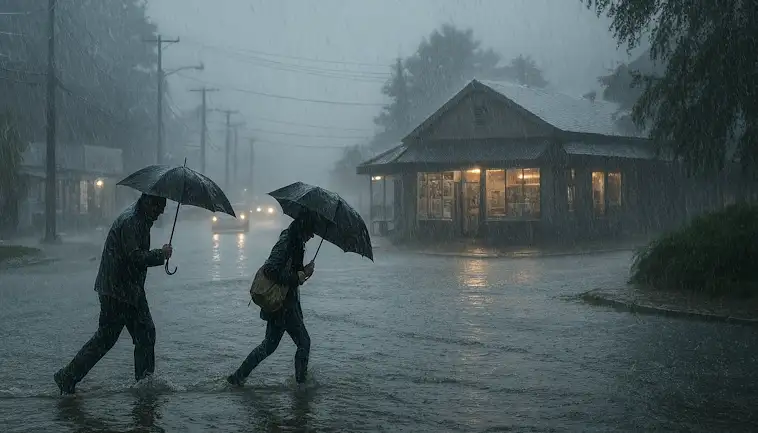
Understanding the Science Behind Rainfall Extremes
Rain doesn’t always fall evenly. Some days we see gentle showers, while other times the sky opens up and floods streets within hours. Scientists call these intense downpours rainfall extremes, and they are becoming more common in many parts of the world. But why is this happening, and what’s really driving the change?
The short answer is: heat. Warmer air holds more moisture. So when the temperature rises, the atmosphere can soak up extra water vapor. That water eventually falls back to Earth, often in sudden bursts. This explains why climate change isn’t just about rising temperatures—it’s also about shifting rainfall patterns that affect our daily lives.
The Role of Storm Systems
Of course, it’s not only about warmer air. Storm systems are like engines that release the moisture. When those systems stall or strengthen, they can dump huge amounts of rain in a short time. That’s why we sometimes see neighborhoods overwhelmed by flash floods while nearby areas stay mostly dry.
Researchers also study how ocean patterns, like El Niño, shape rainfall extremes. These global forces influence when, where, and how storms develop. What might feel random to us is often part of a larger climate puzzle.
The big takeaway? Rainfall extremes are not accidents of nature. They’re shaped by a mix of warming air, shifting oceans, and powerful storm systems. By understanding the science, we can better prepare for the risks ahead—and find smarter ways to live with the new normal of weather.
How Shifting Weather Patterns Disrupt Daily Routines
Weather has always shaped our daily lives, but lately, the changes feel harder to ignore. From sudden downpours to unexpected heatwaves, shifting patterns are reshaping how we plan even the simplest tasks.
Think about it. A heavy rainstorm can turn a short commute into an hour-long ordeal. Heatwaves leave us rearranging work, school, and outdoor time. Snowstorms and flooding can cancel plans in an instant. Even strong winds or long dry spells add another layer of disruption to our routines.
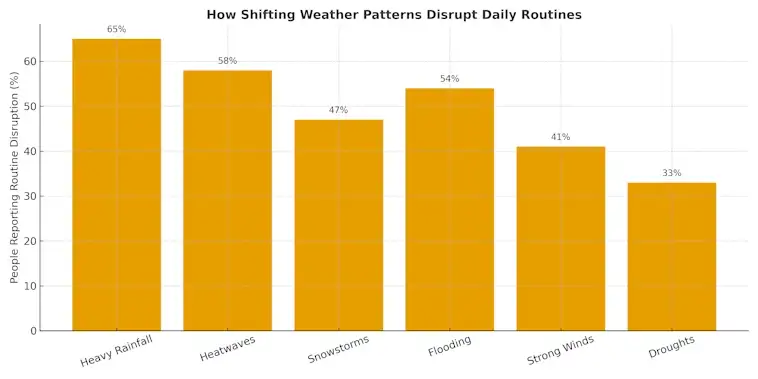
These shifts don’t just test our patience. They highlight how fragile our daily schedules are when nature decides to rewrite the rules. And as weather extremes become more frequent, adapting is no longer optional—it’s essential.
Rainfall Extremes and Their Growing Impact on Communities
Rain isn’t new. But the way it’s falling today is. Across the world, we’re seeing heavier downpours, longer wet seasons, and unpredictable shifts in rainfall patterns. What used to be a “once in a generation” flood now seems to arrive every few years. These extremes aren’t just about water. They reshape communities, disrupt daily life, and leave behind lasting scars.
When rainfall swings from drought to flood, the impacts pile up. Families face damage to homes. Businesses shut down. And cities struggle to keep up with the costs of recovery. Rural communities often feel it even more, with crops destroyed and roads washed out.
Here are some of the biggest ways rainfall extremes are changing lives today:
- Flash flooding damages homes, roads, and power lines, often with little warning.
- Agricultural losses leave farmers struggling with destroyed crops and eroded soil.
- Public health risks rise as contaminated floodwaters spread disease.
- Economic setbacks hit local businesses, schools, and public services hard.
- Mental health pressures increase for families living with repeated disasters.
- Infrastructure strain grows as aging drainage systems fail under extreme stress.
The truth is, rainfall extremes aren’t slowing down. As the climate warms, the atmosphere holds more moisture, making these storms stronger and more frequent. Communities everywhere are being forced to adapt—rethinking where they build, how they prepare, and what resilience really means.
The challenge is real. But so is the opportunity to create safer, more resilient towns and cities that can withstand the storms ahead.
From Floods to Droughts: Why the Balance Is Breaking
We’re living in a time when weather no longer plays by the old rules. Some places are drowning under record-breaking floods, while others face bone-dry droughts. These extremes aren’t random. They’re signs of a climate system that’s losing balance.
When the air gets warmer, it holds more moisture. That means heavier downpours and flash floods. But at the same time, heat dries out soil and speeds up evaporation, making droughts last longer and hit harder. This push and pull creates a dangerous cycle that affects food, water, and the stability of communities everywhere.
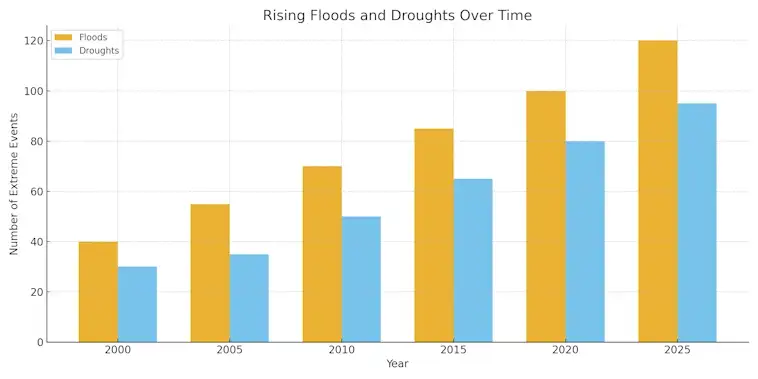
The trend is clear. Floods and droughts are becoming more frequent and more intense. Understanding this shift is the first step toward preparing for a future where extremes are the new normal.
Adapting to a Future Shaped by Climate Uncertainty
We live in a world where the weather no longer feels predictable. Summers bring heat that stretches beyond old records, while winters swing between mild and severe. Storms arrive with little warning, and the familiar patterns we once trusted seem to be slipping away. This uncertainty can feel overwhelming, but it also opens the door to adaptation and resilience.
The truth is, climate change isn’t a distant threat. It’s already shaping the way we grow food, build our homes, and plan our daily lives. Instead of waiting for a return to “normal,” the smarter path is learning how to adapt. That means making choices today that protect us tomorrow.
Preparing for Rainfall Extremes
One clear sign of climate uncertainty is how rainfall is changing. Some places now see long dry spells followed by sudden floods. These rainfall extremes stress crops, damage infrastructure, and disrupt communities. But solutions exist. Cities can redesign drainage systems to cope with sudden downpours. Farmers can switch to more resilient crops and water-saving techniques. And at home, we can all take small steps like collecting rainwater or using permeable surfaces in our gardens.
Adaptation doesn’t mean giving up hope. It means facing reality with practical solutions. By preparing for a shifting climate, we not only protect ourselves but also create stronger, more sustainable communities for the future.
Facing the Future of Rainfall Extremes
Rainfall is no longer following the patterns we once counted on. From flash floods to prolonged droughts, these extremes are reshaping the way we live, work, and plan for the future. The science is clear: what used to be “once-in-a-lifetime” weather is becoming more frequent. And while that may feel overwhelming, it also means we have a chance—right now—to adapt and protect our communities.
The choices we make today matter. Whether it’s supporting climate-smart policies, investing in resilient infrastructure, or simply staying informed, every action adds up. The shifts are here, but so is our ability to respond.