

The Future of Weather Forecasting Unveiled
The Future of Weather Forecasting Unveiled
Storms are getting stronger. Droughts are lasting longer. Weather isn’t just changing—it’s becoming harder to predict. But advances in technology are opening up new ways to make sense of the chaos.
Across the globe, scientists are combining satellite data, machine learning, and climate modeling to sharpen the accuracy of forecasts. What once felt like guesswork is quickly evolving into something far more precise—and faster.
Accuracy will never be perfect. But the goal is to narrow the gap between nature’s surprises and our ability to prepare for them. As forecasting becomes more precise, it could change how cities are designed, how food is grown, and how lives are saved.

How AI Is Changing the Way We Predict Weather
When you check the weather on your phone, you probably don’t think twice about how that forecast came to be. But behind that simple prediction is a growing powerhouse of artificial intelligence (AI), quietly revolutionizing how we understand the skies.
A Smarter Way to Forecast
Traditional weather models are complex. They rely on physics-based simulations that crunch massive amounts of data from satellites, weather balloons, and radar stations. These models are powerful—but they’re also slow and sometimes miss fast-moving or localized changes.
That’s where AI steps in.
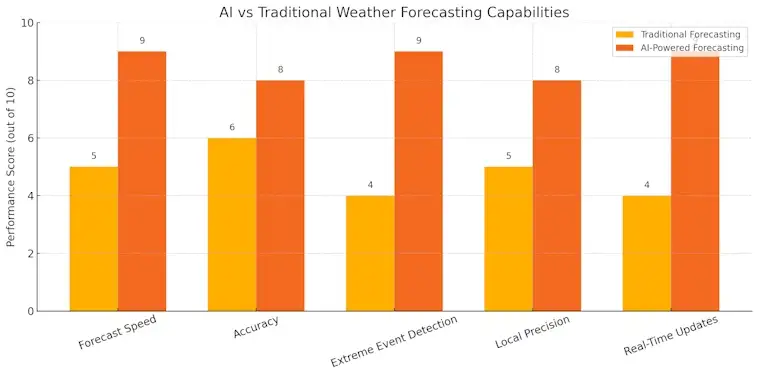
AI can process vast amounts of data much faster than traditional methods. Machine learning algorithms learn patterns from historical weather data and current observations. This allows them to make predictions in minutes instead of hours—sometimes with even greater accuracy.
Why It Matters
Here’s how AI is making a real difference:
- Faster updates: AI can deliver real-time forecasts that adapt quickly to new data.
- Better accuracy: Machine learning improves the precision of short-term and hyperlocal forecasts.
- Extreme weather warnings: AI helps spot early signs of hurricanes, floods, and storms, giving people more time to prepare.
- Climate trend insights: AI tools help scientists analyze long-term patterns and model future climate scenarios.
As AI models continue to evolve, we’ll likely see even more personalized and precise weather predictions. Think tailored alerts for your exact location or AI assistants that tell you when to carry an umbrella based on your daily routine.
It’s an exciting shift—and it’s just getting started. Weather forecasting is no longer just about looking at the sky. With AI, it’s about seeing the future more clearly than ever before.
From Supercomputers to Satellites: The Tools of Tomorrow
Weather forecasting has come a long way from watching the clouds and hoping for the best. Today, it’s powered by some of the most advanced technology on Earth—and beyond. From high-powered supercomputers to orbiting satellites, the next generation of weather prediction is being shaped by innovation on a global scale.
Supercomputers: The Brain Behind the Forecast
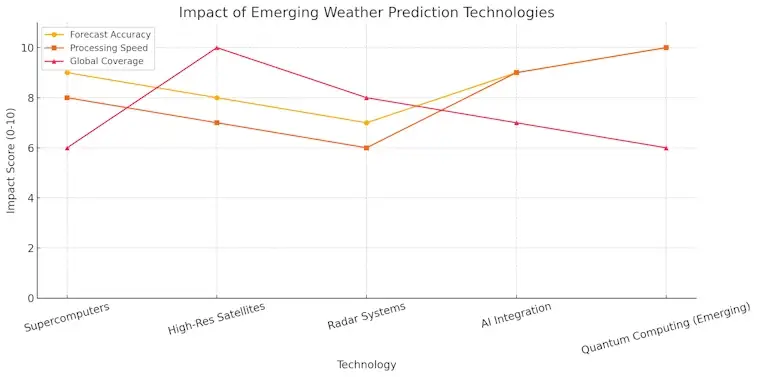
At the heart of modern forecasting are supercomputers—machines capable of running trillions of calculations per second. These high-performance systems take in data from all over the world and simulate how the atmosphere will behave.
- Faster processing means models can update in near real-time.
- Higher resolution lets scientists zoom in on small-scale events like flash floods or tornadoes.
- More frequent updates help improve the accuracy of both short-term and long-range forecasts.
Countries like the U.S., UK, and Japan are investing billions into upgrading their forecasting systems, aiming for speed and accuracy that was unthinkable a decade ago.
Satellites: Eyes in the Sky
While supercomputers do the number crunching, satellites provide the raw data that fuels those models.
Modern weather satellites are equipped with:
- Infrared sensors to measure cloud temperature and moisture.
- Radar altimeters to track ocean height and wave patterns.
- High-res cameras that offer real-time images of storm systems and weather fronts.
Satellites like NOAA’s GOES series and Europe’s Meteosat are constantly scanning the Earth, giving meteorologists a 24/7 view of global weather patterns. This kind of coverage is essential for tracking fast-moving systems and early signs of extreme weather.
The Future Is Even Smarter
The next wave of tech is already on the horizon:
- Quantum computing promises to run forecasts in minutes, not hours.
- Mini-satellites or CubeSats offer faster deployment and global coverage.
- AI integration will help interpret complex data even faster and suggest more precise local predictions.
Better tools mean better warnings, smarter planning, and ultimately, safer communities. Whether it’s helping farmers prepare for drought or warning cities about incoming storms, these technologies aren’t just impressive—they’re lifesaving.
Can We Really Forecast Weeks in Advance?
Wouldn’t it be amazing to know what the weather will be like three or even four weeks from now—before you book that camping trip or plan an outdoor event? Long-range forecasting has always been one of the biggest challenges in meteorology. But thanks to breakthroughs in technology and artificial intelligence, we’re getting closer to making it a reality.
The Promise of Long-Range Forecasting
Extended weather forecasts, also known as sub-seasonal or long-range forecasts, aim to predict patterns two to four weeks ahead. This goes beyond daily highs and lows. Instead, it looks at broader trends—like heatwaves, rainy periods, or prolonged dry spells.
Here’s what the future of extended forecasting could offer:
- Better planning for businesses like agriculture, retail, and travel.
- More advanced warning systems for extreme weather events.
- Stronger support for climate adaptation and energy management.
AI models are now being trained on decades of historical weather data, helping them identify recurring patterns that human forecasters might miss. And with more satellite data and improved computing power, the puzzle pieces are starting to come together.
What’s Still Holding Us Back?
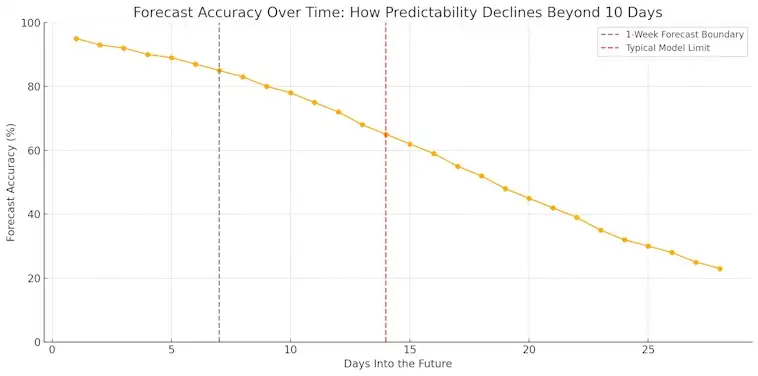
Despite the progress, predicting weather several weeks out is still far from perfect. Here’s why:
- The atmosphere is chaotic: Tiny changes can grow into major shifts, making it hard to track far ahead.
- Data gaps still exist: We don’t yet have complete global coverage, especially over oceans and remote regions.
- Model limitations: Even with AI and supercomputers, current models struggle with accuracy beyond 10-14 days.
A Work in Progress, But Moving Fast
Scientists are now exploring hybrid models that combine traditional physics with AI-powered pattern recognition. These hybrid systems are showing promise, especially when it comes to identifying general trends rather than day-to-day details.
So, can we really forecast weeks in advance? Not quite yet—but we’re getting closer. Within the next decade, long-range weather forecasts could become a trusted tool for everything from city planning to vacation booking.
The future of forecasting isn’t just about knowing tomorrow’s weather—it’s about seeing the big picture weeks in advance, and using that insight to make smarter decisions today.
Climate Change and the Challenge of Extreme Weather
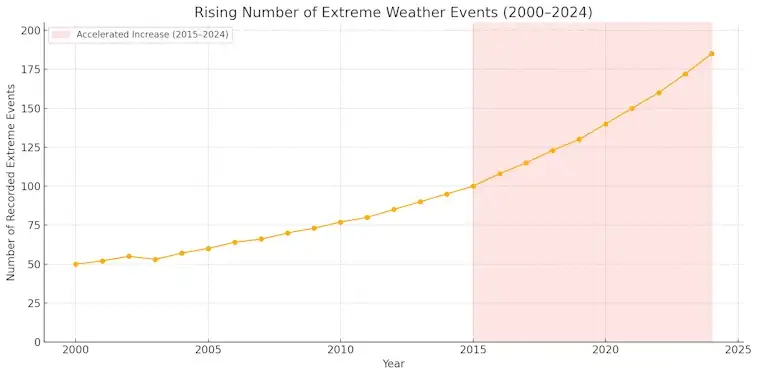
Floods, heatwaves, wildfires, hurricanes—extreme weather is becoming more common, more intense, and harder to ignore. As the climate changes, the stakes for accurate forecasting have never been higher. But predicting extreme events is one of the toughest tasks in meteorology. And climate change is making it even harder.
Why Forecasting Extreme Weather Matters More Than Ever
Extreme weather doesn’t just disrupt your weekend plans—it can destroy homes, shut down cities, and put lives at risk. The ability to forecast these events with greater precision and lead time can save lives and reduce economic damage.
Here’s why improved forecasting is critical today:
- More frequent events: Record-breaking heat, torrential rain, and stronger storms are no longer rare.
- Urban vulnerability: Cities are more densely populated, increasing the risk to people and infrastructure.
- Global ripple effects: A drought in one region can disrupt food supplies and prices worldwide.
What Makes Extreme Weather So Hard to Predict?
While weather models have come a long way, extreme events still push them to their limits. That’s because:
- Small errors grow fast: Minor inaccuracies in early data can explode into major forecast problems.
- Events can change quickly: A storm might rapidly intensify or shift direction without much warning.
- Local factors matter: Terrain, sea temperatures, and atmospheric pressure systems all interact in complex ways.
Climate Change Is Changing the Rules
One of the biggest challenges is that climate change is altering the baseline. Historical data—once the foundation of long-term forecasting—no longer tells the full story.
- Old patterns are breaking: Traditional seasonal cues and storm cycles are becoming less reliable.
- New extremes are emerging: We’re seeing weather events in places and at scales that models weren’t built to handle.
Despite these challenges, technology is giving forecasters new tools:
- AI-driven models that can analyze chaotic systems faster than ever.
- High-resolution satellites that track storms in near real-time.
- Climate-aware forecasting systems that blend short-term predictions with long-term climate trends.
In short, forecasting extreme weather is no longer just a scientific challenge—it’s a public safety mission. As the climate continues to shift, our ability to anticipate and respond to extreme events will play a key role in protecting communities around the world.
What Better Forecasts Mean for You
Imagine getting a weather alert that’s not only accurate—but also tailored to your exact location, schedule, and needs. That’s the future of weather forecasting. As technology advances, the impacts of improved predictions will be felt in everyday life, far beyond just knowing when to bring an umbrella.
Smarter Travel Decisions
Whether you’re planning a weekend getaway or managing airport traffic, better forecasts can make travel safer and more efficient.
- Fewer delays: Airlines and airports can reroute flights before storms hit, reducing cancellations.
- Safer driving: Real-time road weather alerts could warn drivers about icy patches or flooding ahead.
- Planning ahead: Vacation planners will benefit from more reliable long-range forecasts to avoid weather surprises.
A Boost for Farming and Food Security
Weather is one of the biggest wildcards in agriculture. More accurate and longer-range forecasts mean:
- Smarter planting schedules: Farmers can plan crop cycles around expected rainfall or drought.
- Efficient irrigation: Knowing when rain is coming helps save water and reduce waste.
- Pest and disease control: Predicting weather-related outbreaks before they happen can protect yields and livelihoods.
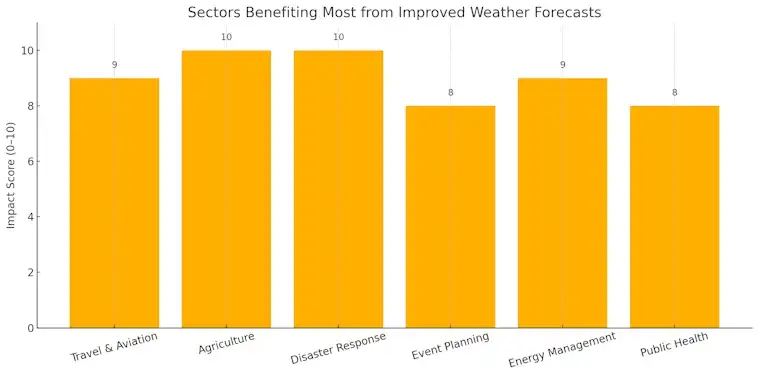
Faster, More Effective Disaster Response
From hurricanes to wildfires, disasters can escalate quickly. Improved forecasting can save lives by providing earlier and more precise warnings.
- More lead time: Emergency services can prepare resources and evacuation plans well in advance.
- Localized alerts: AI-enhanced systems can pinpoint specific neighborhoods most at risk.
- Public safety apps: Personalized alerts can guide people in real time with actionable advice.
Everyday Convenience
It’s not just about big systems—better forecasts will make daily routines smoother too.
- Event planning: Outdoor weddings, sports games, and festivals will be easier to organize with confidence.
- Home energy use: Smart thermostats can adjust based on forecasted temperatures, saving energy and money.
- Health alerts: Vulnerable groups will get notified about heatwaves, poor air quality, or cold snaps in advance.
The next generation of weather predictions will be hyper-local, real-time, and powered by AI. You won’t just get a forecast—you’ll get insights tailored to your day, your plans, and your safety.
In a world shaped by climate change and increasing unpredictability, better forecasts aren’t just a convenience—they’re a vital tool for living smarter and staying safer.
The Sky Isn’t the Limit—It’s Just the Beginning
Weather has always been unpredictable—but that’s starting to change. With the rise of artificial intelligence, powerful satellites, and lightning-fast supercomputers, forecasting is entering a new era. One where predictions are not only more accurate but also more personalized, timely, and useful in daily life.
From helping farmers plan their crops to warning entire cities about incoming storms, tomorrow’s forecasts will do more than tell us if it’s going to rain—they’ll help us make smarter decisions in a changing world.
As climate change accelerates and extreme weather becomes more common, better forecasting isn’t just a scientific achievement—it’s a necessity. And while we may never control the weather, we’re getting much better at understanding what it’s going to do next.
The future of forecasting is here—and it’s looking clearer every day.