

Pollution Control Now: Why Our Health Depends On It
Pollution Control Matters More Than Ever for Our Health and Environment
Air, water, and soil pollution are no longer distant environmental problems. They are daily health risks affecting millions of people. Pollution control has become essential because the quality of the air we breathe and the water we drink directly shapes our well-being. From rising asthma cases to heart and lung disease, the effects of pollution are showing up in hospitals and communities around the world.
At the same time, awareness is growing. Cities are introducing cleaner transport systems. Industries are adopting safer technologies. Governments are tightening environmental rules. These changes show that progress is possible when strong policies, innovation, and public awareness work together.
However, the need for action is urgent. Pollution levels remain high in many regions, and climate change is making the problem even more complex. Without stronger efforts to reduce emissions and protect natural resources, health risks will continue to rise.
Understanding why pollution matters is the first step toward meaningful change. When communities support cleaner energy, smarter urban planning, and responsible industry, healthier lives and safer environments become possible for everyone.
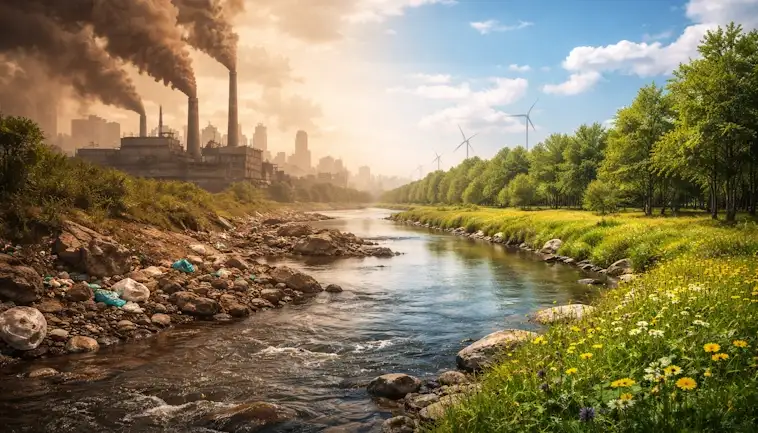
Why Pollution Control Is Essential for Public Health
Pollution often feels like a distant problem. Something that happens far away in big cities or industrial zones. Yet in reality, it touches our lives every day. The air we breathe. The water we drink. Even the soil that grows our food.
When pollution rises, public health suffers. Respiratory illness increases. Heart disease becomes more common. Children and older adults often feel the impact first.
That is why pollution control matters so much. It protects the environment. But more importantly, it protects people. Cleaner air and water lead to longer, healthier lives. And the good news is that smarter policies and new technology are helping many communities turn the tide.
Let’s take a closer look at why controlling pollution is so important for public health today and in the future.
The Link Between Pollution and Human Health
Pollution does not just harm nature. It directly affects the human body.
Air pollution alone is linked to millions of premature deaths worldwide each year. Tiny particles from vehicles, factories, and burning fuels enter the lungs. From there, they can move into the bloodstream.
Over time this exposure can lead to serious health problems.
Common Health Problems Linked to Pollution
- Asthma and breathing difficulties
- Heart disease and strokes
- Lung cancer
- Weakened immune systems
- Developmental issues in children
Even short-term exposure can trigger headaches, fatigue, and throat irritation. Long-term exposure increases the risk of chronic disease.
Because of this, reducing pollution is one of the most powerful ways to improve public health.
Why Children and Older Adults Face Greater Risk
Not everyone is affected equally. Some groups are more vulnerable to pollution.
Children are still developing. Their lungs and immune systems are more sensitive to harmful particles. In addition, they breathe faster than adults. That means they take in more polluted air relative to their body weight.
Older adults face different challenges. As the body ages, the heart and lungs become more fragile. Pollution can worsen existing conditions such as heart disease or chronic respiratory illness.
Pollution Exposure in Everyday Life
Many people imagine pollution only as smog or factory smoke. However, exposure can happen in everyday places.
For example:
- Busy roads with heavy traffic
- Indoor air from cooking fuels or cleaning products
- Industrial areas near residential communities
- Contaminated drinking water
Because pollution appears in many forms, strong control measures are essential.
The Role of Pollution Control in Preventing Disease
Pollution control works by reducing harmful substances before they reach people.
Governments, businesses, and communities all play a role. Regulations can limit emissions from factories and vehicles. Cities can expand green spaces. Cleaner energy sources can replace fossil fuels.
When these actions work together, public health improves.
Real Benefits of Strong Pollution Policies
Communities that reduce pollution often see clear improvements such as:
- Lower hospital admissions for respiratory illness
- Fewer heart attacks and strokes
- Better lung development in children
- Increased life expectancy
In other words, pollution control acts like a large-scale health prevention strategy.
Cleaner Environments Support Healthier Communities
Healthier environments create healthier communities. When pollution levels drop, people feel the difference.
Children spend more time outdoors. Parks and green spaces become safe places to play and exercise. Local food systems benefit from cleaner soil and water.
These improvements also reduce pressure on healthcare systems. Fewer pollution-related illnesses mean lower medical costs and stronger, more productive communities.
Economic Benefits of Pollution Reduction
Cleaner environments also support economic growth.
Businesses benefit from a healthier workforce. Tourism improves when natural areas are protected. And new industries, such as clean energy and green technology, create future job opportunities.
In this way, pollution control protects both public health and long-term economic stability.
Looking Ahead: The Future of Pollution Control
The future of pollution control is becoming more innovative and data-driven.
Cities are using smart sensors to monitor air quality in real time. Renewable energy sources such as wind and solar are expanding rapidly. Electric vehicles are reducing emissions on roads.
At the same time, public awareness is growing. More people are demanding cleaner environments and healthier communities.
The path forward is clear. When governments, businesses, and citizens work together, pollution can be reduced. And when pollution falls, public health rises.
Cleaner air, safer water, and healthier lives are all within reach.
The Hidden Health Risks of Air and Water Pollution
Pollution is easy to ignore when you cannot see it. The air may look clear. The water may seem safe. Yet hidden pollutants can quietly affect our health every single day.
Air and water pollution are two of the biggest environmental threats in the modern world. They do not just harm nature. They also harm our bodies. In fact, millions of deaths each year are linked to polluted air and unsafe water.
Let’s start with the air we breathe. Tiny particles from traffic, factories, and burning fuels can enter our lungs. These particles are known as fine particulate matter. Once inside the body, they can travel through the bloodstream. Over time, this increases the risk of heart disease, stroke, lung cancer, and chronic breathing problems.
Water pollution brings a different set of risks. Contaminated water can carry bacteria, chemicals, and harmful waste. When people drink or use polluted water, it can lead to diseases such as cholera, typhoid, and severe diarrheal illness. These conditions still affect millions of people worldwide.
The real concern is that many of these health problems develop slowly. You may not notice the damage right away. However, long-term exposure to pollution can weaken the immune system and increase the risk of serious illness later in life.
The good news is that awareness is growing. Cities are investing in cleaner energy. Water treatment systems are improving. And people are becoming more aware of the link between pollution and health.
Understanding these risks is the first step toward protecting ourselves and building a healthier future.
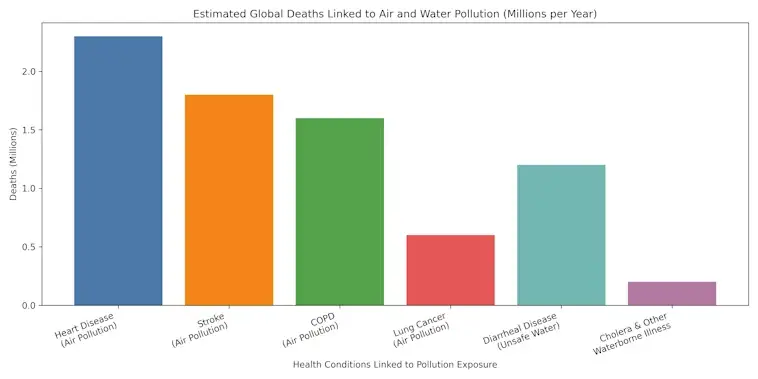
This chart highlights several major health conditions linked to air and water pollution and their estimated global impact. It helps show why reducing pollution is not just an environmental goal. It is also a major public health priority.
How Pollution Control Protects Communities and Ecosystems
Pollution control often sounds like a technical topic. However, at its heart, it is really about protecting everyday life. Clean air, safe water, and healthy soil shape the places where people live, work, and raise families.
Across the world, communities are seeing the benefits of stronger pollution control. When harmful emissions fall, public health improves. Rivers recover. Wildlife returns. Even local economies can grow stronger as environments become safer and more attractive.
In simple terms, pollution control helps restore balance. It reduces the damage caused by human activity and allows natural systems to recover. As a result, both people and ecosystems gain the chance to thrive.
Cleaner Air Means Healthier Communities
Air pollution is one of the most visible environmental threats. Smog, vehicle exhaust, and industrial emissions can affect millions of people every day.
Strong pollution control policies reduce harmful particles in the air. This leads to clear improvements in public health.
Health benefits of reducing air pollution
When air quality improves, communities often see:
- Fewer asthma attacks and respiratory illnesses
- Lower rates of heart and lung disease
- Reduced hospital visits and healthcare costs
- Healthier children and older adults
- Better overall quality of life
Cleaner air also supports outdoor activities. People spend more time walking, cycling, and enjoying parks. Over time, this strengthens both physical and mental wellbeing.
Protecting Water for People and Nature
Water pollution can spread quickly through rivers, lakes, and coastal areas. Without proper controls, chemicals, plastics, and waste can damage entire ecosystems.
Fortunately, pollution control systems help keep water sources safe.
How water pollution control works
Modern strategies focus on preventing contaminants before they reach waterways. Common approaches include:
- Wastewater treatment before release into rivers or oceans
- Industrial discharge limits and monitoring
- Stormwater management in cities
- Reducing agricultural runoff from fertilizers and pesticides
- Improving waste disposal and recycling systems
These steps protect drinking water supplies. At the same time, they help fish, birds, and aquatic plants survive and recover.
Supporting Healthy Ecosystems
Ecosystems depend on clean air, water, and soil. When pollution spreads, the balance between species can break down.
However, pollution control helps restore these natural systems.
Key ecosystem benefits
Stronger pollution management can lead to:
- Cleaner habitats for wildlife
- Healthier forests and wetlands
- Recovery of endangered species
- Improved soil quality for plants and crops
- Stronger biodiversity across landscapes
Over time, ecosystems can become more resilient. This means they are better able to handle storms, droughts, and climate stress.
Pollution Control Strengthens Local Economies
Environmental protection and economic growth can work together. In fact, many communities benefit financially from cleaner environments.
Cleaner regions often attract tourism, new businesses, and skilled workers.
Economic advantages of pollution control
Communities may experience:
- Lower healthcare spending
- Increased tourism and outdoor recreation
- Growth in green industries and clean technology
- Higher property values in cleaner areas
- More stable agriculture and fisheries
As environmental quality improves, long-term economic stability often improves as well.
Looking Ahead: Smarter Pollution Solutions
Pollution control is evolving quickly. New technologies and policies are making it easier to reduce environmental damage while supporting growth.
Cities are investing in cleaner transport. Industries are adopting low-emission systems. Communities are also becoming more involved in protecting local environments.
Key future trends include:
- Smart air-quality monitoring networks
- Renewable energy replacing fossil fuels
- Circular economies that reduce waste
- Stronger environmental regulations
- Community-driven environmental programs
Together, these solutions help build healthier places to live.
Why Pollution Control Matters for the Future
Pollution control is not only about fixing problems today. It is also about protecting the future.
When communities reduce pollution, they protect their health, their economies, and the natural systems that support life. Cleaner environments give future generations a better chance to thrive.
In the end, pollution control is one of the most practical ways to protect both people and the planet. Small changes today can create lasting benefits for decades to come.
Simple Actions Cities and Citizens Can Take Today
Cities face many environmental challenges. Air pollution, traffic congestion, and rising temperatures all affect daily life. However, meaningful change does not always require large or expensive projects. In many cases, small steps taken today can create lasting benefits.
Both city leaders and residents have an important role to play. When communities work together, progress becomes faster and more visible. Simple choices can improve air quality, reduce emissions, and make neighborhoods healthier.
The good news is that many solutions already exist. They are practical, affordable, and easy to start. Below are several actions cities and citizens can take right now to move toward a cleaner and more sustainable future.
Expand Green Spaces and Urban Trees
Trees are one of the simplest tools cities have. They cool streets, filter pollution, and make neighborhoods more pleasant.
Planting more trees along roads, parks, and public spaces can quickly improve urban environments. At the same time, residents can help by supporting local tree planting programs or caring for community gardens.
Over time, even small green areas can reduce heat and improve air quality.
Improve Public Transport Options
Reliable public transport is essential for cleaner cities. When buses, trains, and trams run frequently, more people choose them instead of driving.
Cities can expand routes, add electric buses, and improve reliability. Meanwhile, citizens can support these systems simply by using them more often.
Each journey taken on public transport helps reduce traffic and emissions.
Make Streets Safer for Walking and Cycling
Safe walking paths and bike lanes encourage people to travel without cars. This change benefits both the environment and public health.
Cities can add protected bike lanes and widen sidewalks. Citizens can also choose short trips by bike or on foot when possible.
Small shifts in travel habits can reduce congestion and pollution.
Encourage Recycling and Waste Reduction
Waste management remains a major challenge in many cities. Fortunately, progress can start at the household level.
Cities can improve recycling programs and make collection easier. Residents can reduce waste by recycling, composting, and choosing reusable products.
These actions reduce landfill pressure and lower environmental impact.
Support Local Clean Energy Projects
Cities are increasingly investing in renewable energy. Solar panels on public buildings, community energy programs, and efficient lighting systems are becoming more common.
Citizens can also take part by choosing renewable energy plans or installing small solar systems where possible.
Over time, these efforts help cities rely less on fossil fuels.
Small actions may seem modest at first. Yet when thousands of people take part, the results can be powerful. Cleaner air, healthier communities, and more livable cities often begin with the simple steps we choose today.
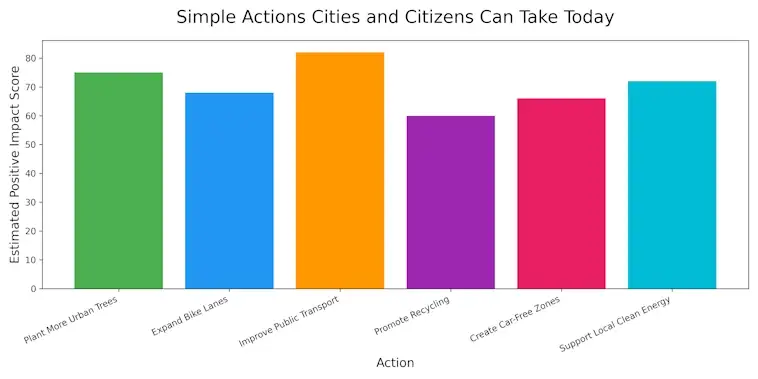
This chart visually highlights several practical actions that cities and citizens can take today and their potential positive impact on urban sustainability.
The Future of Clean Air, Water, and Sustainable Living
The future of our planet is being shaped right now. And one of the biggest questions is simple. How do we live well without damaging the world around us?
Clean air. Safe water. Sustainable living. These are no longer distant goals. They are becoming part of everyday life. Around the world, communities, businesses, and scientists are working together to build healthier environments.
The encouraging news is that change is already happening. New technologies are reducing pollution. Cities are redesigning streets and homes. And people are making smarter choices about how they live.
In the years ahead, these changes will grow even faster. Let’s look at what the future may hold.
Cleaner Air Through Smarter Cities
Air pollution has long been a serious problem. It affects health, climate, and quality of life. But cities are beginning to rethink how they operate.
Urban planners are designing cleaner, greener spaces. Electric transport is replacing older vehicles. And more cities are investing in trees, parks, and green roofs.
These changes may seem small at first. But together they can dramatically improve air quality.
The Rise of Low-Emission Transport
Transportation is one of the biggest sources of pollution. That is why many cities are shifting toward cleaner travel.
Electric buses are replacing diesel fleets. Cycling lanes are expanding. And public transport systems are becoming more efficient.
As electric vehicles become more affordable, cleaner travel will become the norm rather than the exception.
Urban Green Spaces That Filter Pollution
Trees and plants do more than look beautiful. They also help filter the air.
Urban forests can trap harmful particles. Green roofs can reduce heat and absorb pollution. Even small parks can improve the air in busy neighborhoods.
Over time, greener cities could mean healthier lungs for millions of people.
Protecting Water for Future Generations
Clean water is one of the most valuable resources on Earth. Yet pollution, climate change, and growing populations are putting pressure on water supplies.
Fortunately, new solutions are emerging.
Cities are improving wastewater treatment. Industries are reducing chemical discharge. And communities are learning how to protect rivers and lakes.
Together, these actions help secure safe water for the future.
Smarter Water Treatment Technology
Modern water treatment is becoming more advanced each year.
New filtration systems can remove tiny pollutants. Sensors can detect contamination early. And digital monitoring helps utilities respond faster to problems.
These tools make drinking water safer and more reliable.
Reducing Plastic and Chemical Pollution
Plastic waste is one of the biggest threats to waterways. Chemicals from farms and factories also damage ecosystems.
However, stricter regulations and new materials are helping reduce pollution.
Consumers are also changing habits. Reusable bottles, refill stations, and eco-friendly packaging are becoming more common.
If you want to explore the global impact of water pollution and the solutions being developed, the United Nations Environment Programme provides valuable research and guidance.
Sustainable Living Becomes the New Normal
For many years, sustainable living felt difficult or expensive. Today that is changing quickly.
Energy-efficient homes are becoming easier to build. Renewable power is cheaper than ever. And everyday products are being redesigned with sustainability in mind.
As awareness grows, sustainable choices are becoming part of daily life.
Energy-Efficient Homes and Communities
Future homes will use far less energy than older buildings.
Smart insulation keeps temperatures stable. Solar panels generate electricity. Heat pumps provide efficient heating and cooling.
Entire neighborhoods are also being designed with sustainability in mind. Shared green spaces, walkable streets, and community energy systems are becoming more common.
Small Lifestyle Changes With Big Impact
Sustainable living does not always require major changes.
Simple habits can make a big difference. Reducing food waste. Using less plastic. Choosing public transport. Supporting local food.
When millions of people make small changes, the combined effect can be powerful.
Looking Ahead to a Healthier Planet
The future of clean air, safe water, and sustainable living depends on choices made today. Governments must set strong policies. Businesses must adopt responsible practices. And individuals can support change through daily decisions.
The path forward will not always be easy. Yet the direction is clear.
With innovation, cooperation, and growing awareness, a healthier and more sustainable world is possible. And step by step, we are already moving toward it.
The Time for Pollution Control Is Now
Pollution control is no longer just a policy idea. It is a daily health issue that touches every home, street, and workplace. The air we breathe, the water we drink, and the soil that grows our food all depend on how well we manage pollution today.
For many years, pollution felt like a distant problem. However, that view is changing. Cities are expanding, industries are evolving, and our environment is under more pressure than ever before. Because of this, pollution control has become one of the most important public health priorities of our time.
Stronger pollution control means cleaner air and safer water. It also means fewer health risks for families and communities. Research continues to show links between pollution and conditions such as asthma, heart disease, and other long-term illnesses. By reducing pollution at its source, we also reduce these risks. In simple terms, better pollution control leads to healthier lives.
Encouragingly, progress is possible. New technology is helping industries reduce emissions. Governments are improving environmental policies. At the same time, communities are becoming more aware of the importance of pollution control in everyday life. Small actions, when combined with larger policy changes, can make a real difference.
Looking ahead, pollution control will shape the future of public health. Cleaner cities, safer ecosystems, and healthier communities all start with stronger efforts to control pollution today.
The message is clear. Pollution control is not just about protecting the environment. It is about protecting ourselves, our families, and future generations. The sooner we act, the healthier our world will become.