

Polluted Skies Bring Astonishing, Painful Warnings to All
Polluted Skies Are Sending Us Urgent Warnings We Can No Longer Ignore
Polluted skies are becoming harder to ignore, and their growing presence sends a message that feels both urgent and deeply personal. The signs show up in small ways at first—burning eyes, scratchy throats, heavier breaths—but they also speak to something larger unfolding around us. As air quality shifts, so does the rhythm of everyday life, revealing warnings that touch every age group and every community.
More people are beginning to sense that these changes aren’t distant or abstract. They’re happening overhead, shaping how we feel, how we move, and even how we think about the years ahead. And as the signals become clearer, it’s natural to wonder what they mean for our health, our cities, and our collective future.
There’s still room for optimism, though. Awareness grows quickly once the signs are seen. With each step toward cleaner practices and smarter choices, momentum builds. That momentum can turn today’s warnings into tomorrow’s solutions—steady progress that helps us all breathe a little easier.
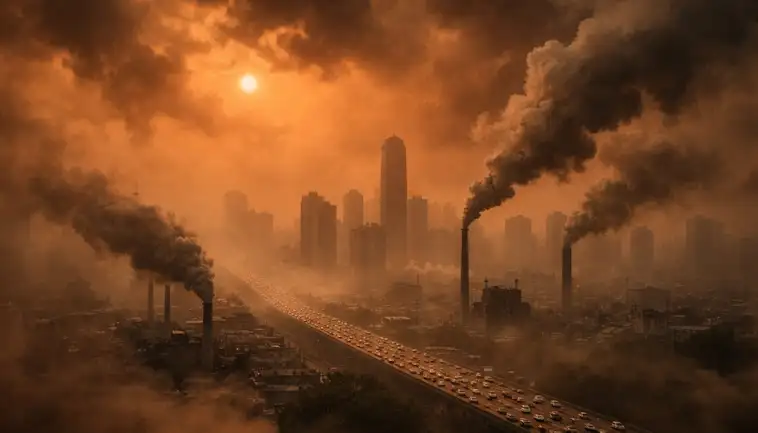
How Polluted Skies Are Quietly Changing Your Day-to-Day Life
When you look up, the sky might seem calm. Yet, beneath that calm, polluted skies are reshaping your daily routine in ways that often slip under the radar. This change isn’t always dramatic. Instead, it shows up in small moments that add up over time. And as air quality trends continue to shift, these quiet changes will only grow more noticeable.
You might feel a little more tired during your morning walk. Or you may notice your allergies acting up more often, even outside peak seasons. These aren’t random. They’re subtle signals that the air around you isn’t as clean as it once was. And while many people picture pollution as something distant or industrial, the truth is that it’s now part of everyday life in many communities.
A Sudden Slowdown in Outdoor Living
One of the biggest impacts of polluted skies is how they shape your time outdoors. You may find yourself cutting park visits short. Or skipping an evening run because the air feels heavy. These small decisions gradually shift the way you live, even if you don’t notice it happening.
As air pollution levels fluctuate, experts warn that these shifts could become more common. Yet, there’s also hope. Cities are testing new ways to clean the air. Communities are paying closer attention. And individuals are learning how to protect themselves in simple, practical ways.
So, as we look ahead, it’s worth asking: how much are polluted skies already influencing your daily choices? And what could change if the air above us improves? Taking notice today can help you stay healthier tomorrow—one breath at a time.
The Surprising Health Signals We Often Miss in the Air Around Us
Have you ever noticed how some days you feel a little “off,” even when you slept well and stayed hydrated? You’re not alone. Many of us brush off these moments, yet the air around us often plays a bigger role than we realize. And because these shifts happen quietly, it’s easy to overlook what your body is actually trying to tell you.
As air quality changes, your body responds. It might be a mild headache that lingers. Or sudden fatigue that feels out of place. Sometimes it’s scratchy eyes or a sense of heaviness when you breathe. These signals are subtle, but they’re also important. They’re early warnings that something in your environment isn’t quite right.
A Closer Look at These Hidden Clues
What’s interesting is how often we misinterpret these signals—or ignore them altogether. Many people assume they’re caused by stress, dehydration, or even seasonal allergies. Yet, shifts in local air quality can easily trigger the same symptoms. And as pollution trends evolve, these symptoms may become more common.
That’s why paying attention is so useful. When you notice patterns—like recurring tiredness on hazy days—you can take small steps to protect yourself. You might adjust your outdoor plans. Or use indoor air filters more often. Even simple awareness helps you make healthier choices.
To make this easier to digest, here’s a quick visual snapshot of some of the most common health signals linked to changes in air quality:
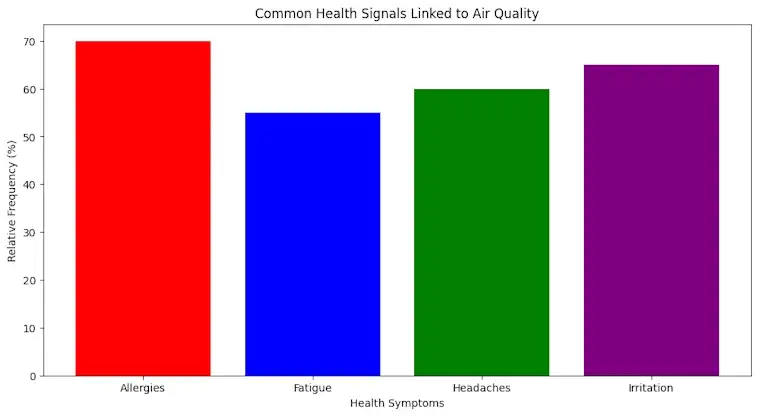
This chart gives you a clearer sense of how often these symptoms appear and why they deserve a second look. And moving forward, as cities continue to adapt and air quality shifts, staying aware can give you an edge in protecting your well-being—one small signal at a time.
Why Polluted Skies Now Point to a Future We Can Still Influence
When we look up today, many of us see something we wish we didn’t: polluted skies. The haze may seem ordinary now, but it tells a much bigger story about where we’re headed. Yet, it also hints at something far more hopeful. We still have time to change course. And when we understand what that haze really means for our lives, our health, and our cities, we start to see just how much influence we still hold.
The shift begins with awareness. Polluted skies aren’t just an environmental issue happening “somewhere else. They shape our daily routines. And they affect how we breathe, how we work, and even how we feel. When air quality dips, outdoor playtime shrinks, commutes feel heavier, and our bodies work harder without us noticing. These small, steady changes add up.
At the same time, something encouraging is happening. More people are paying attention. Cities are adopting cleaner technologies. Communities are pushing for healthier spaces. Researchers are uncovering new ways to track and reduce air pollution. This momentum matters. It shows that polluted skies are not a final verdict—they’re a warning signal we can still act on.
As we look ahead, we’re entering a period where every choice counts a little more. Cleaner transit, better building design, smarter policy, and everyday personal decisions can all reshape the air above us. And because air does not respect borders, local actions ripple outward. The sky is one giant, shared reminder that we’re connected.
Here are a few forces already shaping the future of our air:
- Growing investment in clean energy
- Rapid advances in air-quality monitoring
- Community-led pressure for greener urban design
- Stronger links between climate science and public health
- Rising public demand for transparent environmental data
These shifts may seem small on their own. Yet together, they show that progress is not only possible—it’s already happening. The clearer the picture becomes, the more we understand that polluted skies are not just a symptom of past choices. They are a prompt. A nudge. And a moment that asks us to rethink what we want our future to look like.
And because we still have influence, we also still have hope.
The Hidden Costs Communities Face When Air Quality Declines
When air quality drops, most of us think about coughs, asthma, or hazy skies. But the real story runs deeper. Communities pay a wide range of hidden costs that often go unnoticed. And because these costs grow quietly over time, they shape everything from local budgets to how people feel about where they live.
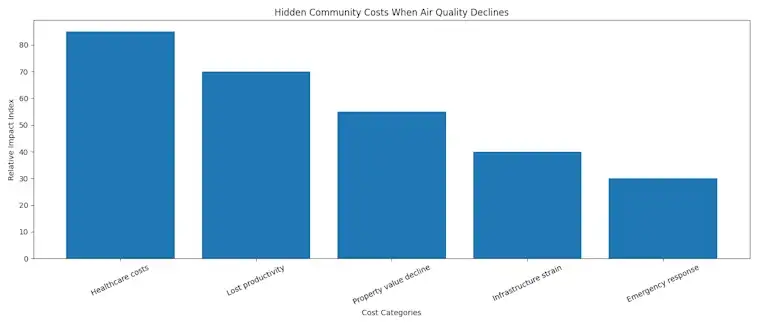
As pollution increases, healthcare bills rise. Workers miss more days on the job. Neighborhoods lose value. Cities spend more money on repairs and emergency services. And while each of these impacts may seem minor on its own, together they create a heavy burden.
The tough part is that these costs don’t appear on a single receipt. Yet they drain communities year after year. By understanding what’s at stake, we can make smarter choices and push for cleaner air that supports healthier, stronger places to live.
Below is a chart that visualizes these hidden costs in a simple way. It highlights how different parts of a community feel the pressure when air quality declines.
Simple Shifts That Help Us Breathe Easier in a Warming World
When the air feels heavier than it used to, most of us notice it first in the small moments. Maybe you feel it on your morning walk or when the kids play outside. Our warming world is changing the air around us, often faster than we expect. Yet there’s good news. With a few simple shifts, we can protect our lungs and ease the daily strain that rising temperatures and pollution place on our bodies.
As we look ahead, it helps to focus on changes that are doable, affordable, and backed by solid science. These small steps add up. And they give us a sense of control at a time when the headlines can feel overwhelming.
Understanding Life Under Polluted Skies
Let’s start with what we can influence right now. One of the easiest changes is improving the air inside our homes. Good ventilation helps move stale air out and fresh air in. You can open windows when outdoor air quality is good or use an inexpensive air purifier to cut down indoor pollutants.
Another shift is choosing cleaner ways to get around. Walking, biking, or using public transit more often can reduce both emissions and stress. Even swapping one car trip a week makes a difference over time. And as electric vehicles become more common, cleaner transport will only get easier.
You can also protect yourself on days when the air is poor. Checking the Air Quality Index before heading outside gives you a heads-up. When levels spike, shortening outdoor workouts or choosing indoor activities helps reduce exposure. These quick adjustments can limit the harm without slowing down your day.
Finally, staying informed matters. Many communities share real-time updates and guidance on local conditions. Reliable sources, like the World Health Organization, offer helpful background on how air pollution affects health.
As the climate continues to warm, these simple habits become even more valuable. They help us stay healthy, stay active, and stay hopeful. And when more of us make these shifts, the impact stretches far beyond our own front doors.
Conclusion: A Clearer Path Forward in an Era of Polluted Skies
As we face more days marked by polluted skies, it’s easy to feel discouraged. Yet these moments also serve as powerful reminders. They show us how closely our health, our climate, and our everyday choices are linked. And while the warnings may be painful, they push us to pay attention, to adapt, and to act with greater intention.
Looking ahead, small steps still matter. Cleaner commutes. Better home ventilation. Smarter energy use. Staying alert to air-quality updates. Each choice helps protect our lungs and supports a more resilient future. Even more, these changes send a message: we’re not powerless, and we’re not waiting for someone else to fix the air we all share.
In the end, polluted skies don’t just tell a story of risk. They tell a story of opportunity. Urging us to rethink how we live, how we move, and how we care for our communities. And when we respond with steady, collective action, we open the door to a world where the air is clearer, the warnings are fewer, and the future feels a little more our own.