

Ocean Surge Explained: What You Need to Know Now
Ocean Surge Explained: What You Need to Know Now
When powerful storms move across the ocean, they don’t just bring high winds and heavy rain. They can also push massive walls of water toward the shore. This sudden rise in sea level is known as an ocean surge, and it’s one of the most dangerous forces linked to hurricanes and cyclones. Surges can flood coastal towns in hours, damage infrastructure, and put lives at risk. With climate change driving stronger storms and rising seas, understanding how surges form and why they matter has never been more urgent.

What Is an Ocean Surge and Why Does It Happen?
When people hear the words ocean surge, they often think of massive waves crashing on the shore. But an ocean surge is different. It’s a sudden rise in sea level, usually caused by strong winds and low air pressure during a storm. This extra push of water can flood coastlines quickly, even before the rain begins.
Ocean surges are not just about the size of the waves. They are about the movement of water driven by weather conditions. When a powerful storm forms out at sea, the winds push water toward the coast. At the same time, the low pressure in the storm allows the sea level to rise even higher. Put those two forces together, and the result is a ocean surge.
Why Location Matters
Not every coastline faces the same risk. Areas with shallow waters, wide bays, or river mouths can see higher surges. That’s because water has nowhere to escape and piles up faster. On the other hand, coastlines that drop off steeply into the ocean may see smaller surges, even during strong storms.
It’s important to know that ocean surges are natural events. But with climate change driving stronger storms and rising sea levels, the risks are increasing. Communities along the coast are paying closer attention than ever, learning how to prepare and protect themselves.
The Difference Between Storm Surge, Tides, and Tsunamis
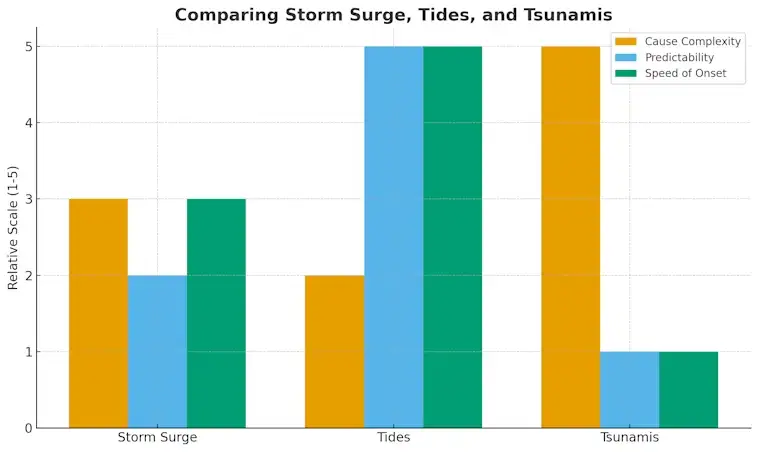
It’s easy to mix them up. Storm surges, tides, and tsunamis all involve the ocean rising higher than normal. But they’re not the same thing. Each one is caused by very different forces, and knowing the difference can help you understand coastal risks better.
A storm surge happens when strong winds and low air pressure from a storm push ocean water onto the shore. It’s sudden, powerful, and often linked with hurricanes or cyclones. Surges can flood coastlines quickly, sometimes even before the storm itself makes landfall.
Tides, on the other hand, are natural and predictable. They happen every day because of the moon’s pull on the Earth’s oceans. High tide and low tide follow a regular rhythm. While tides can raise sea levels, they’re not dangerous by themselves—unless combined with a storm surge.
A tsunami is completely different. Tsunamis are caused by underwater earthquakes, volcanic eruptions, or landslides. They send huge waves racing across the ocean, sometimes traveling thousands of miles before hitting land. Unlike a storm surge, which builds up slowly, a tsunami can strike with little warning.
The Power of Timing
One important thing to know is how these events can overlap. If a storm surge happens during high tide, the flooding can be far worse. Timing can turn an already dangerous event into a life-threatening disaster.
Understanding these differences helps us see the ocean with clearer eyes. Storm surges, tides, and tsunamis may all raise the water, but the causes and impacts are very different.
How Climate Change Is Making Ocean Surges Worse
Ocean surges have always been part of nature. But today, they are growing stronger and more dangerous. The reason? Climate change. Rising sea levels and more powerful storms are combining to create higher and more destructive surges.
When sea levels rise, even a smaller storm can push more water onto the coast. That means areas that used to flood only during big storms are now at risk more often. Add in stronger winds from warming oceans, and the result is surges that reach farther inland and cause more damage.
The Hidden Cost of Rising Seas
It’s not just the flooding we see on the news. Higher surges damage homes, roads, and power lines. They also harm wetlands and coastal ecosystems that normally protect communities from storms. Over time, these natural defenses break down, leaving towns and cities even more exposed.
The scary part is how quickly this is changing. Scientists say that what was once a “rare” event is now happening more often. A ocean surge that used to be called a once-in-a-century disaster could strike several times in a lifetime.
The good news? Awareness is growing. Coastal communities are building stronger defenses, and technology is improving forecasts. But understanding the role of climate change is the first step in preparing for what’s ahead.
Real-World Impacts: Coastal Communities at Risk
For people living along the coast, ocean surges aren’t just numbers in a report. They’re real events that can change lives overnight. From small fishing villages to big cities, the risks are rising.
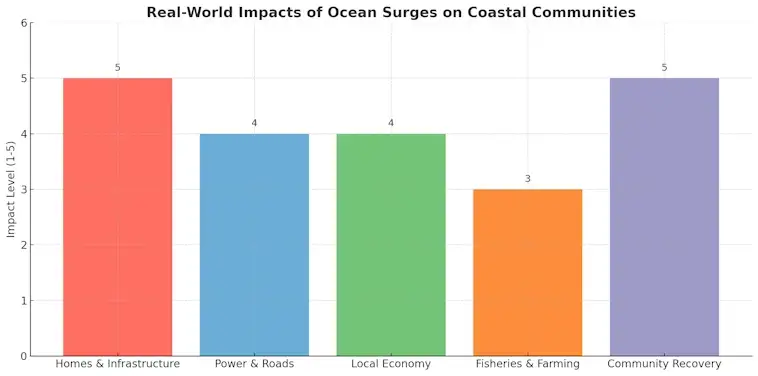
When a surge hits, homes can be flooded, power can be knocked out, and roads can disappear under water. Businesses close, schools shut down, and daily life is put on hold. For many families, recovery takes months or even years.
Ocean Surge and Everyday Life
An ocean surge doesn’t just damage buildings. It disrupts the heartbeat of a community. Fishermen lose their boats. Farmers see saltwater ruin their crops. Local shops and restaurants struggle when tourism slows down after a disaster. These are the hidden costs that stretch far beyond the storm itself.
And the risk is not equal. Low-income neighborhoods and small coastal towns often face the hardest challenges. They may lack strong sea walls, early warning systems, or the money to rebuild quickly.
The truth is clear: as sea levels rise and storms grow stronger, coastal communities are on the front line. Preparing now is the only way to reduce future damage and protect lives.
How to Stay Safe and Prepare for an Ocean Surge
Ocean surges can be sudden and overwhelming, but the right steps can make a big difference. Preparation doesn’t just protect property—it can save lives. Knowing what to do before, during, and after a surge is the key to staying safe.
Start by learning if your home is in a surge risk zone. Local maps and emergency services often provide this information. If you live in a coastal area, have an evacuation plan ready. Keep emergency supplies, like water, food, flashlights, and medications, in a place you can reach quickly.
Smart Steps Before the Surge
Before a storm arrives, secure your home. Move valuables to higher levels, unplug electronics, and make sure drains and gutters are clear. If authorities advise evacuation, don’t wait—leave early and head to safer ground.
During a surge, avoid driving through flooded roads. Just a small amount of moving water can sweep away cars. Stay tuned to weather alerts and official updates. Once the surge has passed, be careful when returning home. Floodwaters can hide debris, sharp objects, and even dangerous wildlife.
Preparation may feel like a chore, but it’s the best defense. By planning ahead and staying alert, you reduce risk and protect what matters most—your family and your future.
Understanding the Power of a Ocean Surge
An ocean surge is more than just high water—it’s a powerful force that can reshape coastlines and communities. By knowing what a ocean surge is, why it happens, and how it impacts daily life, we can better prepare for the future.
Climate change is making surges stronger and more frequent, but awareness and action can reduce the risks. Whether it’s building safer coastal defenses, creating emergency plans, or simply staying informed, every step matters.
The key takeaway is simple: a ocean surge may be natural, but how we respond is up to us. With knowledge, preparation, and resilience, coastal communities can face tomorrow’s challenges with greater confidence.