

Ocean Chemistry Unveiled: Discovering the Hidden Forces Shaping Our Seas
Ocean Chemistry Unveiled: Discovering the Hidden Forces Shaping Our Seas
The chemistry of our oceans is constantly shifting, driven by powerful but often invisible forces. These changes affect everything from the air we breathe to the food we eat. Salinity, pH levels, carbon absorption, and temperature all interact in delicate balance—shaping marine life, weather patterns, and global climate in surprising ways.
As scientists uncover new insights beneath the surface, a clearer picture is emerging of how human activity is influencing these vital systems. Understanding ocean chemistry isn’t just about science—it’s about the future of the planet. Let’s take a closer look at the forces transforming our seas and why they matter more than ever.
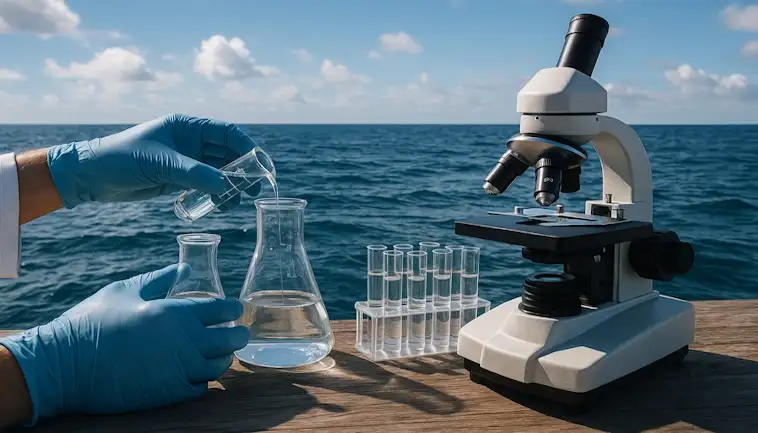
What Is Ocean Chemistry? A Simple Guide to the Science of Seawater
Ocean chemistry is the study of what’s actually in seawater—and how it affects the planet. While the ocean may look like a giant mass of just salty water, it’s a complex mix of elements, minerals, gases, and living matter. Understanding this mix is key to understanding climate change, marine life, and even the future of our food systems.
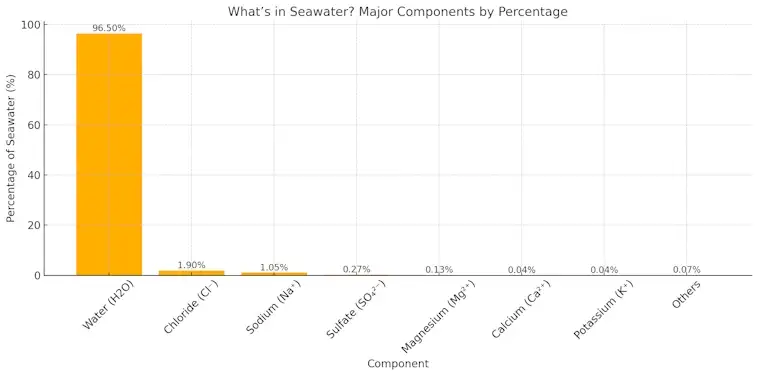
At its core, ocean chemistry focuses on the composition of seawater. That includes salt (mostly sodium and chloride), but also nutrients like nitrogen and phosphorus, gases like oxygen and carbon dioxide, and trace metals such as iron and copper. Each of these plays a unique role in the ocean’s health—and in the Earth’s climate system.
Seawater chemistry isn’t fixed. It changes with temperature, depth, and even pollution levels. For example, as we pump more carbon dioxide into the air, some of it dissolves into the ocean, making the water more acidic. This shift, called ocean acidification, can damage coral reefs, weaken shellfish, and disrupt entire food chains.
Another important part of ocean chemistry is the balance of nutrients. When that balance is thrown off—say, by agricultural runoff—it can lead to harmful algal blooms or “dead zones” where oxygen levels are too low to support most marine life.
Why does this matter? Because the ocean is our planet’s life support system. It produces more than half the oxygen we breathe, absorbs huge amounts of carbon, and feeds billions of people. Knowing what’s in seawater—and how it’s changing—helps scientists protect it, and by extension, us.
In short, ocean chemistry is the science of seawater’s ingredients. And just like any recipe, small changes can have big effects. By paying attention to these shifts, we can better predict, adapt to, and possibly even prevent future ocean and climate disruptions.
The Role of Carbon and pH in Ocean Health
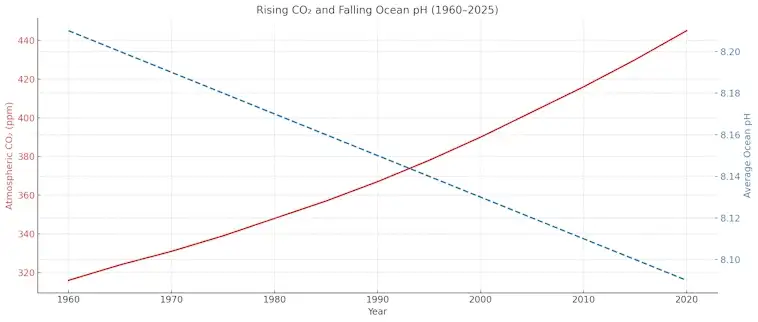
The ocean is one of Earth’s biggest carbon sinks. It absorbs nearly a third of the carbon dioxide (CO₂) we release into the atmosphere. This process helps slow global warming—but it also comes with a hidden cost: changing the chemistry of seawater.
When carbon dioxide enters the ocean, it reacts with water to form carbonic acid. This lowers the pH of the ocean, making it more acidic. It’s a process known as ocean acidification, and it’s one of the biggest threats to marine ecosystems today.
Why does pH matter? In simple terms, pH measures how acidic or basic the water is. A healthy ocean typically has a slightly basic pH around 8.1. But as more CO₂ dissolves into the water, that number drops. Even a small shift in pH can affect marine life in big ways.
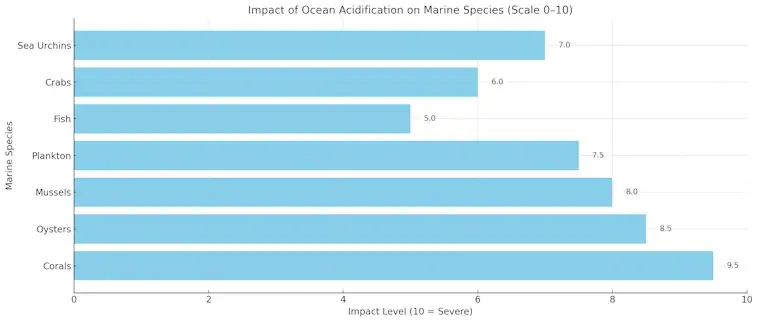
For example, more acidic water makes it harder for shell-building animals—like oysters, clams, and corals—to form their shells and skeletons. This can weaken the entire marine food web, from tiny plankton to the fish people rely on for food.
Changes in ocean pH also impact how nutrients and metals behave in seawater, which can disrupt everything from fish growth to phytoplankton health. And since phytoplankton help produce oxygen and remove carbon, any damage to them affects the whole planet.
So, the role of carbon and pH in ocean health is massive. It’s not just about chemistry—it’s about the future of marine life, coastal communities, and the climate system we all depend on.
Understanding this connection helps us take smarter steps toward reducing emissions, protecting habitats, and preserving the balance of our oceans. Because when the chemistry of the ocean shifts, the ripple effects are global.
How Ocean Chemistry Impacts Marine Life and Ecosystems
Ocean chemistry might sound like a topic for scientists in lab coats, but it affects every living thing in the sea—and by extension, all of us. The chemical makeup of seawater plays a huge role in shaping marine ecosystems, from the tiniest plankton to the largest whales.
One of the most important chemical factors in the ocean is pH, which tells us how acidic or basic the water is. Over the past few decades, rising carbon dioxide (CO₂) levels have caused ocean pH to drop, making seawater more acidic. This shift is known as ocean acidification, and it’s already having serious consequences.
Many marine animals—like corals, oysters, mussels, and even tiny plankton—depend on calcium carbonate to build their shells and skeletons. But in more acidic water, it’s harder for them to do that. Some species grow slower. Others don’t survive at all. And when those base-level species struggle, it sends shockwaves up the entire food chain.
Ocean chemistry also affects oxygen levels in seawater. Warmer, nutrient-rich waters can lead to “dead zones,” where there isn’t enough oxygen to support most marine life. These low-oxygen areas are expanding, threatening fish populations and the health of coastal ecosystems.
On top of that, the balance of nutrients like nitrogen and phosphorus in the water influences which species thrive and which decline. Too much of one nutrient—often from agricultural runoff—can cause harmful algal blooms that poison fish, block sunlight, and reduce biodiversity.
In short, when ocean chemistry changes, marine life must adapt—or face the risk of collapse. Coral reefs bleach. Fish migrate to cooler or more stable waters. Entire food webs shift, sometimes in unpredictable ways.
This matters not just for wildlife, but for people. Billions of people rely on the ocean for food, jobs, and climate regulation. Protecting ocean chemistry isn’t just about science—it’s about survival.
Climate Change and the Shifting Chemistry of Our Oceans
The ocean is on the front lines of climate change. It absorbs more than 90% of the heat trapped by greenhouse gases and pulls in around a third of the carbon dioxide we emit. But this vital role comes at a cost: it’s changing the ocean’s chemistry in ways we’re only beginning to understand—and the effects are accelerating.
One of the biggest changes is ocean acidification. As more CO₂ enters the atmosphere, more of it dissolves into seawater. This lowers the ocean’s pH, making it more acidic. Acidification weakens coral reefs, damages shellfish, and disrupts marine food webs that billions of people rely on.
Another major issue is deoxygenation. Warmer water holds less oxygen. Combine that with pollution and nutrient runoff, and you get expanding “dead zones” where fish and other marine animals can’t survive. These low-oxygen areas are becoming more common in both coastal and open ocean regions.
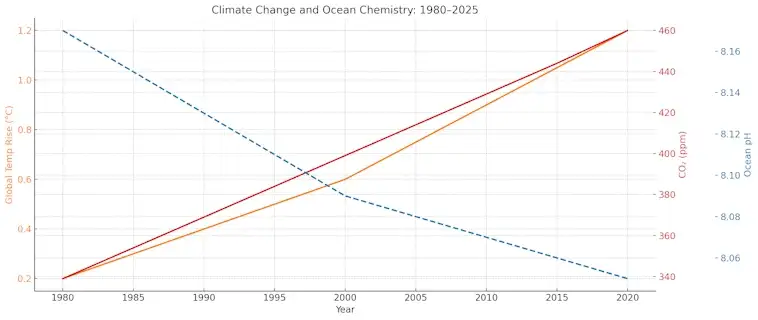
Rising temperatures also affect salinity, circulation, and nutrient availability. As polar ice melts and more freshwater flows into the sea, it dilutes salt levels and can weaken ocean currents. These shifts disturb marine ecosystems and weather patterns across the globe.
Even small changes in ocean chemistry can have big consequences. From altered fish migration to coral bleaching and algal blooms, the effects of climate change are showing up in every corner of the sea.
Why does this matter? Because healthy oceans regulate our climate, provide food, support economies, and produce much of the oxygen we breathe. When ocean chemistry is thrown off balance, so is the health of the planet.
Understanding this connection helps us take smarter climate action—reducing emissions, protecting marine habitats, and investing in sustainable ocean solutions. The chemistry of our oceans is changing. What we do next will shape the future of life on Earth.
Why Understanding Ocean Chemistry Matters for Our Future
Ocean chemistry isn’t just a topic for scientists—it’s a critical piece of the puzzle when it comes to the future of our planet. From the air we breathe to the food we eat, the chemistry of the ocean touches nearly every part of life on Earth.
The ocean absorbs vast amounts of carbon dioxide, helps regulate global temperatures, and produces over half of the oxygen in our atmosphere. But as we burn fossil fuels and warm the planet, the ocean’s chemistry is shifting. And that shift is happening faster than at any time in recorded history.
Why does this matter? Because when ocean chemistry changes, so does everything it supports.
Coral reefs—the “rainforests of the sea”—are dying due to acidification and warming. Shellfish industries are already feeling the impact of lower pH levels. Fish are migrating to cooler waters, leaving some coastal communities struggling to adapt. Even the smallest organisms at the base of the food chain are being affected, which could ripple through ecosystems and economies worldwide.
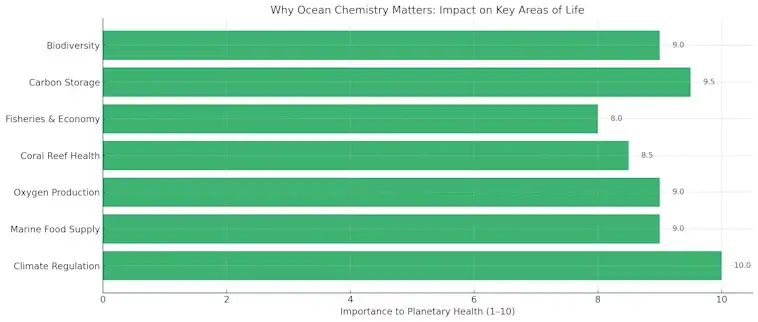
Understanding ocean chemistry helps us predict and respond to these changes. It allows us to build more resilient food systems, protect vulnerable marine life, and make smarter decisions about how we manage the ocean’s resources.
It also gives us tools to fight climate change. Better knowledge of carbon absorption, nutrient cycles, and ocean feedback loops can lead to breakthroughs in climate modeling, sustainable fishing, and even carbon capture technology.
The future of our oceans is still unwritten. But one thing is clear: protecting ocean chemistry means protecting the life-support system of our planet.
By investing in ocean science, supporting clean energy, and reducing pollution, we can help stabilize the chemistry of the seas—and ensure a healthier, more sustainable future for generations to come.
The Ocean’s Chemistry Is the Planet’s Lifeline
The ocean may seem vast and unchanging, but its chemistry is constantly shifting—and those changes are shaping the future of our world. From the balance of carbon and pH to the oxygen levels and nutrient cycles, the invisible forces within seawater affect everything from marine ecosystems to global climate patterns.
What happens beneath the surface doesn’t stay there. It touches the air we breathe, the food we eat, and the health of communities everywhere. As carbon levels rise and temperatures climb, understanding how ocean chemistry works isn’t just important—it’s essential.
Protecting the ocean starts with knowledge. The more we understand how it functions, the better equipped we are to safeguard it for future generations. Whether it’s through science, sustainable choices, or climate action, every step we take today can help restore balance to this vital life system.
The ocean has always taken care of us. Now it’s our turn to return the favor.