

Climate Shifts That Could Upend Your World
Climate Shifts That Could Upend Your World
The planet’s climate is changing faster than at any time in human history. Weather patterns that once felt reliable are breaking down. Coastlines are shrinking, heat records keep shattering, and rainfall is turning unpredictable. These shifts are more than background noise — they’re reshaping economies, food supplies, and even where people can live. Understanding what’s coming isn’t just for scientists or policymakers; it’s becoming essential for everyone who wants to prepare for a future that may look very different from today.
Rising Seas and the Cities in Their Path
Coastal cities have always lived in a delicate balance with the ocean. The water brings trade, beauty, and life. But now, it’s also bringing a threat that’s growing every year — rising seas.
Scientists say global sea levels have risen by over eight inches since 1900. That may not sound like much, but in the world of flooding, it’s huge. Storm surges now reach further inland. High tides swallow streets that used to stay dry. And the risk is only rising.
When the Water Comes for the Shoreline
Think of cities like Miami, Jakarta, or Venice. They’re already feeling the pinch. Miami’s streets flood on sunny days. Jakarta is sinking so fast it’s building a new capital. Venice battles to keep its famous squares above water. These aren’t just far-off warnings — they’re today’s headlines.
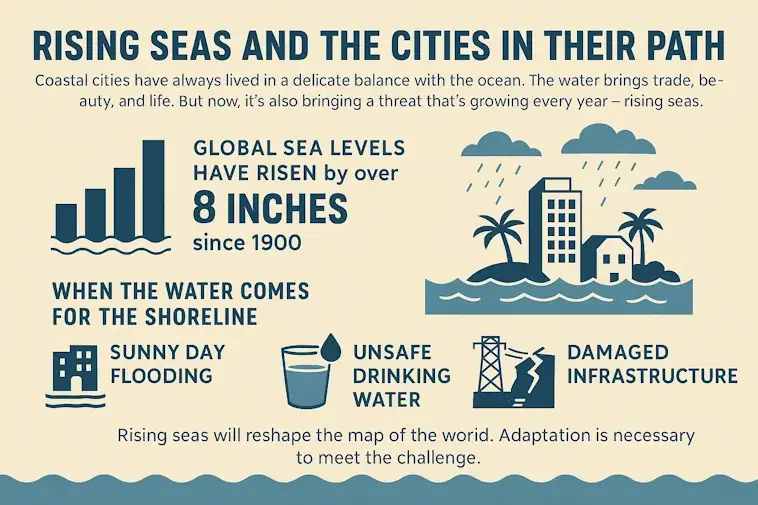
The danger isn’t only in dramatic floods. Saltwater creeping into freshwater supplies can make drinking water unsafe. Homes and businesses face higher insurance costs. Infrastructure, from roads to power lines, is at risk.
We can’t hold back the ocean forever. But we can prepare. Some cities are building sea walls. Others are restoring wetlands to act as natural buffers. Innovative architects are designing floating neighborhoods. The goal is not just survival, but adaptation.
The truth is, rising seas will reshape the map of the world. Some communities will have to move. Others will reinvent themselves. The choices we make now will decide how much we lose — and how much we save.
This isn’t a distant problem. If you live near the coast, it’s personal. Even if you’re inland, rising seas affect trade, food prices, and migration. The tide is coming in. The question is, how will we meet it?
Heatwaves That Push Human Limits
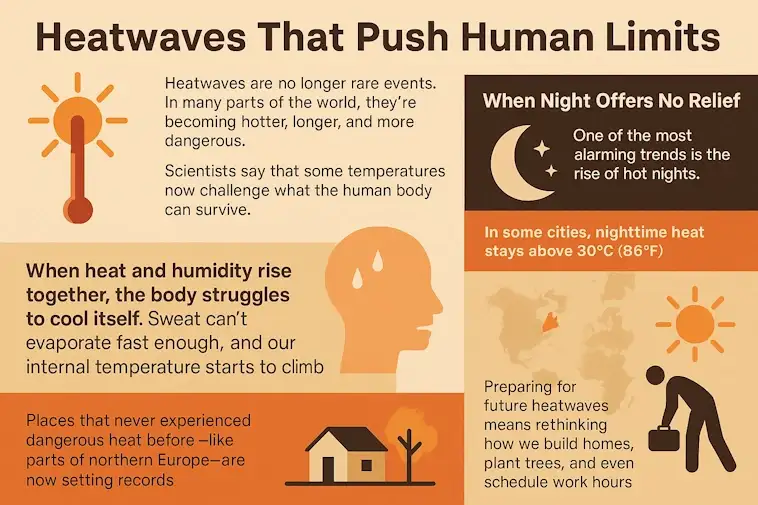
Heatwaves are no longer rare events. In many parts of the world, they’re becoming hotter, longer, and more dangerous. Scientists say that we are now seeing temperatures that challenge what the human body can survive.
When heat and humidity rise together, the body struggles to cool itself. Sweat can’t evaporate fast enough, and our internal temperature starts to climb. This isn’t just uncomfortable—it can be deadly. In some extreme cases, even healthy people can be at risk within hours.
When Night Offers No Relief
One of the most alarming trends is the rise of hot nights. In the past, temperatures would drop after sunset, giving our bodies a chance to recover. Now, in some cities, nighttime heat stays above 30°C (86°F). That means the body is under constant stress, even while we sleep.
We’re also seeing a shift in where these extreme events happen. Places that never experienced dangerous heat before—like parts of northern Europe—are now setting records. That means millions of people live in buildings and cities that were never designed for such intense heat.
Preparing for future heatwaves will require more than just air conditioning. It means rethinking how we build homes, plant trees, and even schedule work hours. Because if current trends continue, we may face summers where stepping outside for too long becomes a serious risk.
Vanishing Water and the Fight for What’s Left
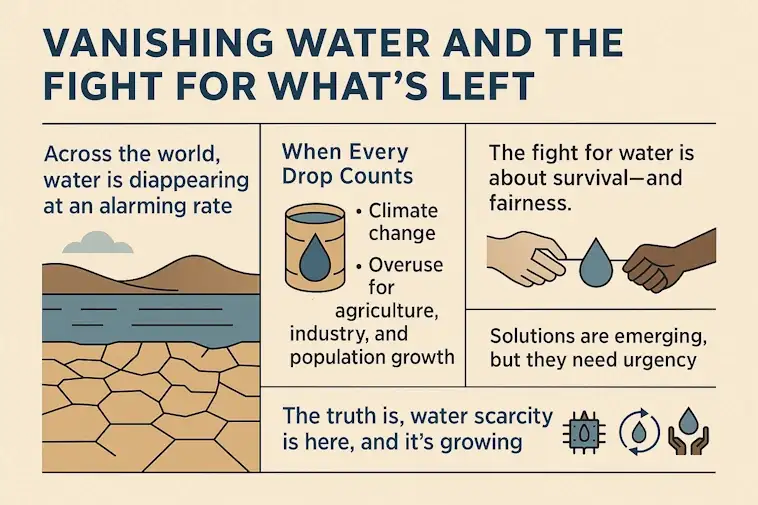
Across the world, water is slipping away faster than we can replace it. Lakes are shrinking. Rivers run dry before reaching the sea. Even underground aquifers, once thought to be endless, are draining at alarming rates.
It’s not just happening in far-off deserts. It’s in farming towns, coastal cities, and suburbs where taps once ran without question. Climate change is intensifying droughts. Meanwhile, overuse for agriculture, industry, and growing populations is pushing supplies to the limit.
When Every Drop Counts
I’ve seen communities where neighbors collect rainwater in barrels because the local reservoir is nearly empty. It changes the way you think about a glass of water. You stop seeing it as something you use. You start seeing it as something you protect.
The fight for water is about more than survival. It’s about fairness. Who gets it? Who controls it? And how do we share what’s left without turning on each other?
Solutions are emerging—smarter irrigation, wastewater recycling, and better conservation habits. But they need urgency. Every delay means more people facing dry taps and dusty fields.
The truth is, water scarcity isn’t a distant problem. It’s here, and it’s growing. The question now is whether we act together while there’s still enough to save.
Shifting Storm Patterns and Unpredictable Seasons
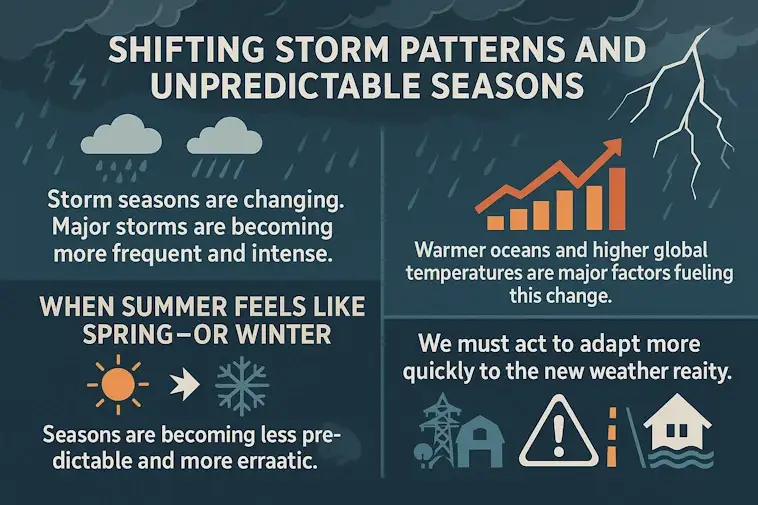
Weather is no longer playing by the old rules. Storm seasons are stretching, shifting, and showing up in places they rarely hit before. That “once in a decade” storm? It now seems to happen every few years.
Scientists say warmer oceans and rising global temperatures are key drivers. They’re feeding storms with more energy, making them stronger and sometimes slower. That’s why we see hurricanes stalling over coastlines or winter storms arriving when we least expect them.
When Summer Feels Like Spring—Or Winter
The lines between seasons are blurring. Spring can feel like summer one week, then swing back to frost the next. Farmers are struggling to plan crops. Communities are caught off guard by sudden heatwaves in late autumn or ice storms in early spring.
This unpredictability isn’t just inconvenient—it’s costly. It affects food prices, insurance rates, and even mental health. People need time to prepare for extreme weather, but shifting patterns make that harder every year.
Storms and seasons are changing, and we need to adapt faster than ever. That means improving early warning systems, strengthening infrastructure, and rethinking how we live with nature’s new rhythm.
Wildlife on the Move: The Race to Survive
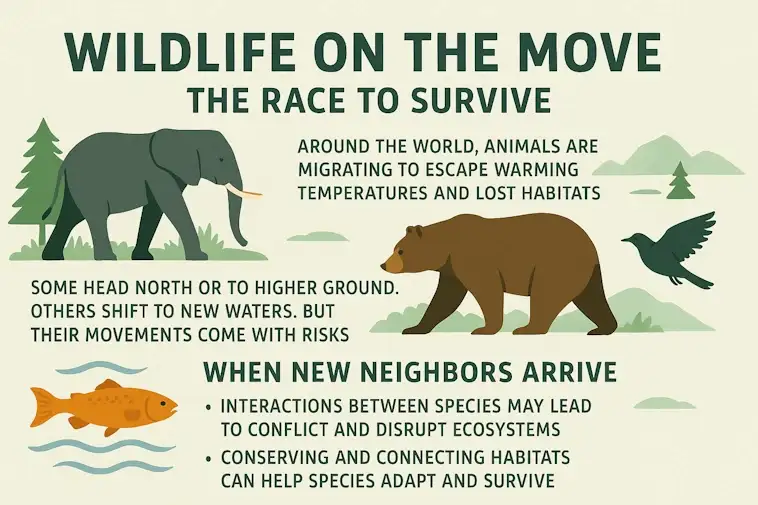
Around the world, animals are on the move. Not because they want to explore, but because they have to. Rising temperatures, shrinking habitats, and shifting food sources are forcing wildlife to relocate faster than ever before.
Some species are heading north, chasing cooler climates. Others are climbing to higher ground. In the oceans, fish are swimming into unfamiliar waters. These changes may help them survive in the short term, but they also bring new risks.
When New Neighbors Arrive
When animals move, they don’t travel into empty spaces. They meet new species, compete for food, and sometimes clash over territory. This can disrupt entire ecosystems. For example, a predator in a new area can quickly upset the balance, threatening smaller or slower animals.
For scientists, tracking these migrations is like watching a race against time. If animals can’t move quickly enough, or if they run out of suitable places to live, the outcome is grim. Yet, there’s hope. Creating wildlife corridors, protecting habitats, and restoring ecosystems can give species a fighting chance.
The question is, can we act fast enough to keep pace with nature’s urgent journey?
The Urgency of Adapting to a Changing Climate
The world is not standing still, and neither is our climate. From rising seas to shifting weather patterns, the changes we’re witnessing today are only the beginning. These climate shifts aren’t just distant threats — they’re unfolding in real time, shaping the way we live, work, and plan for the future.
The good news is that we’re not powerless. By staying informed, adapting our communities, and pushing for innovative solutions, we can reduce the risks and build resilience. The choices we make now will determine whether we face a future of escalating crises or one where we’ve learned to live sustainably with our changing planet.
If there’s one takeaway, it’s this: prepare today, because tomorrow is already arriving faster than you think.