
Living Shorelines: The Urgent Shift Coastal Towns Need
Living Shorelines: Why Coastal Towns Need This Urgent Shift Now
Coastal towns are running out of time. Rising seas, stronger storms, and steady erosion are putting homes, roads, wetlands, and local economies under growing pressure. That is why living shorelines are gaining attention as a smarter way to protect the coast. Instead of relying only on hard structures like seawalls, this approach works with nature to reduce damage, support wildlife, and build long-term resilience.
For many communities, the old methods are no longer enough. Concrete barriers can shift erosion, damage habitats, and become more costly over time. Living shorelines offer a more flexible option. They use natural elements such as marsh plants, oyster reefs, and sand to absorb wave energy and help shorelines adapt to changing conditions. As climate risks grow, coastal towns need solutions that protect both people and the places that make these communities worth saving.
What You’ll Discover
Why Living Shorelines Are Becoming Essential for Coastal Towns
The Rising Cost of Hard Defenses Along Vulnerable Coasts
How Living Shorelines Help Communities Adapt to Climate Risk
What Coastal Towns Gain From Nature-Based Protection
The Urgent Case for Smarter, More Resilient Shoreline Planning
Conclusion
Why Living Shorelines Are Becoming Essential for Coastal Towns
Coastal towns are under more pressure than ever. Stronger storms, rising seas, and ongoing erosion are changing shorelines at a fast pace. For many communities, the old approach of fighting water with hard walls is no longer enough. In some cases, it can even make problems worse over time.
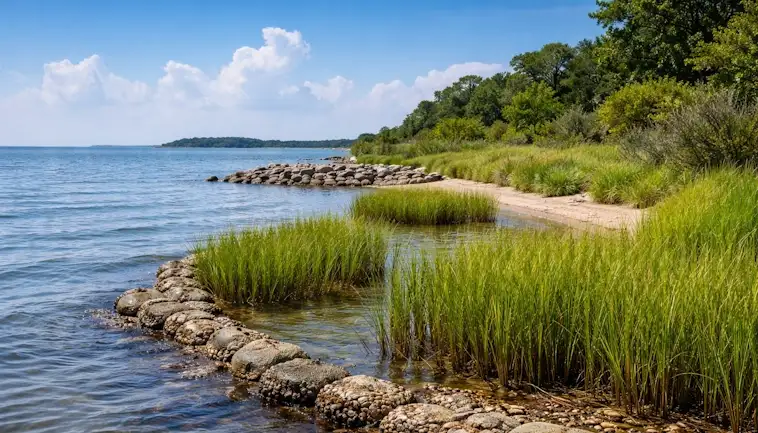
That is why more towns are turning to living shorelines. This approach works with nature, not against it. Instead of relying only on concrete, steel, or rock, living shorelines use natural materials and native plants to protect the coast. They can include marsh grasses, oyster reefs, dunes, and other features that help absorb wave energy and stabilize the land.
As a result, coastal towns are finding that this option can do more than prevent erosion. It can also improve water quality, create wildlife habitat, and make waterfront areas more attractive for local people and visitors. In other words, living shorelines offer protection and long-term value at the same time.
A Smarter Way to Reduce Erosion
One reason living shorelines are gaining attention is simple. They help slow erosion in a way that feels more natural and sustainable. Traditional seawalls may block water in one place, but they often shift wave energy elsewhere. That can increase erosion nearby.
By contrast, living shorelines help soften that impact. Plants hold soil in place with their roots. Natural features break up wave energy before it hits the land. Because of this, the shoreline can become more stable over time rather than more fragile.
Living Shorelines: Better for Nature and Local Communities
Another major benefit is that living shorelines support healthy coastal ecosystems. A hard barrier may protect land, but it usually offers little for fish, birds, or other wildlife. Living systems are different. They create places where species can feed, nest, and grow.
This matters for people too. Healthier ecosystems often mean cleaner water and stronger local fisheries. In addition, natural shorelines can make coastal areas more beautiful and enjoyable. That is important for towns that depend on tourism, outdoor recreation, or a strong sense of place.
Built for a Changing Future
Looking ahead, flexibility is becoming more important. Coastal towns need solutions that can adapt as conditions change. That is another reason living shorelines are becoming essential. Unlike rigid structures, they can grow and shift over time.
Of course, they are not the answer for every location. However, in many areas, they offer a practical and forward-looking option. They protect the coast while also supporting the environment and the local economy.
For coastal towns planning for the future, living shorelines are no longer just a nice idea. Increasingly, they are a smart and necessary one.
The Rising Cost of Hard Defenses Along Vulnerable Coasts
Coastal towns and cities are under growing pressure. Sea levels are rising. Storms are becoming more intense. And, as a result, the demand for stronger coastal protection is climbing fast. For many places, hard defenses such as sea walls, rock revetments, flood gates, and concrete barriers still seem like the most direct answer. They are visible. They feel solid. And they promise protection.
However, that protection comes at a rising cost.
For a start, these structures are expensive to build. The materials alone can push budgets higher, especially when steel, concrete, and fuel prices rise. Then there is the cost of design, transport, labor, and long-term maintenance. In many cases, what looks like a one-time solution soon turns into a long and costly commitment.
Why Hard Defenses Cost More Over Time
At first glance, a sea wall may look like a lasting fix. Yet coastal defenses rarely stay “finished” for long. Waves keep hitting. Saltwater slowly wears materials down. Storm surges test every weak point. So, over time, repairs become essential. In some places, those repairs are needed far sooner than expected.
What is more, climate change is making the challenge even harder. Defenses built for past conditions may not be high enough or strong enough for future risks. That means local authorities often need to upgrade them, extend them, or rebuild them altogether. As sea levels continue to rise, the price of keeping pace rises too.
The Hidden Costs Many Communities Overlook
There is also another side to this story. Hard defenses can shift erosion further down the coast. In other words, one protected area may increase risk somewhere else. When that happens, nearby communities may also need new defenses. As a result, costs can spread well beyond the original project.
In addition, these structures can affect beaches, habitats, and local tourism. A concrete wall may protect property, but it can also reduce beach access or damage the natural character of a coastline. That can hurt businesses that rely on visitors. So, the true cost is not only financial. It can also be social, environmental, and economic.
A Growing Need for Smarter Coastal Planning
This is why many experts now argue for a more balanced approach. Hard defenses still have a role, especially in dense urban areas or where vital infrastructure is at risk. Yet they are no longer seen as the only answer. More places are combining them with softer measures, such as dune restoration, saltmarsh recovery, and managed retreat.
The real challenge is not just building higher walls. It is making smarter choices. Coastal protection must work in the short term, but it must also remain affordable and practical in the years ahead. That is now the heart of the debate.
How Living Shorelines Help Communities Adapt to Climate Risk
Climate risk is no longer a far-off problem. Instead, it is already changing coastlines, flooding roads, and putting homes, habitats, and local economies under pressure. As sea levels rise and storms become more intense, many communities are looking for smarter ways to protect the places they love. That is where living shorelines come in.
Unlike hard structures such as seawalls and bulkheads, living shorelines work with nature, not against it. They use natural materials like native plants, sand, oyster reefs, and marsh grasses to stabilize the shore. As a result, they can reduce erosion, absorb wave energy, and support wildlife at the same time. In other words, they offer a more flexible and resilient way to respond to climate risk.
What makes living shorelines so appealing is that they do more than protect land. They also help restore ecosystems that have been damaged over time. Moreover, they can improve water quality, create habitat for fish and birds, and make waterfront areas more attractive for local people and visitors. For many towns and cities, that means one solution can deliver several benefits at once.
A Natural Buffer Against Storms and Erosion
One of the biggest strengths of living shorelines is their ability to soften the impact of waves. Plants and reef structures help slow water down before it hits the land. Because of this, shorelines are less likely to wash away during storms or high tides.
Over time, these natural features can grow and adapt. For example, marsh plants spread their roots and help trap sediment. Oyster reefs can build upward in some locations. So, instead of breaking down like some hard barriers, living shorelines can become stronger as conditions change.
Why Communities Are Paying Attention
Communities are choosing living shorelines because they support both safety and long-term resilience. They can also fit well into broader climate adaptation plans.
Key benefits of living shorelines
- Help reduce coastal erosion
- Absorb wave energy during storms
- Support fish, birds, and other wildlife
- Improve water quality naturally
- Add beauty and recreational value to waterfronts
- Adapt more naturally to rising seas over time
A Practical Path for Climate Adaptation
Of course, living shorelines are not the right fit for every site. However, in many areas, they can be a practical and cost-effective option. They are especially useful where communities want protection without sacrificing the health of local ecosystems.
Lookingg ahead, living shorelines will likely play a bigger role in climate adaptation. As coastal risks grow, communities need solutions that are strong, flexible, and sustainable. By blending protection with restoration, living shorelines offer a hopeful path forward.
What Coastal Towns Gain From Nature-Based Protection
Coastal towns live with beauty and risk side by side. On one hand, they enjoy sea views, thriving tourism, and strong local identity. On the other hand, they face rising tides, stronger storms, and steady erosion. That is why more communities are looking at nature-based protection as a smarter way forward.
Put simply, nature-based protection means working with the natural world instead of against it. This can include restoring dunes, planting salt marshes, protecting wetlands, and bringing back oyster reefs. While hard sea walls and concrete barriers still play a role in some places, natural systems often offer wider and longer-lasting benefits.
Stronger Protection From Storms
First of all, natural features can help reduce the force of waves and storm surges. Sand dunes act like buffers. Wetlands soak up excess water. Oyster reefs and mangroves can slow waves before they reach homes, roads, and businesses. As a result, towns may see less flood damage during extreme weather.
This matters more each year. Storms are becoming more intense in many coastal areas. Therefore, towns need protection that is flexible and able to adapt over time. Unlike some fixed structures, living systems can grow, shift, and rebuild themselves when they are cared for properly.
Healthier Local Wildlife and Landscapes
Nature-based protection also improves the local environment. Restored habitats create space for birds, fish, shellfish, and pollinators to thrive. In turn, this helps support healthier coastal ecosystems.
That benefit reaches people too. Cleaner water, greener public spaces, and more natural shorelines can make towns more attractive places to live and visit. For many communities, this strengthens their sense of place. It also helps protect the landscapes that make them unique.
Economic Benefits for the Community
Just as important, nature-based solutions can support local economies. Healthy beaches, marshes, and waterfront habitats often boost tourism and recreation. Activities like birdwatching, kayaking, fishing, and walking trails can all benefit from a more natural coastline.
Moreover, these projects can create jobs in restoration, conservation, engineering, and long-term land management. Over time, they may also reduce repair costs by lowering storm damage and slowing erosion. So, while the upfront investment matters, the long-term value can be significant.
A More Resilient Future
In the end, nature-based protection offers more than a defence system. It gives coastal towns a chance to become safer, greener, and more resilient at the same time. That is a powerful mix.
As climate pressures grow, towns will need solutions that protect people without harming the places they love. Nature-based protection does exactly that. It helps communities prepare for the future while improving daily life in the present.
The Urgent Case for Smarter, More Resilient Shoreline Planning
Coastlines are under more pressure than ever. Rising seas, stronger storms, and ongoing erosion are putting homes, businesses, habitats, and local economies at risk. At the same time, many older shoreline defenses are starting to show their limits. Concrete walls and hard barriers may seem like the safest option at first. However, they can be expensive to maintain and may even make erosion worse in nearby areas over time.
That is why smarter shoreline planning matters so much now. Communities need solutions that do more than hold the line for a few years. They need approaches that can adapt, recover, and keep working as conditions change. This is where living shorelines are becoming such an important part of the conversation.
Why Traditional Shoreline Defenses Are No Longer Enough
For decades, hard structures like seawalls, bulkheads, and revetments have been seen as the standard fix for coastal erosion. In some places, they still play a role. Yet they often come with trade-offs. They can disrupt natural coastal processes, reduce habitat, and reflect wave energy in ways that increase damage elsewhere.
As a result, relying only on hard infrastructure can leave communities with fewer options in the future. It can also create shorelines that are less flexible and less healthy. In a time of growing climate uncertainty, that is a real concern.
How Living Shorelines Offer a Better Path Forward
Unlike hard barriers, living shorelines work with nature rather than against it. They use natural materials and features such as native plants, sand, marshes, and oyster reefs to stabilize the coast. Because of this, they can reduce erosion while also improving habitat and water quality.
Even better, living shorelines can grow stronger over time. Plants spread. Root systems deepen. Oyster reefs expand in the right conditions. In other words, these projects are not just protective. They are regenerative too.
A More Resilient Future for Coastal Communities
Smarter shoreline planning is about thinking long term. It is about protecting people and property while also supporting ecosystems that make coastal places worth living in. When communities invest in living shorelines, they are not choosing a softer option. They are choosing a more balanced one.
Looking ahead, shoreline resilience will depend on solutions that are practical, adaptable, and sustainable. Living shorelines check all of those boxes. That is why they should be a central part of modern coastal planning, not a side note. The sooner communities act, the better prepared they will be for what comes next.
Conclusion
In the end, living shorelines are no longer just an interesting idea. They are becoming a necessary solution for coastal towns that need stronger, safer, and more sustainable protection. As sea levels rise and storms grow more intense, traditional hard barriers alone cannot meet every challenge. By contrast, living shorelines work with nature, not against it.
Just as importantly, living shorelines can reduce erosion, support wildlife, improve water quality, and help communities stay resilient over time. They also offer a more balanced way to protect coastlines while preserving the natural beauty that makes these places special. That matters now, and it will matter even more in the years ahead.
For coastal leaders, planners, and residents, the message is clear. Investing in living shorelines today can help create healthier ecosystems and more prepared communities tomorrow. The urgent shift coastal towns need is already within reach. Now is the time to make living shorelines part of the future.