
Is Ancient Ice Releasing Secrets of the Past?
Is Ancient Ice Releasing Secrets of the Past?
Deep beneath layers of ancient ice lie secrets that have been frozen for tens of thousands of years. Each sheet of ice is more than just frozen water—it’s a time capsule holding traces of Earth’s atmosphere, microscopic life, and even evidence of human history. As scientists study melting glaciers and ice cores, they are uncovering air bubbles that reveal past climates, dormant microbes waiting to be understood, and artifacts that tell forgotten stories. These discoveries are reshaping how we see the past while raising urgent questions about what might surface as the ice continues to thaw in today’s warming world.

What Ancient Ice Can Tell Us About Earth’s Climate History
When we think of ice, we often picture glaciers or frozen lakes. But hidden deep inside ancient ice are secrets about Earth’s past. For scientists, ice is like a time capsule. It holds tiny clues that help us understand how our planet’s climate has changed over thousands—even millions—of years.
Ice cores, drilled from glaciers in places like Antarctica and Greenland, are especially powerful. Layer by layer, they trap bubbles of air, dust, and even volcanic ash. Each layer tells a story. By studying them, researchers can see how temperatures shifted, how much carbon dioxide was in the air, and how fast changes happened. It’s almost like flipping through pages of Earth’s diary.
Frozen Clues in Every Layer
What makes this so fascinating is how precise these records are. For example, scientists can match a spike in volcanic ash to a known eruption. They can also track periods when Earth warmed or cooled quickly. These frozen clues remind us that climate has never stood still. And they also warn us that today’s rapid warming is unlike anything in the natural record.
Looking back at ancient ice doesn’t just satisfy curiosity. It gives us context. It shows that while Earth’s climate has shifted before, the pace and scale of today’s changes are extraordinary. By listening to what the ice tells us, we gain a clearer picture of what lies ahead.
Frozen Bubbles: Trapped Air That Speaks Across Millennia
Imagine holding a piece of ice that carries whispers from Earth’s distant past. Inside ancient ice sheets are tiny air bubbles, sealed away for tens of thousands of years. These frozen pockets of air are more than just curiosities. They are direct samples of the atmosphere from long ago.
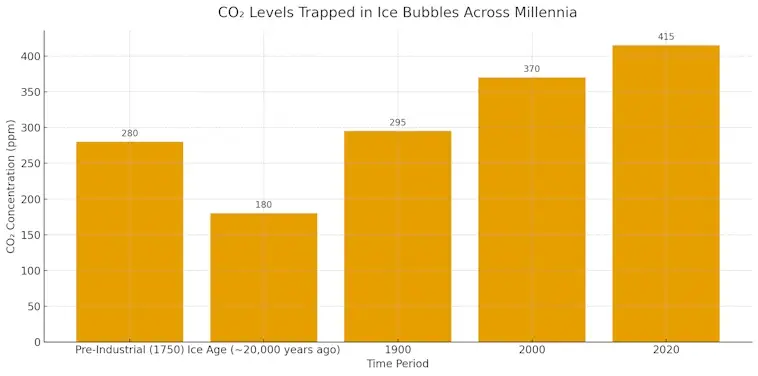
When scientists drill deep into glaciers, they unlock these bubbles and measure the gases inside. Carbon dioxide, methane, and other greenhouse gases are preserved in perfect detail. This lets researchers compare past levels of greenhouse gases with today’s rising numbers. The result? A crystal-clear record that shows just how much humans have changed the atmosphere in a very short time.
A Window Into Past Atmospheres
What makes these bubbles remarkable is their honesty. They don’t just hint at climate changes—they prove them. For example, scientists can track how greenhouse gases rose and fell alongside ice ages and warm periods. Every bubble is like a voice from the past, reminding us how closely temperature and atmospheric gases are connected.
By studying these frozen time capsules, we can see that Earth’s natural shifts happened over thousands of years. In contrast, the speed of modern climate change is breathtaking. These bubbles help us understand not just where we’ve been, but where we may be headed if emissions continue to climb.
Uncovering Viruses and Microbes Locked in Ancient Ice
When we think about what’s hidden in ice, most of us picture air bubbles or layers of snow. But scientists are discovering something even more surprising—tiny microbes and viruses that have been frozen for thousands of years. These microscopic time travelers are sealed away, waiting to be studied as the ice slowly melts.
For researchers, this is both exciting and unsettling. On the one hand, ancient microbes can teach us about the history of life on Earth. They reveal how organisms adapted to extreme cold and survived without sunlight or nutrients. On the other hand, melting ice could also release organisms we’ve never seen before into today’s environment.
Life Frozen in Time
One of the most fascinating findings is that some of these frozen microbes are still alive—or can be revived under the right conditions. This shows just how resilient life can be, even in the harshest places on Earth. By studying these organisms, scientists gain clues about how life might exist on other icy worlds, like Europa or Mars.
At the same time, these discoveries raise big questions. What risks do ancient microbes pose if they reawaken in a warming world? And what can they teach us about our own future? Ancient ice doesn’t just hold the past—it may also influence what lies ahead.
How Melting Glaciers Reveal Lost Civilizations and Artifacts
Glaciers aren’t just frozen rivers of ice. They are also keepers of history. As they retreat in today’s warming climate, they are uncovering things that have been hidden for centuries—or even thousands of years. From ancient tools to preserved clothing, melting ice is revealing stories of people who once lived in places we thought were untouched.
Archaeologists call these discoveries a gift and a warning. A gift, because the artifacts offer rare insights into human history. A warning, because they remind us that glaciers are vanishing fast, taking with them records we may never recover.
Unexpected Finds in the Ice
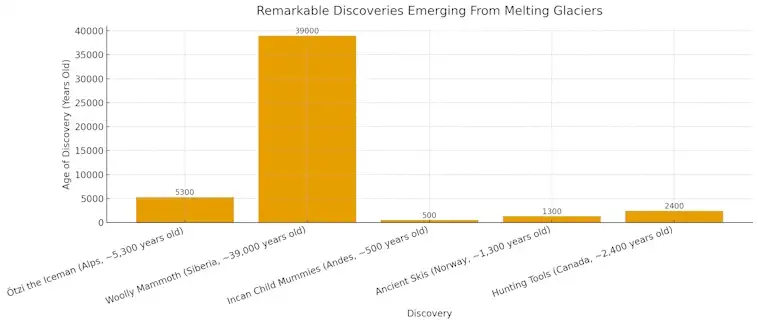
One striking example comes from the Alps, where hikers discovered a well-preserved body known as Ötzi the Iceman. He lived more than 5,000 years ago and carried tools that tell us about daily life in the Copper Age. Similar finds are now appearing in the Arctic, the Andes, and even in high mountain passes once thought too remote for human travel.
Each artifact, whether it’s a shoe, a hunting weapon, or a piece of fabric, connects us to people from the past. These discoveries show how humans adapted to changing climates before—and how our own future may depend on adapting quickly as the ice continues to retreat.
Why Ancient Ice Matters for Understanding Our Future
When scientists study ancient ice, they aren’t just looking backward. They’re also looking ahead. Ice cores and frozen layers act like mirrors, reflecting the story of Earth’s climate over hundreds of thousands of years. By reading this frozen record, we learn how our planet responds to change—and what that means for us today.
The air trapped in ice shows us how greenhouse gases and temperatures moved together over time. The patterns are clear: when carbon dioxide rises, so does global temperature. This link is vital because it confirms that today’s rapid warming isn’t just coincidence. It’s directly tied to the greenhouse gases we continue to release.
Lessons Written in Ice
One of the biggest lessons from ancient ice is the speed of change. In the past, shifts in climate happened slowly, giving life on Earth time to adapt. Today, changes are happening at a pace far faster than anything recorded in the ice. That means ecosystems, communities, and even cities face challenges unlike anything in human history.
Studying ice helps us prepare. It tells us what may happen if we keep following the same path. It also gives us hope—because understanding the past gives us tools to shape a better, more stable future.
Ancient Ice and the Stories It Holds
Ancient ice is more than frozen water. It is a library of Earth’s history, storing clues about past climates, ancient life, and even human civilizations. By studying ice cores, trapped air bubbles, microbes, and the artifacts it protects, scientists are uncovering powerful lessons about our world.
These frozen records remind us that Earth’s climate has shifted before, but never as quickly as it is today. They also show us how closely life is connected to the health of our planet. The past, locked in ice, is speaking to us now—and the message is clear. Understanding these frozen archives is key to protecting our future.
As glaciers continue to melt, the discoveries we make will shape not only our knowledge of history but also how we prepare for what’s ahead. Ancient ice isn’t just about where we’ve been. It’s about where we’re going.