

Iceberg Drift: Unusual and Hazardous Moves Worry Cities
Iceberg Drift: How Unusual Movements Are Creating New Hazards for Coastal Cities
Iceberg drift is becoming harder to predict, and that uncertainty is raising real concern for coastal communities. As these massive blocks of ice break free and wander into new waters, they can shift shipping routes, threaten offshore infrastructure, and even disrupt local economies. The changes are subtle at first, but they add up quickly, and many cities are starting to pay attention.
As weather patterns warm and ocean currents shift, scientists are seeing icebergs move in unexpected ways. These movements used to follow seasonal rhythms. Now they can swing wide, stall, or accelerate with little warning. That means more risk for vessels, fishing crews, and energy operations that depend on stable sea conditions.
Looking ahead, the trend is likely to intensify. New research suggests that changing currents and rising temperatures will push ice farther into populated shipping zones. Cities that once considered iceberg hazards a distant problem may face them at their doorstep sooner than expected. It is a moment for awareness, smart planning, and steady preparation for what could become a recurring challenge.
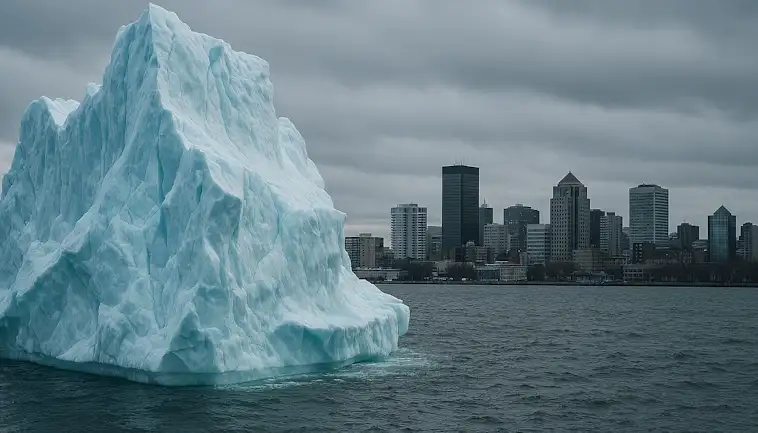
Iceberg Drift and Why It’s Becoming More Unpredictable
Iceberg drift once followed patterns we could count on. Today, that stability is slipping away. As the climate warms, icebergs break off earlier, travel farther, and move in ways that surprise even seasoned researchers. This shift matters because iceberg drift affects shipping, fishing, offshore energy, and coastal communities. It also tells us a lot about what is happening across the planet’s coldest regions.
You might wonder why iceberg drift is changing so fast. The short answer is that the ocean and atmosphere are both in flux. Warmer water melts ice from below. Stronger winds push icebergs into new routes. Ocean currents shift and tug them in unexpected directions. When all of these forces combine, the traditional models become less reliable. And as a result, predicting where an iceberg will go next is getting harder each year.
A Hidden Push from the Deep
One surprising factor behind unpredictable iceberg drift is what happens below the surface. Deep ocean layers are warming. These warmer layers rise and weaken the structure of drifting ice. That means icebergs rotate, fracture, and even accelerate in ways we didn’t often see in past decades. Over time, this leads to wilder paths that demand closer monitoring.
Even so, there is a hopeful side. New satellite tools and smarter ocean models are helping scientists track iceberg drift with better precision. And as these tools grow more advanced, we may regain some of the predictability we’ve lost. The more we understand about iceberg drift, the better prepared we’ll be for the changes ahead.
How Shifting Ice Giants Threaten Coastal Communities
The world’s largest ice sheets are moving faster than ever, and the impact is already reaching our coastlines. As temperatures rise, massive glaciers in Greenland, Antarctica, and the Arctic are melting at record speeds. This shift may feel distant, but it affects daily life for millions of people living near the sea.
Coastal communities face higher tides, stronger storm surges, and more frequent flooding. These changes do not happen overnight. They build slowly and quietly, until one day the risk becomes impossible to ignore. That is why understanding how fast the ice is disappearing is so important.
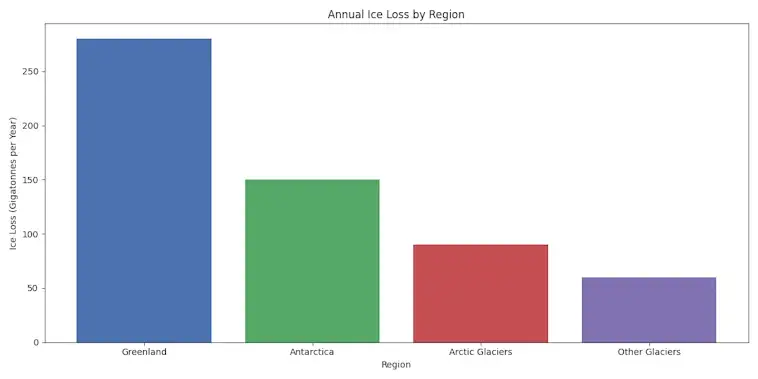
The chart below shows how much ice different regions are losing each year. When you look at the numbers, the trend is hard to miss. Greenland alone is shedding hundreds of gigatonnes of ice annually. Together, these losses push sea levels higher, placing homes, roads, and vital infrastructure at risk.
As we look toward the future, it is clear that adapting early will matter. Communities that plan now—by improving drainage, elevating buildings, or restoring natural barriers—will be far better prepared for what lies ahead. The shifting ice giants may be far away, but their influence is already on our shores.
Iceberg Drift Patterns That Signal Growing Danger
Icebergs have always moved with the currents. Yet today, their wandering paths tell a new story. And it is one we can no longer ignore. As the climate warms, iceberg drift is becoming less predictable. This shift matters because drifting icebergs can disrupt shipping routes, damage offshore platforms, and hint at deeper changes in our oceans.
Let’s take a closer look at why these patterns are changing. First, rising ocean temperatures are speeding up ice melt. That means icebergs break away more often and travel farther than before. Second, stronger and shifting currents push them into places they rarely reached in the past. As a result, regions once considered safe now face growing risks.
You can already see the signs if you look at recent satellite data. More icebergs are entering busy shipping corridors. Some are drifting south earlier in the season. Others survive longer, making their journeys more unpredictable. When you connect these changes, the trend becomes clear: the ocean is telling us something.
Here are a few key signals experts watch when tracking iceberg drift:
- Sudden increases in iceberg numbers entering shipping lanes
- Icebergs traveling farther south than historical averages
- Longer iceberg lifespans due to unusual current patterns
- Seasonal drift occurring earlier or lasting longer
- Iceberg clusters forming in new, unexpected areas
Together, these clues show how fast the environment is shifting. And while the risks are growing, understanding these patterns helps us get ahead of the danger. With better forecasting and smarter monitoring, we can protect vessels, infrastructure, and coastal communities.
As you think about the future, it helps to remember that iceberg drift is more than a scientific term. It is a warning sign—a moving marker of how our planet is changing. And by paying attention now, we give ourselves a better chance to adapt.
What Cities Can Do to Prepare for Extreme Ice Movement
Extreme ice movement is becoming more common as winters grow less predictable. Cities that once faced only light frost now find themselves dealing with shifting ice sheets, sudden freezes, and powerful breakup events. These changes can damage roads, strain utilities, and disrupt daily life. So cities need to think ahead. And they need to act early.
Preparing for these shifts does not have to feel overwhelming. With practical steps and a forward-looking mindset, communities can strengthen their defenses and protect residents. Even small changes, when planned well, can reduce risk. And as we look to the future, cities that invest now will be more resilient when ice conditions swing from one extreme to another.
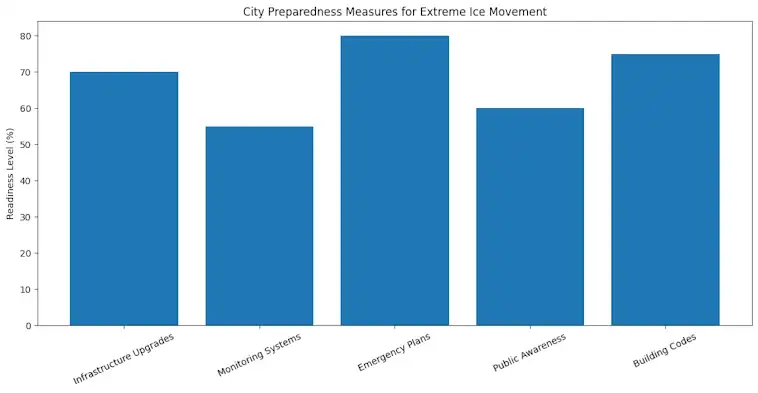
One helpful way to start is by looking at where cities already stand. The chart below highlights common areas of preparedness and how they tend to compare. It can spark local conversations and help leaders set priorities.
The Future of Iceberg Tracking and Early-Warning Systems
The world’s oceans are changing fast. Icebergs are breaking away from polar ice sheets more often, and they are moving in ways that are harder to predict. Because of this, the need for better iceberg tracking and early-warning systems is growing. This shift matters to all of us, especially as global shipping lanes, offshore energy sites, and coastal communities become more vulnerable.
Today’s systems do a good job, but the next wave of innovation is arriving. And it promises accuracy, speed, and a clearer picture of what lies ahead.
Understanding Iceberg Drift in a Changing Climate
As ocean temperatures rise, icebergs behave differently. They melt faster, break apart sooner. And they drift along new paths that can surprise even experienced researchers. This is why the future of monitoring will depend on smarter tools that learn and adapt.
New satellites already capture sharper images. Drones can now fly longer and track ice from above with real-time sensors. Even underwater robots are mapping the base of icebergs to understand how they move beneath the surface. These tools, once experimental, are quickly becoming practical.
Looking ahead, we will likely see AI-powered prediction models that update every few minutes, not every few hours. That means earlier alerts for cargo ships. More precise route planning for polar cruises. And stronger protection for offshore infrastructure.
The goal is simple: see danger sooner, and respond faster. Yet the impact is huge—not only for safety but for scientific understanding. With better tracking, we gain a clearer view of how the polar regions are shifting and what that means for the planet.
If you want a deeper look at current research, the National Snow and Ice Data Center offers accessible insights.
Together, these advances point to a future where iceberg monitoring becomes more proactive. And with that comes a safer, more informed world.
Why Iceberg Drift Deserves Our Attention
In the end, iceberg drift is more than a curious natural event. It is a growing signal of how our climate is shifting and how our communities must adapt. As icebergs break loose more often and wander into unusual waters, the risks to coastal cities, shipping routes, and local economies become harder to ignore.
Understanding how iceberg drift works—why it changes, and where it might go next—helps us stay ahead of emerging hazards. It also encourages smarter planning, better monitoring, and stronger protections for the places we rely on.
As we look forward, the message is clear: staying informed today prepares us for the challenges of tomorrow. By paying attention to iceberg drift now, we give ourselves a better chance to respond, adapt, and keep our cities safe.