

Ice Sheet Collapse: How Close Are We to the Tipping Point?
Ice Sheet Collapse: How Close Are We to the Tipping Point?
The collapse of an ice sheet is no longer a distant scenario reserved for future generations. Scientists are warning that the Greenland and Antarctic ice sheets are melting at a pace that could trigger irreversible changes. These massive frozen reservoirs hold enough water to raise sea levels by several meters, threatening coastal cities, ecosystems, and economies worldwide.
What makes the situation even more urgent is the concept of a tipping point—a threshold beyond which the ice melt accelerates so quickly that it cannot be stopped. Understanding how close we are to crossing that line is crucial, not only for climate researchers but also for communities everywhere that face rising seas and shifting weather patterns.
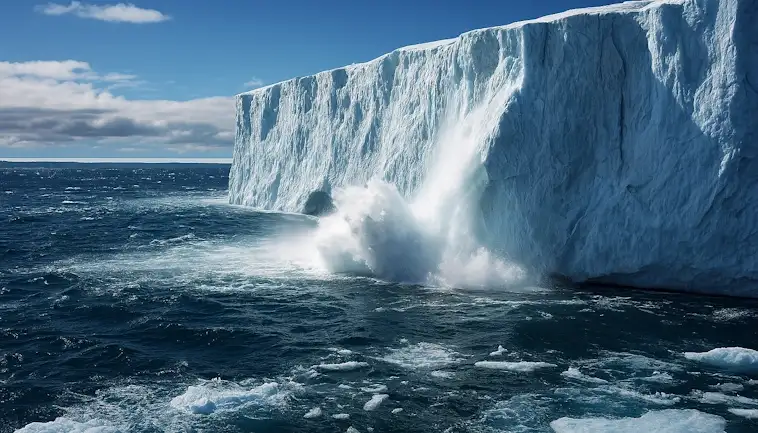
Ice Sheet Collapse and Climate Change: Why Scientists Are Alarmed
When scientists talk about climate change, the focus often turns to rising seas. At the heart of this threat are the vast ice sheets in Greenland and Antarctica. These frozen giants hold enough water to raise global sea levels by many feet. The worry is not just if they melt—but how quickly.
Researchers are finding evidence that ice sheets can collapse much faster than once believed. Instead of melting slowly over centuries, some areas are breaking apart in sudden, dramatic events. That’s why scientists are sounding the alarm. The pace of collapse matters. A few inches of sea level rise is one thing. Several feet in just a few decades would be devastating for coastal cities worldwide.
What Happens If Ice Sheets Collapse Fast?
If large sections of ice give way, the oceans will rise at a rate that communities cannot easily adapt to. Imagine sea walls that no longer protect cities, ports that flood with every tide, and neighborhoods forced to move inland. The ripple effects go beyond flooding. Agriculture, drinking water supplies, and global trade could all face serious disruption.
The message is clear: ice sheet collapse is not just a polar problem. It’s a global one. What happens in Greenland or Antarctica will directly affect lives thousands of miles away. That’s why keeping global warming in check isn’t only about saving polar bears—it’s about protecting people, economies, and the places we call home.
The Warning Signs of a Rapidly Melting Arctic
The Arctic is warming faster than anywhere else on Earth. Scientists call this “Arctic amplification,” and it’s changing our world at a startling pace. But how do we actually spot the warning signs?
First, sea ice is disappearing, which means less sunlight is reflected back into space and more heat gets trapped. Second, temperatures are rising at more than twice the global average. This triggers permafrost to thaw, releasing powerful greenhouse gases. Glaciers are shrinking too, fueling sea level rise. And all of this puts entire ecosystems—polar bears, fish, and even human communities—under pressure.
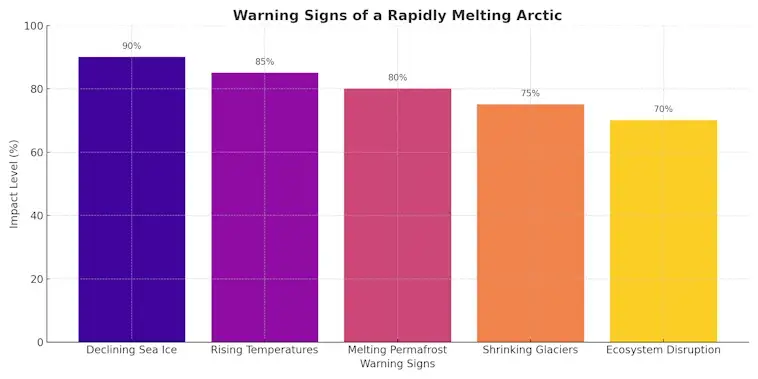
When we piece these signs together, the story is clear: the Arctic is sounding an alarm. And it’s a warning that affects not just the polar region, but every one of us.
Ice Sheet Instability: Understanding the Risk of a Sudden Shift
When we think about climate change, we often picture melting glaciers or rising seas inching higher year by year. But what many people don’t realize is that some of the world’s largest ice sheets—like those in Greenland and Antarctica—don’t always melt slowly. Sometimes they shift suddenly, creating dramatic changes that can reshape coastlines and communities in just decades, not centuries.
Scientists call this ice sheet instability, and it’s one of the most worrying “tipping points” in the climate system. Once these massive sheets of ice become unstable, the process is hard to reverse. The consequences go beyond the poles—they affect us all.
Here’s why ice sheet instability matters:
- Faster sea level rise: A sudden ice sheet collapse could raise sea levels by several feet, putting millions of homes at risk.
- Irreversible changes: Once instability sets in, the ice doesn’t return, locking in long-term impacts.
- Global ripple effects: Melting ice sheets disrupt ocean currents, weather patterns, and even food systems.
- Shorter timelines: Instead of gradual change over centuries, instability can cause dramatic shifts within a single lifetime.
The big takeaway? We’re not just dealing with slow, distant problems. Ice sheet instability reminds us that climate change can bring sudden surprises. Understanding these risks helps us prepare and adapt before the shifts happen.
How a Collapse Could Reshape Coastlines Worldwide
Imagine waking up to find your favorite beach gone or your coastal town suddenly at risk. That’s the kind of shift scientists warn could happen if major ice sheets collapse. Rising seas wouldn’t just nibble at the edges of coastlines—they could redraw the map entirely.
What does this mean for us? It means millions of people living near the ocean could see their homes, jobs, and heritage washed away. Ports, farmland, and even entire island nations could shrink or disappear. And the impact wouldn’t stop at the shore. Inland communities would also feel the effects as populations move, economies adjust, and ecosystems struggle to adapt.
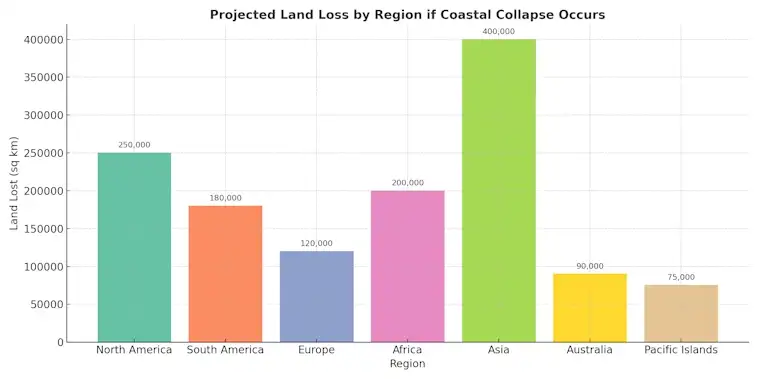
This isn’t just a distant threat. Coastlines worldwide are already under pressure. A collapse could speed up these changes, making adaptation harder and costlier. Looking at the numbers shows just how uneven the risks are from region to region.
What We Can Still Do to Slow the Melting
It’s easy to feel powerless when we hear about glaciers shrinking and sea levels rising. But the truth is, there’s still a lot we can do. Every choice we make—big or small—adds up. The key is to focus on practical steps that reduce heat-trapping emissions and protect our planet’s natural balance.
One of the most effective actions is cutting back on fossil fuels. When we use cleaner energy like solar or wind, we release far less carbon dioxide. This slows global warming, which in turn slows ice melt. It doesn’t happen overnight, but the impact builds over time.
We can also rethink how we travel. Walking, biking, or taking public transit reduces our personal footprint. These choices not only help the environment but often save money and improve health.
And let’s not forget the role of forests. Trees absorb huge amounts of carbon. Supporting reforestation projects or even planting trees in our communities makes a difference.
Protecting Ice Sheet Stability Matters
Scientists are clear: ice sheets are among the most vulnerable parts of our climate system. Once they start breaking down, the process is hard to reverse. Protecting them means limiting the global temperature rise as much as possible. That starts with collective action—from governments, businesses, and individuals alike.
The good news? Small steps at home spark bigger changes. Choosing energy-efficient appliances, cutting food waste, or speaking up for strong climate policies all move the needle. None of us can stop melting on our own. But together, we can slow it down and buy precious time for future generations.
The Time to Act on Ice Sheet Collapse Is Now
The science is clear—our planet’s ice sheets are under serious threat. While we may not have reached the tipping point yet, every fraction of a degree matters, and every year of delay increases the risk of irreversible collapse. The choices we make today will decide whether future generations inherit a stable world or one defined by rising seas and climate upheaval.
Now is the time to turn awareness into action. Support policies that cut emissions, stay informed about the latest climate research, and make sustainable choices in your daily life. Change is possible—but only if we act before the ice reaches its breaking point.