
How Rapid Polar Ice Melt Is Changing Our Climate
The Alarming Speed of Polar Ice Melt — And What It Means for Our Climate Future
The world’s polar ice is melting faster than scientists once predicted, and the consequences are reaching far beyond the frozen poles. Each year, vast sheets of ancient ice shrink a little more, sending trillions of tons of meltwater into the oceans. This rapid loss is reshaping coastlines, disrupting weather systems, and pushing delicate ecosystems to their limits.
What’s happening at the top and bottom of our planet isn’t staying there. The melting of polar regions is changing the rhythm of global climate patterns — from stronger storms and shifting ocean currents to unpredictable seasons that affect crops and communities worldwide.
Understanding these changes is no longer just about science; it’s about survival and smart adaptation. The faster the ice disappears, the more urgent it becomes to rethink how we manage our resources, design our cities, and plan for a future that’s heating up in ways we can no longer ignore.
The Fragile Balance: Why Polar Ice Matters More Than Ever
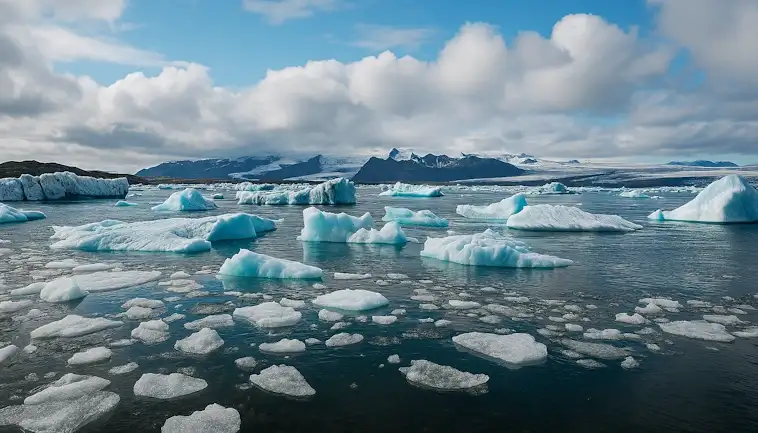
When we think about polar ice, it’s easy to picture something distant and untouched — a frozen world far away from our daily lives. But here’s the truth: those icy caps at the top and bottom of our planet are keeping everything in balance. They’re like Earth’s natural thermostat, quietly regulating global temperatures, ocean levels, and even weather patterns. And now, that balance is slipping.
The Arctic and Antarctic regions are warming faster than anywhere else on Earth. As the ice melts, it exposes darker ocean and land surfaces that absorb more sunlight. This speeds up warming even more — a dangerous loop scientists call the feedback effect. It’s not just a polar problem; it’s a global one.
A Chain Reaction We Can’t Ignore
When polar ice disappears, sea levels rise. That puts coastal cities and small island nations at serious risk. It also changes ocean currents, which can disrupt weather systems across continents. We’re already seeing stronger storms, unpredictable seasons, and shifts in marine life that affect global food chains.
But there’s another layer to this story. The polar regions store vast amounts of carbon in frozen soil known as permafrost. As temperatures climb and that ground thaws, more carbon dioxide and methane are released — powerful greenhouse gases that push global warming even further.
The melting of polar ice isn’t just an environmental issue. It’s a human one. It touches our food, our homes, our safety, and our future. Yet, there’s still time to act. Supporting renewable energy, protecting Arctic ecosystems, and reducing carbon emissions all make a difference.
Melting at Record Speed: The Science Behind the Ice Loss
It’s hard to ignore the headlines—our planet’s ice is disappearing faster than ever before. From the Arctic to Antarctica, glaciers are melting at record speed. But what’s actually driving this massive loss?
The short answer: heat. As global temperatures climb, ice that once stayed frozen year-round is now melting earlier and faster. This isn’t just a seasonal issue—it’s a structural one. Warmer oceans are eroding ice shelves from below, while rising air temperatures melt them from above. Together, they’re reshaping the map of our planet.
Scientists are using satellite data and climate models to track these changes. Their findings are clear and deeply concerning: ice loss has more than quadrupled since the 1980s. That means billions of tons of water are pouring into our oceans each year, pushing sea levels higher and increasing the risk of flooding in coastal cities.
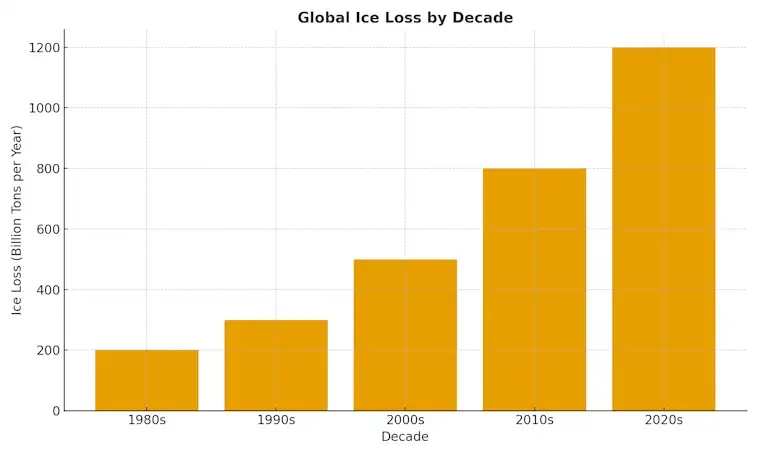
This is more than just a climate statistic. It’s a real-time warning that our planet’s balance is shifting faster than expected. The good news? Understanding the science gives us power—the power to act, innovate, and adapt before the ice is gone for good.
Polar Ice and Global Weather: The Ripple Effects We’re Already Seeing
When we think about polar ice, it’s easy to picture faraway glaciers and frozen oceans. But here’s the thing — what happens at the poles doesn’t stay there. These icy regions act like the planet’s thermostat. As they melt, they send shockwaves through our global weather systems, changing everything from rainfall patterns to ocean currents.
Over the last few decades, scientists have been warning that the melting of polar ice isn’t just about rising sea levels. It’s about the planet’s delicate balance shifting in ways we’re only beginning to understand. And now, we’re starting to feel those changes.
Let’s break down what’s happening and why it matters:
- Rising sea levels: Melting ice sheets in Greenland and Antarctica are adding trillions of gallons of water to the oceans, threatening coastal cities worldwide.
- Unstable weather patterns: The loss of Arctic ice affects the jet stream, leading to more frequent heatwaves, cold snaps, and heavy storms.
- Disrupted ocean currents: As cold freshwater pours into the sea, it slows down vital ocean circulations that regulate global climate.
- Ecosystem changes: Marine species are shifting habitats, and traditional Arctic communities are facing unpredictable seasons.
- Feedback loops: Less ice means less sunlight reflected into space, which accelerates global warming — a dangerous cycle that feeds on itself.
This isn’t some distant future scenario. It’s unfolding right now. Every melt season, satellite data confirms more ice loss than ever before. The polar regions are warming nearly four times faster than the global average — and those ripple effects reach straight into our own backyards.
If you’d like to explore the latest research on how melting polar ice is transforming our world, check out NASA’s Climate Change portal.
The bottom line? The poles are speaking — loudly. The real question is whether we’re listening.
Rising Seas, Shifting Winds: How Climate Patterns Are Being Rewritten
Our planet’s rhythm is changing. The winds, waves, and weather we’ve long relied on are no longer following familiar patterns. From stronger ocean currents to unpredictable storm paths, the natural balance that shapes our climate is being rewritten in real time.
Let’s start with the seas. Global sea levels have risen by more than 8 inches since 1900. That might sound small, but it’s already reshaping coastlines and increasing flood risks for millions. Warmer oceans also mean more energy for storms, fueling hurricanes that move slower but hit harder. Communities from Florida to the Philippines are feeling the shift.
Then there are the winds. Jet streams—the high-altitude air currents that steer weather systems—are becoming wavier and less stable. This change can lock in extreme weather patterns, making heatwaves, cold snaps, or heavy rains last longer than ever before. Scientists believe melting Arctic ice is part of the reason, disrupting the temperature balance that drives these powerful airflows.
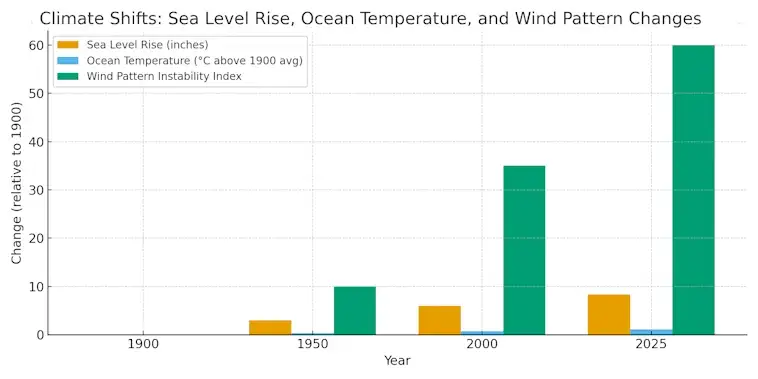
All of these changes connect. Rising seas influence coastal wind patterns, while shifting winds affect rainfall and drought cycles inland. It’s a domino effect that’s rewriting climate systems across the globe.
But here’s the key takeaway: we’re not powerless. By reducing emissions, restoring natural ecosystems, and investing in smarter climate resilience, we can still steady the winds and calm the tides. The story of our changing planet isn’t finished—we’re still writing it.
What We Can Still Do: Turning Polar Warnings Into Climate Action
Let’s face it — the melting of our polar ice caps isn’t just a distant, icy problem. It’s a loud alarm bell for all of us. But here’s the good news: there’s still time to act. What we do in the next decade will decide whether that alarm fades or keeps ringing louder.
The key is turning awareness into real, daily action. That doesn’t always mean grand gestures — it’s the small, consistent choices that add up.
Why Polar Ice Matters More Than You Think
When we talk about polar ice, we’re really talking about the planet’s cooling system. These frozen regions reflect sunlight, keeping Earth’s temperature balanced. But as they melt, the darker ocean absorbs more heat, speeding up global warming. That’s why protecting them is not just about saving penguins — it’s about protecting ourselves.
Simple actions can have big impacts. Reducing food waste, cutting down on unnecessary flights, and switching to renewable energy all help slow the melt. Even choosing sustainable brands or eating less meat supports the global effort.
And while individual change is powerful, community and political action multiply the effect. Join local environmental groups, support green policies, or volunteer for conservation projects. Every voice and vote matters.
The poles may be far away, but their future is tied to ours. Acting today means we still have a chance to rewrite the ending of this story — one choice, one person, one planet at a time.
The Future Melts With Us: Time to Act Before It’s Too Late
As polar ice continues to melt at record speed, our planet is sending a clear message: climate change is no longer a distant threat — it’s unfolding in real time. From rising sea levels to extreme weather patterns, every fraction of a degree matters. The ice that once seemed eternal is vanishing, and with it, the stability of our climate system.
But here’s the hopeful part — we still have the power to slow it down. By cutting carbon emissions, protecting natural ecosystems, and supporting sustainable innovation, we can shape a different future. The choices we make today will decide the world we live in tomorrow.