

How Global Warming Is Changing Our Planet
The Real Impact of Global Warming: How Our Planet Is Changing Before Our Eyes
Global warming is happening right now, reshaping weather patterns, melting ice caps, and disrupting the balance of life across the planet. From rising sea levels to more frequent heatwaves, the signs are becoming harder to ignore. Scientists warn that if global temperatures continue to climb, the changes we’re seeing today could accelerate in ways that touch every corner of the Earth.
The evidence is everywhere — in the shifting seasons, the unpredictable storms, and the vanishing species. Communities are already feeling the pressure, as crops struggle, coastlines erode, and ecosystems break under the strain. Yet, there’s still time to act. With innovation, global cooperation, and a stronger awareness of how our choices shape the planet’s future, we can slow the damage and protect what remains.
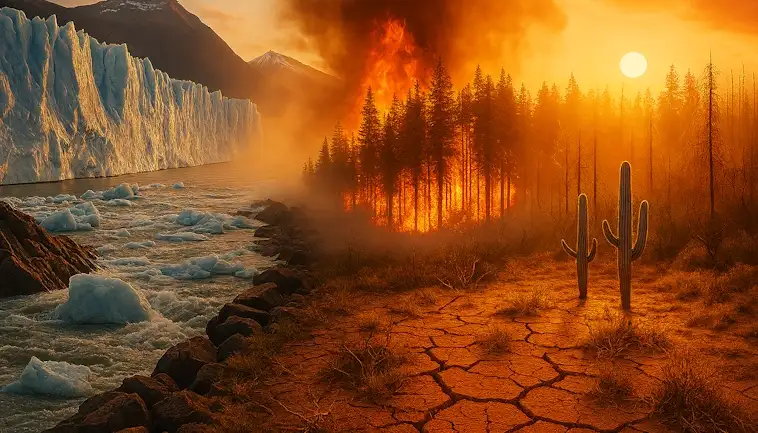
Global Warming and the Rapid Rise in Extreme Weather
Let’s be honest—global warming isn’t some far-off problem anymore. It’s here, shaping our weather in real time. From scorching summers to flash floods and record-breaking storms, extreme weather is becoming the new normal. And it’s happening faster than most of us expected.
Scientists have been warning us for years, but now the data is impossible to ignore. Average global temperatures keep climbing, pushing our climate into dangerous territory. This steady rise fuels more heatwaves, stronger hurricanes, and unpredictable rainfall patterns. Every year, headlines tell the same story—nature is turning up the volume.
The Changing Rhythm of Our Seasons
Have you noticed how seasons seem to have lost their balance? Spring comes earlier, winters feel shorter, and summer seems endless. That’s not your imagination—it’s the fingerprint of global warming. Warmer oceans feed more intense storms, while drier regions are facing historic droughts. These shifts don’t just affect the weather forecast; they ripple through our food supply, health, and even local economies.
The good news? We still have a say in how this story unfolds. By cutting emissions, protecting forests, and investing in clean energy, we can slow down the rise in global temperatures. Every action counts, from what we drive to how we power our homes.
Melting Ice, Rising Seas: The Planet’s Alarming Response
If you’ve noticed headlines about melting glaciers or shrinking ice sheets, they’re not exaggerating. Our planet’s frozen frontiers are thawing faster than ever. From Greenland’s icy peaks to Antarctica’s vast shelves, the rate of ice loss has more than doubled in the past few decades.
This melting ice isn’t just a faraway problem—it’s a global wake-up call. As glaciers and ice sheets melt, the extra water flows into our oceans. Sea levels have already climbed more than 100 millimeters since 1993, and they’re still rising. That might sound small, but it’s reshaping coastlines, flooding communities, and threatening millions of lives.
The science is clear: warmer oceans and higher air temperatures are speeding things up. Every fraction of a degree matters. And as the ice melts, it reveals darker surfaces that absorb even more heat—a feedback loop that accelerates warming.
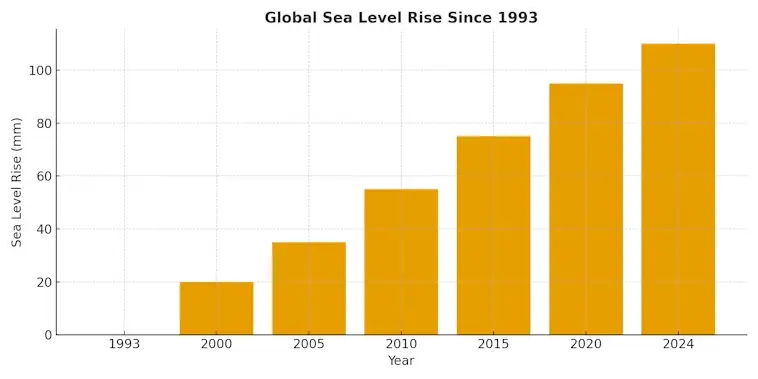
But here’s the good news. We’re not powerless. By cutting carbon emissions, restoring coastal ecosystems, and embracing cleaner energy, we can slow the pace of change. The planet is responding loudly—it’s time we listen and act.
How Global Warming Is Reshaping Life on Land and in the Oceans
Global warming is reshaping how plants, animals, and even we humans live. From the forests to the deep blue seas, life is being pushed to adapt in ways we’ve never seen before.
On land, rising temperatures are changing where species can survive. Some animals are moving north or climbing higher to find cooler habitats. Others, sadly, can’t move fast enough. Plants are blooming earlier, throwing entire ecosystems out of sync. Imagine bees waking up to find the flowers they depend on have already come and gone. That’s what’s happening.
The oceans tell an equally powerful story. Warmer waters are driving fish toward the poles and bleaching coral reefs — the rainforests of the sea. Marine life that once thrived in certain regions is now struggling to survive in warmer, more acidic waters.
Here’s how global warming is reshaping life across the planet:
- Species migration: Animals are shifting their ranges toward cooler climates.
- Changing food webs: When one species moves or disappears, entire food chains are disrupted.
- Coral bleaching: Rising ocean temperatures cause corals to lose their color and vital algae.
- Loss of habitats: Melting ice, deforestation, and drought are destroying natural homes.
- Human impact: Local communities that depend on stable ecosystems are facing new challenges — from food shortages to economic loss.
It’s not all doom and gloom, though. Scientists and communities are working together on solutions — from restoring coral reefs to creating wildlife corridors that help species migrate safely.
Understanding how global warming affects life on Earth helps us make better choices — not just for nature, but for ourselves. The more we know, the more power we have to change the outcome.
If you’d like to explore current research and practical actions, visit the Intergovernmental Panel on Climate Change (IPCC) — one of the leading global sources on climate science.
The Human Cost: Health, Homes, and Habitats Under Threat
Let’s be honest—climate change isn’t just a distant problem happening somewhere else. It’s already showing up in our hospitals, our homes, and our local wildlife. From rising asthma rates to families displaced by floods, the human cost is growing every year.
Health impacts are climbing as heatwaves intensify and air quality drops. People are struggling with respiratory diseases, dehydration, and stress. Meanwhile, extreme weather events are destroying homes, pushing millions into sudden displacement. And let’s not forget the natural world—habitats that once thrived are disappearing fast, leaving entire ecosystems unbalanced.
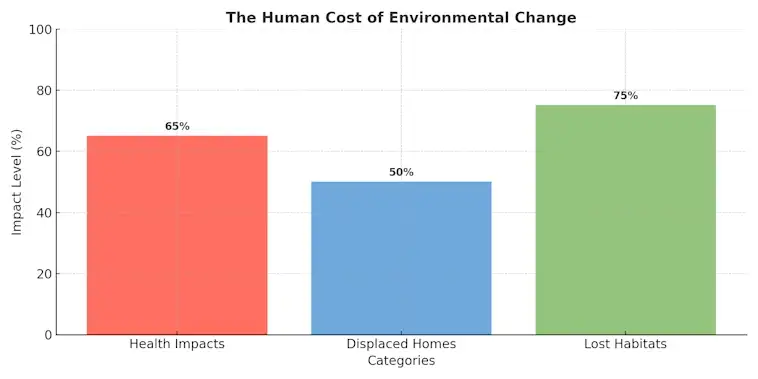
This isn’t just about statistics. It’s about real lives and the delicate balance we all depend on. Understanding the scale of the problem helps us act with urgency—and empathy.
Can We Still Turn It Around? The Future of a Warming World
It’s the question that hangs over every climate conversation: Is it too late? The truth is, we’re at a tipping point—but not a dead end. The planet is warming fast, but so is our potential to change course. Every choice, from policy to product design, still shapes the kind of future we’ll live in.
Yes, the situation is serious. Ice caps are melting, oceans are heating, and extreme weather is rewriting our seasons. But here’s the part we often forget—humans are incredibly good at adapting and innovating when it matters most. Renewable energy is now cheaper than fossil fuels in many places. Cities are rethinking transport. Farmers are restoring soil. These aren’t distant ideas—they’re happening right now.
Facing Global Warming Head-On
Global warming is here, woven into our daily lives. Yet, we’re also seeing record investments in green tech, from solar energy to carbon capture. Scientists and startups alike are racing to make clean energy scalable and affordable for everyone.
The key is momentum. Each step we take—whether it’s cutting emissions, eating more sustainably, or supporting policies that protect nature—adds up. Imagine if collective action became our new normal. That’s how big change begins.
So, can we still turn it around? Absolutely. The window is narrowing, but it’s still open. The real question is whether we’ll act boldly enough, soon enough, to make the difference.
If you want to explore how renewable energy is reshaping our future, the International Energy Agency offers great insights into what’s already working.
A Warming World—And Why Your Actions Matter More Than Ever
Global warming is reshaping our planet right now. From stronger storms to rising seas and shifting seasons, the evidence is everywhere. But here’s the thing: while the problem is global, the power to change it starts local—with us.
Every small action adds up. Cutting energy waste, eating more sustainably, supporting clean energy, and speaking up for climate-smart policies all make a difference. The more people who act, the faster we can slow the warming and protect the world we love.
Our planet’s future is still being written, and your choices help decide the next chapter. So don’t just read about climate change—be part of the solution. Start today. Reuse, reduce, and raise your voice for a cooler, safer planet.