

Has Floating Trash Reduced Marine Life in Coastal Areas?
Floating Trash and Marine Life: What’s Really Happening in Coastal Waters?
Floating trash has become a familiar sight along many coastlines, and its presence is raising serious questions about the future of marine life. Scientists and local communities are noticing changes in the number and variety of species that once thrived near shore. As the debris piles up, it creates new pressures on animals that are already struggling to survive. These early warning signs are prompting closer attention to what is happening just below the surface.
More people are starting to connect the dots. Coastal waters serve as nurseries for countless species, yet they are now crowded with plastic fragments, discarded packaging, and other waste carried by tides and storms. These materials do not simply drift without consequence. They can damage habitats, interrupt feeding patterns, and introduce toxins that move up the food chain. Over time, those effects can add up.
There is growing interest in understanding how severe the impact might be and what changes are unfolding as a result. And as research continues, one thing is becoming more evident: human choices are shaping ocean health in ways that cannot be ignored.
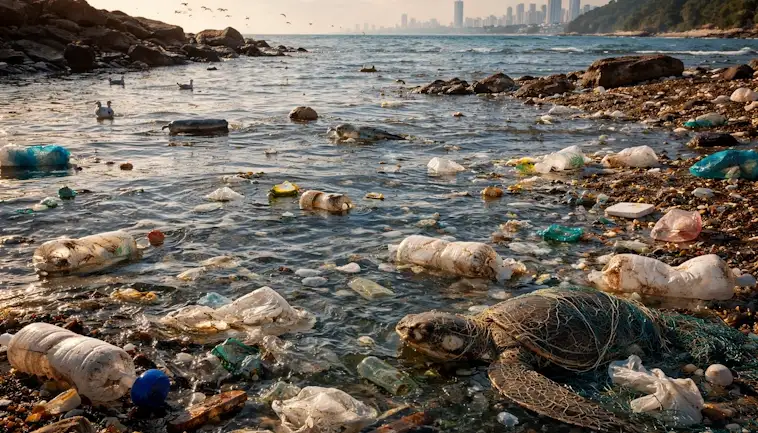
How Floating Trash Threatens the Health of Coastal Marine Life
Floating trash is one of those problems that feels distant until you see it up close. When you walk along a beach after a storm and spot plastic bottles, food wrappers, or stray fishing gear, it suddenly becomes real. And as our coastlines change, this problem is growing faster than many people realise.
Every piece of debris, no matter how small, has a story. Often it starts on land, travels through drains or rivers, and drifts out to sea. Once it reaches coastal waters, it creates a chain reaction that affects everything from tiny plankton to large sea turtles.
A Rising Tide of Hidden Dangers
Floating trash does more than clutter the surface. It blocks sunlight. Breaks down into microplastics. And it becomes tangled around fins, wings, and beaks. Over time, these stressors change how marine species eat, migrate, and reproduce. That means local ecosystems become weaker and less able to bounce back after storms, heatwaves, or pollution spikes.
What makes this issue even tougher is that floating trash spreads easily. Ocean currents carry it far from its source. A bottle tossed inland can end up miles away, harming wildlife in places that had nothing to do with the original pollution. This movement also makes clean-up efforts harder, because the debris is always shifting.
Yet there is hope. When communities stay aware and take small steps, the impact adds up. Better waste habits at home, smarter stormwater systems, and beach clean-ups all make a difference. Even simple choices, like reducing single-use plastics, help keep floating trash out of the water.
As we look ahead, the challenge will be balancing coastal development with the health of our oceans. But with more people paying attention, and with better tools on the horizon, we have a real chance to protect the marine life that depends on these waters.
The Hidden Ways Pollution Disrupts Ocean Ecosystems
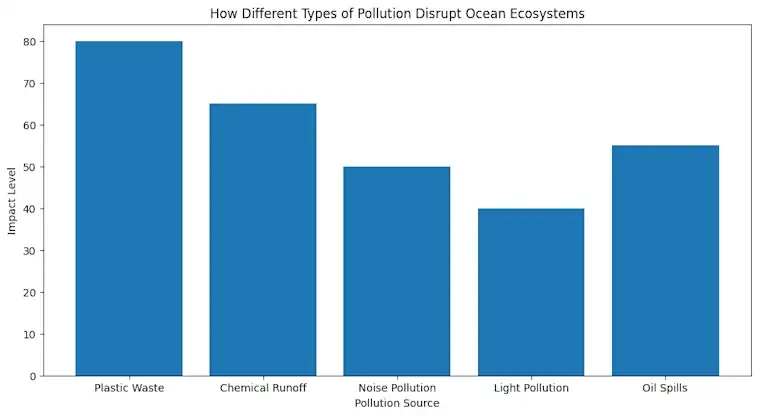
Pollution in the ocean is often easy to miss. Much of it happens out of sight, yet it affects marine life in ways that build up over time. As a result, entire ecosystems can shift before we even notice what is happening. That is why understanding these hidden pressures matters so much.
When we talk about pollution, most people think of plastic bottles or oil spills. Those are serious problems, but they are only part of the picture. Many forms of pollution are quieter and slower. They slip into the water through rivers, runoff, or even sound waves from ships. Over time, these small disruptions change how ocean species feed, grow, and move.
As conditions shift, some species struggle while others spread more easily. Coral reefs bleach faster. Fish migrate away from their usual breeding grounds. Even plankton, the base of the ocean food chain, reacts to changes in temperature and chemistry. And because everything in the ecosystem is connected, a small change in one place can ripple far beyond it.
Looking ahead, we have a real opportunity to slow these trends. Cleaner energy, better waste management, and stronger coastal protections all make a meaningful difference. And when communities stay informed, it becomes easier to push for change that protects both the ocean and the people who depend on it.
Why Floating Trash Accelerates the Decline of Local Sea Species
Floating trash may look like a surface-level problem, but it goes much deeper than most people think. As you watch bits of plastic bob on the water, it can be easy to assume the damage is limited. Yet the truth is far more troubling. This debris changes how marine life behaves, feeds, and survives. And as more trash gathers in our bays and coastlines, the pressure on local species builds fast.
This issue deserves a closer look because the impacts show up in places we do not always expect. Over time, floating trash reshapes entire ecosystems. It alters food chains. And also disrupts the natural balance that sea species rely on to recover and thrive.
Let’s walk through why the problem grows so quickly and why it matters to anyone who cares about healthy coastal waters.
Floating trash harms local sea species in several ways:
- Blocks sunlight that underwater plants need to grow.
- Carries toxins that enter the food chain.
- Traps or injures marine animals as they swim or feed.
- Introduces invasive species that travel long distances on drifting debris.
As you can see, the threat spreads across every layer of the ecosystem. And because floating trash keeps moving, it reaches new areas before communities can respond. This creates a cycle where species already under stress face even more challenges.
When you step back, a clear pattern emerges. Floating trash speeds up decline because it weakens species from multiple angles at once. It affects their food, their habitat, and even their ability to reproduce. With each passing year, the damage compounds.
The good news is that small actions still carry real weight. When we cut down what enters waterways, we slow the chain reaction. And when local groups and individuals get involved, change happens faster than most expect. That is why raising awareness and taking steady steps forward can help restore life below the surface.
Understanding how floating trash spreads harm is the first step toward turning the tide.
Evidence Linking Coastal Waste to Falling Biodiversity
Coastal waste is easy to overlook, especially when it washes up in small waves or scatters across the shoreline. Yet the effects go far beyond what we see on the surface. Over time, this pollution quietly chips away at the diversity of life along our coasts. And as biodiversity drops, the entire ecosystem becomes more fragile.
When we talk about coastal waste, we are talking about more than plastic bottles or food wrappers. We are talking about the full mix of debris, chemicals, and runoff that enters the water every day. These materials create stress that local species cannot escape. As the pressure builds, the variety of marine life shrinks.
This matters because biodiversity acts like a safety net. It keeps ecosystems stable helping species adapt to changes. And it protects local food chains. When waste builds up and biodiversity drops, everything becomes more vulnerable.
Researchers continue to uncover new links between coastal pollution and declining species. Many of them point to the same pattern. Waste reduces habitat quality. It harms sensitive species first. Then it spreads to the broader food web. As a result, even strong species begin to feel the strain.
To help you visualize this connection, here is a chart showing estimated impacts of several common coastal waste sources on local biodiversity.
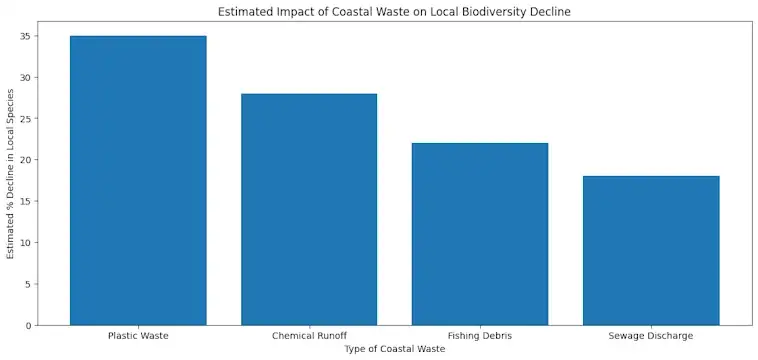
Together, this evidence paints a clear picture. Coastal waste is not just a nuisance. It is a direct driver of falling biodiversity. By reducing what enters our waterways and supporting cleanup efforts, we can slow this decline and give local ecosystems a chance to recover.
What Communities Can Do to Restore and Protect Coastal Waters
Healthy coasts don’t happen by accident. They are the result of steady community action, smart planning, and a shared belief that our shores deserve better. When people work together, change can happen faster than many expect. And that is encouraging, because our coastal waters need help now.
One of the most effective steps is improving local water quality. Communities can start with simple actions. Reduce fertilizer use. Plant native vegetation. Support wetland restoration. These efforts help filter runoff before it reaches the sea. They also create natural buffers that protect homes and wildlife.
Education is another powerful tool. When people understand how daily habits affect the ocean, they tend to make better choices. Hosting workshops, school programs, and shoreline events builds awareness. It also strengthens community pride. Over time, these small shifts build momentum for bigger improvements.
Local governments can also take the lead. Policies that limit pollution, expand green infrastructure, and preserve open space make a huge difference. Strong coastal plans protect ecosystems while also safeguarding local economies that depend on clean water.
How Floating Trash Becomes a Community Challenge
Floating debris is more than an eyesore. It harms wildlife and washes onto beaches after every storm. Communities can tackle this by installing trash traps in storm drains and organizing regular cleanups. These events bring people together and send a clear message: the coastline matters.
It also helps to support national programs working toward cleaner seas. The NOAA Marine Debris Program offers free resources and guidance that communities can use to reduce waste and protect coastal environments.
Looking ahead, coastal protection will depend on steady collaboration. When neighbors, schools, local businesses, and leaders share the same goal, the results can be remarkable. Clean water brings life back to beaches, supports coastal jobs, and creates a healthier future for everyone.
Conclusion: Why Tackling Floating Trash Now Matters Most
As we look at the changes happening along our coasts, one thing is clear: floating trash is more than a nuisance. It is a growing pressure on marine life. Yet communities still have the power to turn things around. When we reduce waste, clean our waterways, and protect fragile habitats, we give coastal species the chance to recover.
This issue will not disappear on its own. But every local cleanup, every better choice about what we throw away, and every policy that keeps debris out of the water adds up. Step by step, these efforts help rebuild healthier coastal ecosystems.
The path forward is hopeful. Because when people act together, floating trash becomes a problem we can control rather than one that controls us. By staying committed, learning as we go, and working across communities, we can create coastal environments where marine life thrives again.