

Has Coastal Erosion Sparked New Ways to Protect Our Shores?
Has Coastal Erosion Sparked New Ways to Protect Our Shores?
Has coastal erosion become more than a challenge—it may also be a catalyst for change. Around the world, shorelines are shifting as rising seas and stronger storms reshape coastlines. While the effects can feel alarming, something inspiring is happening at the same time. Communities, scientists, and innovators are working together to rethink how we live with the ocean’s power.
From nature-based defenses like restored wetlands to cutting-edge engineering, new strategies are showing that solutions are possible. Coastal erosion is no longer seen only as a threat; it is also sparking fresh ideas about resilience and sustainability. The question is not just how to slow the loss, but how to build a future where people and coastlines thrive side by side.
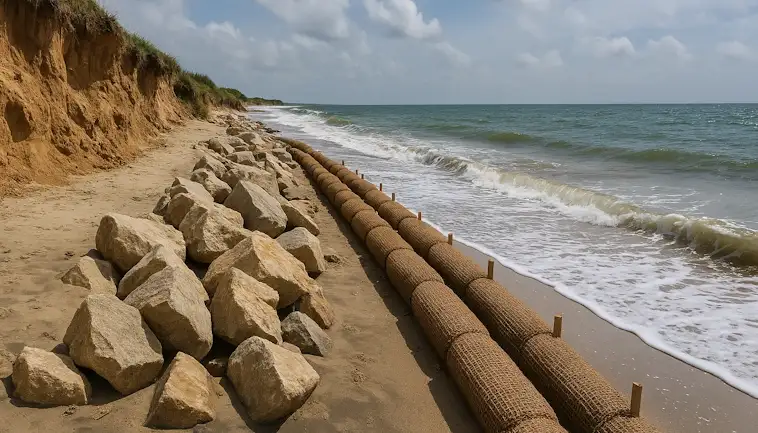
Understanding the Causes of Coastal Erosion Today
Coastal erosion is a problem we can’t ignore. Every year, beaches, dunes, and cliffs are being worn away faster than many people realize. But why is this happening? The answer lies in both natural forces and human activity.
The ocean is always moving. Waves, tides, and currents constantly reshape the shoreline. During storms, this process speeds up. Strong winds and heavy waves can remove huge amounts of sand in just a few hours. Over time, this weakens natural defenses like dunes and wetlands.
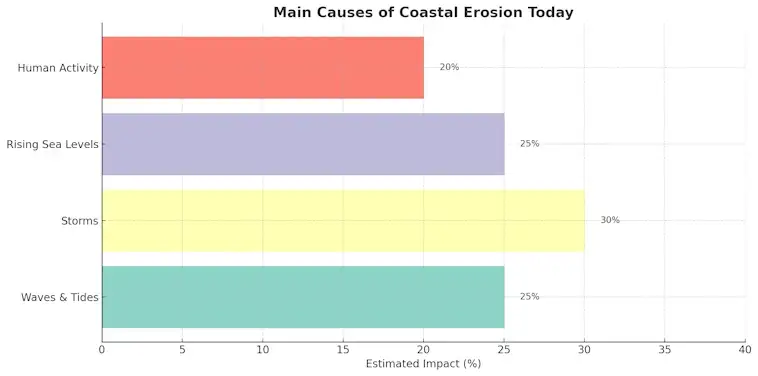
How Climate Change Speeds Things Up
Rising sea levels are one of the biggest drivers of coastal erosion today. As water levels climb, beaches become narrower and less able to absorb wave energy. Add to that stronger and more frequent storms, and erosion happens at a much faster rate.
But it’s not just nature at work. Human decisions also play a role. Building too close to the shore, removing vegetation, and constructing seawalls or jetties can all disrupt the natural balance. While these structures are often designed to protect property, they can actually push erosion further down the coast.
When you put these factors together, it’s clear why coastal erosion is becoming such a pressing issue. The shoreline isn’t just changing—it’s changing faster than ever before.
How Communities Are Adapting to Coastal Erosion
Coastal erosion isn’t just a distant problem—it’s happening right now. But the good news is, communities across the world are finding ways to adapt. Some solutions are simple, while others use new technology. What they all have in common is a focus on protecting both people and nature.
Nature as a First Line of Defense
More towns are turning back to natural solutions. Planting dune grass, restoring wetlands, and rebuilding mangroves all help slow down erosion. These ecosystems act like buffers, soaking up wave energy before it reaches homes and roads. And the bonus? They also support local wildlife.
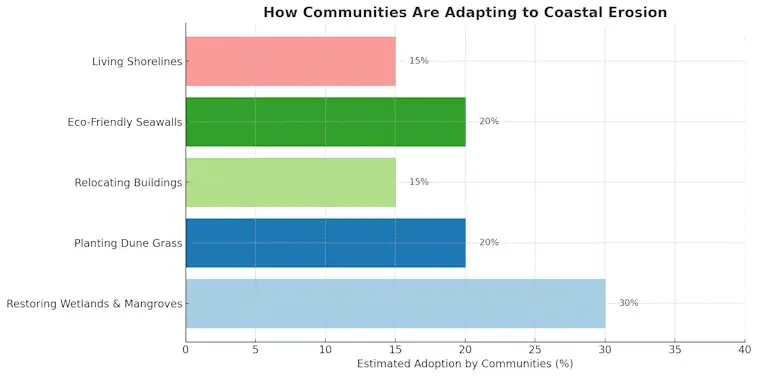
In other places, people are rethinking how and where they build. Moving homes and businesses further from the shoreline may be a tough choice, but it’s often the safest in the long run. Communities that take this approach are planning for the future, not just reacting to the present.
Technology also plays a role. Engineers are experimenting with eco-friendly seawalls and “living shorelines” that blend human design with natural features. These solutions don’t just hold back the sea—they work with it.
Adaptation looks different in every community. Some focus on restoring nature. Others invest in stronger infrastructure. Many do a mix of both. But the shared goal is clear: building resilience so that coastal life can continue for generations to come.
Innovative Solutions That Turn Coastal Erosion Into Opportunity
Coastal erosion is often seen as a threat. But around the world, some communities are flipping the script. Instead of only fighting against erosion, they’re finding creative ways to work with it. These innovations not only protect coastlines but also bring new opportunities for people and nature.
From Problem to Possibility
One example is living shorelines. These projects use natural materials like oyster reefs, sea grass, and sand to slow erosion. At the same time, they create habitats for fish and birds. What was once a problem now becomes a thriving ecosystem.
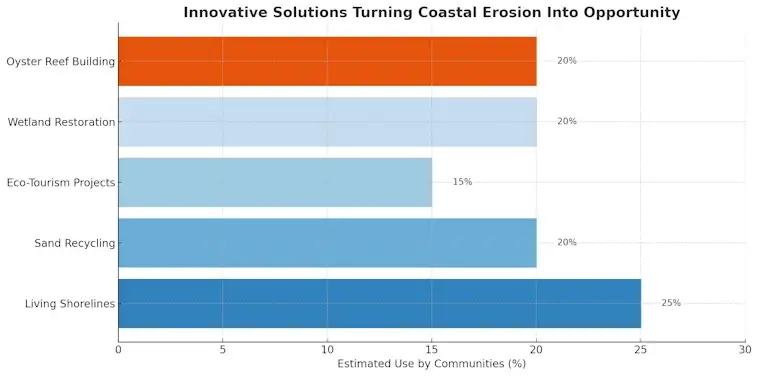
Another exciting idea is sand recycling. Instead of dredging up new sand every time a beach washes away, some towns are reusing sand that moves naturally along the coast. This approach saves money and reduces environmental damage.
In places where erosion is too strong, some communities are using it as a chance to rethink development. Abandoned areas are being turned into parks, wetlands, or eco-tourism spots. These spaces not only protect against rising seas but also attract visitors and support local economies.
What makes these solutions stand out is their positive outlook. Instead of resisting change, they adapt and transform it into something valuable. That mindset could be the key to thriving on the coast in the years ahead.
The Role of Nature in Slowing Coastal Erosion
Nature has always been the coast’s best defense. While storms and rising seas put pressure on shorelines, natural systems quietly work to keep everything in balance. By protecting and restoring these ecosystems, we can slow erosion and create healthier coasts at the same time.
Mangroves, Marshes, and More
Mangroves are one of the strongest shields against erosion. Their tangled roots trap sediment and absorb wave energy, making them powerful natural barriers. Salt marshes work in a similar way, holding soil in place while also filtering water and supporting wildlife.
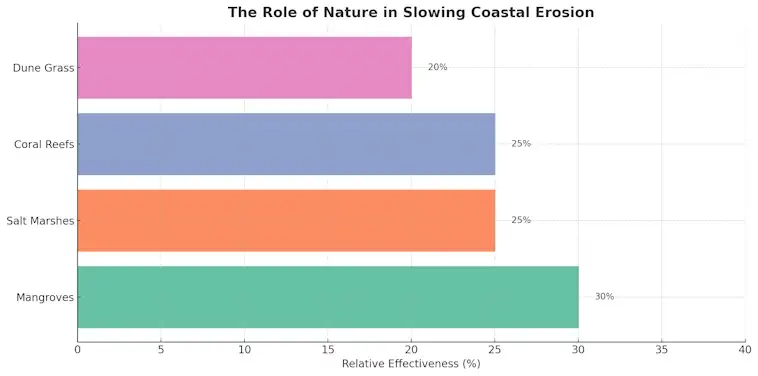
Coral reefs also play a vital role. They break incoming waves before they reach the shore, reducing erosion and protecting coastal communities. And on sandy beaches, simple dune grass helps anchor the shoreline, preventing the wind and waves from sweeping sand away.
The best part? These natural defenses don’t just stop erosion—they also bring life. They provide food, shelter, and breeding grounds for countless species. For communities, this means stronger coastlines and healthier ecosystems all in one.
Protecting nature isn’t just about conservation. It’s about working with the coast instead of against it. When we give these natural systems space to thrive, they return the favor by keeping shorelines safe.
Building a Future Where Shores Stay Strong
The future of our coasts depends on the choices we make today. Coastal erosion is a challenge, but it doesn’t have to define the story of our shorelines. With the right balance of innovation, planning, and respect for nature, we can build stronger, more resilient coasts for generations to come.
Planning With Tomorrow in Mind
Communities that look ahead are already seeing the benefits. By combining natural defenses like wetlands with smart engineering, they create shorelines that are both protective and sustainable. This mix of solutions doesn’t just slow erosion—it also supports local economies and ecosystems.
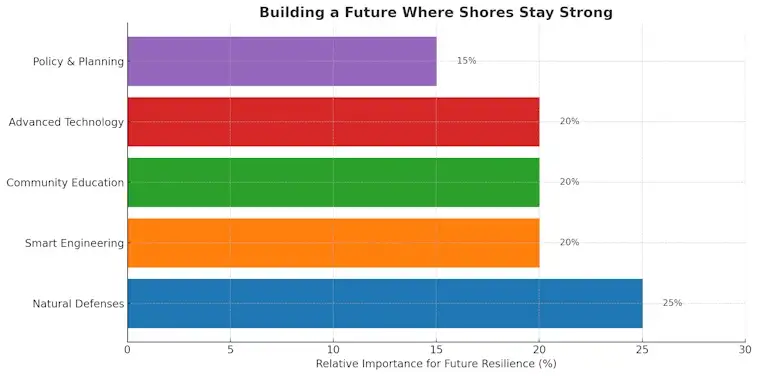
Education and awareness play a big role too. When people understand the risks and the solutions, they’re more likely to support long-term change. From school programs to community workshops, spreading knowledge is one of the strongest tools we have.
Technology will also shape the future. From satellite monitoring to advanced modeling, we can predict where erosion will hit hardest and act before it’s too late. This forward-thinking approach saves money, saves homes, and most importantly, saves lives.
A strong shoreline future isn’t just about protecting land—it’s about protecting the people, cultures, and communities who call the coast home. Together, we can make sure the next generation inherits shores that are safe, thriving, and built to last.
Protecting Our Shores Starts Today
Coastal erosion is one of the most pressing challenges of our time. It reshapes beaches, threatens homes, and impacts ecosystems. Yet, it also gives us a chance to act smarter and build stronger. By combining natural defenses, innovative solutions, and forward-looking community planning, we can protect coastlines while creating opportunities for people and nature.
The key is to start now. Every dune restored, every wetland protected, and every smart policy adopted makes a difference. Together, we can slow erosion, safeguard communities, and ensure that future generations inherit coastlines that are not just surviving—but thriving.