

Geothermal Energy: The Underground Power Shaping Our Sustainable Future
Geothermal energy is quietly powering homes, businesses, and even entire cities—all from beneath our feet. Unlike solar or wind, it doesn’t depend on the weather. It taps into the steady heat of the Earth’s core, offering a clean and constant energy source.
Right now, it plays a relatively small role in the global energy mix. But that’s starting to change. New drilling technologies, growing climate concerns, and rising demand for energy independence are turning attention underground.
Here’s why geothermal is gaining ground:
- Always on: It provides consistent power, 24/7, no matter the season or time of day.
- Low emissions: It produces a fraction of the carbon emissions of fossil fuels.
- Small land footprint: Geothermal plants use much less space than wind or solar farms.
- Long lifespan: Once built, systems can operate for decades with relatively low maintenance.
- Potential everywhere: Enhanced geothermal systems (EGS) could unlock access in regions not traditionally seen as hot spots.
With innovation pushing the boundaries of what’s possible, geothermal is no longer just for volcanic regions. It’s becoming part of the broader energy conversation. And if it continues to scale, it could be a powerful force in shaping a sustainable future—quietly, steadily, from underground.
Geothermal Energy: The Underground Power Shaping Our Sustainable Future

What Is Geothermal Energy?
Geothermal energy is heat that comes from deep inside the Earth. It’s a clean and renewable source of power that’s been around for as long as our planet has existed. This heat can be used to warm homes or buildings—and even to produce electricity.
Unlike solar or wind power, geothermal energy doesn’t depend on the weather. It’s available all the time, day or night, rain or shine. That makes it a steady and reliable option in the world of renewable energy.
How Do We Use Geothermal Energy?
The Earth’s core is extremely hot—hotter than the surface of the sun in some places. That heat slowly travels upward through layers of rock and water. In some areas, it gets close enough to the surface that we can tap into it.
To access this underground heat, engineers drill wells—like giant straws—down into the Earth. Then they bring up hot water or steam that’s been naturally heated by the Earth. This heat is used in two main ways:
- For heating: The hot water or steam can directly warm buildings, greenhouses, or even sidewalks (to melt snow in winter).
- For electricity: The steam can be used to spin turbines. Turbines are like big windmills, but instead of wind, they spin using steam. The spinning creates electricity, which can then be sent to homes and businesses.
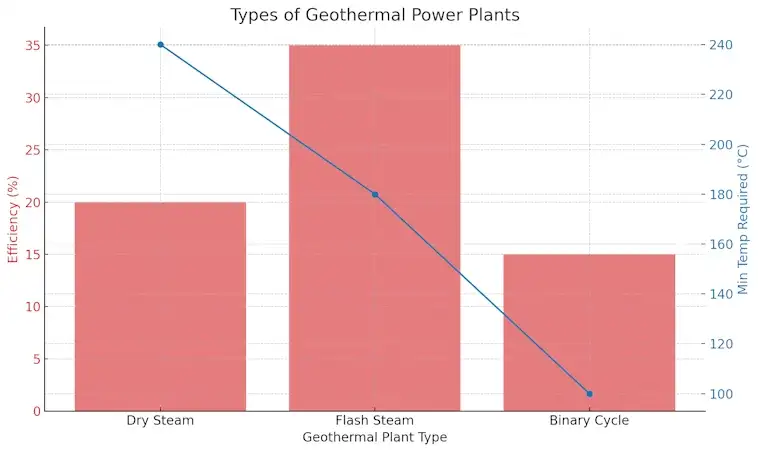
Types of Geothermal Power Plants
There are three main types of geothermal power plants. They each use the Earth’s heat a little differently, depending on how hot the underground water or steam is.
Dry Steam Plants
- These are the oldest kind of geothermal plants.
- They use steam that comes straight from underground—no extra water is needed.
- The steam goes directly into a turbine to make electricity.
- These plants work best in places where there’s a natural underground steam reservoir.
- Example location: The Geysers in California.
Flash Steam Plants
- These are the most common type in use today.
- They pull up hot water from deep underground—usually more than 180°C (around 350°F).
- As the water rises, the pressure drops, and the water “flashes” into steam.
- That steam spins the turbine to generate electricity.
- Afterward, the leftover water is sent back underground to be reheated.
Binary Cycle Plants
- These are more high-tech and can work with lower temperatures.
- Instead of using the Earth’s steam directly, they use a special liquid with a lower boiling point than water.
- The hot water from underground heats this liquid, turning it into vapor.
- The vapor then spins a turbine, just like steam would.
- This system is cleaner because nothing from underground is released into the air.
Why Geothermal Energy Matters
- It’s reliable: Unlike wind or solar, geothermal energy works around the clock.
- It’s clean: It doesn’t burn fossil fuels or release much pollution.
- It’s local: Once a system is built, the energy it produces stays close to where it’s used.
- It’s renewable: As long as the Earth exists, it will keep making heat.
Geothermal energy is already being used in places like Iceland, the United States, and the Philippines. But there’s room to grow—especially in areas where the ground is hot but not close enough to the surface yet.
Future technology may let us tap into even deeper heat or use geothermal systems in more places, even in cities. With new drilling methods and better materials, geothermal could become a bigger part of how we power the world.
And the best part? The Earth’s heat won’t run out any time soon. It’s always on, quietly waiting beneath our feet.
Why Geothermal Is a Game-Changer
When people talk about clean energy, solar panels and wind turbines usually steal the spotlight. They’re easy to see and understand. But there’s another form of renewable energy that quietly works behind the scenes—day and night, all year round. That’s geothermal energy.
Geothermal doesn’t get as much attention, but it’s one of the most reliable and powerful clean energy sources we have. It’s not just “another option.” It plays a unique and critical role in how we move away from fossil fuels.
What Makes Geothermal Different?
While solar, wind, and hydropower are all great sources of renewable energy, geothermal brings something special to the table.
It Works 24/7
- Solar only works when the sun is shining. Wind power depends on the breeze. Even hydropower can vary with rainfall or droughts.
- But geothermal? It just keeps going. It taps into heat from deep inside the Earth, and that heat is always there.
- This makes geothermal one of the only renewable sources that can provide baseload power—the steady, round-the-clock electricity that keeps the grid running, no matter the time or weather.
It Takes Up Less Space
- Geothermal plants have a much smaller land footprint than wind or solar farms.
- A geothermal power station can produce the same amount of electricity using a fraction of the space.
- That’s a big advantage, especially in places where land is scarce or expensive.
It’s Super Low on Emissions
- Geothermal energy produces extremely low amounts of greenhouse gases.
- Most of the steam or hot water pulled from underground is reused and sent back into the Earth.
- There’s no burning of fuel, and almost nothing is released into the air—just clean, constant power.
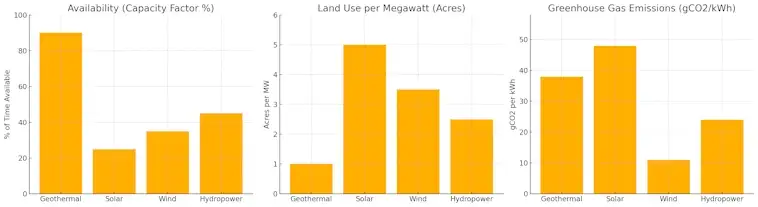
How It Fits into the Bigger Picture
Every type of renewable energy has its strengths:
- Solar is great for sunny regions and rooftops.
- Wind is powerful and efficient in breezy areas.
- Hydropower can produce a lot of electricity where there are big rivers and dams.
But geothermal is the one that doesn’t rely on nature’s moods. It’s like the quiet, reliable friend in a group—always there, always steady.
In a future powered by clean energy, we’ll need all of these sources. But we especially need ones we can count on when the sun isn’t shining and the wind isn’t blowing. That’s where geothermal shines.
A Quiet Power with Big Potential
Geothermal energy may not be flashy, but it’s incredibly valuable. It provides dependable power without taking up much space or harming the environment. And with newer technology, we can use it in more places than ever before.
So while the world turns to solar panels and wind farms, it’s worth remembering the steady power humming beneath our feet. Geothermal isn’t just part of the clean energy puzzle—it’s one of the corner pieces.
Where Geothermal Power Is Already Making an Impact
Geothermal energy might sound like a futuristic technology, but it’s already a key part of the energy mix in many parts of the world. Some countries rely on it for most of their electricity. Others are just beginning to tap into the power beneath their feet. And it’s not just for keeping the lights on—geothermal heat is used in everyday life in all sorts of surprising ways.
Here’s a look at how geothermal energy is already making a difference across the globe.
Where Geothermal Leads the Way
Iceland: A Geothermal Pioneer
- Nearly 90% of homes in Iceland are heated using geothermal energy.
- The country also gets about 30% of its electricity from geothermal power plants.
- Iceland takes full advantage of its volcanic landscape, using hot water straight from the ground for heating, bathing (think Blue Lagoon), and even melting snow off city streets.
Kenya: Africa’s Geothermal Leader
- Kenya is one of the top geothermal producers in the world.
- More than half of the country’s electricity now comes from geothermal power.
- The Rift Valley, with its natural underground heat, gives Kenya a reliable and renewable energy source that helps reduce dependence on imported fuels and supports rapid growth.
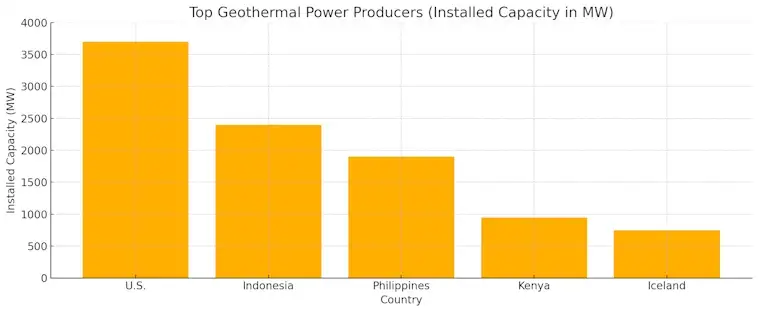
Growing Geothermal Hotspots
United States: A Sleeping Giant
- The U.S. has more installed geothermal capacity than any other country, but it’s concentrated mostly in California and Nevada.
- Places like The Geysers in Northern California, the world’s largest geothermal complex, have been producing electricity since the 1960s.
- New drilling technology and interest in “super-hot rock” geothermal could unlock much more of this potential across the country.
Indonesia: Big Plans in the Ring of Fire
- Sitting on the Pacific “Ring of Fire,” Indonesia has huge geothermal resources—second only to the U.S.
- It’s already the world’s second-largest geothermal power producer, and the government is pushing to expand this further to meet growing electricity demand in a clean, sustainable way.
Beyond Electricity: Everyday Uses of Geothermal
Geothermal isn’t just for making power. In many places, it’s used in simple, practical ways that make life better.
Heating Buildings and Water
- In colder regions, geothermal district heating systems warm entire neighborhoods or campuses.
- This is common in Europe, especially in countries like Hungary, France, and Germany.
Greenhouses and Farming
- In the Netherlands, geothermal energy helps grow tomatoes and cucumbers year-round, reducing the need for gas-powered heating.
- In Iceland, it powers large greenhouses that supply fresh produce despite the cold climate.
Snow-Free Streets
- Cities like Reykjavík in Iceland use geothermal heat to melt snow on sidewalks and roads.
- Pipes under the pavement circulate warm water, making winter commutes safer and easier.
A Resource with Global Potential
Geothermal energy is already making a big impact—and it’s just getting started. With the right investments and technology, more countries can follow the lead of Iceland, Kenya, and Indonesia.
It’s a clean, quiet, and constant source of energy that doesn’t depend on the weather. Whether it’s heating homes, growing food, or powering cities, geothermal energy is proving it can do a lot more than people once thought. And in a world looking for steady, climate-friendly solutions, that’s a big deal.
What’s Holding Geothermal Back?
Geothermal energy has a lot going for it. It’s clean, reliable, and always on. But like any energy source, it comes with its own set of challenges. These hurdles have slowed down its global growth—especially compared to solar and wind. Still, none of these problems are deal-breakers. In fact, many are already being addressed with new technology and smarter policies.
Let’s look at the key issues geothermal energy faces—and why there’s good reason to stay optimistic.
The Main Challenges
High Upfront Costs
- One of the biggest obstacles is the cost of getting started.
- Drilling deep into the Earth to reach hot rocks or underground reservoirs can be expensive and uncertain.
- It’s a bit like oil exploration—engineers often don’t know exactly what they’ll find until they drill.
- Power plants and infrastructure also add to the cost.
But here’s the good news, once a geothermal system is up and running, it’s very cheap to operate. The fuel (Earth’s heat) is free, and the plants can run for decades. New tools like 3D subsurface imaging and improved drilling methods are also reducing risks and costs over time.
Limited Suitable Locations
- Geothermal energy isn’t equally available everywhere.
- It works best in geologically active areas—think volcanoes, hot springs, and tectonic plate boundaries.
- Countries like Iceland, Kenya, and Indonesia have great access, but others may have to dig deeper or invest more to get results.
That said, new technologies like enhanced geothermal systems (EGS) are changing the game. EGS can create artificial geothermal reservoirs in places that don’t have natural ones. This could expand geothermal access to large parts of the world that were once off the map.
Environmental Concerns
- Geothermal is very low on emissions—but it’s not totally impact-free.
- In some areas, drilling and injecting water back into the ground has been linked to induced seismic activity, or man-made earthquakes. These are usually small, but they raise concerns.
- There’s also the issue of water use and the safe disposal of gases or minerals brought to the surface.
Still, these risks can be managed. Most geothermal sites now use closed-loop systems that recycle water and keep emissions minimal. Ongoing research is helping us better understand and prevent seismic risks. Compared to fossil fuels, geothermal’s environmental footprint is still extremely low.
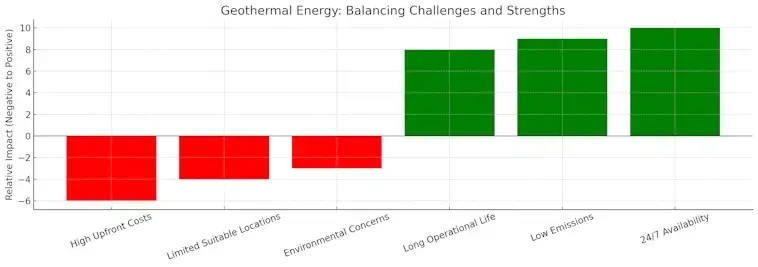
Why These Challenges Are Worth Overcoming
Every energy source has trade-offs. Solar struggles with storage. Wind needs lots of space. Hydropower can affect ecosystems. Geothermal’s main issue is that it’s underground, which makes it more complex to reach.
But that also means it’s:
- Always available
- Extremely efficient
- Long-lasting
With the right investment and policy support, geothermal could play a much bigger role in the world’s clean energy future. The technology is improving. The interest is growing. And the Earth’s heat isn’t going anywhere.
Digging Deeper, Building Smarter
The path forward for geothermal energy isn’t without bumps—but it’s far from blocked. Countries, companies, and researchers around the world are working to lower costs, expand access, and keep the process safe and sustainable.
We already have the blueprint. Now it’s about drilling smarter, investing wisely, and thinking long-term. Geothermal may be hidden underground—but its potential is right in front of us.
What’s Next for Geothermal Energy?
Geothermal energy has always had enormous promise—but until recently, it’s been limited by cost and geography. Most geothermal power today comes from areas with naturally hot underground water close to the surface. That’s great if you live in Iceland or Kenya, but not so helpful if you’re in New York or Berlin.
Now, that’s changing. Thanks to new technologies and rising investment, geothermal energy is on the verge of a breakthrough that could make it a global powerhouse. The goal? To tap into the Earth’s heat almost anywhere.
What’s New and What’s Next
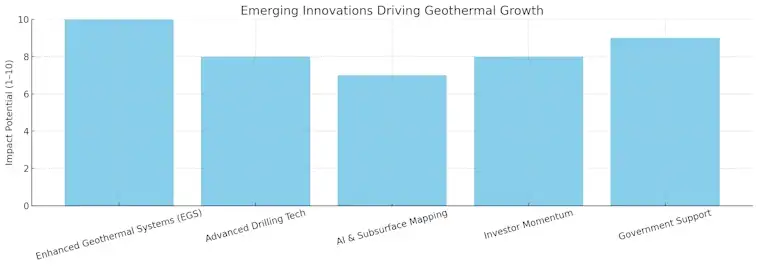
Enhanced Geothermal Systems (EGS)
- Traditional geothermal relies on natural underground water and porous rock.
- EGS is different. It creates artificial geothermal reservoirs by drilling into hot rock and injecting water to generate steam.
- This means geothermal energy could work even in places without natural hot springs or geysers.
- Countries like the U.S., Australia, and Germany are already testing EGS at scale.
EGS is often compared to fracking—but cleaner, more controlled, and without fossil fuels. It has the potential to unlock geothermal energy almost anywhere, transforming how the world thinks about baseload power.
Advanced Drilling Technologies
- One big challenge with geothermal has always been the cost of drilling deep enough to reach the heat.
- But new methods—like millimeter wave drilling (similar to microwave cutting) and plasma-based systems—could change that.
- These approaches are faster, cheaper, and produce less wear on equipment.
Startups and research groups are pushing boundaries here, trying to drill hotter and deeper than ever before. The deeper we go, the more energy we can access—and the more places geothermal becomes viable.
AI and Smart Subsurface Mapping
- Artificial intelligence is helping make geothermal exploration much more precise.
- AI models can analyze geological data to predict where underground heat sources are located and which areas are safest and most cost-effective to drill.
- This reduces risk, speeds up planning, and improves the success rate of new geothermal projects.
The result? Lower costs and faster development, even in previously overlooked locations.
Money and Momentum Are Building
Investor Interest Is Rising
- With clean energy demand growing fast, geothermal is catching the attention of venture capital and energy companies.
- Major firms like Google and Chevron are backing geothermal startups.
- Several startups—like Fervo Energy and Quaise Energy—have raised millions to scale next-gen geothermal technologies.
Governments Are Getting On Board
- The U.S. Department of Energy is funding pilot projects to prove EGS can work at scale.
- The European Union and Australia are also supporting geothermal innovation with grants and incentives.
- Policy is shifting to recognize geothermal not just as a niche option, but as a major piece of the renewable puzzle.
Why It Matters
Geothermal energy has the potential to be:
- Constant: Always available, unlike solar or wind.
- Clean: Very low emissions.
- Compact: Requires far less land than wind or solar.
- Expandable: With EGS and modern tech, it could be used nearly everywhere.
The path forward is clear. With smart investments and continued innovation, geothermal could become one of the world’s most important clean energy sources—not just in hot, volcanic regions, but anywhere we need power.
It’s an exciting time to watch what’s happening under the surface.
Conclusion
Geothermal energy may not be the flashiest renewable, but it’s one of the most powerful. It offers clean, constant energy that works day and night, with a tiny land footprint and almost no emissions. From heating homes in Iceland to powering cities in Kenya, it’s already proving what’s possible.
With new technologies like enhanced geothermal systems and smarter drilling methods, we’re no longer limited to volcanic hotspots. The heat beneath our feet is everywhere—we just need the tools to reach it.
As governments invest, startups innovate, and the world pushes for cleaner power, geothermal is stepping into a much bigger role. It’s not just another option in the energy mix—it’s a cornerstone of a more reliable and sustainable future.