

Frozen Front Proven Deadly as a Sudden Surge Builds
Frozen Front Highlights Growing Risks as Sudden Surges Become More Common
A frozen front can turn from a quiet sweep of cold air into a life-threatening force faster than most people expect. When temperatures plummet and pressure shifts, the atmosphere behaves like it’s been shaken awake. Conditions tighten. Winds sharpen. And suddenly a surge builds that can overwhelm entire regions before communities have time to react.
As colder seasons grow more unpredictable, the risks grow with them. Sudden freezes now arrive with greater strength and less warning, pushing emergency systems to their limits. Yet people still step outside each day assuming the weather will behave. Understanding why these fronts become so deadly — and how they gain momentum so quickly — is becoming more important as new patterns take shape.
This moment calls for sharper awareness and a readiness to adapt. The signals are there. But the question is whether we recognize them in time.
What You’ll Discover
Frozen Front Brings a Rapid and Deadly Shift in Weather
Why a Sudden Surge Caught Communities Off Guard
Frozen Front Fuels Dangerous Conditions Across Wide Areas
How Fast-Moving Cold Air Turns Winter Storms Deadly
What This Event Signals for Future Extreme Weather Risks
Frozen Front Brings a Rapid and Deadly Shift in Weather
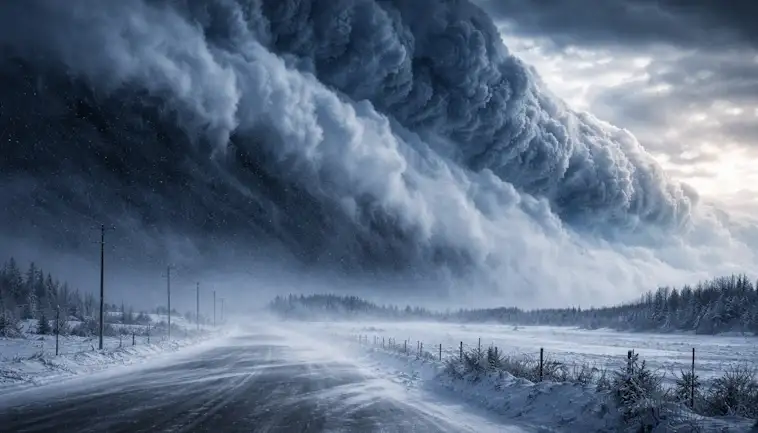
When a frozen front sweeps in, it can feel like the world changes in an instant. One day the air is crisp but manageable. The next, temperatures plunge, roads glaze over, and everyday routines suddenly turn risky. These sharp swings are becoming more common, and they catch people off guard. That’s why it’s worth slowing down and looking at what actually happens during one of these fast-moving cold surges—and why they matter more than ever.
A frozen front is not just cold air pushing through. It’s a collision of systems that can rebuild an entire weather pattern within hours. As warmer air retreats, the atmosphere destabilizes. This shift can trigger heavy snow, flash freezes, and even dangerous winds. Because everything unfolds so quickly, communities often have only a narrow window to prepare.
When the Temperature Turns Against You
Think about the last time you stepped outside and felt the cold hit you like a wall. That’s the human side of a frozen front. But beyond that sensation, there’s a cascade of everyday impacts. Roads become slick before plows roll. Power lines sag under sudden ice. Commutes grow unpredictable. And people with limited mobility or health issues face real threats when the thermometer drops faster than forecasts suggest.
As we look ahead, these rapid shifts may become even more intense. Weather patterns are trending toward more volatility, not less. So understanding how a frozen front forms—and how it disrupts daily life—helps us respond more confidently next time one appears on the horizon.
If we treat these sudden freezes not as rare surprises but as expected seasonal events, we can adapt with less stress and fewer risks. After all, preparation is far easier than reacting in the moment.
Why a Sudden Surge Caught Communities Off Guard
When temperatures plunge without warning, it doesn’t just disrupt plans. It disrupts entire communities. And a sudden surge did exactly that. One moment, conditions looked manageable. Then a sharp drop hit, and people were left scrambling. As we look more closely at what happened, it becomes clear why so many felt unprepared.
Forecasts had hinted at a cool-down, but not at the speed or intensity of the shift. That rapid change left little time for crews to treat roads or for families to adjust their routines. Even well-built infrastructure strained under the sudden stress. Power lines iced up. Transit slowed to a crawl. And emergency services were stretched thin almost immediately.
A Chain Reaction of Small Delays
The truth is, most communities can handle cold. What’s harder is handling cold that arrives too fast. We move through our days assuming we’ll have time to react. Yet with a sudden surge, that margin can vanish. And once the first delays began—slippery roads, late buses, overloaded call centers—everything else follows.
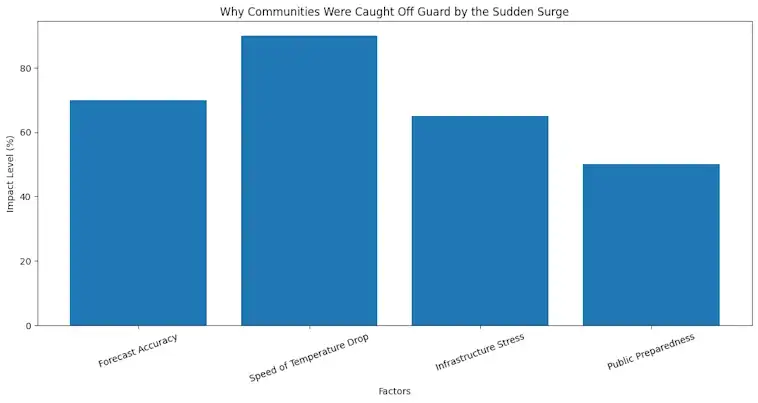
A quick glance at the chart below shows why a sudden surge can be so disruptive. Weather models didn’t fully capture the timing. The temperature drop was extreme. Infrastructure struggled. And the public didn’t have enough time to adapt. When these factors line up, even a familiar season can feel dangerously unpredictable.
As we look forward, these abrupt shifts may become more common. Understanding what caught us off guard this time helps us respond faster next time. Preparation isn’t just about cold weather. It’s about the pace of change—and how ready we are when it comes.
Frozen Front Fuels Dangerous Conditions Across Wide Areas
When a frozen front sweeps across large regions, it doesn’t just bring a chill. It reshapes daily life in ways we often underestimate. As temperatures plunge and moisture in the air turns to ice, entire communities can slow to a crawl. Yet many people don’t realise how quickly these conditions can escalate. So let’s break down what’s really happening when a frozen front takes hold — and why it matters for all of us.
A frozen front forms when deeply cold air pushes into warmer, wetter air. This clash sets the stage for rapid icing, heavy snow, and reduced visibility. It also increases the risk of sudden travel hazards. And while these events aren’t new, they are becoming more disruptive as weather patterns grow more unpredictable. That’s why understanding what to expect helps you stay one step ahead.
Here are a few things you might notice as a frozen front settles in:
- Ice forming on roads and walkways, often faster than people anticipate
- Heavy, wet snow that weighs down trees and power lines
- A sharp drop in visibility due to blowing snow or freezing fog
- Increased chances of power outages as infrastructure strains under icy conditions
These impacts may seem simple on the surface. However, together they can create a chain reaction of delays, disruptions, and safety risks. That’s why it’s so important to track updates, prepare early, and adjust your plans when needed.
As we look ahead, frozen fronts may hit more often and with greater strength. But with the right awareness and a bit of planning, you can navigate these events with confidence. Staying informed is the first step toward staying safe — and your future self will thank you for it.
How Fast-Moving Cold Air Turns Winter Storms Deadly
When cold air sweeps in fast, winter storms can shift from manageable to dangerous in a matter of hours. You’ve probably felt that sudden temperature drop before a storm hits. It can feel sharp and immediate. And that’s often the first clue that conditions are about to change more than most people expect.
Fast-moving cold air creates a pressure imbalance. As it crashes into warmer, moisture-rich air, storms intensify. Snow falls faster. Ice forms quicker. Winds pick up dramatically. And visibility drops in minutes, not hours. This rapid escalation makes it harder for people to react in time, which is why these storms tend to catch communities off guard.
You might notice how quickly the landscape transforms. Roads become slick. Power lines strain under ice. Trees bend or snap. And travel becomes risky even for experienced drivers. When the air shifts that fast, so does the level of danger.
As weather patterns continue to evolve, we’re seeing more storms fueled by dramatic temperature swings. That means the relationship between fast-moving cold air and storm intensity will only grow more important to understand. Staying alert to these shifts helps you plan earlier, adjust faster, and avoid the worst of the impact.
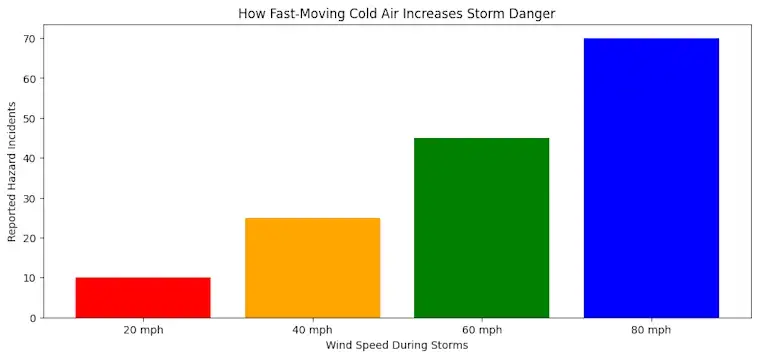
Here’s a chart that shows how hazard incidents rise as wind speeds increase during cold-air-driven storms.
What This Event Signals for Future Extreme Weather Risks
When a major weather event hits, it’s easy to see it as a one-off shock. Yet events like this are actually signals. They show us how our climate is shifting and what risks may grow in the years ahead. As temperatures rise and weather patterns become more unstable, extremes become more common. And they also become harder to predict.
Today, more researchers are pointing to a pattern: storms are intensifying faster, heat waves are lasting longer, and cold outbreaks are becoming more chaotic. Agencies like NOAA now track these swings with far more urgency. Their data makes one thing clear. The next decade won’t look like the last.
The Frozen Front and What It Reveals
A frozen front might seem like an isolated cold snap. However, it often forms when the jet stream weakens and dips, dragging Arctic air to places that aren’t prepared for it. This wobble also fuels heavier snow, sharper temperature drops, and disruptions that ripple through transport, energy systems, and public safety.
What’s striking is how these fronts now collide with warmer surrounding air. That clash helps build stronger storms. It also heightens the risk of rapid freeze–thaw cycles, which damage roads, power lines, and even buildings. So while the event itself may pass in a few days, the consequences linger.
Looking ahead, the real story is not just about cold or heat. It’s about volatility. And with more volatility comes a greater need for early warnings, resilient infrastructure, and public awareness. If we understand what these events are telling us—early and clearly—we can respond faster and safer.
For deeper context on how temperature extremes are evolving, you can explore updated climate trend data from the NOAA.
Conclusion: Why the Frozen Front Demands Our Attention
As we wrap up, it’s clear that the frozen front isn’t just another dramatic headline. It’s a warning sign. Events like this show how fast extreme weather can escalate and how unprepared many communities still are. And while the science keeps improving, the pattern is already visible: colder blasts are snapping harder, storms are building faster, and the window to act is shrinking.
Still, there’s room for optimism. When we treat these events as signals—not surprises—we can adapt. We can strengthen our grids, protect vulnerable neighborhoods, and improve early-warning systems. Most importantly, we can start talking about these risks in a way that helps people understand what’s coming next.
So the takeaway is simple. A frozen front may strike quickly, but its meaning lasts longer. Paying attention now puts us in a better position to stay safe, stay informed, and stay ready for whatever the next season brings.