

From Waste to Watts: How Nature’s Leftovers Are Powering the Future
From Waste to Watts: How Nature’s Leftovers Are Powering the Future
Fossil fuels have powered the world for over a century, but their time at the top is running out. Around the globe, communities, scientists, and companies are looking for cleaner, smarter, and more sustainable ways to meet our growing energy needs. And some of the most surprising solutions are coming from unexpected places—nature’s leftovers.
Organic waste, once seen as little more than a smelly problem, is quickly becoming a valuable resource in the race toward a cleaner energy future. From banana peels to sewage sludge, what was once destined for the landfill is now being turned into electricity, heat, and even transportation fuel.
This shift isn’t just about technology. It’s about rethinking how we see waste and designing systems that work with nature rather than against it.
Looking ahead, as technology improves and the urgency to act on climate intensifies, waste-to-energy innovations could play an even bigger role in reshaping how the world thinks about both garbage and power.

Why Organic Waste Is More Valuable Than Ever
We live in a world where energy shortages, climate shocks, and resource scarcity are no longer distant threats. They’re happening now, reshaping industries and challenging governments to rethink waste, pollution, and how we produce energy. Amid these global shifts, something surprising is emerging as a hero: organic matter.
That’s right. Food scraps, farm residues, and even human sewage are becoming prized resources in a world hungry for sustainable solutions.
From Garbage to Gold
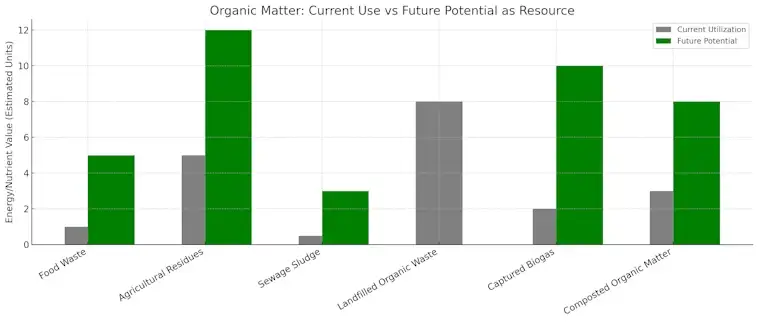
For decades, organic waste was just that—waste. It was landfilled, incinerated, or left to rot. But today, the narrative is changing fast. Thanks to advances in technology and mounting environmental pressures, this “waste” is being rebranded as a resource packed with untapped energy and nutrients.
Here’s why industries and governments are paying attention:
- Energy Crisis Pressure: With fossil fuels under scrutiny and energy security becoming a priority, organic matter offers a renewable, local, and low-carbon alternative. Technologies like anaerobic digestion, which turns food scraps and sewage into biogas, are scaling up globally.
- Climate Change Urgency: Organic waste in landfills produces methane—a greenhouse gas far more potent than CO₂. Diverting this waste to create energy not only reduces emissions but also creates a closed-loop system where nothing goes to waste.
- Circular Economy Trends: The linear economy (take, make, waste) is giving way to a circular model where materials are reused, recycled, or recovered. Organic matter is central to this shift. Composting, biogas, and nutrient recovery are all part of the puzzle.
What’s Driving This Momentum?
Several converging factors are making organic matter a hot commodity:
- Policy Push: The EU’s Green Deal, China’s circular economy strategy, and even local city mandates are pushing for organic waste separation, biogas production, and composting.
- Technological Maturity: Technologies that once seemed niche—like biodigesters or biorefineries—are now proven, affordable, and scalable.
- Corporate Responsibility: Brands are being held accountable for their carbon footprints. Investing in organic waste recovery is an easy win for companies seeking greener operations.
A Future Built on Banana Peels and Manure?
It might sound unglamorous, but the future of energy, food systems, and even urban planning could hinge on how well we harness organic matter. Imagine cities that turn restaurant scraps into biogas for city buses. Or farms that transform manure into electricity and fertilizer. This is not sci-fi. It’s already happening in parts of Europe, Asia, and North America.
But the opportunity is still largely untapped. According to the UN, nearly 30% of all food produced globally is wasted, much of which could become energy or compost.
Why It Matters Now
We can’t afford to see organic matter as garbage anymore. It’s a key ally in:
- Fighting climate change
- Reducing reliance on fossil fuels
- Building resilient, circular economies
As individuals, businesses, and communities, there’s an urgent need to embrace this mindset shift. Organic waste isn’t a problem to bury. It’s a solution waiting to be unlocked.
The Science Behind Bioenergy
Ever wondered how your banana peel could fuel a bus? Or how leftover corn stalks might one day power your home? It’s not magic—it’s science. And thanks to modern technology, this science is becoming a cornerstone of clean energy strategies around the world.
In a time when climate change, energy insecurity, and resource scarcity dominate the headlines, the ability to turn organic waste into power is no longer a novelty. It’s a practical, scalable solution. But how does it actually work? Let’s break down the main processes that make this possible.
Anaerobic Digestion: Letting Nature Do the Heavy Lifting
What it is:
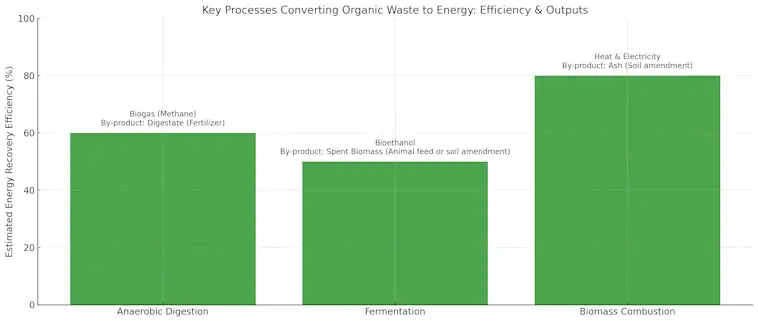
Anaerobic digestion is a natural process where microbes break down organic matter—like food scraps, manure, or sewage—without oxygen. This happens inside sealed tanks called digesters.
The science made simple:
Think of it like a giant stomach. Inside the digester, bacteria munch away at the waste, producing two main by-products:
- Biogas: A mixture of methane and carbon dioxide that can be used like natural gas for heating, electricity, or even vehicle fuel.
- Digestate: A nutrient-rich sludge that can be used as fertilizer.
Real-world use:
Cities like Copenhagen are already using biogas from food waste to power city buses and heat homes.
Fermentation: Turning Sugar into Biofuels
What it is:
Fermentation is the same process used to make beer and wine. But instead of alcohol for drinking, it produces biofuels like ethanol.
The science made simple:
Microbes (often yeast) feed on the sugars in plant waste—think corn stalks, sugarcane, or even kitchen scraps. They convert those sugars into ethanol, a type of alcohol that can be blended into gasoline or used as a cleaner fuel alternative.
Real-world use:
Brazil has been a global leader in using sugarcane ethanol to fuel cars, significantly cutting its oil imports.
Biomass Combustion: Burning Smart, Not Dirty
What it is:
This is the oldest method of turning organic matter into energy—burning it. But modern biomass plants do it cleanly and efficiently.
The science made simple:
Organic waste—like wood chips, agricultural residues, or specially grown energy crops—is burned in high-efficiency plants to produce heat and electricity. Unlike coal or oil, the carbon released is roughly balanced by the carbon the plants absorbed while growing, making it more climate-friendly.
Real-world use:
In Sweden, biomass combustion is a key part of district heating systems that warm entire neighborhoods using wood waste from forests.
Beyond Theory: Why This Matters Now
These processes might sound technical, but they’re already being used in farms, cities, and industries around the world. They help tackle:
- Waste management issues
- Energy security gaps
- Greenhouse gas emissions
And the best part? They turn something we used to throw away into something we desperately need: clean, local, renewable energy.
Whether it’s through digestion, fermentation, or combustion, the science behind converting organic waste into power is proven, approachable, and powerful. By understanding these methods, we can see banana peels, corn stalks, and kitchen scraps not as garbage—but as fuel for a cleaner, smarter future.
Powering Cities with Leftovers
It’s easy to think of food scraps, manure, and sewage as little more than messes to be cleaned up. But around the world, cities and communities are proving that this “waste” can be a force for good—and for clean, local energy.
At a time when the world is grappling with rising energy prices, climate pressures, and pollution, these inspiring examples show that the future of energy isn’t just about wind turbines and solar panels. It’s also about banana peels, corn stalks, and human ingenuity.
Here’s how some places are leading the charge.
Sweden: Biogas Buses Fueling Climate-Friendly Cities
In Sweden, trash isn’t just garbage—it’s fuel for a cleaner society.
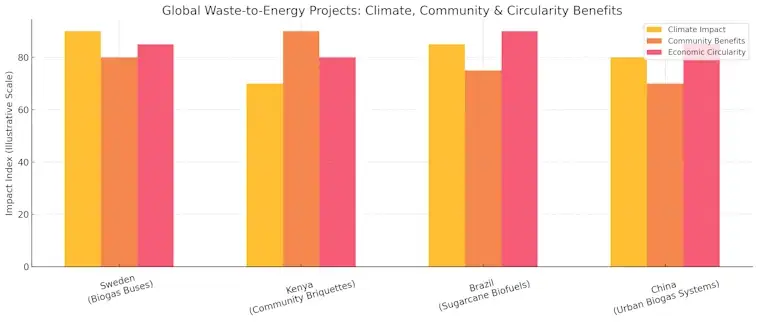
Cities like Stockholm and Linköping have built robust systems where food waste, sewage sludge, and even slaughterhouse leftovers are collected and processed into biogas. This biogas fuels city buses, waste trucks, and taxis.
Key impacts:
- Cleaner air: Biogas buses produce far less air pollution than diesel.
- Local loops: Waste collected locally powers local transportation, reducing dependence on imported fuels.
- Climate win: Biogas cuts greenhouse gas emissions by up to 90% compared to fossil fuels.
Sweden’s success shows how cities can turn unavoidable waste into an everyday fuel source, making public transport both cleaner and greener.
Kenya: Empowering Communities Through Waste-to-Energy Innovation
In Kenya, where energy access can still be a challenge, local innovation is unlocking the power of waste.
One example is Sanivation, a social enterprise that collects human waste from underserved communities and transforms it into fuel briquettes. These briquettes replace charcoal and firewood, reducing deforestation and indoor air pollution.
Key impacts:
- Health benefits: Cleaner-burning fuel improves indoor air quality, reducing respiratory illnesses.
- Economic opportunity: Local waste collection and briquette production create jobs.
- Environmental gains: Reduces open defecation and protects forests.
Kenya’s grassroots projects show how waste-to-energy isn’t just for wealthy nations—it can also uplift communities, improve health, and create local business opportunities.
Brazil: Sugarcane Waste Fuels a Transportation Revolution
Brazil has long been a pioneer in biofuels, but what’s truly inspiring is how they use agricultural waste—not just crops—to produce clean energy.
Sugarcane bagasse, the fibrous material left after juice extraction, is now used to generate electricity and produce second-generation ethanol. This helps Brazil power its grid and keep cars running with low-carbon fuel.
Key impacts:
- Energy independence: Reduces Brazil’s reliance on oil imports.
- Waste valorization: Turns what used to be a low-value by-product into a key energy resource.
- Rural benefits: Supports farmers and rural economies by adding value to waste streams.
China: Circular Cities Closing the Loop on Waste
Cities like Shenzhen are leading the way in integrating food waste collection, anaerobic digestion, and biogas into urban systems.
Key impacts:
- Urban resilience: Diverting food waste from landfills reduces methane emissions and improves urban sustainability.
- Circular economy: Biogas is used for power and heat, while the remaining digestate is used as fertilizer for urban agriculture.
China’s example shows how megacities can design systems that close the loop, making cities part of the solution, not the problem.
The Big Picture: From Local to Global
These examples—from Stockholm to Nairobi, from São Paulo to Shenzhen—prove that the science of turning waste into energy works everywhere. Whether it’s fueling city buses, powering homes, or improving health, these projects:
- Make waste a resource, not a burden.
- Deliver real benefits to communities and economies.
- Show scalability from small villages to global megacities.
Most importantly, they remind us that the energy revolution isn’t happening in boardrooms or labs alone—it’s happening in neighborhoods, farms, and city streets, led by people who see opportunity where others see garbage.
What’s Holding Bioenergy Back?
Bioenergy from waste sounds like a no-brainer, right? Turning food scraps, sewage, or agricultural leftovers into clean energy checks both the environmental and economic boxes. But while the technology exists and the benefits are clear, its widespread adoption has been surprisingly slow.
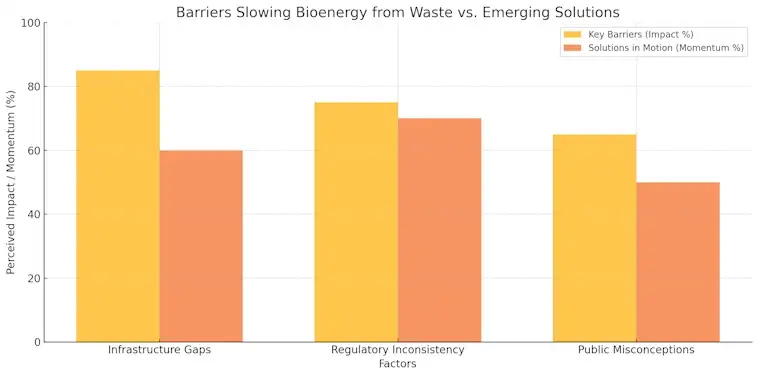
It’s not just about the tech. The roadblocks are more human and systemic. From outdated infrastructure to stubborn public misconceptions, several obstacles stand in the way. But the good news? A new wave of startups and policy reforms are stepping up, determined to close the gap between potential and reality.
Let’s break down the hurdles—and meet the changemakers aiming to overcome them.
Key Obstacles Slowing Bioenergy from Waste Adoption
Infrastructure Gaps
- Many regions lack the collection, sorting, and processing infrastructure needed to turn waste into energy at scale.
- Rural and emerging markets face particular challenges where waste is either burned, dumped, or left to decompose.
- Existing energy grids aren’t always designed to integrate small-scale, decentralized bioenergy inputs.
Inconsistent Regulations and Permits
- Rules around waste-to-energy plants differ wildly between countries—and sometimes even between neighboring cities.
- Permitting can take years, with bureaucratic delays stalling projects.
- In some areas, outdated environmental standards still classify all forms of waste burning as harmful, lumping bioenergy in with polluting incineration.
Public Misconceptions and NIMBYism
- Many still associate bioenergy with pollution or bad odors.
- “Not in my backyard” (NIMBY) attitudes delay projects even when the actual environmental footprint is low.
- People often confuse bioenergy from waste with fossil-based biofuels or landfill gas, muddying public debate.
The Innovators and Policy Shifts Changing the Game
Startups Turning Waste into a Business Opportunity
- HomeBiogas (Israel): Bringing compact, user-friendly biodigesters to homes, farms, and small businesses, making waste-to-energy personal and tangible.
- Charm Industrial (US): Innovating carbon-negative bio-oil production from agricultural residues, focusing on scalable climate solutions.
- UBQ Materials (Israel): Converting unsorted municipal waste into a new kind of thermoplastic that replaces oil-based plastics—showing that waste can be raw material for more than just energy.
Policy Momentum
- The EU’s Circular Economy Action Plan is pushing for stronger incentives for waste-to-energy projects that support decarbonization and resource efficiency.
- California’s SB 1383 law mandates the diversion of organic waste from landfills, creating fresh demand for bioenergy infrastructure.
- Emerging carbon credit markets are starting to reward projects that turn waste into bioenergy—especially those with measurable methane reduction or carbon capture benefits.
Looking Ahead: Will Bioenergy from Waste Break Through?
The signs are promising. As cities look for local, low-carbon energy sources and as waste management becomes an unavoidable issue, bioenergy from waste is poised for growth. But to truly scale, we need:
- Smarter, clearer policies that cut red tape.
- Better public communication that tells success stories, not just science.
- Scalable tech that’s not just green, but also economically irresistible.
The journey is bumpy, but the innovators are on the move. Bioenergy from waste might not yet be mainstream—but it’s no longer stuck in the margins.
How You Can Plug into the Waste-to-Energy Revolution
Bioenergy from waste isn’t just a story of complex technology and big industry players. It’s also about what everyday people, local businesses, and communities do. Small actions, when multiplied, can add up to big changes.
While we wait for infrastructure and policy to catch up, there are plenty of ways to get involved, advocate, or support the systems that turn waste into clean energy. And the beauty? Many of these actions also help reduce emissions, cut waste, and support local economies.
Here’s how you can plug into the waste-to-energy revolution.
Practical Ways to Participate and Support
For Individuals
- Compost at Home or Join a Local Composting Hub: Composting food scraps reduces methane from landfills and can support local bioenergy or biogas projects that rely on organic feedstock.
- Support Companies Using Bioenergy or Bioproducts: Buy from brands that use bio-based materials or energy from waste. Look for certifications or transparency on energy sourcing.
- Advocate for Better Local Waste Management: Contact local officials to push for municipal composting programs, anaerobic digesters, or better organic waste collection systems.
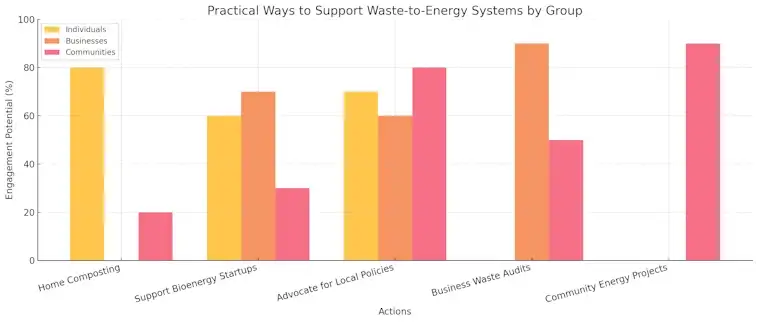
For Businesses
- Audit and Rethink Waste Streams: Map your organic waste flows. Partner with local biodigesters, composters, or waste-to-energy services to divert waste sustainably.
- Invest in Circular Supply Chains: Source from suppliers that turn waste into energy or bioproducts. Consider installing small-scale biodigesters for energy needs (especially in hospitality or agriculture sectors).
- Collaborate with Bioenergy Startups: Offer your waste streams as test cases or pilots for startups innovating in waste valorization or energy conversion.
For Communities
- Establish or Support Community Energy Projects: Community-scale biodigesters or biogas cooperatives are gaining popularity in rural and urban settings alike.
- Push for Local Policy Change: Advocate for ordinances that support organics recycling, incentivize bioenergy projects, and reduce landfill dependence.
- Host Awareness Campaigns: Educate your community on the difference between traditional waste-to-energy and cleaner, modern bioenergy systems.
Hope, and the Power of Small Actions
The future of bioenergy from waste isn’t in someone else’s hands. It’s in ours. Every meal you compost, every startup you support, every policy you help shape nudges us closer to a cleaner, more circular energy future.
And the best part? You don’t need to be an engineer or policymaker to make a difference. Change can start right at home, at your local store, or in your neighborhood meeting hall.
Waste isn’t just waste anymore—it’s an opportunity waiting to be tapped.
Conclusion
The journey from nature’s leftovers to clean, usable energy is no longer a distant dream. It’s already happening in cities, on farms, and even in backyards. Waste-to-energy systems are proving that what we once threw away might actually be the key to a more resilient, local, and circular energy future.
Yes, there are still hurdles to clear—outdated infrastructure, patchy policies, and misconceptions that slow progress. But they aren’t insurmountable. Around the world, communities, startups, and everyday people are stepping up to drive this transformation from the ground up.
The most exciting part? This isn’t just about big technology or sweeping regulations. It’s also about everyday choices—composting that banana peel, supporting businesses that turn waste into fuel, and making sure local leaders know that clean, community-powered energy matters.
From kitchen scraps to community grids, the future of energy might be a lot closer than we think. And it smells less like smoke and more like possibility.