

Forest Protection: The Battle to Save Our Green Lifeline
Why Forest Protection Is Key to Fighting Climate Change and Securing Our Future
Forest protection has become one of the most urgent challenges of our time, as rising global temperatures, illegal logging, and land clearing threaten these natural carbon stores. Every tree cut down not only releases carbon but also weakens the planet’s ability to heal itself.
Around the world, scientists, communities, and activists are racing to preserve what’s left. From tropical rainforests to boreal woodlands, these ecosystems support wildlife, purify air and water, and regulate weather patterns. Yet, despite their importance, forests continue to vanish at an alarming rate.
Protecting them isn’t just about conserving nature—it’s about securing the foundation of human life. With new technologies, sustainable policies, and local action gaining ground, there’s still hope for turning the tide and keeping our green lifeline alive for future generations.
Why Forest Protection Matters More Than Ever
Let’s be honest—most of us know forests are important. But it’s easy to forget just how much they shape our everyday lives. Forest protection isn’t just about saving trees. It’s about safeguarding the air we breathe, the water we drink, and the climate that keeps our planet stable.
Think about it. Forests act like Earth’s lungs, absorbing carbon dioxide and releasing oxygen. They cool the air, store rainfall, and create habitats for millions of species. Yet every year, huge areas are cleared for farming, mining, and development. When that happens, the balance of nature starts to tip—and the effects ripple out to all of us.
The Hidden Value of Forests
Here’s something many people overlook: protecting forests supports local economies too. Forests provide food, medicine, and sustainable jobs for communities that depend on them. When managed responsibly, they can be both a source of livelihood and a shield against climate change.
But forest protection isn’t just a local issue—it’s global. What happens in the Amazon or Congo Basin affects weather patterns around the world. The loss of one forest can mean droughts, floods, and extreme weather elsewhere.
For more on how forests influence climate and biodiversity, the World Wildlife Fund Forests offers great insights and ways to get involved.
Protecting forests today means a safer, greener tomorrow. And that’s something worth standing up for.
How Deforestation Is Quietly Reshaping Our Planet
It’s easy to think of deforestation as something happening far away—deep in the Amazon or in remote parts of Asia. But the truth is, its effects ripple across the globe, touching every one of us. Forests aren’t just trees; they’re living systems that balance our climate, clean our air, and protect countless species. When they disappear, that balance starts to crumble.
Over the last few decades, the pace of deforestation has accelerated. According to global data, we lose around 10 million hectares of forest every year. That’s roughly the size of Portugal—gone annually. Beyond the obvious loss of trees, this has a domino effect on biodiversity, rainfall patterns, and even global food security.
When forests vanish, carbon dioxide builds up in the atmosphere. The soil becomes weaker, and nearby rivers dry out faster. This means more heat, less rain, and fewer natural barriers against floods and droughts. And it’s not just tropical regions feeling the impact. Shifts in weather patterns caused by deforestation are now being linked to extreme weather events across North America, Europe, and Asia.
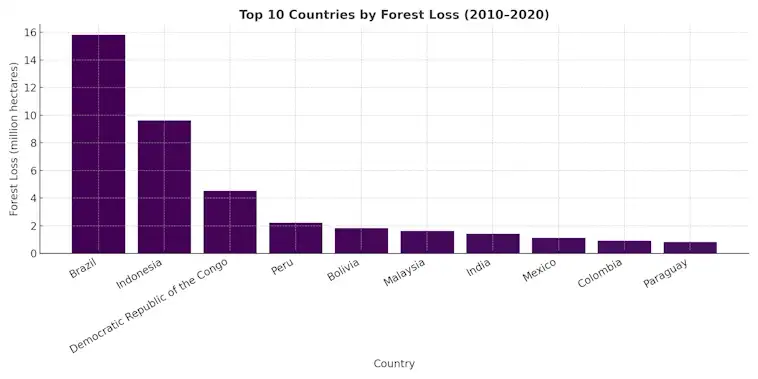
If this trend continues, scientists warn that some ecosystems may never recover. The good news? There’s still time to change course. The more people act, the greater the chance we have to restore balance to our planet.
The Future of Forest Protection: Turning Words Into Action
When we talk about forest protection, it often sounds like a noble idea — and it is. But the real shift is no longer just about saying we care. It’s about acting in ways that ensure our forests are alive, healthy and resilient for decades to come.
As we look ahead, we face a series of opportunities and challenges. From rising wildfire risks to the need for more diverse forests and inclusive management, the road forward is both exciting and urgent. The good news? We all have a role to play — and turning words into action is more achievable than ever.
Here’s what the future of forest protection could look like:
- Commitment to proactive stewardship: going beyond passive protection by monitoring, restoring and managing forests actively.
- Embracing diversity in tree species and forest types so ecosystems are more resilient to climate change, pests and diseases.
- Expanding community-led and locally governed forest initiatives, where those living near forests take the lead in protecting them.
- Preventing forest loss by linking protection measures to economic incentives, policy support and sustainable land-use planning.
- Using data and early warning systems to track threats like fires, pests or deforestation before they become unmanageable.
- Creating stronger partnerships between government, private sector, local communities and NGOs to share resources and knowledge.
- Mobilising more investment into forest protection — not just planting new trees, but safeguarding existing ones and restoring damaged forest land.
- Ensuring policy frameworks support forest protection at every level — local, national and global — with accountability, transparency and clear targets.
Some of the world’s leading examples already highlight this approach. For instance, the Forest Stewardship Council says that for forests to truly become our allies in the face of climate change, we must enhance their resilience and protect ecosystems around the world.
If you’d like to see how global forest protection efforts are progressing, check out the Global Forest Watch. It’s a great resource for tracking deforestation and seeing where action is making a difference.
The next chapter of forest protection isn’t about more speeches. It’s about making choices. It’s about every landowner, every policy-maker, every community and every one of us saying: Yes, I will act. Because forests don’t wait. And neither should we.
Community Heroes: Grassroots Movements Saving Our Forests
When we talk about saving the planet, it’s easy to picture big organizations or government initiatives. But some of the most powerful defenders of our forests are ordinary people — local heroes who’ve rolled up their sleeves to protect what’s left of the world’s green lungs.
Across the globe, grassroots movements are stepping in where policy often falls short. In Brazil’s Amazon, community-led patrols watch over thousands of acres once targeted by illegal loggers. In Kenya, local women’s groups plant trees faster than they’re being cut down. And in India, village cooperatives are reviving ancient forest management traditions to restore balance with nature.
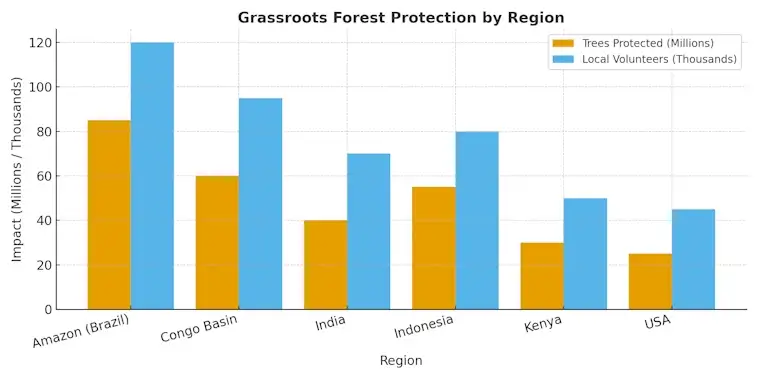
What’s driving this quiet revolution is connection — people who live closest to the forests understand their value in a deeply personal way. They know that protecting trees means protecting their water, their crops, and their children’s future.
What You Can Do Today to Help Restore the World’s Forests
It’s easy to feel powerless when we hear about forest loss. But the truth is, every small step we take adds up. Whether you live near a forest or in a city, your choices can help restore and protect the lungs of our planet. Forests aren’t just beautiful—they’re vital. They clean our air, store carbon, and shelter countless species. So, how can you make a difference starting today?
Everyday Actions for Forest Protection
Start simple. Reduce your paper use and choose recycled products whenever you can. These small decisions cut the demand for new wood and protect existing forests. If you buy furniture or building materials, look for certification labels like FSC (Forest Stewardship Council)—they guarantee the wood comes from responsibly managed forests.
You can also support reforestation projects. Many organizations let you fund tree planting with just a few clicks. Even better, choose companies that plant trees for every purchase. It’s a win-win—you get what you need, and the planet gets a little greener.
And don’t underestimate your voice. Talk about forest protection with friends. Share articles, start conversations, and encourage others to care. Social pressure can spark big change, especially when it’s about protecting something as important as our forests.
If you’re ready to go further, consider volunteering with a local conservation group or donating to global projects that focus on forest restoration. One great place to start is One Tree Planted, a nonprofit that plants trees around the world.
Because when more of us act—even in small ways—the results can be huge. Forests can recover. Wildlife can return. And together, we can rebuild a greener, more balanced world.
Standing Together for Our Forests’ Future
Forests are more than just trees — they’re the living lungs of our planet, protecting our air, water, and wildlife. Yet, every year, we lose millions of acres to deforestation, climate change, and short-sighted policies. The battle to save these green lifelines isn’t just an environmental cause; it’s a fight for our collective survival and well-being.
But there’s still hope. From local conservation projects to global reforestation efforts, every action counts. Supporting sustainable products, speaking up for stronger environmental laws, or even planting a single tree can make a real difference.
If you care about cleaner air, thriving wildlife, and a stable climate, now’s the time to act. Share this message, get involved with a forest protection initiative, or start one in your own community. Our forests need defenders — and that starts with you.
Let’s protect the roots of life before they disappear.