

Changing Weather Is Quietly Reshaping Life Around Us
Changing Weather Is Quietly Reshaping Life Around Us
Changing Weather is not just about sudden storms or warmer summers—it’s reshaping daily routines, local economies, and even the way communities connect with each other. From shifting planting seasons that affect the food on our tables to unusual rainfall patterns altering how cities prepare for floods, the ripple effects reach far and wide. These changes often unfold quietly, yet they touch everything from travel plans to the cost of groceries. Paying attention to these subtle shifts helps us see how the environment and human life are more closely linked than we might realize.

How Changing Weather Is Altering Our Daily Routines
Weather has always shaped the way we live, but lately it feels more personal. The heatwaves, sudden storms, and shifting seasons are no longer distant news stories. They’re knocking at our doors, reshaping the way we move through everyday life.
For many of us, mornings look different. Instead of a quick jog, we’re checking air quality apps before stepping outside. Lunch breaks aren’t always in the park anymore—too hot, too humid, or sometimes too smoky. Even grocery runs are shifting to earlier or later hours to avoid extreme temperatures.

Why Your Commute Feels Different
Transportation is one of the biggest routines being disrupted. Trains slow down in high heat, roads flood after sudden downpours, and walking or cycling often feels unbearable in rising temperatures. More people are working from home when the weather is extreme, not just for comfort but for safety.
And it’s not only travel. Our sleep patterns are shifting as warmer nights make it harder to rest. Energy bills climb because fans and air conditioners are running longer. Parents are adjusting kids’ playtimes, and outdoor events are being rescheduled or even canceled.
The truth is, these aren’t small changes. They add up to a new normal where planning your day means planning around the weather. The routines we once took for granted—commuting, shopping, exercising, even relaxing—are being rewritten by the climate outside our window.
The Hidden Costs of Changing Weather on Local Economies
When the weather changes, it doesn’t just affect the sky above us. It affects the money in our pockets and the heartbeat of local communities. Many towns and cities rely on stable seasons to keep their businesses running smoothly. But with unpredictable storms, hotter summers, and wetter winters, that balance is slipping away.
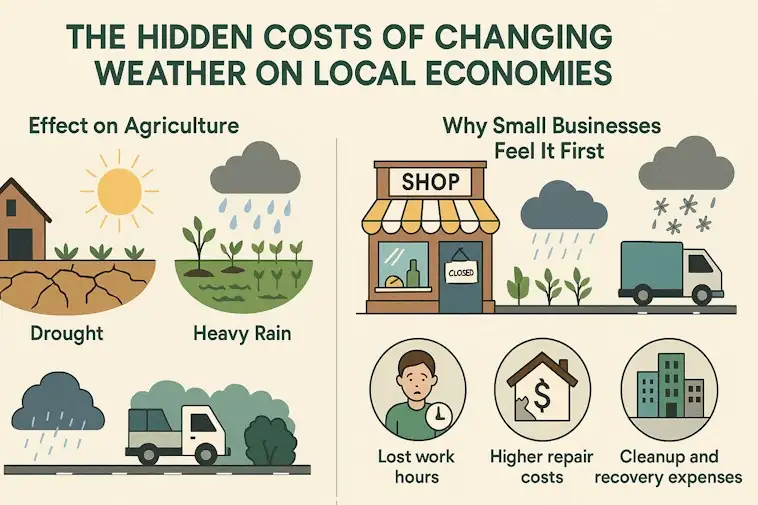
Take farming, for example. A sudden drought can wipe out crops that families depend on for both food and income. On the flip side, too much rain can flood fields and delay planting. The result? Higher prices at the grocery store and less money for local farmers.
Why Small Businesses Feel It First
It’s not just farmers who feel the pinch. Small businesses, like corner shops, restaurants, and local services, often carry the weight of these weather shifts. If extreme heat keeps people indoors, cafes see fewer customers. If heavy snow closes roads, deliveries are delayed, and shelves stay empty.
These disruptions ripple through entire communities. Workers may lose hours, families spend more on repairs, and local governments face unexpected costs for cleanup and recovery.
The hidden truth is that changing weather has a price tag that doesn’t show up on the evening forecast. It’s quietly shaping the strength of our neighborhoods and the future of local economies.
Why Changing Weather Is Affecting Our Health More Than We Realize
We often talk about how the weather shapes our daily plans. But what’s less obvious is how it’s shaping our health. Shifts in temperature, air quality, and extreme events are having a bigger impact on our bodies than most people realize.
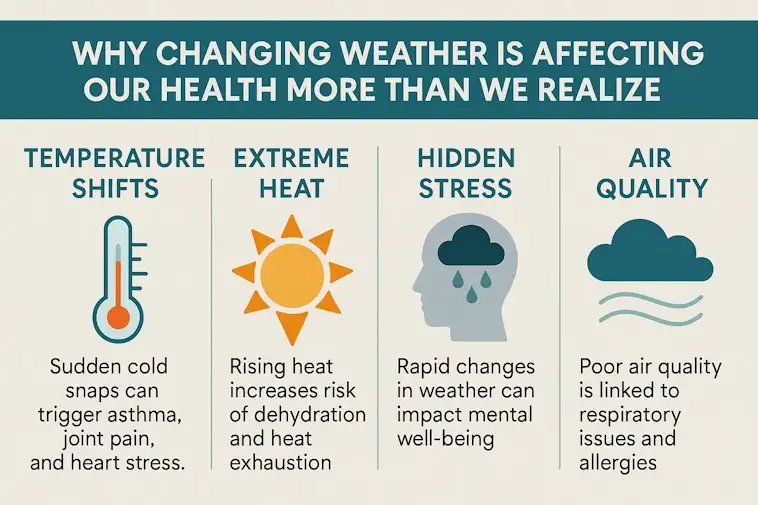
When the seasons feel unpredictable, our immune systems struggle to keep up. Sudden cold snaps can trigger asthma, joint pain, and even heart stress. On the other hand, extreme heat puts older adults and children at greater risk of dehydration and heat exhaustion. These risks are rising as heatwaves grow longer and more intense.
The Hidden Stress on Our Bodies
It’s not just about physical health. Rapid weather changes also affect our mental well-being. Studies show that extreme heat can heighten anxiety, disrupt sleep, and even influence our mood. Meanwhile, natural disasters like floods or wildfires leave lasting emotional scars long after the skies clear.
All of this points to a bigger truth: climate and health are deeply connected. Yet, because the effects often feel subtle or delayed, we don’t always see the link. The cough that lingers, the restless nights, or the spike in allergies—these may all tie back to the weather shifting around us.
The more we understand these connections, the better we can protect ourselves and our communities. Simple actions—like staying hydrated, using air filters, or checking local air quality alerts—can make a real difference.
Nature’s Response: Wildlife and Ecosystems on the Move
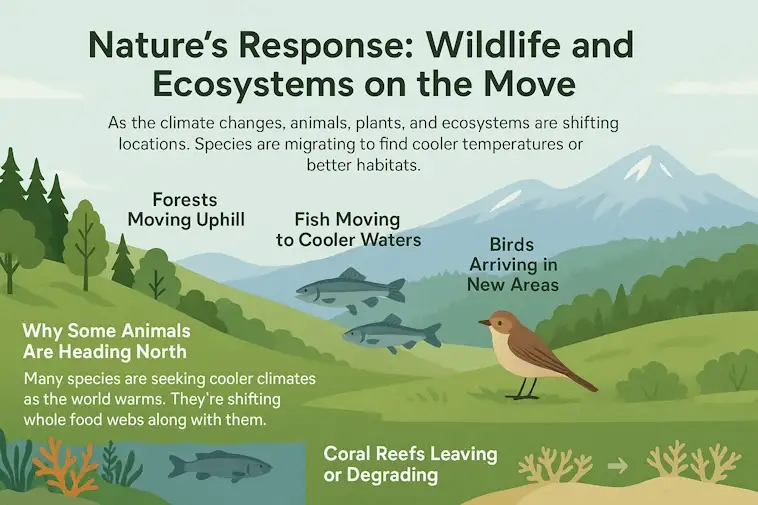
Nature doesn’t stand still. As the climate shifts, animals, plants, and even entire ecosystems are on the move. Forests are creeping uphill. Fish are swimming into cooler waters. Birds are showing up in places they’ve never been spotted before. It’s nature’s way of adapting, but the speed of change today is unlike anything we’ve seen before.
Why Some Animals Are Heading North
Many species are chasing cooler temperatures. For example, butterflies in Europe are moving hundreds of miles north. In the U.S., moose are slowly retreating into colder regions while deer take over their old range. Even tiny insects are shifting their habitats, and that has ripple effects on crops, predators, and the food web.
These movements may sound small, but together they’re reshaping landscapes. When one species moves, others often follow—or disappear. Think of it like a domino effect.
But here’s the catch: not all wildlife can move fast enough. Coral reefs, for instance, can’t pack up and swim away when oceans warm. Instead, they bleach and die, taking thousands of species with them.
So while some animals adapt by moving, others are left behind. This creates new winners and losers in the natural world.
Looking ahead, we’ll likely see more unexpected neighbors in our own backyards. From unfamiliar birds at our feeders to new plants pushing through the soil, nature will keep shifting. The question is: how much of this change will we notice, and how will it shape the future of life on Earth?
Preparing for Tomorrow: How We Can Adapt to a Shifting Climate
The climate is changing, and it’s changing fast. While that can feel overwhelming, it also gives us a chance to prepare, adapt, and create a safer future. The truth is, we can’t stop every storm, flood, or heatwave. But we can choose how ready we’ll be when they arrive.
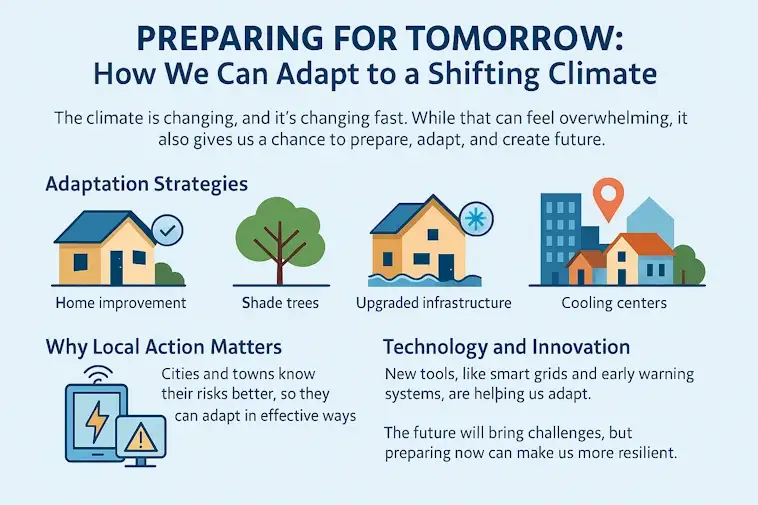
Adaptation doesn’t have to mean big, impossible changes. It starts small. Think about improving home insulation to handle both heat and cold. Or planting shade trees in your neighborhood to lower temperatures during the summer. Communities can also update building codes, improve flood defenses, and create cooling centers. These steps save lives and protect homes.
Why Local Action Matters
One of the most powerful tools we have is local action. Cities and towns know their risks better than anyone. A coastal town may focus on sea walls, while a rural community might invest in water storage for droughts. When local leaders and residents work together, adaptation becomes more personal and more effective.
At the same time, technology is opening new doors. Smart grids, early warning systems, and climate-friendly farming practices are already helping communities adapt. These tools give us the ability to stay one step ahead.
The future will bring more challenges, but also more solutions. Preparing now means we can move from reacting to leading. It’s about shifting our mindset from fear to resilience. Tomorrow’s climate may look different, but with the right choices today, we can build a future that’s stronger and safer for everyone.
Adapting to a World of Changing Weather
Changing weather is no longer a distant idea—it’s something we all feel in our daily lives. From rising grocery prices to shifting seasons and even how we plan family activities, the quiet reshaping is happening all around us. The good news is, we’re not powerless. By paying attention, staying informed, and preparing for the unexpected, we can adapt to these shifts with resilience.
As weather patterns continue to change, the key will be awareness and action. Communities that plan ahead will not only manage the challenges but also find new opportunities in this evolving climate. One thing is certain: the weather will keep reshaping our world. The question is, how will we choose to respond?