

Enormous Fisheries Decline Warns Of Collapsing Ocean Life
Fisheries Decline Signals a Dangerous Turning Point for Ocean Life Worldwide
Fisheries decline is becoming one of the clearest warning signs that ocean life is reaching a breaking point. Coastal communities are reporting fewer catches, scientists are seeing disrupted food chains, and long-stable species are now struggling to survive. As pressures grow, the scale of these losses hints at a much larger shift beneath the surface—one that could reshape the future of marine ecosystems.
This rapid downturn didn’t appear overnight. Years of overharvesting, warming waters, and changing ocean chemistry have pushed many species to the edge. As trends continue, the risks extend far beyond empty nets. They affect global food security, local economies, and the natural balance that sustains life in the sea.
There is still room for optimism, though. New technologies, responsible management, and restorative practices are gaining momentum. With enough commitment and cooperation, it’s possible to slow the damage and help ocean life recover.
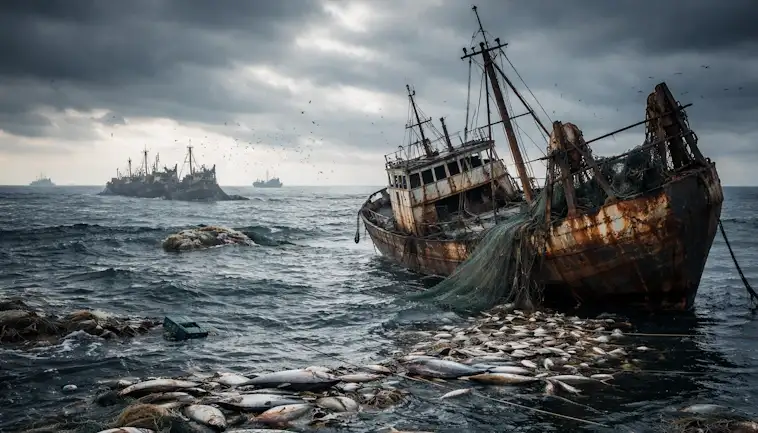
How Fisheries Decline Is Reshaping Ocean Ecosystems
When we talk about fisheries decline, it’s easy to think only about fewer fish on our plates. Yet the story runs much deeper. Our oceans depend on a delicate balance, and when fish populations crash, the entire system begins to shift. These changes are already happening, and they will shape the future of marine life in ways we’re only beginning to understand.
As fish numbers fall, predators lose stable food sources. Prey species start to behave differently. Even the structure of coral reefs and coastal habitats begins to change. You can almost picture the ocean as a busy city where certain “jobs” go unfilled. When that happens, nothing quite works the same again.
The Ripple Effects We Can No Longer Ignore
One of the most striking changes is how food chains reorganize themselves. When large fish disappear, smaller species often surge. At first, this might sound like good news. However, these sudden booms can lead to overgrazing of algae, shifts in nutrient cycles, and new competition that many species aren’t built to handle.
These cascading effects don’t stop at the water’s edge. Communities that rely on fishing for income feel the pressure too. As catches decline, the cost of living rises, and local traditions tied to the sea begin to fade. Looking ahead, this raises tough questions about how we rebuild sustainable fisheries while protecting the ecosystems they rely on.
If you want a deeper look at long-term global data on fish stocks, the Food and Agriculture Organization offers a helpful overview here.
As we move forward understanding these patterns is crucial. When we act early—through better management, smarter policies, and stronger community efforts—we give the ocean room to recover. And when the ocean rebounds, everything connected to it gets a chance to thrive again.
The Hidden Drivers Behind Rapid Marine Loss
Marine loss is speeding up, and many people are still unaware of what’s pushing it forward. When you dig into the data, you start to see a pattern. A handful of powerful forces are working together, and the results are reshaping ocean life faster than scientists expected. This matters to all of us because healthy oceans support our climate, food systems, and coastal communities.
Today, we’re facing a mix of human pressures that weaken marine ecosystems. These pressures make it harder for species to survive and bounce back. As a result, entire food webs can shift. You might think the ocean is too vast to change so quickly. Yet these hidden drivers show us just how connected everything really is.
As we look to the future, it helps to understand what’s fueling these rapid losses. That way, we can respond with smarter solutions and stronger protections.
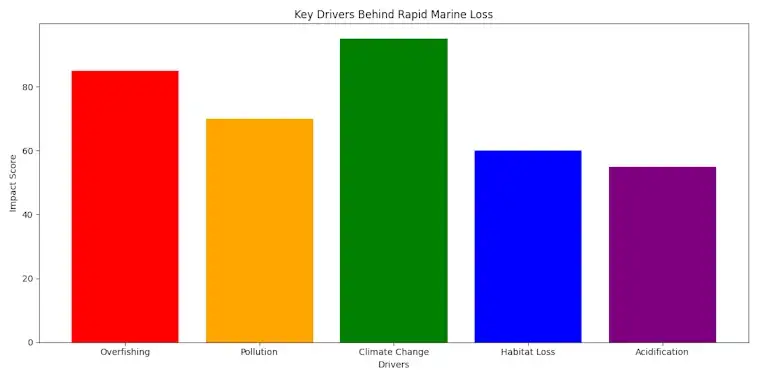
As scientists track marine decline, they’ve started to focus on a handful of drivers that appear again and again. Overfishing weakens populations before they can rebuild. Pollution introduces toxins that spread quietly through food chains. Meanwhile, rising temperatures and acidifying waters add stress that many species simply cannot handle. When these forces combine, the ocean begins to change in ways we can see from space.
Even small disruptions can snowball. A drop in one key species might lead to unexpected spikes in another. Habitats can shift, shrink, or disappear. And although we often talk about these issues separately, they rarely act alone. That’s why understanding the full picture is so important as we plan for long-term recovery.
Why These Drivers Matter More Than Ever
Right now, the pace of change is accelerating. As warming speeds up, so does coral bleaching. And as coastal development grows, so does habitat loss. These aren’t isolated stories—they form a linked chain. And once that chain weakens, the ripple effects reach far into our lives, from local economies to global food supplies.
If we want a healthier ocean, we must start by naming these pressures clearly. Then we can build policies and innovations that support recovery rather than delay it. Momentum is growing, and with better tools and global cooperation, there’s still time to reverse the trend.
Why Fisheries Decline Signals a Larger Environmental Breakdown
When we talk about fisheries decline, it can seem like a single issue tied only to dwindling fish stocks. But the truth is far bigger. Declining fisheries are one of the clearest early warning signs that our wider environment is under strain. When fish populations fall, they reflect deep changes across entire ecosystems. And because oceans are so closely linked to climate, food security, and global trade, these shifts reach far beyond the water.
As fish numbers shrink, we start to see patterns that echo across the natural world. Species that once thrived struggle to adapt. Predators lose dependable food sources. Coastal communities notice changes in their catches, their income, and even their cultural traditions. These signals create a picture of an environment losing its balance.
The more we study this trend, the more we see how interconnected everything really is. Fisheries decline is not just a symptom—it is a storyline that reveals broader challenges unfolding beneath the surface.
As marine scientists dig deeper into the causes, they point to a mix of pressures that are reshaping ocean systems at the same time. Rising temperatures disrupt migration routes. Pollution reduces water quality and harms reproductive cycles. Habitat destruction removes safe breeding grounds. And when these forces interact, the impact compounds. What begins as a local problem quickly becomes global.
To understand the scale of these changes, it helps to break down what fisheries decline signals:
- Reduced biodiversity that weakens entire food webs
- Shifts in ocean chemistry that affect growth and reproduction
- Loss of ecosystem services that support coastal protection and clean water
- Increased vulnerability to extreme climate events
- Economic instability in communities that depend on fishing
Taken together, these changes paint a clear picture. When fish populations fall, the ecosystem is sending us a message. It’s telling us that conditions are no longer stable, and without action, recovery becomes far harder. Yet there is hope. Sustainable fishing, better monitoring, and stronger global cooperation are already helping some regions rebuild their stocks. These efforts show what’s possible when science and policy move in the same direction.
Looking ahead one thing becomes clear. Protecting fisheries is not only about protecting fish. It’s about protecting the foundation of healthy oceans—and in many ways, the stability of our entire planet.
Communities at Risk as Marine Resources Dwindle
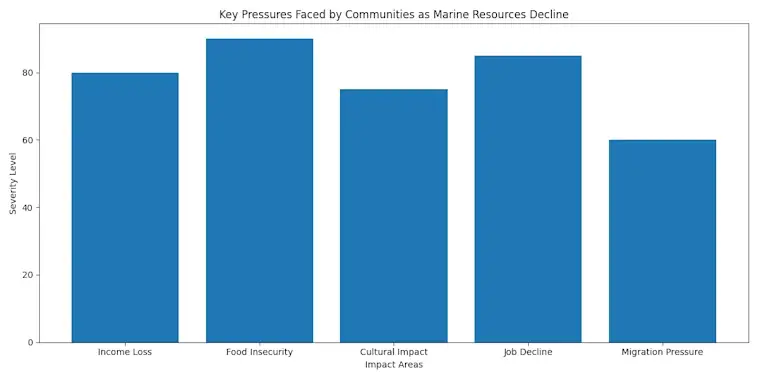
When marine resources shrink, coastal communities feel it first. These are places where the ocean shapes daily life, local jobs, and cultural identity. So when fish stocks fall, the effects ripple through homes, markets, and traditions. It becomes harder for families to rely on steady income, and food insecurity grows as seafood becomes less available and more expensive.
These shifts don’t happen slowly anymore. Many communities are seeing sudden drops in their catches, forcing them to rethink how they work and how they survive. As marine decline accelerates, the pressure on people increases, and the risk of long-term economic instability becomes very real.
The Growing Impact on Daily Life
As the ocean changes, so does the rhythm of community life. Small fishing towns experience the biggest disruptions, but the effects spread far beyond the shoreline. When marine resources dwindle, local businesses struggle, and younger generations begin looking elsewhere for opportunities. Over time, the social fabric that once held these communities together starts to fray.
Many regions face the same core challenges: lower income from fishing, higher food prices, and more pressure to migrate for work. These trends signal a future where adaptation isn’t just helpful—it’s essential. Stronger planning, better resource management, and community support will play a key role in keeping these places resilient as conditions shift.
What We Can Do Now to Restore Ocean Health
Restoring ocean health starts with simple, practical steps we can take today. The challenges are big, but the solutions are within reach. When communities, governments, and everyday people work together, the ocean has an incredible ability to recover. And because so many of these problems are human-driven, our actions can make a real difference.
Right now, the most effective path forward is a mix of smarter policies, better science, and more responsible choices. Each one helps rebuild marine life, strengthen coastal economies, and create a healthier future for everyone who depends on the sea.
How Addressing Fisheries Decline Supports Recovery
Focusing on fisheries decline is one of the fastest ways to turn things around. When we protect breeding grounds, limit destructive fishing methods, and improve monitoring, fish populations can rebound surprisingly quickly. These efforts also stabilize local communities and strengthen food security. Even small policy shifts—like reducing bycatch or creating seasonal closures—help rebuild the balance that ocean ecosystems rely on.
A few practical actions that make a big impact include:
- Supporting sustainable seafood programs
- Expanding marine protected areas where wildlife can recover
- Reducing pollution that disrupts habitats
- Funding better ocean monitoring and research
- Encouraging responsible coastal development
Looking ahead, the most powerful tool we have is momentum. Once we start restoring ecosystems, the benefits multiply. Healthy oceans store more carbon. They support stronger economies. And they protect coastal communities from extreme weather. When we act now, we set the stage for oceans that can thrive long into the future.
Conclusion: Why Fisheries Decline Demands Our Attention Now
The evidence is clear: fisheries decline is more than a warning sign. It’s a signal that ocean life is approaching a breaking point. As fish populations fall, the entire marine system shifts—affecting food webs, coastal communities, and the health of the planet itself. Yet this moment also offers a chance to act. When we protect habitats, support sustainable fishing, and reduce pollution, the ocean responds with resilience.
The path forward is not complicated, but it does require commitment. Small choices, backed by smarter policies and global cooperation, can slow the damage and even reverse it. The sooner we act, the greater the chance we have to rebuild thriving oceans that support life for generations to come.
In the end, paying attention to fisheries decline isn’t just about saving fish. It’s about safeguarding the stability of our climate, our economies, and our shared future.