

Ecosystem Disruption Is Pushing Biodiversity to the Edge
Ecosystem Disruption Is Pushing Biodiversity to the Edge
Ecosystem disruption is accelerating at a pace that nature can barely keep up with. Forests are thinning, coral reefs are bleaching, and species that once thrived are disappearing faster than they can adapt. From shifting climate patterns to human-driven habitat loss, the balance that has sustained life for millennia is being pushed to its limits. Each small change ripples outward, weakening the intricate web of biodiversity that supports food security, clean water, and stable weather systems. The warning signs are no longer distant—they are unfolding around us, urging action before the damage becomes irreversible.
How Climate Change Accelerates Ecosystem Disruption
Climate change isn’t just about warmer summers or stronger storms. It’s a force that reshapes entire ecosystems — fast. When the climate shifts, plants, animals, and even microbes are pushed to adapt, migrate, or vanish. That rapid change sends shockwaves through the food chain.
The Domino Effect in Nature
Think of an ecosystem like a balanced puzzle. Each species plays a part. When rising temperatures push one species out of its comfort zone, the effects cascade. A plant blooms earlier than usual, but the pollinators aren’t there yet. Or a predator loses its main prey, forcing it to hunt elsewhere. These changes break connections that have taken centuries to form.

Warming oceans tell a similar story. Coral reefs bleach and die, leaving fish without shelter. Ice melts in the Arctic, stripping polar bears of hunting grounds. Once these natural systems unravel, it’s hard — sometimes impossible — to piece them back together.
Human communities feel the impact too. We rely on stable ecosystems for food, water, and even clean air. When they falter, so do the systems that keep us alive.
The big takeaway? Climate change speeds up ecosystem disruption to a point where nature struggles to catch up. And when nature falls behind, we all do.
The Link Between Habitat Loss and Species Decline
When a habitat disappears, the species that depend on it often disappear too. Forests are cleared, wetlands drained, and coastlines built over. Every time we lose a piece of nature, we chip away at the living web that supports life.
When Home Disappears, Survival Gets Harder
Imagine losing your home and every source of food and shelter you rely on. That’s what happens to wildlife when habitats vanish. Birds lose nesting sites. Pollinators lose flowers. Larger animals are pushed into smaller spaces where finding food — or avoiding predators — becomes a daily struggle.
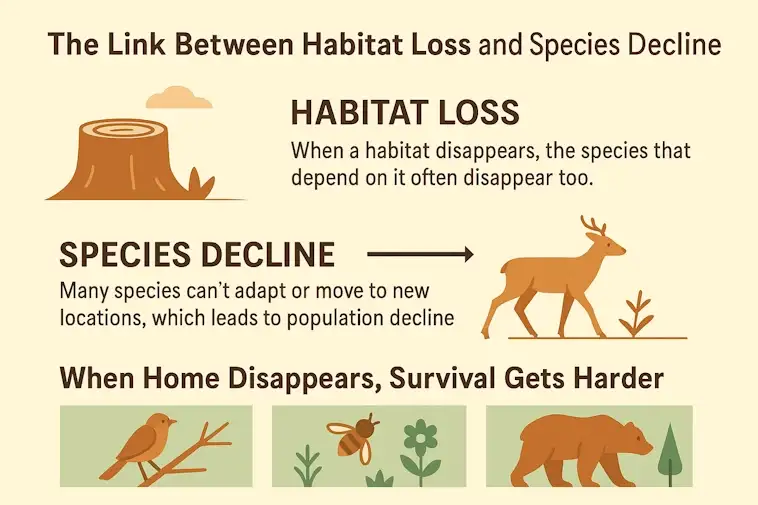
The problem grows when these losses happen fast. Many species can’t adapt quickly enough. They either move to a new location, which isn’t always possible, or face population decline. This isn’t just a wildlife problem. Healthy habitats store carbon, filter water, and protect us from floods. When they’re gone, communities lose these natural defenses.
Habitat loss and species decline are two sides of the same coin. One drives the other, and together they speed up biodiversity collapse. Protecting land and water is not just about saving animals. It’s about saving the systems that keep our planet — and us — alive.
Why Invasive Species Are a Hidden Biodiversity Threat
When we think about threats to wildlife, we often picture bulldozers clearing forests or factories polluting rivers. But there’s another danger quietly spreading across the world: invasive species.
These are plants, animals, or even tiny organisms that don’t naturally belong in an area. They often arrive because of human activity—through trade, travel, or even gardening choices. Once established, they can grow out of control.
The Unseen Impact on Local Ecosystems
Invasive species compete with native plants and animals for food, water, and space. Some bring new diseases. Others alter the soil or change how an ecosystem works. This can push native species to the brink and reduce biodiversity—the variety of life that keeps ecosystems healthy.

For example, the cane toad in Australia was introduced to control pests, but it became a pest itself. In North America, zebra mussels clog waterways and crowd out native mussels. These changes happen quietly at first, but the ripple effects are huge.
The tricky part? Once an invasive species takes hold, removing it is expensive and often nearly impossible. Prevention is far easier than trying to fix the damage later. That means being careful about what we plant, what we transport, and what we release into the wild.
Biodiversity is more than just a number of species. It’s the foundation of clean air, fresh water, fertile soil, and stable climates. Protecting it means acting before the damage is done. In the case of invasive species, the threat is hidden—but the cost of ignoring it can be devastating.
Human Activities Driving Ecosystems Past the Tipping Point
Our planet has a breaking point. Ecosystems can take a lot, but not forever. When we push them too far, they change in ways that can’t be undone.
Farming, industry, and urban growth are reshaping the land and seas faster than nature can recover. Forests are cleared for crops. Rivers are drained for water. Oceans are overfished. Each action chips away at the balance that keeps life thriving.

Why Small Changes Add Up Fast
It’s not always one big event that causes a collapse. Often, it’s the steady, everyday pressure. Cutting down a few more trees. Using just a little more water. Burning more fuel each year. Over time, these actions push ecosystems toward their tipping point—where they can no longer bounce back.
Climate change adds fuel to the fire. Higher temperatures and unpredictable weather make fragile systems even weaker. Coral reefs bleach. Wetlands dry up. Wildlife struggles to adapt. Once the tipping point is crossed, recovery can take decades—or may never happen at all.
The truth is, we’re part of these systems. When they collapse, it affects our food, water, and safety. The good news? We have the power to change course. Smarter choices in how we farm, build, and consume can slow the damage. If enough people act, we can keep ecosystems resilient for generations to come.
What Can Be Done to Restore Nature’s Balance
Restoring nature’s balance isn’t just about protecting forests or saving a few animal species. It’s about rebuilding the systems that keep our air clean, our water fresh, and our climate stable. The good news? Every action counts, and there’s plenty we can do right now.
Start Small, Think Big
You don’t need to be a scientist or an activist to make a difference. Planting native trees in your backyard, reducing single-use plastics, and supporting local farmers all help. These small steps create ripples that add up over time.
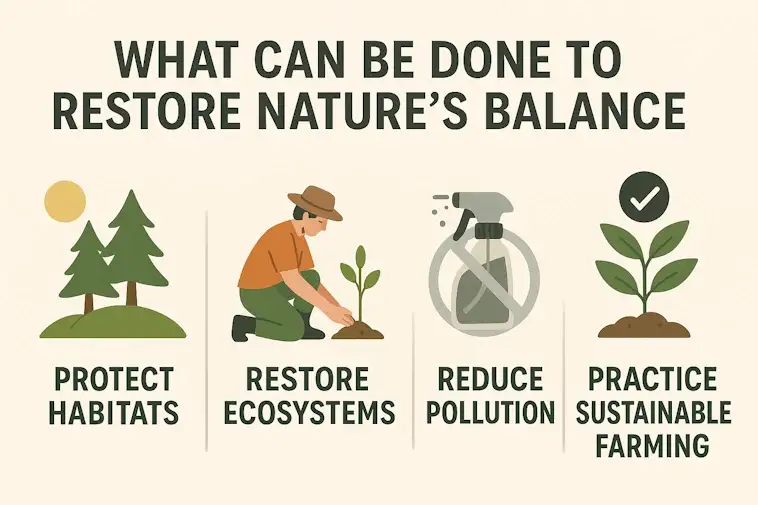
Nature works best when it’s left to regenerate. That means protecting habitats from overdevelopment, restoring wetlands, and rewilding degraded land. Governments and businesses have a huge role to play here, but so do communities. Local clean-up projects, urban gardens, and wildlife corridors can bring life back to even the most damaged areas.
We also need to rethink how we produce and consume. Choosing renewable energy over fossil fuels, cutting food waste, and buying fewer but better-quality products all reduce pressure on natural systems. The less strain we put on nature, the faster it recovers.
Most importantly, change happens when people care. Share what you learn, inspire others, and speak up for policies that protect our planet. Restoring nature’s balance isn’t a single project — it’s a way of living that keeps giving back.
The Urgent Call to Protect Our Fragile Ecosystems
Ecosystem disruption isn’t just an environmental issue—it’s a direct threat to the rich biodiversity that keeps our planet alive and thriving. From shrinking habitats to shifting climates, the balance that countless species depend on is being pushed to the brink. The good news is that change is still possible. By protecting critical habitats, supporting sustainable practices, and pushing for stronger conservation policies, we can help restore the natural systems we all rely on. Every action, no matter how small, sends a ripple through the environment. Now is the time to choose the kind of future we want—one where biodiversity flourishes and ecosystems remain resilient for generations to come.