

Ecosystem Collapse: Are We Near the Point of No Return?
Ecosystem Collapse: The Hidden Crisis Threatening Life on Earth
Ecosystem collapse is no longer a distant threat. Across the world, forests are thinning, coral reefs are bleaching, and species are disappearing at a pace that alarms scientists. Each breakdown in nature’s web sends ripples through the systems that support human life — from clean water to fertile soil and stable weather. The signs are growing louder, and the question is becoming harder to ignore: how close are we to crossing a line that nature can’t recover from?
Earth’s ecosystems have always been resilient, adapting to cycles of change over millions of years. But today’s pressures — pollution, deforestation, climate shifts, and industrial expansion — are happening faster than nature’s ability to heal. The balance that sustains life is tipping, and the warning lights are flashing in every biome.
Still, there’s reason for cautious optimism. New conservation strategies, renewable technologies, and community-led restoration projects are showing that recovery is possible when action is bold and timely. The challenge now is whether society can move quickly enough to restore stability before the damage becomes irreversible.

Understanding the Warning Signs of Ecosystem Collapse
Have you ever wondered how close we might be to an ecosystem collapse? It’s not always dramatic or obvious. In fact, nature often whispers before it shouts. Forests don’t die overnight, oceans don’t suddenly turn lifeless, and coral reefs don’t vanish in a day. The truth is, the signs are often there—we just have to know where to look.
When ecosystems start to weaken, small shifts can set off a chain reaction. Species disappear, water sources dry up, and soil loses its richness. These changes might seem minor at first, but they build over time until balance is lost. Once that happens, recovery becomes much harder.
How to Spot Nature’s Distress Signals
Look for the subtle changes around you. Are bird populations dropping in your area? Are once-clear rivers becoming murky? Maybe the weather feels “off” more often than before. These are all signs of stress within an ecosystem. Scientists call them early warning indicators, and paying attention to them helps us act before it’s too late.
Human activity plays a major role here—deforestation, overfishing, pollution, and climate change all push ecosystems to their limits. But there’s still hope. Communities around the world are restoring wetlands, replanting forests, and protecting wildlife corridors. These efforts show that healing is possible when we listen to the signals and respond early.
Understanding the warning signs of ecosystem collapse isn’t just about science—it’s about awareness. The more we recognize the changes happening around us, the better chance we have to protect the systems that sustain life.
If you’d like to learn more about how ecosystems recover and what you can do to help, the United Nations Environment Programme offers excellent resources and inspiring stories from around the globe.
How Human Activity Is Accelerating Nature’s Decline
Everywhere you look, signs of nature’s distress are growing harder to ignore. Forests are shrinking, oceans are warming, and wildlife populations are dropping at alarming rates. But here’s the uncomfortable truth — much of this decline traces back to our own hands.
From deforestation and overfishing to pollution and unchecked urban growth, our daily actions are reshaping ecosystems at a pace nature can’t match. Forests that once absorbed carbon are being cleared for agriculture. Rivers are turning toxic from industrial runoff. And cities keep expanding into fragile habitats, squeezing out the species that once thrived there.
Climate change is now amplifying these pressures. The heat waves, droughts, and storms we see more often aren’t random — they’re direct consequences of human impact. And together, these forces are tipping the balance of life on Earth.
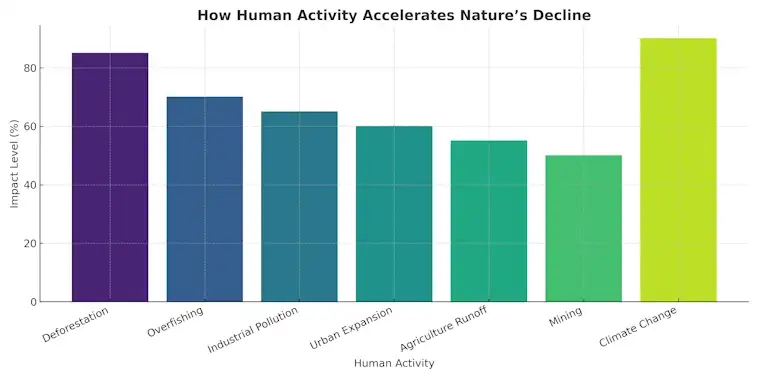
The good news? Awareness is rising. More people are talking about sustainability, renewable energy, and protecting biodiversity. If we act together — and fast — we can still slow, and even reverse, nature’s decline. The first step is understanding just how big the problem has become.
Ecosystem Collapse and the Tipping Points We Can’t Ignore
Have you ever wondered how close we might be to pushing our planet past its limits? The truth is, our natural systems are more fragile than they appear. Scientists are warning that we’re approaching several tipping points—critical moments when small changes can trigger massive, irreversible shifts. And once these shifts start, it’s incredibly hard to turn things back.
Ecosystem collapse doesn’t happen overnight. It builds slowly, as climate stress, pollution, and habitat loss pile up. Then, one day, a forest stops regenerating. A coral reef bleaches beyond repair. A wetland dries up. What was once a thriving web of life suddenly falls apart.
Here’s why this matters more than ever:
- Forests that store carbon are turning into carbon sources as they die off.
- Coral reefs, which support a quarter of all marine life, are vanishing due to ocean warming.
- Arctic ice is melting faster, reshaping weather patterns across the globe.
- Soil ecosystems are degrading, threatening our ability to grow food.
- Pollinators like bees are declining, putting crops and food security at risk.
Each of these tipping points connects to the next, creating a dangerous domino effect. If one major ecosystem collapses, it can destabilize others, leading to global consequences—from food shortages to mass displacement.
But there’s still hope. We can slow or even stop ecosystem collapse by restoring habitats, cutting emissions, and protecting biodiversity. Every action matters, no matter how small it feels. Supporting sustainable practices, reforestation projects, and community-led conservation can make a real difference.
If you want to dig deeper into the science behind planetary tipping points, check out this detailed overview from the Stockholm Resilience Centre.
The Hidden Role of Biodiversity in Keeping Our Planet Stable
When we talk about protecting the planet, we often focus on cutting carbon or reducing plastic. But there’s another hero quietly holding everything together — biodiversity. The variety of life on Earth, from the tiniest microbes to the largest whales, keeps natural systems balanced and resilient.
Think of biodiversity as nature’s safety net. When one species struggles, others can step in to fill the gap. This balance helps stabilize the climate, clean the air, purify water, and even grow the food we eat. Without it, ecosystems become fragile and less able to recover from shocks like droughts, floods, or disease outbreaks.
Yet, biodiversity loss is accelerating. Forests are shrinking, oceans are warming, and species are disappearing faster than ever before. Every loss makes the web of life a little weaker.
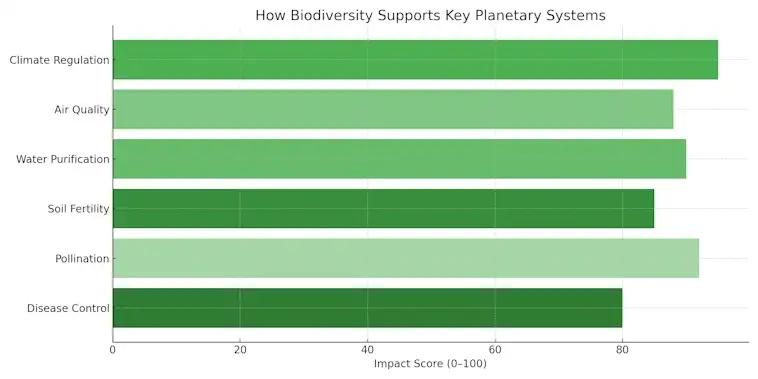
Here’s something to keep in mind: protecting biodiversity doesn’t just save animals and plants. It protects us too — our health, our food, and our future stability. Investing in nature is one of the smartest things we can do to keep our planet strong.
Can We Still Prevent a Global Ecological Breakdown?
It’s a question many of us quietly worry about. With wildfires, floods, and rising temperatures making headlines every week, it’s easy to feel like the damage is already done. But here’s the truth — while the planet is under pressure, it’s not too late to act. We still have time to shift course, but it’s a race against our own habits and systems.
The good news? Change doesn’t have to come from governments alone. Every decision — from what we eat to how we power our homes — adds up. Think of it as a collective ripple effect. When enough of us make smarter, sustainable choices, industries and policies start to follow.
How to Stop an Ecosystem Collapse Before It Starts
Ecosystem collapse isn’t some far-off, abstract concept. It’s happening in real time — coral reefs bleaching, forests turning to dust, and species disappearing faster than they can adapt. But ecosystems are resilient if we give them the chance. Restoring natural habitats, protecting biodiversity, and cutting emissions are three of the most powerful tools we have.
For instance, rewilding projects across Europe have shown how quickly nature can bounce back when left to heal. Wetlands refill. Birds return. Forests regrow. These are real examples of recovery, not just hope.
The challenge now is to act boldly, not slowly. Every year we wait, the harder it becomes to reverse the damage. Yet, as long as ecosystems still breathe, so does our chance to restore balance.
The Tipping Point Is Closer Than We Think
Our planet’s ecosystems aren’t just background scenery — they’re the life support systems that make everything possible. From clean air to stable weather and fertile soil, we depend on their balance every single day. But the signs of strain are everywhere: dying coral reefs, disappearing pollinators, and forests turning from carbon sinks into carbon sources. The question isn’t whether ecosystem collapse is coming — it’s how close we are, and what we’re willing to do about it.
Still, it’s not too late. Each action — whether it’s supporting rewilding projects, reducing waste, or holding leaders accountable — helps pull us back from the edge. The world’s ecosystems have an incredible capacity to heal if we give them the chance.
The future isn’t written yet — but what we do next will decide how the story ends.