

The Critical Role of Species Diversity in Sustaining Our Planet
The Critical Role of Species Diversity in Sustaining Our Planet
Life on Earth thrives on variety. From the tiniest microbe in the soil to the vast herds of animals roaming open plains, every species plays a role in keeping natural systems in balance. This intricate web of life is more than beautiful — it’s essential. Species diversity acts as a safety net, helping ecosystems adapt to change, recover from disruption, and keep providing what we need to survive.
As climate change accelerates and natural habitats shrink, the loss of species isn’t just a tragedy for wildlife — it’s a direct threat to clean air, fresh water, and stable food supplies. Understanding how different forms of life work together is key to protecting the planet’s health and our future on it.

Why Biodiversity Matters More Than Ever
We often hear about biodiversity in the context of saving polar bears or planting more trees. But biodiversity isn’t just a “nice-to-have” part of nature—it’s the foundation of life as we know it.
Biodiversity means the variety of life on Earth. That includes everything from the tiniest microbes in the soil to the largest whales in the ocean. These organisms are all connected through complex ecosystems that support food, clean air, fresh water, and even the stability of our climate.
But here’s the catch: biodiversity is under threat. Fast.
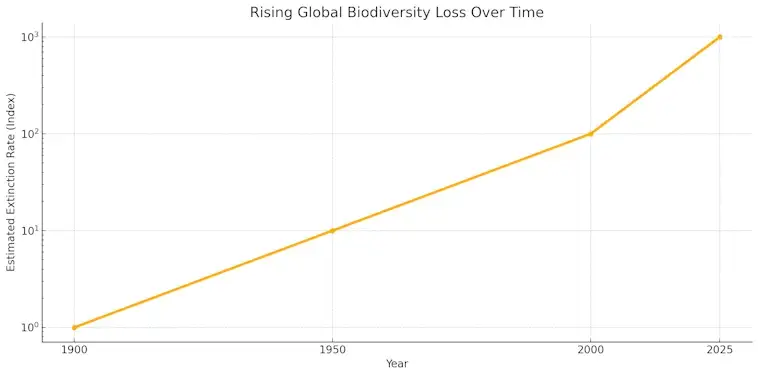
Human activity—deforestation, pollution, overfishing, and climate change—is causing species to disappear at rates not seen since the age of the dinosaurs. Every species lost can trigger a ripple effect we can’t always predict. Lose too many, and ecosystems start to collapse. And when ecosystems fail, so do the services they provide—like pollination for crops, or forests that absorb carbon.
This isn’t just about protecting wildlife. It’s about protecting ourselves. Biodiversity helps safeguard food security, supports medical discoveries, and even reduces the spread of diseases by keeping ecosystems in balance. And as climate change intensifies, ecosystems rich in biodiversity are often more resilient and better able to adapt.
In short, biodiversity is our life support system.
The good news? It’s not too late. With the right mix of policy, innovation, and community action, we can restore and protect what’s left. But we have to act now. Not just for nature’s sake—but for our own.
How Species Diversity Keeps Ecosystems in Balance
Nature isn’t just a collection of species—it’s a living, breathing network. Every organism, from a single bee to an ancient oak tree, plays a role. That’s what makes species diversity so essential. It’s not just about numbers; it’s about relationships.
Think of an ecosystem like a team. Each species has a job. Some pollinate plants. Others clean up waste. Predators keep certain populations in check, while prey support others. Take out one piece, and the system starts to wobble. Lose too many, and it can fall apart entirely.
Let’s take coral reefs as an example. These vibrant underwater worlds rely on a mix of coral species, algae, fish, and invertebrates to stay healthy. If too many species vanish—due to pollution or warming waters—the reef can’t survive. The balance breaks, and the entire ecosystem can collapse.

The same applies on land. Forests thrive when they’re home to a wide range of animals, plants, fungi, and insects. These species help cycle nutrients, improve soil, and support tree growth. When that diversity shrinks, forests become more vulnerable to pests, fires, and disease.
Species diversity also acts as a kind of insurance. In a changing world, with shifting climates and unpredictable weather, diverse ecosystems are better able to adapt. If one species struggles, another can often fill its role. That flexibility keeps the system strong—and us safer.
So when we talk about protecting biodiversity, we’re really talking about keeping nature’s balance intact. A balanced ecosystem is more productive, more resilient, and more likely to support life—including human life—for the long haul.
The Silent Work of Nature’s Unsung Heroes
When we think of nature, we often picture majestic animals—lions, whales, elephants. But the real magic? It often comes from the quiet workers we rarely notice. These are nature’s unsung heroes: pollinators, decomposers, and tiny organisms doing essential jobs every single day.
Take bees, for example. They don’t just buzz around flowers—they pollinate roughly one-third of the food we eat. Without them, many fruits, vegetables, and nuts wouldn’t grow. Yet, bee populations are in decline due to pesticides and habitat loss. If they disappear, we’ll feel it on our plates and in our grocery bills.
Then there’s the underground world of fungi and microbes. These microscopic powerhouses break down dead plants and animals, recycling nutrients back into the soil. Without them, forests wouldn’t grow, and agriculture would struggle. Earthworms and beetles? They quietly till the soil and help it breathe.
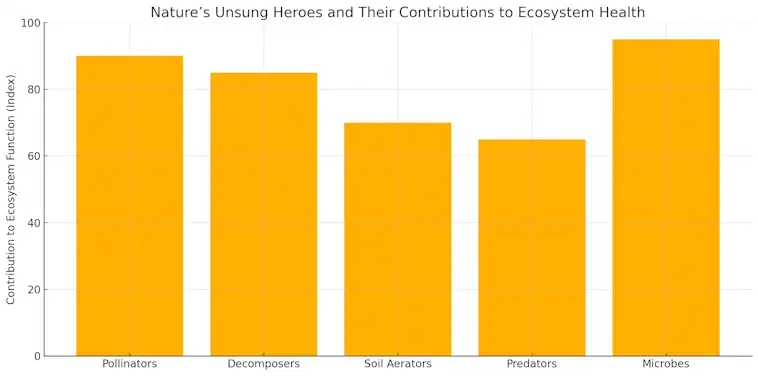
Even predators like wolves or sharks, often misunderstood, keep prey populations in check and maintain balance in their ecosystems. When wolves were reintroduced to Yellowstone, they not only controlled deer populations—they helped forests and rivers recover. That’s the ripple effect of a healthy ecosystem.
The truth is, most of nature’s hard work happens out of sight. But it keeps everything running—our food systems, our water supplies, even our climate. These species may not grab headlines, but their contributions are vital.
So the next time you see a bee, a worm, or even a mushroom, remember: they’re not just background noise. They’re part of the engine that powers life on Earth. And if we want a stable future, it’s time we give them the credit—and protection—they deserve.
From Forests to Oceans: Life’s Web of Interconnection
It’s easy to think of nature in separate pieces—trees over here, fish over there, birds flying above it all. But in reality, life on Earth is connected in ways we’re only beginning to understand. From the depths of the ocean to the canopy of the rainforest, everything is part of one vast, interwoven web.
Consider this: forests don’t just clean the air in their immediate surroundings. They influence rainfall patterns thousands of miles away, affecting crops and water supplies in regions far from the trees themselves. Likewise, ocean currents regulate global temperatures and weather systems, helping to stabilize the climate even in landlocked areas.
Animals, too, play surprising roles across ecosystems. Migratory birds, for instance, link continents. They help spread seeds, control insects, and connect forest, wetland, and coastal systems. Whales, deep in the ocean, help fertilize surface waters with nutrients that support plankton—tiny organisms that produce much of the oxygen we breathe.
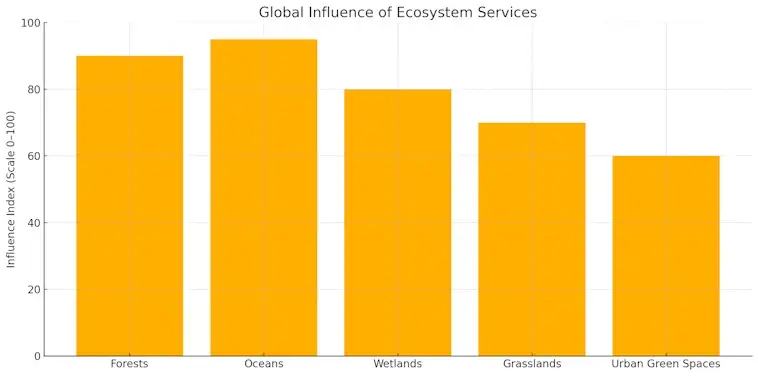
Even human life is part of this web. What happens in one ecosystem can ripple outward. Cutting down forests can reduce fish populations downstream. Polluting rivers can damage coral reefs far out at sea. When we damage one strand, the entire web feels the strain.
But here’s the good news: this interconnection means that positive change travels, too. Restoring wetlands can improve water quality for miles. Protecting mangroves helps stabilize coastlines and support marine life. Planting native trees can cool cities and revive soil health beyond the immediate area.
Nature thrives on connection. And so do we. When we recognize the links between land, sea, and sky, we make better choices—not just for the environment, but for our shared future.
What We Lose When We Lose a Species
When a species disappears, it’s not just a quiet moment in the wild. It’s the loss of a story, a role, and a connection. Each extinction leaves a hole in the web of life—and that hole often stretches wider than we think.
Every species, no matter how small or obscure, plays a role in its ecosystem. Some are pollinators, some are prey, some are predators, and others are silent recyclers of nutrients. Remove just one, and the balance can shift. Sometimes the impact is immediate. Other times, the effects ripple through ecosystems years later, in ways scientists are still working to understand.
Take amphibians like frogs. They may not seem crucial, but they help control insect populations and serve as food for birds, snakes, and fish. When frogs vanish, mosquito numbers can rise, and entire food chains are disrupted. Coral reefs offer another example. When coral dies off due to warming waters, countless fish and marine creatures lose their homes, and coastal communities lose natural storm protection and fisheries.
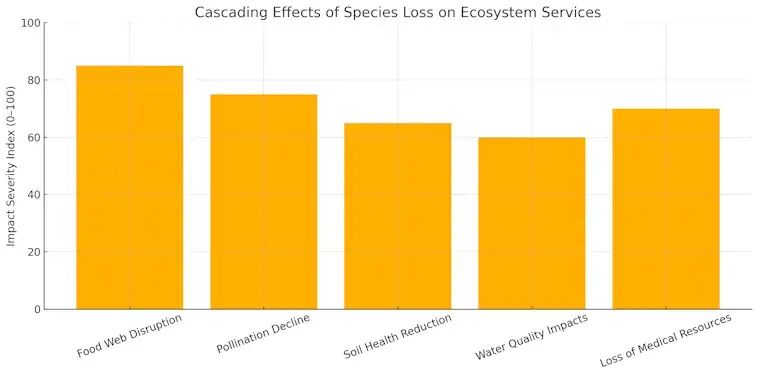
But it’s not just about ecosystem function. Species loss also means a loss of potential. Many of our medical breakthroughs—like painkillers, antibiotics, and cancer treatments—have come from plants, fungi, or animals. What cures, ideas, or innovations might be lost with the next extinction?
Then there’s the cultural and emotional impact. For many communities, animals and plants hold spiritual, traditional, or economic significance. Losing them isn’t just ecological—it’s personal. It’s a loss of identity, memory, and connection to place.
In short, losing a species is more than losing a life form. It’s losing part of the foundation that supports our own. The more we value every piece of nature’s puzzle, the more resilient—and hopeful—our future becomes.
The Bottom Line: Why Every Species Counts
Species diversity isn’t just about the beauty of nature—it’s about the strength, balance, and future of life on Earth. From forests to oceans, and from the tiniest microbes to large mammals, every form of life plays a role in keeping our planet healthy and resilient.
As we face growing environmental challenges, preserving biodiversity isn’t a luxury. It’s a necessity. Healthy ecosystems support clean water, fertile soil, stable weather, and the very food we eat. When we protect the full spectrum of life, we protect the systems that support us, too.
Every species lost is a color gone from nature’s palette. But every action we take to preserve and restore biodiversity adds strength, richness, and hope to the picture. The future depends not just on what we save—but on how quickly we act.
Now is the time to recognize the value of every living thing—and to protect the delicate balance that sustains us all.