

Earth Wonders: Outstanding Vibrant Life On A Warming Planet
Earth Wonders: The Remarkable Ways Nature Stays Vibrant on a Warming Planet
Earth wonders often reveal themselves in surprising ways, especially as the planet warms. Around the world, new colors, sounds, and behaviors are emerging in places long thought predictable. Species are shifting ranges. Forests are adapting. Oceans are reshaping entire coastlines. And even with all the challenges, life keeps showing a remarkable ability to adapt and flourish.
As temperatures rise, these changes are becoming easier to notice. Some are beautiful, some unsettling, and many a mix of both. Yet they share a common theme: nature is responding faster and more creatively than most people expect. Understanding these shifts can help us appreciate the resilience around us and think more clearly about the role we play.
There is also a growing sense of wonder as scientists uncover patterns that were once invisible. New habitats are forming. Once-rare creatures are becoming familiar. And vibrant ecosystems are appearing in regions that seemed unlikely contenders for such transformation. Each discovery pushes us to rethink what’s possible on a changing planet.
This warming world is already rewriting the story of life on Earth. And as the pace of change accelerates, it becomes even more important—and more inspiring—to follow where nature leads next.
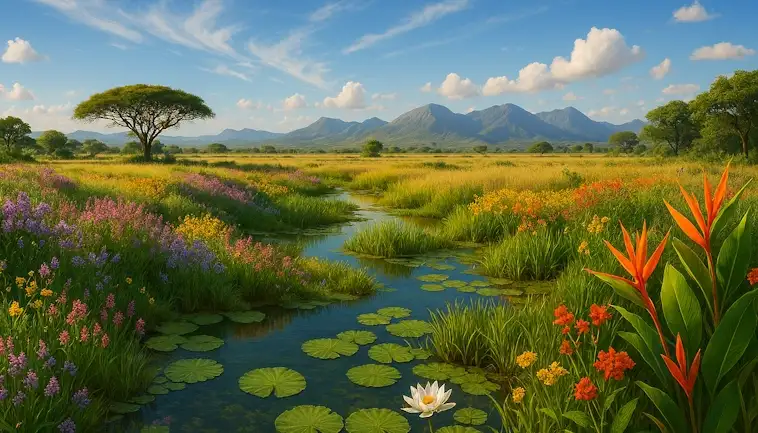
Earth Wonders: How Life Adapts and Thrives on a Warming Planet
When we think about climate change, it is easy to picture loss. We imagine melting glaciers, rising seas, and disappearing species. Yet there is another side to this story. Nature is also responding with remarkable creativity. These earth wonders reveal how life keeps adapting, even as temperatures rise.
In many ways, the planet acts like a living laboratory. Plants shift their growing seasons. Animals change their migration routes. Even tiny microbes evolve new survival strategies. And while not all species can keep up, watching how resilient life can be is both humbling and hopeful.
A Surprising Ally: The Power of Micro Survivors
Some of the most impressive adaptors are microscopic. These small organisms adjust faster than larger species. They develop heat-tolerant traits, help rebuild stressed ecosystems. And they often provide early clues about how the rest of nature might react in the years ahead.
Still, adaptation is not a free pass. It comes with limits. As the planet warms, these responses will shape which ecosystems thrive and which struggle. That is why understanding these patterns matters so much. When we pay attention to these earth wonders, we learn more about our shared future.
This warming world asks us to stay curious and take action. Life is still rewriting its own story. And we have a chance to support that resilience—by protecting habitats, cutting emissions, and choosing smarter ways to live on this changing planet.
From Melting Ice to Shifting Seasons: The New Face of a Changing Earth
If you have been watching the news, you have probably noticed how often climate stories appear. Glaciers are shrinking. Seasons are shifting. Storms are growing stronger. It can feel overwhelming at times. Yet it also gives us a clearer picture of how fast the world is changing.
Today, the signs are no longer far away. They are happening in real time. Spring flowers bloom earlier. Winters feel shorter. Summers stretch longer. These changes may seem small, but they add up. And as they do, they reshape how we live, travel, farm, and plan for the future.
As we look ahead, understanding these patterns becomes essential. When we track how fast the planet warms, we gain insights that help us prepare. We also get a chance to make better choices. And those choices can soften the impact on communities and ecosystems.
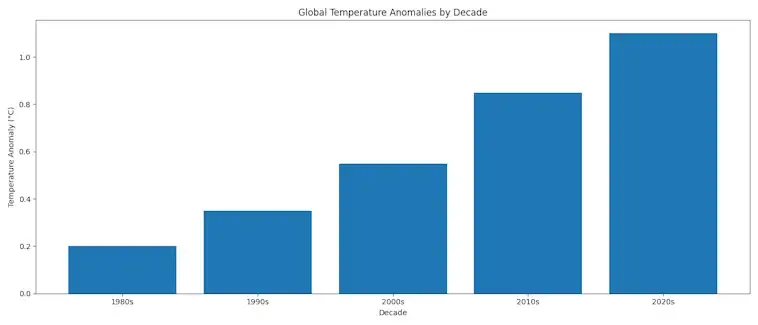
The chart below illustrates how global temperatures have shifted by decade. It offers a simple view of a trend that affects us all. And while the story it tells is serious, it also empowers us. Because the more we understand, the more we can act.
Hidden Earth Wonders: Surprising Ecosystems Flourishing in Extreme Conditions
Sometimes the most remarkable earth wonders are the ones we never see. They thrive far from tourist maps and outside the comfort zones where most life prefers to live. Yet these hidden ecosystems tell powerful stories. They show us how life bends, adapts, and survives in places that seem impossible.
Let’s start with a simple truth. Nature is tougher than we often imagine. Even in boiling deserts, frozen seas, deep caves, and toxic lakes, life pushes forward. And as scientists explore these extreme environments, they uncover new species and new clues about how our planet works. This research also shapes how we think about the future, especially as climate shifts and ecosystems come under pressure.
These secret places often feel like something out of science fiction. But they’re real, and they’re changing what we know about resilience. They remind us that life refuses to give up, even when conditions turn harsh.
Here are a few standout examples of earth wonders in extreme environments:
- Microbes living inside Antarctic ice sheets
- Worms surviving near deep-sea hydrothermal vents
- Fish adapting to acidic volcanic lakes
- Mosses growing in the dry interiors of desert caves
Each of these ecosystems reveals something different. They show us how life rewrites the rules when it needs to. And they also hint at what future life on Earth might look like as our world warms, dries, or floods.
As researchers keep pushing into these remote environments, we’ll learn even more about these hidden earth wonders. And that knowledge matters. It can help us protect fragile species, design new technologies, and rethink what’s possible on this planet and beyond.
In the end, these extreme ecosystems remind us of something hopeful. Life adapts, endures. And sometimes, the most inspiring earth wonders are the ones we’ve only just begun to discover.
Wildlife on the Edge: Species Struggling and Surviving in a Hotter World
A warming planet is reshaping wildlife in real time. You can already see the pressure building. Heat waves last longer. Seasons shift earlier. Food sources disappear faster. And yet, many species are still fighting to adapt.
But this is not only about loss. It is also about resilience. Some animals are changing their ranges. Others are altering their behavior. Many are holding on in places once thought unlivable. These shifts give us a glimpse of how nature responds when pushed to the edge.
Still, the risks are growing. Scientists warn that rising temperatures could affect entire ecosystems. When a species declines, everything connected to it feels the impact. That is why understanding these changes matters. It helps us protect vulnerable wildlife before it is too late.
Below is a chart that highlights the estimated decline of a few well-known species already feeling the heat.
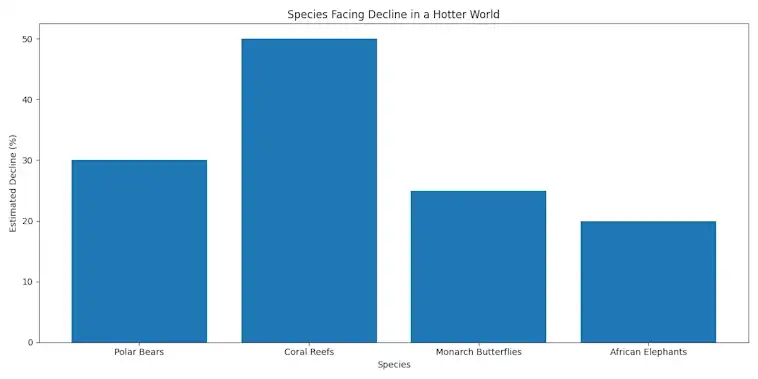
This data underscores a simple truth. The hotter the world gets, the more wildlife struggles. But with awareness and smarter conservation, these species still have a chance.
Hope in Motion: How Human Action Can Protect Vibrant Life on Our Planet
There is a lot of bad news out there, but there is also real momentum for change. People everywhere are taking practical steps that protect wildlife, restore ecosystems, and slow climate damage. These actions may seem small at first. Yet, when they stack up, they create powerful waves of hope. And that hope grows each time someone chooses to act.
Today, many communities are rewriting what it means to care for the planet. They are planting trees in abandoned lots. Restoring coral reefs with new methods that work faster and last longer. And they are redesigning cities so nature can return. These choices matter because they help us imagine a future where our planet is thriving rather than struggling.
Even better, anyone can take part in this shift. You do not need special skills or deep scientific knowledge. Just a willingness to learn, try, and keep going. When you do, you help protect the vibrant life that still fills our world.
Exploring the Earth Wonders That Inspire Action
When we witness the beauty of natural places, something changes inside us. A walk through an old forest or a moment beside a quiet lake can spark a sense of responsibility. This feeling often leads people to support conservation projects, rethink daily habits, or join local clean-up groups. These simple actions help ecosystems stay strong. And they encourage others to follow.
Small choices add up. Riding a bike once a week. Cutting back on single-use plastics. Supporting companies that put sustainability first. Each step sends a message about the kind of world we want to live in. As more people join in, these choices shift markets, influence policy, and reshape communities.
You can explore more examples of real-world solutions that are already making an impact through this helpful resource from the United Nations.
Every action matters, every effort helps. And every person has the power to move our world toward a brighter, more resilient future.
Keeping Earth Wonders Alive: A Future We Can Still Shape
As we look ahead, it is clear that our planet’s story is still being written. Even in a warming world, earth wonders continue to shine. They remind us of what is at stake and what is still possible. These landscapes, species, and ecosystems carry a quiet message: with steady action, we can protect the vibrant life that makes our world extraordinary.
This is a moment to stay hopeful and stay involved. Small choices matter, and collective action can shift the path we are on. When we learn, adapt, and support solutions that work, we help safeguard the natural beauty that inspires us.
Earth wonders are not just scenes to admire. They are living systems that need our care. And with each step we take, we help ensure they remain part of our future.