

Defend Biodiversity: The Fight To Save Nature Starts Now
Defend Biodiversity: Why Protecting Nature Is the Most Urgent Fight of Our Time
Life on Earth depends on healthy ecosystems. Forests, oceans, wetlands, and grasslands support wildlife, clean the air, and help produce the food people eat every day. Yet nature is under growing pressure from habitat loss, pollution, and climate change. That is why the call to defend biodiversity has become more urgent than ever.
Biodiversity keeps natural systems stable and resilient. It protects crops from pests, helps regulate the climate, and supports millions of livelihoods. However, species are disappearing faster than at any other time in modern history. As a result, the loss of biodiversity is no longer only an environmental concern. It is also an economic and social challenge.
Protecting nature now can still change the future. Strong conservation, smarter land use, and community action can help ecosystems recover. The effort to protect biodiversity is gaining momentum across the world, and every step forward brings nature closer to recovery.
Defend Biodiversity: Why Nature Needs Our Protection Now
Nature is under pressure. Forests are shrinking. Oceans are warming. Wildlife populations are falling at a speed many scientists did not expect to see in our lifetime.
Yet biodiversity is not just about rare animals or distant rainforests. It is the living system that supports our food, water, and health. When biodiversity declines, the systems we rely on begin to weaken.
That is why the call to defend biodiversity is growing louder. Around the world, people are starting to understand that protecting nature is not optional. It is essential.
Biodiversity includes every living thing. Plants, animals, insects, fungi, and even microscopic life all work together in complex ecosystems. These systems clean the air, pollinate crops, and keep soils healthy. When one part disappears, the balance can quickly shift.
For example, fewer pollinators mean lower crop yields. Damaged forests store less carbon. Degraded wetlands cannot absorb floods as well as they once did. Step by step, these changes begin to affect everyday life.
This is why protecting biodiversity is not just an environmental issue. It is also an economic and social one.
Small Actions That Help Defend Biodiversity
The good news is that progress is possible. Many communities are already working to defend biodiversity in simple but powerful ways.
First, protecting natural habitats remains one of the most effective strategies. National parks, marine reserves, and wildlife corridors give species space to survive and recover.
Second, restoring damaged ecosystems can bring surprising results. Replanting forests, rebuilding wetlands, and improving soil health often leads to rapid wildlife return. In some areas, species once thought lost have begun to reappear.
Third, everyday choices matter more than people think. Supporting sustainable farming, reducing waste, and choosing responsibly sourced products can all reduce pressure on nature.
At the same time, global cooperation is becoming more important. International agreements now aim to protect at least 30 percent of the planet’s land and oceans by 2030. These efforts show that many governments are starting to take biodiversity loss seriously.
If you want to explore the global effort to protect ecosystems, the United Nations explains the biodiversity crisis and current solutions in clear terms.
Looking ahead, the need to defend biodiversity will only grow. Climate change, land use, and pollution will continue to test the resilience of ecosystems. However, with smarter policies and stronger public support, the future can still shift in a positive direction.
Nature has an amazing ability to recover when given the chance. The key question now is simple. Will we act quickly enough to protect it?
The Hidden Value of Biodiversity in Everyday Life
Biodiversity may sound like a distant environmental issue. However, it shapes everyday life more than many people realise.
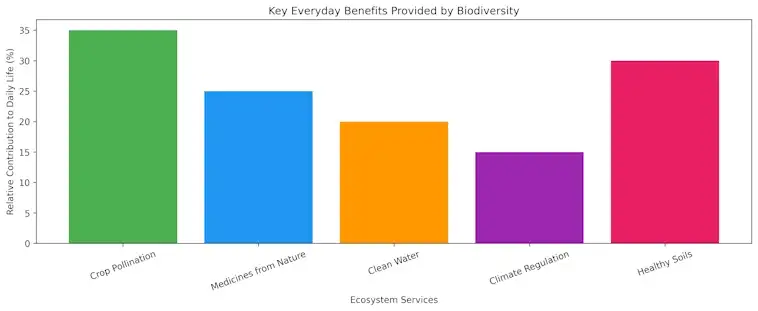
Every meal, every breath of clean air, and even many medicines come from healthy ecosystems. Plants, animals, insects, and microbes all play a role. Together they keep natural systems working.
For example, bees and other pollinators help produce many of the foods we eat. Forests clean the air and store carbon. Wetlands filter water before it reaches our taps. Even the soil beneath our feet is alive with organisms that keep crops growing.
Yet these benefits often go unnoticed. When biodiversity declines, these natural services weaken. Food becomes harder to grow. Water becomes harder to clean. And ecosystems become less stable.
That is why protecting biodiversity is not only about saving wildlife. It is also about protecting the systems that support modern life.
The chart below highlights some of the key ways biodiversity supports daily living.
Looking ahead, the hidden value of biodiversity will likely become even clearer. As cities grow and the climate changes, healthy ecosystems will be more important than ever. Protecting nature today helps secure the everyday resources people rely on tomorrow.
Defend Biodiversity to Protect Wildlife, Ecosystems, and Food Security
Nature supports life in ways we often overlook. From the food on our plates to the air we breathe, healthy ecosystems make it all possible. That is why the call to defend biodiversity is becoming more urgent around the world.
Biodiversity means the variety of life on Earth. It includes plants, animals, insects, fungi, and even tiny microorganisms. Together, these living systems keep the planet balanced and productive.
However, many ecosystems are now under pressure. Habitat loss, pollution, and climate change are reducing wildlife populations and damaging natural systems. When biodiversity declines, the effects quickly spread. Crops become harder to grow. Soil becomes weaker. Water systems become less stable.
Defending biodiversity helps protect the natural foundations of food security and ecosystem health. In fact, many of the world’s most important crops depend on pollinators and healthy soil organisms.
Here are a few important reasons why efforts to defend biodiversity matter so much:
- Protects wildlife habitats so species can survive and reproduce
- Supports pollinators that help grow fruits, vegetables, and crops
- Maintains healthy soil, which is essential for farming and food production
- Strengthens ecosystems, making them more resilient to climate change
- Preserves natural medicines, many of which come from plants and wildlife
The good news is that progress is possible. Governments, conservation groups, and local communities are working together to protect habitats and restore damaged ecosystems.
If you want to explore the global effort to safeguard biodiversity, the World Wildlife Fund provides clear insights and practical guidance.
Looking ahead, the mission to defend biodiversity will only grow in importance. Protecting nature today helps secure wildlife, ecosystems, and food systems for future generations. Even small actions can help move the world toward a healthier and more balanced planet.
Major Threats Putting the World’s Biodiversity at Risk
Biodiversity is declining faster than at any point in modern history. Many species are struggling to survive. At the same time, ecosystems that support life are becoming weaker.
Several major pressures are driving this trend. Most of them come from human activity. As cities expand and demand for resources grows, natural habitats are often pushed aside.
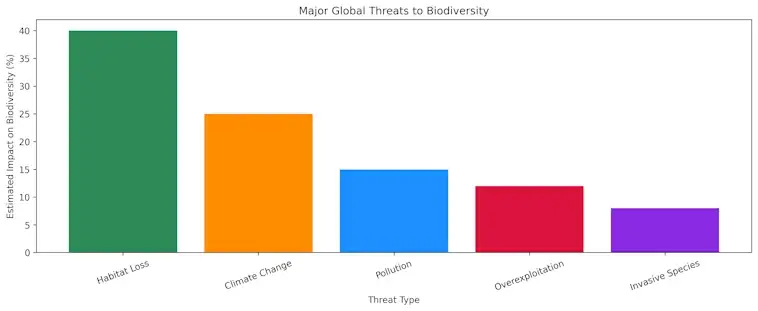
One of the biggest threats is habitat loss. Forests are cleared for farming, roads, and housing. When habitats disappear, many species lose the space they need to live and reproduce.
Climate change is another growing risk. Rising temperatures, shifting rainfall, and extreme weather events are changing ecosystems around the world. Some species cannot adapt quickly enough.
Pollution also plays a role. Chemicals, plastics, and contaminated water harm wildlife and disrupt natural systems. Overfishing and hunting add even more pressure to already stressed populations.
The chart below highlights some of the main global threats to biodiversity.
Looking ahead, these pressures could intensify. However, stronger conservation policies, habitat protection, and sustainable resource use can slow biodiversity loss and help ecosystems recover.
Simple Actions People Can Take to Help Nature Recover
Nature is resilient. When given the chance, ecosystems can recover faster than many people expect. However, that recovery often begins with small, everyday choices.
The good news is that helping nature does not always require major lifestyle changes. In fact, simple actions taken by many people can make a real difference. When communities work together, these small steps can help restore habitats, protect wildlife, and strengthen ecosystems.
Even everyday decisions about food, gardens, travel, and waste can support the natural world. Over time, these habits help reduce pressure on wildlife and the environments they depend on.
Easy Ways to Defend Biodiversity at Home and in Your Community
One simple step is to plant native flowers, trees, or shrubs. Native plants provide food and shelter for local wildlife. They also help support pollinators such as bees and butterflies.
Reducing pesticide use is another helpful change. Many chemicals harm insects that are vital for healthy ecosystems. Choosing natural alternatives can protect both wildlife and soil health.
Food choices matter too. Buying sustainably produced food supports farming methods that protect soil, water, and wildlife habitats.
You can also reduce waste. Cutting down on plastic use and recycling properly helps prevent pollution that harms animals and ecosystems.
Finally, supporting conservation groups or local nature projects can have a lasting impact. Even small donations or volunteer work can help restore habitats and protect wildlife.
If you want practical ideas and guides on protecting nature where you live, the Wildlife Trusts offer helpful resources and advice.
Looking ahead, these everyday actions will become even more important. As environmental pressures grow, the need to defend biodiversity will only increase. The encouraging part is this: when people act together, nature often responds with remarkable recovery.
Defend Biodiversity: The Future of Nature Depends on What We Do Now
The need to defend biodiversity has never been more urgent. Across the world, wildlife populations are falling and natural habitats are under growing pressure. Yet the future of nature is not decided yet.
Biodiversity supports the systems that keep life running. It protects our food supply, keeps soil healthy, and helps clean the air and water. When biodiversity thrives, ecosystems stay balanced and resilient.
However, the window to act is narrowing. Habitat loss, pollution, and climate change continue to challenge ecosystems everywhere. Without action, the natural systems people depend on could weaken even further.
The encouraging news is that change is possible. Governments, scientists, communities, and individuals are starting to work together to protect nature. Protected areas are expanding. Habitat restoration projects are growing. Awareness is rising.
Still, long-term success depends on continued effort. Each step matters. Supporting conservation, choosing sustainable products, reducing waste, and protecting local wildlife habitats all help strengthen the movement to defend biodiversity.
Looking ahead, protecting biodiversity will shape the health of our planet for generations to come. The choices made today will influence the world our children inherit.
The message is simple. If we want a thriving planet, we must continue to defend biodiversity—starting now.