

The Top Environmental Challenges Shaping Our World
The Top Environmental Challenges Shaping Our World
The planet is changing fast—and not always for the better. From rising sea levels to shrinking biodiversity, the natural world is facing pressure like never before. What happens next will depend on how we respond to some of the most urgent environmental challenges of our time. These issues aren’t just distant problems for future generations—they’re already reshaping our health, economy, and daily lives. Understanding what’s at stake is the first step toward meaningful change.

Climate Change: How a Warming Planet Is Reshaping Life on Earth
Climate change isn’t just a distant threat anymore—it’s happening now. From melting glaciers to rising sea levels, the planet is changing fast. And these shifts are touching every part of life on Earth.
Let’s start with ecosystems. As temperatures climb, many animals and plants are struggling to survive. Some species are migrating to cooler areas. Others are facing extinction because their habitats are disappearing. Coral reefs, often called the “rainforests of the sea,” are bleaching and dying at alarming rates due to warming oceans.
But it’s not just wildlife. People are feeling the impact, too. Longer droughts, more intense heatwaves, and stronger storms are becoming more common. These events disrupt food production, threaten clean water supplies, and damage homes and infrastructure.
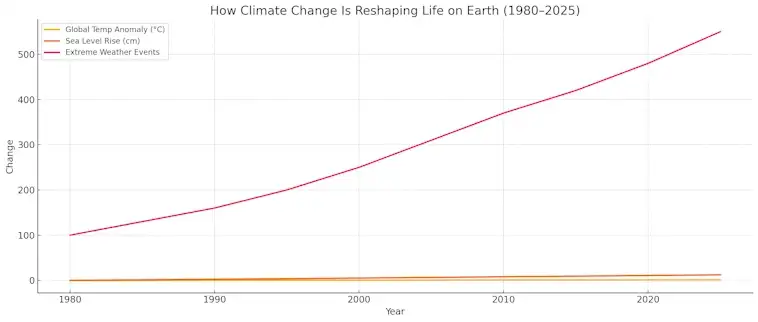
Even our health is at risk. Warmer climates can increase the spread of diseases like malaria and dengue. Air pollution worsens with higher temperatures, making it harder to breathe in many cities.
Yet, it’s not all doom and gloom. Around the world, communities are adapting. Cities are investing in green infrastructure, like parks and urban forests, to keep things cooler. Farmers are shifting to climate-smart practices to protect crops. And renewable energy—from wind to solar—is growing fast, offering hope for a cleaner, more resilient future.
Climate change is reshaping life on Earth in real time. But with action, innovation, and global cooperation, we can still shape the future we want. The choices we make today matter more than ever.
Biodiversity Loss: Why Vanishing Species Threaten Us All
Every time a species disappears, the natural balance shifts. And that matters more than most people realize. Biodiversity—the variety of life on Earth—isn’t just about saving the polar bear or protecting rainforests. It’s about protecting the systems that keep us alive.
Right now, we’re losing species faster than at any point in human history. Scientists warn we’re living through a mass extinction event, largely driven by human activity. Deforestation, pollution, climate change, overfishing, and the spread of invasive species are all taking a toll. But what does this really mean for us?
Think of nature as a giant web. When one thread breaks, the whole structure weakens. Fewer bees and butterflies mean less pollination, and that directly impacts the food we eat. Fewer fish in the ocean means less protein for billions of people. Disrupted ecosystems can also drive the spread of diseases from animals to humans—something we’ve seen more clearly in recent years.
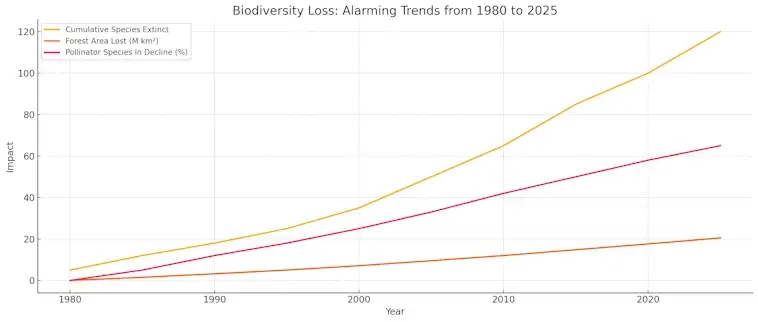
Biodiversity also supports clean water, fertile soil, and climate stability. Forests, wetlands, and grasslands all act as natural buffers—storing carbon, filtering air and water, and protecting communities from floods and droughts. When these ecosystems are damaged, we lose that protection.
But here’s the good news: restoring biodiversity is possible. Around the world, efforts are growing to rewild landscapes, protect endangered species, and rebuild natural habitats. Whether it’s planting native trees, protecting coral reefs, or enforcing anti-poaching laws, every action counts.
Saving biodiversity isn’t just an act of conservation—it’s an act of self-preservation. Because when nature thrives, we thrive. And the time to act is now.
Plastic Pollution: Tackling the Toxic Legacy of Waste
Plastic was once hailed as a miracle material. Lightweight, durable, and cheap to produce, it transformed industries and daily life. But over time, that convenience has turned into a crisis. Today, plastic pollution is one of the most pressing environmental challenges of our era.
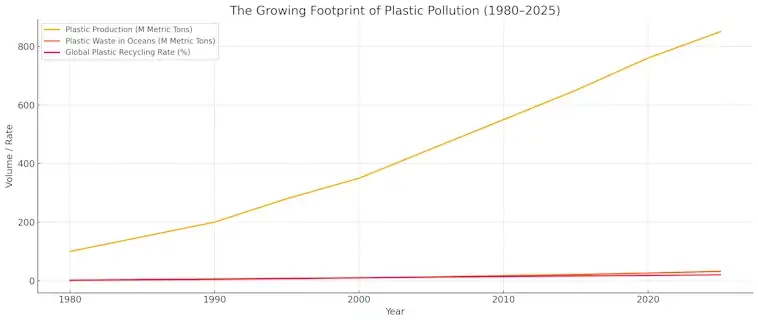
We’ve produced over 8 billion tons of plastic since the 1950s—and most of it still exists. That’s because plastic doesn’t really break down. Instead, it fragments into tiny pieces called microplastics, which now pollute our oceans, soil, air, and even our bodies.
The environmental toll is massive. Plastic chokes marine life, entangles seabirds, and clogs waterways. Around one million seabirds and 100,000 marine animals die each year from plastic-related causes. On land, microplastics contaminate farmland and leach chemicals into groundwater.
But it’s not just nature that suffers. Plastics are made from fossil fuels, so their production contributes to climate change. And as plastic waste builds up in food chains—from plankton to people—there are growing concerns about long-term health effects.
So, what can we do?
The good news is that solutions are already taking shape. Countries are banning single-use plastics. Cities are investing in better recycling systems. Brands are shifting to compostable packaging and refillable products. And innovators are creating materials that biodegrade naturally.
But real progress requires collective action. Governments need stronger policies. Businesses must design with sustainability in mind. And we, as individuals, can rethink how we shop, eat, and dispose of waste.
Plastic pollution may be a global problem, but it’s also a solvable one. By facing it head-on, we can clean up our planet and prevent this toxic legacy from defining the future.
Water Scarcity: The Rising Battle Over a Shrinking Resource
Water covers most of our planet, but clean, drinkable water is becoming harder to find. Across the globe, communities are already facing a harsh reality—water scarcity is no longer a distant concern. It’s here, and it’s growing.
Today, over 2 billion people live in areas where water is scarce. Rivers are drying up, lakes are shrinking, and underground aquifers are being drained faster than they can refill. Climate change is making things worse, disrupting rainfall patterns and triggering more droughts. Meanwhile, rising demand from agriculture, industry, and population growth is pushing supplies to the limit.
It’s easy to take water for granted—until it runs out. In many places, that tipping point has already come. Cities like Cape Town and Chennai have come dangerously close to “Day Zero,” when taps could run dry. Rural areas often suffer quietly, as wells go dry and crops fail.
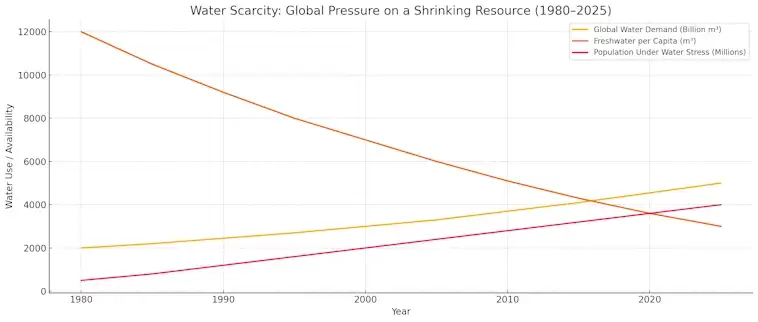
But water scarcity isn’t just a humanitarian issue. It’s also an economic and security risk. Lack of water can fuel conflict, force migration, and trigger food crises. And as competition for water intensifies, even well-off regions may start to feel the pressure.
The good news? We have solutions. Smarter irrigation, better infrastructure, and water recycling can stretch existing supplies. Protecting wetlands and forests helps nature do its job—filtering and storing water naturally. And simple changes, like fixing leaks or reducing meat consumption, can make a big difference when multiplied across millions of people.
Water is life. Every drop counts. As the battle over water heats up, our best defense is cooperation, conservation, and innovation. The future depends on how wisely we manage this most precious—and irreplaceable—resource.
Deforestation and Land Use: Can We Save Our Forests in Time?
Forests are often called the lungs of the planet—and for good reason. They absorb carbon, protect biodiversity, regulate rainfall, and provide food, shelter, and medicine to billions of people. But right now, we’re cutting them down faster than they can recover.
Every year, we lose around 10 million hectares of forest—an area roughly the size of Portugal. Most of this is driven by land use: clearing trees to make room for cattle grazing, palm oil plantations, soy farms, and mining. While some of this land feeds the global economy, it’s also eating away at one of nature’s most valuable life-support systems.
The Amazon, often seen as the symbol of Earth’s forests, has lost nearly 20% of its original cover. Southeast Asia and Central Africa are also under serious threat. And as trees disappear, so do the countless species that depend on them—along with the Indigenous communities that have protected these ecosystems for generations.
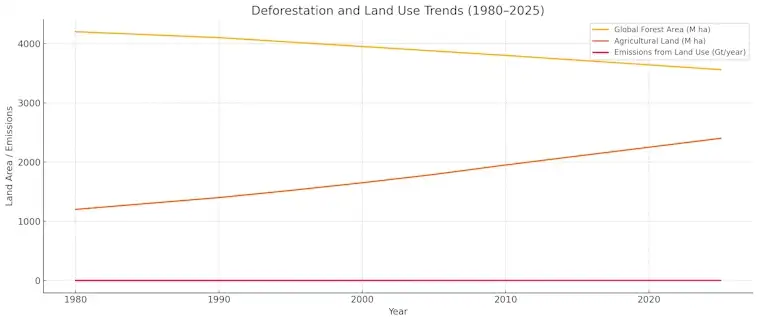
Deforestation doesn’t just hurt the environment. It fuels climate change by releasing carbon stored in trees and soils. It also disrupts weather patterns, increases the risk of floods and fires, and even plays a role in the spread of diseases by pushing wildlife closer to human settlements.
But here’s the encouraging part: we know what works. Reforestation efforts are gaining ground, from the Great Green Wall in Africa to large-scale tree-planting programs in India and China. Sustainable agriculture, responsible sourcing, and protecting Indigenous land rights are also key pieces of the puzzle.
Technology is helping too. Satellites and AI tools are being used to monitor forests in real time, track illegal logging, and guide conservation efforts more effectively.
The question isn’t whether we can save our forests. It’s whether we choose to. Forests are not just resources—they’re relationships. And the time to protect them is now, before more of what we value disappears.
A Future Worth Fighting For
The challenges facing our planet are real—and they’re growing. Climate change, biodiversity loss, plastic pollution, water scarcity, and deforestation are reshaping the way we live. These aren’t distant problems. They affect our health, our food, our economy, and our future.
But here’s the truth: we still have time. Time to rethink how we live, what we value, and how we care for the Earth that sustains us. With bold action, smart policies, and everyday choices, we can slow the damage and start building something better.
Solutions already exist. Innovation is on our side. Around the world, people are restoring forests, cleaning up rivers, creating clean energy, and protecting wildlife. Every effort counts—whether it’s made in a boardroom, a classroom, or your own backyard.
The future isn’t written yet. It depends on what we do now, together. Facing these environmental challenges head-on is not just a responsibility—it’s an opportunity to shape a healthier, fairer, more resilient world for everyone.
Let’s not wait for change. Let’s lead it.