

Are Quiet Woods Speaking Truths We All Often Overlook?
Quiet Woods Hold Clues We Rarely Notice—Are We Paying Attention?
Quiet woods often hold more meaning than we give them credit for. Their calm atmosphere can feel almost ordinary at first, yet something deeper tends to surface when the noise of daily life fades. These still places hint at patterns, pressures, and possibilities that many people overlook, even as they walk right through them.
As you move forward, a clearer picture begins to form. Forest silence is not empty. It reflects how stretched our attention has become and how quickly we race past cues that could help us think, rest, or reconnect. And as environmental stresses rise, these untouched pockets of nature can act like quiet truth-tellers, offering signals about the health of our world and the pace of our lives.
There is value in slowing down long enough to notice what stands right in front of us. Small shifts in light, sound, and space can reveal insights that feel surprisingly relevant to daily routines. By paying closer attention, new possibilities start to open—ones that can shape how we move through both nature and the modern world with a little more clarity.
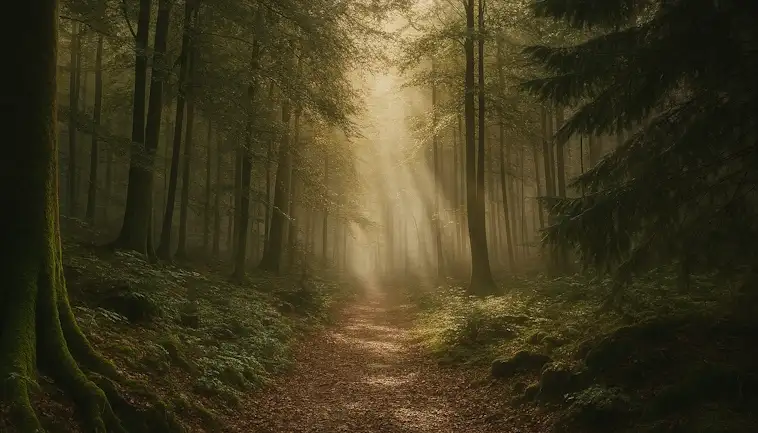
Quiet Woods and the Subtle Signals We Rarely Stop to Notice
When you step into the quiet woods, the world shifts. The noise fades, and the air feels different. Even your thoughts seem to slow down. Yet, as calming as it is, these gentle places are rarely as simple as they appear. There is a whole language in the trees, soil, and sky that most of us miss because we rush through or never pause long enough to look a little closer.
The quiet woods offer clues about the health of our environment. They show how wildlife moves, how seasons change, and how the land responds to stress. These signals are subtle. Still, once you notice them, you cannot help but pay attention. And as more people seek peaceful outdoor escapes, understanding these signs becomes even more important.
A Closer Look at Nature’s Whispers
Take the way the sunlight filters through the canopy. It can tell you how old a forest is. Or listen to how the wind shifts across the leaves. It often hints at weather changes long before your weather app does. Even the softness of the ground beneath your feet may signal how much rainfall the forest has absorbed.
As you walk, you might also see patterns in moss growth or hear gaps in birdsong. These small details can reveal stress in the ecosystem. And because the quiet woods respond to change faster than we expect, paying attention helps us see the future of our natural world in real time.
When we slow down, these signals feel almost like a conversation. They remind us that nature is always communicating. We just need to make space to hear it.
The more we learn to read these signs, the more connected we become. And that connection encourages us to protect the quiet woods that give us so much in return.
Why Silence in Nature Can Be More Informative Than Noise
When you head outdoors, you might expect nature to greet you with birdsong, rustling leaves, or flowing water. Yet the most revealing moments often come from the quiet. Silence in nature is rarely empty. Instead, it is full of cues about what is happening around you. And once you start noticing these quiet signals, your time outside feels richer and more connected.
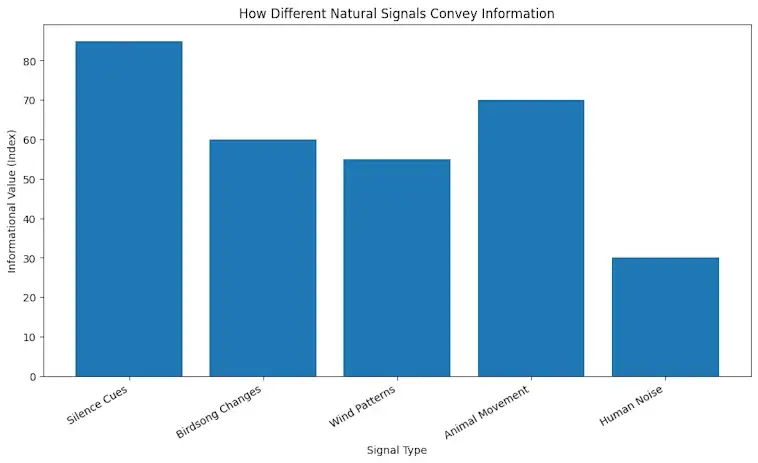
Silence can show you shifts in wildlife behavior. It can hint at weather changes, and can even signal larger environmental stress before it becomes visible. Because of this, silence in nature often tells a deeper story than noise ever could. And as more people look for calm places to recharge, learning to read these quiet moments can transform the way we experience the outdoors.
When you pause and listen, you begin to pick up on subtle patterns. Maybe the wind stops suddenly, birds fall silent, or maybe the forest floor seems stiller than usual. These shifts are often early clues that something is changing. And noticing them makes every walk feel like a small discovery.
Silence invites you to slow down. It gives you space to think and notice what you would normally miss. And as you do, you start to understand how nature communicates. This quiet awareness helps you feel more grounded. And it also encourages you to care more deeply for the wild places that depend on our attention.
Below is a chart that highlights how different natural signals—including silence—can carry surprising levels of information.
What Quiet Woods Reveal About Change, Balance, and Loss
When you step into quiet woods, something shifts. The noise falls away. Your breath slows. And suddenly, you notice things you might miss in the rush of everyday life. These calm places do more than soothe us. They tell stories about how our world is changing, often in ways we rarely see.
As you walk deeper, you start to sense the balance that keeps a forest alive. Yet you also notice how fragile that balance has become. Many forests now face rising temperatures, shifting seasons, and fewer species to hold everything together. These changes may be subtle at first. However, they add up.
In fact, quiet woods reveal clues about loss long before it reaches our cities or homes. Fallen branches, thinning canopies, fewer birdsong moments. Each sign whispers that something is out of rhythm. And while these signals can feel heavy, they also offer direction. They show us where action matters most.
To bring this into focus, consider what quiet woods often reveal:
- Forests are warming faster than many regions around the world.
- Certain tree species no longer thrive in the places they once defined.
- Wildlife depends on habitats that shrink a little more each year.
- Soil health declines when ecosystems lose their natural diversity.
- Small disruptions build into larger, long-term changes.
Even so, there is hope in these observations. When we pay attention, we spot patterns early. We learn what to protect and why it matters. And we remember that nature’s quiet is not empty. It is full of signals, guidance, and reminders that the future is still ours to shape.
As you continue through your own quiet woods, listen closely. They are speaking. And their stories can help us move forward with more awareness, more balance, and a deeper sense of care for the world we depend on.
How Listening More Closely to Forests Can Shape Smarter Choices
Forests are always talking. We just tend to tune them out. Yet when we slow down and listen, we notice patterns that can guide better decisions about how we live, plan, and protect the natural world. These sounds are simple clues. However, they help us understand the health of an ecosystem in real time.
As we pay closer attention, we begin to hear more than birds and wind. We hear early warnings about climate stress, we hear shifts in wildlife behavior. And we hear changes in moisture and temperature long before they show up in reports. This kind of listening does not require special tools. It only requires curiosity and a willingness to observe.
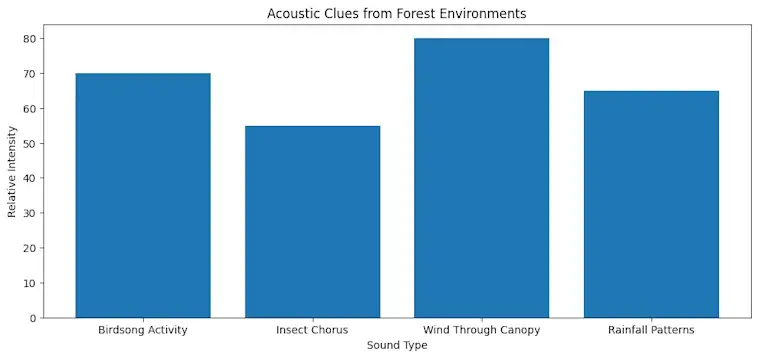
When these acoustic hints are gathered and shared, communities can act sooner. They can restore damaged areas, adjust land-use plans, and support conservation strategies that match what the forest is telling us. In short, listening helps us make smarter choices for the future. And it keeps us connected to the places that sustain us.
Below is a chart illustrating how different forest sounds can offer quick insights into environmental conditions.
The Lessons Hidden in Stillness That Modern Life Often Misses
Life moves fast. We rush from task to task, often without noticing how much noise we carry with us. Yet, when we slow down, something important happens. We start to hear the things we have been missing, we notice our thoughts, and sense our needs. And we reconnect with the small details that actually make life feel meaningful.
Stillness does not mean doing nothing. It means paying attention, it means letting the world settle for a moment so we can see it more clearly. Many people say they feel overwhelmed or distracted. But often, what they are really missing is space. The space to breathe, to think, and the space to simply be.
When we create that space, even for a few minutes a day, we begin to understand ourselves differently. We discover that clarity often hides beneath the noise. And with clarity comes better decisions, steadier emotions, and a sense of direction that feels grounded rather than forced.
Why the Quiet Woods Teach Us More Than We Expect
There is a reason people seek out nature when life feels too heavy. The quiet woods slow us down. They encourage us to listen, and remind us that stillness is not empty. It is full of cues and patterns that help us reflect.
Walking through a calm forest, for example, can calm the nervous system. Studies show that just being in nature helps lower stress and improve focus. One helpful overview comes from the American Psychological Association, which offers research on how nature boosts mental well-being.
Stillness teaches patience. It teaches presence. And it reminds us that many answers surface only when we stop pushing so hard.
As life becomes even more connected and fast-moving, the ability to pause will become a vital skill. It gives us resilience, it gives us perspective. And most of all, it gives us a chance to live with more intention, not just more speed.
By welcoming stillness, we gain lessons that modern life often misses.
Listening to What the Quiet Woods Reveal
As we step back and look at the bigger picture, it becomes clear that the quiet woods are more than a peaceful escape. They are a reminder of what we often miss in our fast-paced lives. When we slow down and pay attention, we begin to notice patterns, signals, and small truths that can shift how we see the world. And, as awareness grows, so does our ability to make better choices for ourselves and our environment.
The quiet woods invite us to pause, reflect, and reconnect. They show us that clarity often lives in stillness. By returning to these spaces—whether in person or through moments of mindful rest—we open the door to deeper understanding. And when we carry that insight back into our daily routines, we strengthen our sense of direction and purpose.
In the end, the quiet woods are not just landscapes. They are teachers, and they speak softly. But their lessons can echo for a lifetime.