

Amazon Rainforest Destruction and the Fight to Save It
Amazon Rainforest: The Destruction Unfolding and the Global Fight to Save It
The Amazon Rainforest stands at a critical crossroads. Once seen as endless and untouchable, it now faces record loss due to deforestation, wildfires, and expanding industries. The world is watching because the stakes are high. This vast forest influences weather, stores carbon, and supports millions of species. Yet every minute, more trees fall. As current pressures grow, the question has shifted from whether change is needed to how fast meaningful action can happen.
At the same time, momentum is building. New technology supports real-time monitoring. Local communities are leading innovative conservation efforts. Governments and global companies are under rising pressure to protect remaining forest. Moving forward, the fight to save this essential ecosystem will require bold strategies, long-term thinking, and a shared sense of responsibility.

How the Amazon Rainforest Became the Center of a Global Crisis
The Amazon Rainforest has always been a place of wonder. It’s packed with rare wildlife, ancient trees, and ecosystems that scientists are still trying to understand. Yet over the past decade, it has shifted from being a symbol of natural beauty to the center of a global crisis. The scale of what is happening there has caught the world’s attention. And it should. Because the future of the Amazon Rainforest is deeply connected to the future of life on Earth.
The situation didn’t happen overnight. For years, small-scale logging and land clearing flew under the radar. Then demand for beef, soy, and minerals soared. Businesses saw profits. Politicians saw opportunity. And forests began falling faster than they could regrow. Today, deforestation has reached alarming levels. Huge areas of ancient trees are wiped out in a matter of weeks.
A Turning Point We Can’t Ignore
With every tree lost, carbon storage is reduced. That means more heat-trapping gases end up in our atmosphere. Weather becomes more extreme. Crops struggle. Seas rise. It all connects back to us. You may live thousands of miles away from the Amazon Rainforest, but its decline shapes your daily life in subtle ways like rising food prices and unpredictable weather patterns.
There is hope, though. Governments are talking. Communities are resisting. Scientists are innovating. Individuals are learning how their choices impact forests far beyond their homes. While the challenge is massive, so is the potential for change. The Amazon Rainforest can still recover if the world sees it not as a resource to use up, but as a living system worth protecting.
This crisis is not just environmental. It’s economic, political, and personal. Because what happens in the Amazon Rainforest doesn’t stay there. It echoes across the globe. And that is why the next chapter must be written differently—one that supports the people who live there, protects nature, and builds a future we can all depend on.
The Hidden Drivers Behind Accelerating Deforestation
When people think about forests being cleared, they often picture loggers cutting down trees. That is part of the story, but it’s not the main one anymore. Today, the forces pushing deforestation forward are more complex and less visible. That makes the issue tougher to solve, yet even more important to understand.
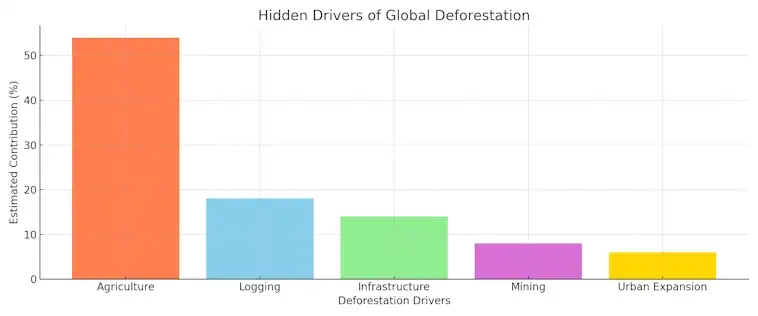
To start, agriculture leads the charge. Growing demand for food, animal feed, and biofuel is clearing huge areas of land. Soy farms and cattle ranching continue to expand into forest territory. As populations grow and diets change, this pressure increases.
Logging does contribute, but many don’t realize how much infrastructure plays a role. New roads open untouched forests to commercial exploitation. Once a road exists, settlements, farms, and further clearing often follow.
Mining also scars large regions. Minerals and metals used in electronics, construction, and everyday products come at a high environmental cost. Meanwhile, expanding cities create another layer of concern. As urban areas stretch outward, forests are often the first to go.
These drivers are tied to global consumption habits. What we buy, what we eat, and how we travel all influence what happens miles away from our homes. Looking ahead, solutions will require more than planting trees. They will demand new thinking in how industries operate, how products are made, and how communities thrive without clearing land.
Below is a chart highlighting the major drivers of deforestation today. It helps show how much of the problem is tied to our growing need for food and fuel, and why understanding these hidden forces matters for the future of our forests.
Why Protecting the Amazon Rainforest Matters for Every Nation
The Amazon Rainforest often feels far away from daily life. However, its impact reaches every country on Earth. It shapes our weather, fuels the air we breathe, and plays a key role in stabilizing the global climate. When we talk about protecting the Amazon Rainforest, we are not only discussing trees and wildlife. We are talking about the future of our cities, our food systems, and the safety of our families.
The Amazon Rainforest stores vast amounts of carbon. When trees are cut or burned, that carbon goes straight into the atmosphere. This raises global temperatures and increases the risk of extreme weather. From coastal storms to heat waves, nations feel the consequences. So, saving the Amazon Rainforest isn’t charity. It’s global survival.
Also, millions of people rely on the Amazon for food, water, and income. Protecting the land supports indigenous communities who care for it. Their knowledge and stewardship have helped the forest thrive for centuries. Investing in protection means supporting cultures that understand its rhythms better than anyone.
Here are a few reasons the Amazon Rainforest matters to every nation around the world:
- Helps regulate global temperatures.
- Produces oxygen and stores carbon on a massive scale.
- Provides ingredients used in life-saving medicines.
- Supports rainfall patterns that affect farming worldwide.
- Protects endangered species that help keep ecosystems balanced.
- Sustains indigenous communities with deep cultural roots and knowledge.
- Holds opportunities for future discoveries in health, science, and clean energy.
Looking ahead, protecting the Amazon Rainforest means investing in technologies and global agreements that stop deforestation. Nations must collaborate. Partnerships with local communities must be prioritized. The true value of the Amazon is far greater than the short-term profits of clearing it.
The world depends on the Amazon Rainforest more than many realize. And if nations act together now, there is still time to protect it for future generations. The decision we make today will echo tomorrow.
Indigenous Communities on the Frontline of Environmental Change
Indigenous communities are among the first to feel the impact of a changing environment. While many of us hear about climate change through headlines or social feeds, these communities live the reality every day. Their homes, traditions, and local economies depend on the land and the natural world in ways that are deeply rooted and hard to replace.
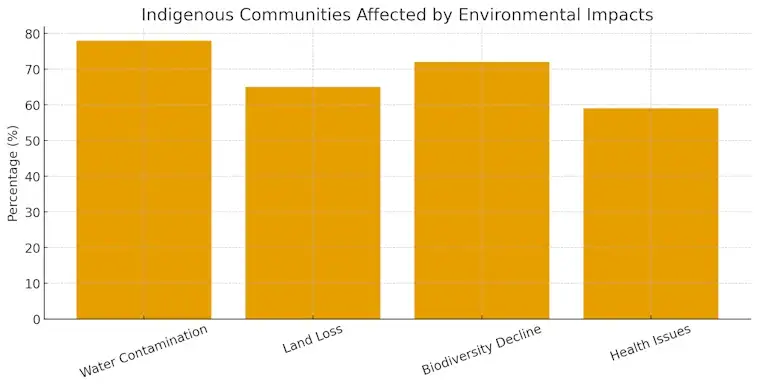
Across the globe, Indigenous groups are witnessing rising sea levels swallow their coastlines. They are dealing with polluted rivers that once provided food, water, and cultural connection. And as forests shrink and biodiversity declines, long–standing knowledge systems are being disrupted. This creates challenges that ripple far beyond the environment itself.
However, there is also hope. Indigenous leadership is reshaping the future of climate action. Their traditional knowledge and land stewardship practices offer insights that modern science is only beginning to value. And as more people begin listening and collaborating, we move closer to solutions that honor the environment while supporting the communities who protect it.
Below is a chart showing how major environmental impacts affect Indigenous populations today.
New Strategies and Technologies Leading the Fight for Forest Recovery
Around the world, forests are fighting for their future. Yet, new technologies and bold strategies are bringing real hope. Today, restoration no longer relies only on slow, manual planting. Instead, drones, AI-driven mapping, and climate-smart planning are transforming how we protect and rebuild vital ecosystems.
These breakthroughs are speeding up reforestation and improving long-term success rates. Even better, they offer communities new tools to monitor progress and respond faster to threats like illegal logging and wildfires.
The Amazon Rainforest and Data-Driven Restoration
When it comes to the Amazon Rainforest, innovation is proving to be a lifeline. Satellite monitoring now tracks tree loss in near real time. This lets conservation teams act sooner and make better decisions. Meanwhile, drones are dropping seed pods from above, reaching remote areas once impossible to plant manually.
Local communities are also stepping into leadership roles. With mobile apps and open-source platforms, farmers and Indigenous organizations can map land, track restoration, and share data with global research networks. This collaboration helps ensure restored forest areas support wildlife, carbon storage, and sustainable livelihoods.
If you’re curious about how these technologies are being used on the ground, the World Resources Institute offers an excellent resource for understanding data-driven forest recovery efforts.
As we look ahead, the momentum is encouraging. Forest recovery is no longer a distant dream. It’s happening right now — faster, smarter, and more collaboratively than ever before.
The Future of the Amazon Rainforest Is Still Ours to Shape
The story of the Amazon Rainforest is not finished. Yes, it faces enormous threats—from illegal logging to rising global temperatures—but these challenges are not impossible to overcome. Around the world, everyday people, researchers, Indigenous communities, and global leaders are pushing for stronger protection and smarter solutions. And those efforts are gaining momentum.
As we look ahead, the choices we make now will decide the future of one of Earth’s most valuable ecosystems. By supporting sustainable products, backing policies that prioritize conservation, and amplifying the voices of those defending the forest, we each play a part.
The Amazon Rainforest matters to the climate, to biodiversity, and to future generations. The fight to save it is not only urgent—it is achievable. And with continued dedication, innovation, and global cooperation, hope still stands tall beneath the canopy.