

Algal Blooms Explained: What’s Fueling These Sudden Surges in Our Waters?
Algal blooms are becoming more common—and more dangerous. These outbreaks of rapid algae growth can turn lakes, rivers, and coastal waters into green, murky messes. They’re not just unpleasant to look at; some types release toxins that harm wildlife, pets, and even people.
As temperatures rise and pollution from farming and cities continues to flow into waterways, conditions become perfect for these blooms to thrive. What was once a rare event is now something communities around the world are dealing with every year.
Here’s why this matters now more than ever:
- Health risks: Certain algae produce toxins that can cause rashes, breathing issues, or even liver damage.
- Ecosystem damage: Algal blooms block sunlight and deplete oxygen, which can kill fish and other aquatic life.
- Economic impact: Fishing, tourism, and water treatment all take a hit when blooms strike.
- Climate connections: Warmer waters and more intense storms—both linked to climate change—are helping blooms spread.
Understanding the causes and effects of algal blooms isn’t just for scientists or environmentalists. It’s something that affects drinking water, food supplies, and recreation. And it’s not just a problem of today. The way we respond now will shape the future of our lakes, rivers, and oceans.
Algal Blooms Explained: What’s Fueling These Sudden Surges in Our Waters?

What Are Algal Blooms?
If you’ve ever looked out at a lake, river, or even the ocean and noticed patches of green or reddish scum floating on the surface, chances are you’ve seen an algal bloom. These colorful outbreaks might look harmless—or even beautiful at times—but they can hide serious problems beneath the surface.
So what exactly are algal blooms? And why do some of them turn dangerous?
What Is an Algal Bloom?
An algal bloom is a rapid growth of algae in a water system. Algae are tiny, plant-like organisms that live in both freshwater and saltwater. They’re a natural part of healthy ecosystems and form the base of many food chains.
But when conditions are just right—like warm temperatures, lots of sunlight, and an overload of nutrients such as nitrogen and phosphorus—algae can grow out of control. This sudden growth is called a “bloom.”
You can usually spot a bloom because it changes the color of the water. It might look green, red, brown, or even blue, often forming a thick scum on the surface. Some blooms only last a few days, while others can stick around much longer.
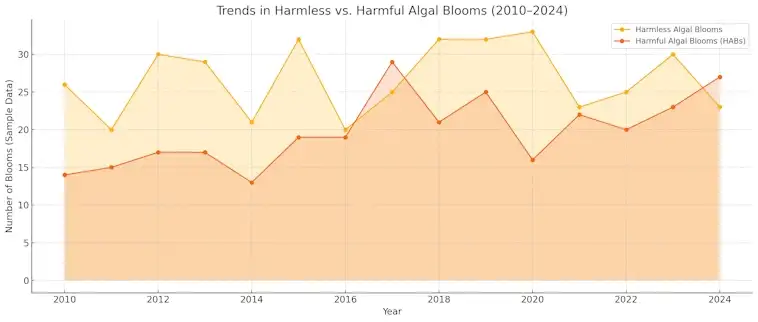
Not All Blooms Are Bad
Some algal blooms are mostly harmless. They might look strange, but they don’t produce toxins or significantly damage the environment. In small amounts, algae even help the ecosystem by producing oxygen and serving as food for aquatic creatures.
But Some Can Be Dangerous: Harmful Algal Blooms (HABs)
The real concern comes with harmful algal blooms—also known as HABs.
These blooms can:
- Produce dangerous toxins that harm or kill fish, birds, and even people.
- Deplete oxygen in the water, which can lead to massive fish kills.
- Block sunlight from reaching underwater plants, disrupting ecosystems.
- Contaminate drinking water and make beaches unsafe for swimming.
One common example is cyanobacteria, often called blue-green algae. These can release toxins that affect the liver, nervous system, or skin. Red tides, which often occur in oceans, are another type of HAB that can cause respiratory problems in people and kill marine life.
Algal blooms are becoming more common around the world. That’s partly due to climate change and rising water temperatures, and partly due to increased nutrient pollution from farming, sewage, and runoff.
Understanding the difference between a typical bloom and a harmful one is important. It helps communities respond faster and protect people, pets, and ecosystems from harm.
Why Are Algal Blooms on the Rise?
Algal blooms are becoming more frequent and more intense in lakes, rivers, and oceans around the world. In many places, what used to be a rare, seasonal event now happens multiple times a year. Some blooms stretch across miles of water, killing fish, sickening people, and shutting down beaches.
So what’s going on? Why are these blooms getting worse?
The answer comes down to a mix of human activity, environmental stress, and climate change—all working together to tip the balance of our water systems.
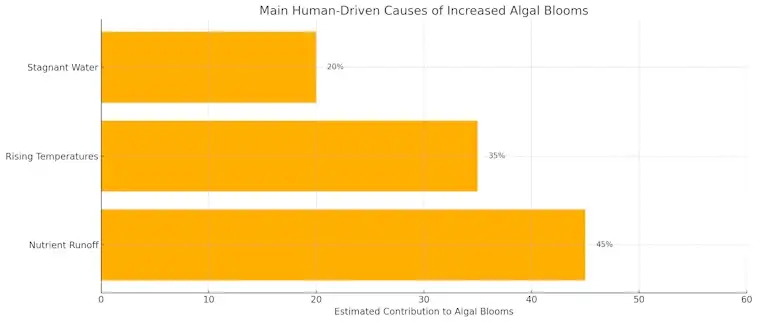
The Main Causes Behind Algal Blooms
Nutrient Runoff from Farms and Cities
One of the biggest drivers of algal blooms is nutrient pollution—especially nitrogen and phosphorus. These nutrients are commonly found in:
- Fertilizers used on farms and lawns
- Animal waste from large-scale livestock operations
- Sewage and stormwater runoff from cities
When it rains, these nutrients wash off the land and flow into nearby streams, lakes, and coastal waters. Once there, they act like fuel for algae, triggering explosive growth.
Why it matters: This kind of nutrient overload didn’t happen as often in the past. But with modern agriculture and sprawling urban areas, the amount of runoff has skyrocketed.
Rising Temperatures from Climate Change
Algae love warm water. As global temperatures rise, so do water temperatures—especially in shallow or slow-moving bodies of water.
Warmer water:
- Speeds up algal growth
- Favors harmful species like cyanobacteria
- Reduces oxygen levels, making conditions worse for fish
Climate change is also increasing extreme weather—from heavy rainstorms (which carry more runoff) to long dry spells (which lead to stagnant water). That brings us to the next cause.
Stagnant or Slow-Moving Water
Water that doesn’t move much is a perfect environment for algal blooms. It allows nutrients to settle and algae to concentrate near the surface.
Stagnation can happen due to:
- Dams that slow river flow
- Droughts that reduce water levels
- Irrigation systems that divert water from natural channels
In some regions, man-made changes to rivers and coastlines have created slow-moving pools where blooms thrive. Combine that with nutrient overload and warm water, and you’ve got the perfect storm.
Connecting the Dots: People, Climate, and Ecosystems
What we’re seeing with algal blooms isn’t just a natural phenomenon—it’s a clear signal of how human activity is altering the planet.
- Agriculture feeds us, but intensive farming often leads to runoff.
- Dams provide energy and water, but they change how rivers behave.
- Climate change amplifies all of it—warmer waters, more extreme weather, and longer bloom seasons.
These forces don’t act alone. They combine and interact, making blooms harder to predict and harder to control.
Tackling algal blooms means looking at the big picture. It’s not just about cleaning up a lake after it turns green. It’s about smarter land use, better waste management, and bold climate action.
The good news? Many communities are already experimenting with solutions—from restoring wetlands to buffer runoff, to upgrading sewage systems, to adopting climate-resilient farming practices.
The challenge is clear. But so is the opportunity: by reconnecting how we live with how nature works, we can turn the tide on harmful blooms—and build healthier waters for the future.
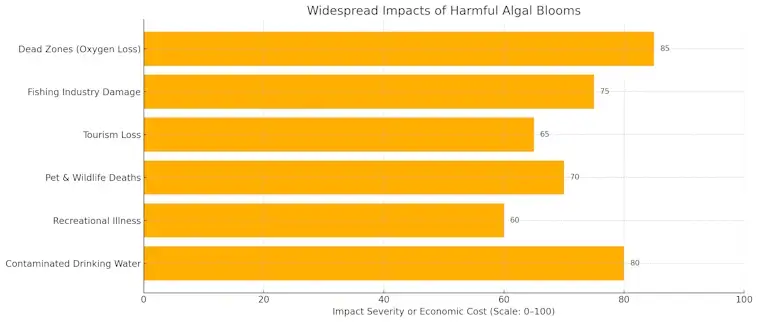
How Algal Blooms Affect People, Pets, and the Planet
At first glance, an algal bloom might just look like a harmless green layer on the water. But beneath that surface is a problem that can ripple through entire communities. Algal blooms—especially harmful ones—don’t just affect the environment. They can put human health at risk, threaten pets and wildlife, and even hurt local economies.
Let’s look at how these blooms are doing more damage than many people realize.
How Algal Blooms Affect Health
Contaminated Drinking Water
Some algal blooms release toxins, especially those caused by cyanobacteria (also called blue-green algae). These toxins can:
- Contaminate drinking water supplies
- Cause stomach pain, vomiting, and liver damage
- Affect the nervous system in rare but serious cases
Treatment plants can usually filter out these toxins—but not always. In 2014, for example, nearly half a million people in Toledo, Ohio, were told not to drink their tap water because of a toxic bloom in Lake Erie.
Illness From Swimming and Recreation
You don’t have to drink the water to get sick. Swimming, boating, or even being near a bloom can cause problems like:
- Skin rashes and eye irritation
- Respiratory issues from breathing in airborne toxins
- Stomach issues if water is accidentally swallowed
Children and people with weakened immune systems are at higher risk. And if beaches have to close, it affects both public health and community recreation.
The Risk to Pets and Wildlife
Algal blooms are especially dangerous for animals. Pets, particularly dogs, often drink from lakes or ponds—and just a small amount of contaminated water can be fatal. Every year, cases of dog deaths linked to toxic blooms make headlines.
Wildlife is at risk too:
- Fish and shellfish can die in large numbers during blooms.
- Birds and other animals that eat fish or drink from affected water can also become sick or die.
Even animals that survive can be affected by long-term changes in their food supply or habitat.
Economic Damage: Fishing, Tourism, and More
When algal blooms hit, they can cost communities millions of dollars. Here’s how:
- Commercial fishing suffers as fish die off or become unsafe to eat.
- Recreational fishing and boating are disrupted, hurting local businesses.
- Tourism declines when beaches close and water turns murky or smells bad.
- Property values near affected lakes and rivers often drop.
In coastal regions, red tides (a type of harmful algal bloom) can also impact seafood industries, especially shellfish, which absorb toxins and become dangerous to eat.
“Dead Zones” and Oxygen Loss
One of the most damaging effects of algal blooms is the creation of dead zones. Here’s how it happens:
- When algae die, they sink to the bottom and decompose.
- This process uses up the oxygen in the water.
- Fish and other aquatic life either flee or die from lack of oxygen.
Some of the world’s largest dead zones form every year, like the one in the Gulf of Mexico, which can cover thousands of square miles. These zones turn vibrant ecosystems into lifeless underwater deserts.
Algal blooms are a warning sign that our relationship with nature is out of balance. They’re not just a water issue—they’re a public health issue, a wildlife issue, and an economic one.
But there’s hope. With better water management, stronger pollution controls, and smarter climate policies, we can start reversing the trend. Keeping our waters clean means keeping our communities safe, thriving, and resilient.
Can We Predict and Prevent Algal Blooms?
Algal blooms are on the rise—but so is our ability to track, understand, and prevent them. Thanks to new tools and technologies, scientists, governments, and communities are getting better at predicting when and where blooms will happen—and how to reduce the damage.
But this isn’t just about satellites and sensors. It’s also about smarter policies, better farming, and people getting involved locally. Let’s break down what’s working and what’s next.
Tools and Technology to Track Blooms
Satellite Imaging
One of the most powerful tools we have is the view from above. Satellites can:
- Detect large-scale changes in water color
- Monitor bloom size and movement over time
- Provide near real-time updates for lakes, rivers, and coastlines
This is especially helpful for spotting blooms in remote areas or across large bodies of water like the Great Lakes or oceans.
AI and Predictive Modeling
Artificial intelligence (AI) is playing a growing role in predicting algal blooms. Here’s how:
- AI models analyze huge datasets—from weather patterns to water quality trends
- These models can forecast when and where blooms might appear
- Some systems even send alerts to local agencies and communities
This early warning can help prevent public health problems and reduce economic damage.
Water Testing and Sensor Networks
On the ground (or in the water), scientists and agencies use sensors and test kits to monitor conditions in real time. These tools measure things like:
- Water temperature
- Nutrient levels (like nitrogen and phosphorus)
- Algae concentration
In some places, floating sensor buoys send data continuously, helping track changes as they happen.
Community Science: Locals Making a Difference
In many regions, local residents are helping track algal blooms too. This is often called community or citizen science.
- Volunteers collect water samples or report changes they see
- Apps and online tools make it easy to submit data or photos
- Their observations can fill in gaps and alert officials quickly
This kind of local involvement builds awareness and makes communities part of the solution.

Preventing Future Blooms
While tracking blooms is important, stopping them from happening in the first place is even better. Prevention starts with smarter policies, better land use, and long-term planning.
Stronger Regulations on Nutrient Pollution
Many algal blooms start with too much fertilizer or waste getting into water. Governments can help by:
- Limiting fertilizer use near waterways
- Requiring buffer zones or setbacks on farms
- Updating wastewater treatment standards
Some regions are already passing these kinds of laws, especially near lakes and coastlines hit hard by blooms.
Better Farming Practices
Farmers can be a powerful part of the solution. With the right support, many are already adopting:
- Precision agriculture to reduce fertilizer waste
- Cover crops that absorb nutrients during off seasons
- No-till methods that keep soil and nutrients in place
These techniques help grow food without fueling blooms downstream.
Green Infrastructure
In cities and suburbs, stormwater runoff is a major problem. Green infrastructure offers a more natural way to manage it. This includes:
- Rain gardens and bioswales
- Permeable pavements
- Wetlands that filter water before it reaches rivers and lakes
These designs not only reduce pollution—they also beautify neighborhoods and support biodiversity.
Education and Awareness
The more people understand what causes blooms, the more they can help prevent them. Public awareness campaigns, school programs, and local events all make a difference.
Even small changes—like using less lawn fertilizer or properly disposing of pet waste—can help protect nearby waters.
The challenge of algal blooms won’t go away overnight. But with smarter technology, stronger policies, and everyday people stepping up, we’re getting better at both predicting and preventing them.
It’s a powerful example of how science, nature, and community can work together—and a hopeful sign that we can turn the tide on this growing problem.
Adapting to a Greener (and Not in a Good Way) World
Algal blooms aren’t just a seasonal nuisance anymore. They’re growing larger, lasting longer, and appearing in places that never had them before. If this trend continues, the world could face bigger challenges—from polluted water supplies to serious threats to food systems and ecosystems.
But here’s the twist: while the risks are real, so are the solutions. Around the world, cities, farmers, scientists—and even entrepreneurs—are already preparing for what’s ahead. And in some cases, people are finding ways to turn the problem into something useful.
Let’s look at what could happen if blooms keep spreading—and how we might meet the challenge head-on.
What’s at Risk if Blooms Keep Growing?
If harmful algal blooms (HABs) become more common and intense, we could see:
- More frequent drinking water warnings as blooms reach major water supplies
- Widespread fish die-offs from oxygen-starved waters
- Increased pressure on health systems from respiratory and gastrointestinal illnesses
- Heavier economic losses in fishing, tourism, and coastal industries
- Expanding dead zones in oceans and lakes, making recovery harder for wildlife
And climate change could make all of it worse—warmer waters, stronger storms, and longer dry spells all help blooms thrive.
How Are We Preparing?
Despite these challenges, the response is growing stronger and more coordinated across sectors:
Cities Are Getting Smarter About Water
Many urban areas are:
- Upgrading wastewater treatment plants to remove nutrients more effectively
- Installing green infrastructure (like rain gardens and wetlands) to filter runoff
- Launching public alert systems to keep people safe when blooms appear
Some cities are also partnering with universities and tech startups to test real-time sensors and AI-driven prediction models.
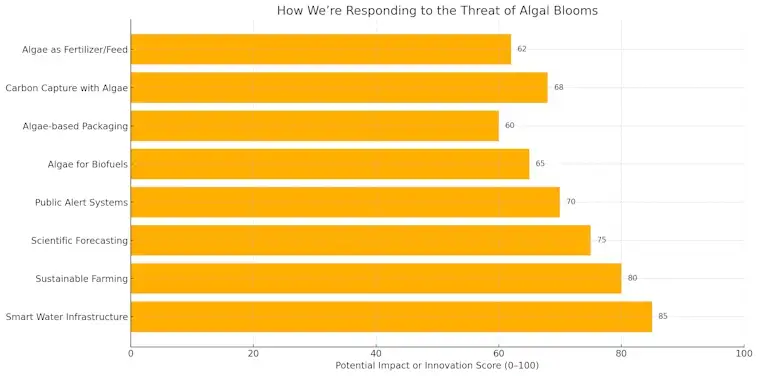
Farmers Are Shifting Toward Sustainable Practices
Agriculture plays a big role in nutrient runoff, but farmers are adapting:
- Using precision tools to apply just the right amount of fertilizer
- Planting cover crops to absorb nutrients and prevent erosion
- Participating in conservation programs that offer both funding and education
The idea is to grow food and protect water at the same time. It’s not always easy—but it’s becoming more common.
Scientists Are Expanding Monitoring and Forecasting
Research teams are developing:
- New satellite systems to detect blooms faster and more accurately
- Machine learning models to predict bloom outbreaks weeks in advance
- Genetic tools to understand which species of algae are most dangerous
And they’re sharing this data across borders, recognizing that water—and algae—don’t care about state or country lines.
Turning the Tide: Can We Use Algae for Good?
Here’s where the story takes a hopeful turn. While harmful algal blooms are a problem, not all algae are bad. In fact, algae might be part of the solution to some of our biggest challenges.
Innovative Uses of Algae
- Biofuels: Some species can be turned into clean-burning fuel, offering a renewable alternative to fossil fuels.
- Bioplastics: Algae-based packaging is biodegradable and already being used by a few eco-friendly companies.
- Carbon capture: Algae absorb carbon dioxide during growth. In controlled systems, they can help reduce greenhouse gases.
- Animal feed & fertilizers: Certain algae can be harvested and used in farming, closing the nutrient loop.
While we can’t (and shouldn’t) harvest blooms that are toxic, growing the right kinds of algae in controlled environments is becoming a fast-growing field.
A Realistic but Hopeful Future
If algal blooms continue to spread, we’ll need to stay alert, invest in smarter water systems, and rethink how we grow food and manage land. But we also have a chance to innovate—by turning this environmental challenge into a driver of new ideas, industries, and technologies.
The path ahead won’t be easy. But if we combine science, policy, and creativity, we can protect our waters—and maybe even transform algae from a threat into a surprising ally.
Conclusion
Algal blooms are more than just green scum on the water—they’re a sign that our environment is under pressure. They affect the way we drink, swim, fish, and live. And as they spread, the stakes get higher.
But this isn’t just a story about problems. Around the world, people are stepping up. From farmers using smarter methods, to scientists building early-warning systems, to communities raising awareness—there’s a growing movement to protect our waters and our health.
And who knows? With the right investment and imagination, even algae might help us tackle other challenges—fuel, packaging, and climate solutions included.
The key is staying informed, getting involved, and supporting the systems and policies that put nature and people first. Cleaner water, stronger communities, and a more balanced future are all within reach.