

Shifting Sands: Understanding and Addressing Dune Degradation
Shifting sands not only paint a picture of natural beauty and mystery but are also a critical part of our ecosystem. Coastal and desert dunes play a significant role in protecting inland areas from severe weather and providing habitat for diverse wildlife. However, these landscapes are facing increasing threats due to human activity and climate change. Dune degradation is a pressing issue that requires immediate attention and action.
- Understanding Dune Degradation: Dunes are formed by the wind’s movement of sand in environments where there is an abundant source of sand and strong winds to move it. However, factors such as construction, foot traffic, and off-road vehicle use can destabilise these formations and lead to their degradation.
- The Role of Vegetation: Vegetation is crucial in stabilising dunes by trapping sand and reducing wind speed at the surface. The degradation often results from the loss of this native vegetation, which can be caused by human disturbances or climate-related factors such as drought.
- Implications for Biodiversity and Coastal Defence: Dunes serve as natural barriers against storms and rising sea levels, protecting inland ecosystems and human communities. They also support a unique range of plant and animal species adapted to sandy environments. When dunes degrade, this biodiversity is at risk, and the protective function of dunes diminishes.
Addressing the issue of dune degradation is not just about conservation but also about understanding the dynamics of these unique ecosystems. By acknowledging the causes and implementing strategic actions, it is possible to restore and preserve the dynamic beauty and ecological importance of our planet’s dunes.
Shifting Sands: Understanding and Addressing Dune Degradation
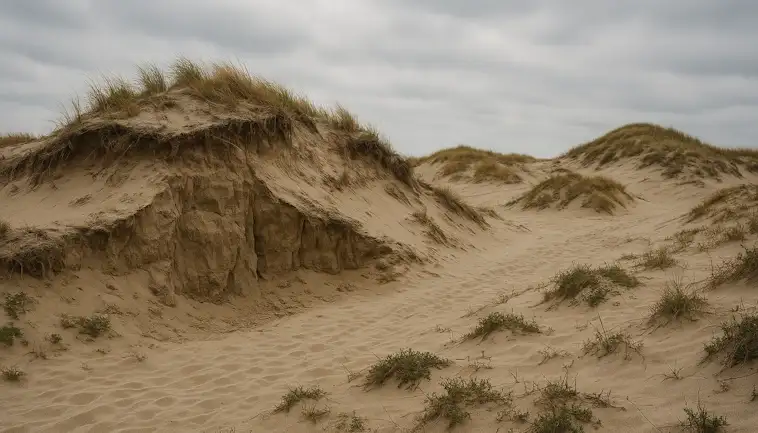
Causes of Dune Degradation
Dune erosion is a natural and anthropogenic process affecting coastal regions worldwide. While natural phenomena like storms and sea-level rise significantly shape these landscapes, human activities such as urban development and tourism exacerbate the vulnerability of dunes. Understanding both aspects is crucial for sustainable coastal management.
Natural Factors Contributing to Dune Erosion
- Storms: Storms, particularly hurricanes and cyclones, can cause dramatic dune erosion due to strong winds and powerful storm surges. These events can strip sand from dunes, altering the coastline within hours. For example, during Hurricane Sandy in 2012, significant dune erosion was reported along the coasts of New Jersey and New York.
- Sea-Level Rise: As global temperatures rise, melting ice caps and the thermal expansion of seawater contribute to rising sea levels. This gradual increase leads to higher baseline water levels, which can erode dunes more frequently and intensely. In places like the Maldives and Tuvalu, rising sea levels pose a continual threat to the integrity of coastal dunes.
Human Factors Increasing Dune Vulnerability
- Urban Development: The construction of buildings, roads, and other infrastructure near dunes often leads to their destabilisation. For instance, in Florida, extensive coastal development has led to the removal of natural vegetation that stabilises sand dunes, making them more susceptible to erosion.
- Tourism: Heavy tourist activity on dunes compacts the sand and damages the vegetation cover, reducing the dune’s ability to recover naturally from erosion events. In European coastal regions like the Mediterranean, the pressure from tourism has led to significant dune degradation.
- Improper Coastal Management: Inadequate or poorly planned coastal management practices, such as constructing seawalls or groynes, can inadvertently increase dune erosion. These structures can alter natural sand movement, leading to sand depletion in other areas. For example, in some parts of Australia, coastal engineering projects have led to increased erosion rates.
Examples of Global Manifestation
- United States (New Jersey/New York): Post-Hurricane Sandy, efforts to rebuild and fortify dunes have been a key focus, recognising the protective barrier they offer against storm surges.
- Australia: In areas like the Gold Coast, groynes and seawalls have been constructed to protect urban areas but have resulted in changes to sediment patterns, exacerbating erosion in adjacent dune systems.
- Europe (Mediterranean Coast): Tourism has heavily impacted dune systems, with many areas implementing restoration projects to recover dune vegetation and stability.
Both natural and human factors play significant roles in dune erosion. Addressing these issues requires a balance of preserving natural dune systems while managing human activities thoughtfully. Effective coastal management strategies, informed by both environmental science and community needs, are essential to protect these vital ecosystems for future generations.
Impacts of Dune Degradation
Dune ecosystems are rich in biodiversity, supporting a unique range of plants and wildlife adapted to the harsh coastal environment. Degradation of these dunes can lead to significant ecological impacts:
- Loss of Habitat: Many species rely on the unique habitat that sand dunes provide. For example, certain birds, like the piping plover in North America, nest only in sandy dune environments. When dunes erode, these species lose nesting sites, which can lead to declines in their populations.
- Reduction in Plant Diversity: Dunes are home to specialised plants that can withstand high salt, shifting sands, and intense sun exposure. As dunes degrade, these plants lose their footing, literally, as erosion removes the sand they root in. This not only reduces plant diversity but also impacts animals dependent on these plants for food and shelter.
Economic Impact on Coastal Communities
The degradation of dunes can have profound economic consequences, particularly for communities that rely heavily on tourism:
- Tourism Revenue Loss: Beaches flanked by healthy dunes are often more attractive to tourists seeking natural landscapes. As dunes degrade, the aesthetic and recreational value of these beaches can diminish, potentially reducing tourism revenue. For instance, in beachfront communities along the Mediterranean, dune degradation can result in fewer tourist visits, which impacts local businesses and seasonal employment.
- Property Damage and Loss: Dunes serve as natural barriers against coastal storms. Their degradation leads to greater vulnerability of nearby properties to storm damage, which can increase insurance costs and decrease property values, impacting homeowners and investors alike.
Impact on Coastal Resilience
Dunes play a critical role in coastal resilience against environmental threats like storms and sea-level rise:
- Storm Surge Protection: Dunes act as the first line of defence against storm surges, absorbing and dissipating the energy of waves before they can reach inland areas. Without these natural barriers, coastal areas become more susceptible to flooding and storm damage. For example, during Hurricane Ike in 2008, areas with intact dune systems experienced significantly less damage compared to areas where dunes had been eroded.
- Buffer Against Sea-Level Rise: As sea levels rise, dunes can naturally migrate inland, provided there is space and sediment supply to do so. This natural migration helps maintain the height and breadth of the dune system, which is crucial for continuing to provide protection against the encroaching sea. However, fixed structures and hardened shorelines can prevent this migration, leading to a permanent loss of dune habitats and a decrease in coastal resilience.
The degradation of dunes has wide-ranging impacts on biodiversity, local economies, and the overall resilience of coastal areas. Protecting and restoring these natural features is not only an environmental necessity but also an economic imperative for many coastal communities. Sustainable management practices, community engagement, and long-term planning are essential to balance human use and conservation of these vital landscapes.
Current Mitigation Efforts
Laws and policies for dune protection vary by region but generally aim to conserve these critical ecosystems through regulation and restoration initiatives:
- United States: The Coastal Barrier Resources Act (CBRA) restricts federal expenditures that could encourage development on barrier islands, thus protecting dunes and their natural habitats. State-specific regulations also play a crucial role. For instance, North Carolina’s Coastal Area Management Act (CAMA) requires permits for any development activities that could affect coastal areas, including dunes.
- European Union: The EU’s Habitats Directive includes dunes as a key habitat type to be conserved, requiring member states to designate Special Areas of Conservation to protect and restore dune systems.
- Australia: The Environment Protection and Biodiversity Conservation Act 1999 (EPBC Act) protects areas of environmental significance, including dunes, by regulating actions that could have significant impacts on these ecosystems.
Successful Dune Restoration Projects
Several successful dune restoration projects around the world serve as models for ecosystem recovery:
- The Netherlands: The Sand Motor (De Zandmotor) is an innovative project that involves depositing millions of cubic meters of sand in strategic locations along the coast. This “mega nourishment” approach uses natural tidal currents to distribute sand along the coast, naturally reinforcing dune systems.
- United States (New Jersey): After Hurricane Sandy, extensive dune restoration involved planting native dune grasses and installing sand fencing to trap sand and stabilise the dunes. This project not only helped to restore the natural landscape but also improved the resilience of the coastal areas against future storms.
Techniques Used in Dune Restoration
Effective dune restoration often involves a combination of techniques:
- Vegetation Planting: Planting native dune grasses, such as Ammophila (European marram grass) or Uniola paniculata (sea oats in the U.S.), helps stabilise the sand. The roots of these plants bind the sand particles and encourage the accumulation of more sand.
- Sand Fencing: Wooden slats are installed perpendicular to the prevailing wind direction to help trap and accumulate sand, promoting dune formation and growth.
- Managed Retreat: Allowing dunes to migrate inland naturally by removing hard barriers and avoiding development in vulnerable areas helps maintain the ecological and protective functions of dunes.
Community Engagement in Dune Preservation
Local communities play a critical role in dune preservation efforts:
- Volunteer Programs: Many coastal regions organise community volunteer programs for planting dune grasses and removing invasive species that threaten native dune flora.
- Education and Awareness Campaigns: Coastal communities often implement educational programs to raise awareness about the importance of dunes and the correct behaviours to protect them, such as sticking to designated pathways to avoid trampling vegetation.
- Local Ordinances: Some communities have enacted local ordinances that limit access to dune areas during critical times of the year or that require builders to take specific measures to protect dunes during construction.
Protecting dune ecosystems requires a mix of legal protection, restoration projects, innovative techniques, and community involvement. Each element is crucial for the success of dune preservation efforts, helping to ensure these landscapes can continue to provide ecological, economic, and protective benefits to coastal areas. Through collective action and sustained commitment, the resilience and vitality of dune ecosystems can be maintained and enhanced.
Future Perspectives
In response to the challenges posed by climate change and human activity, emerging technologies and methods for dune conservation and restoration are becoming increasingly vital. These innovative approaches, coupled with public awareness and education, play a crucial role in ensuring the sustainable management and preservation of dune ecosystems.
Emerging Technologies and Methods for Dune Conservation
- Drones and Remote Sensing: Drones equipped with high-resolution cameras and remote sensing technology are now used to monitor dune morphology and vegetation cover over large areas. This technology provides precise data that can help identify erosion trends and the effectiveness of restoration efforts in real time.
- Geotextiles: Biodegradable geotextiles are used to stabilise dunes temporarily while vegetation takes root. Made from natural fibres, these textiles protect young plants from wind and water erosion and naturally decompose once the plants are established.
- 3D Geomorphic Modelling: Advanced computer models can simulate dune dynamics under various scenarios, including sea-level rise and increased storm frequency. These models help in designing dune landscapes that are more resilient to future conditions.
Importance of Public Awareness and Education
Educating the public about the ecological role and vulnerability of dunes is essential for their preservation:
- Community Engagement Programs: Programs that involve local communities in monitoring and restoration activities increase public investment in the health of dune ecosystems. Engaged communities are more likely to support and comply with conservation measures.
- Educational Campaigns and Signage: Informative campaigns and signage on beaches can educate visitors about the importance of staying off dunes, the reasons behind dune restoration efforts, and how their behaviour can impact these fragile systems.
- Schools and Youth Programs: Integrating coastal ecology into school curriculums and organising field trips to dune systems can foster a sense of stewardship in young people, ensuring that future generations understand and value these natural barriers.
Recommendations for Policymakers
To enhance dune conservation efforts, policymakers should consider the following strategies:
- Strengthen Regulations: Implement stricter regulations that protect dunes from development and overuse. This can include setting limits on the proximity of construction to dune areas and regulating the type of activities allowed near or on dunes.
- Funding and Resources: Allocate more resources to dune restoration and conservation projects. Funding can support the application of new technologies, community engagement efforts, and the continuous monitoring of dune health.
- Integrated Management Plans: Develop and implement comprehensive coastal management plans that include dune conservation as a key component. These plans should involve multiple stakeholders, including local governments, environmental organisations, and community groups, to ensure a holistic approach.
- Climate Adaptation Strategies: Incorporate dune conservation into broader climate change adaptation strategies. Recognising dunes as crucial buffers against sea-level rise and storm surges can justify further investment in their preservation and restoration.
The combination of emerging technologies, public education, and strategic policymaking forms a robust framework for dune conservation and restoration. By embracing these innovative approaches and fostering a deeper public understanding of dune ecosystems, communities can significantly enhance the resilience and sustainability of these vital coastal features.
Conclusion
Dune degradation presents a pressing challenge, yet it also offers an opportunity for collective action and innovative thinking. By understanding the delicate balance of natural processes and human impacts that shape our coastal landscapes, we can implement effective strategies to protect and restore these vital ecosystems. The interplay between emerging technologies and community engagement holds the key to sustaining dune health.
As we advance our efforts in dune conservation, it’s crucial to integrate education, policy, and science to enhance the resilience of these natural barriers, ensuring they continue to protect and enrich our coastlines for generations to come. Through proactive stewardship and responsible management, the shifting sands of our dunes can stand firm against the tides of change.