

The Chain Reaction: Biodiversity Loss from Logging
The Chain Reaction: Biodiversity Loss from Logging
Deforestation is a big problem that affects our planet in many ways, one of the most serious being the loss of biodiversity. Every time trees are cut down; numerous species lose their homes. This can lead to fewer plants and animals in our forests, impacting everything from clean air to fresh water. We’re taking a look at how logging leads to these changes and why it matters for both wildlife and people. We’ll also discuss what can be done to help protect our natural world and the creatures that share it with us.
What You’ll Discover
The Domino Effect of Habitat Destruction
Species at the Brink: Endangered Animals and Plants
The Ripple Effects on Ecosystem Services
Climate Change and Carbon Footprints: An Intertwined Impact
Invasive Species: Opportunists in a Weakened Ecosystem
Legal and Illegal Logging: Understanding the Scope
Community and Indigenous Peoples: The Human Cost
Future Forecasts: Reversing the Trend
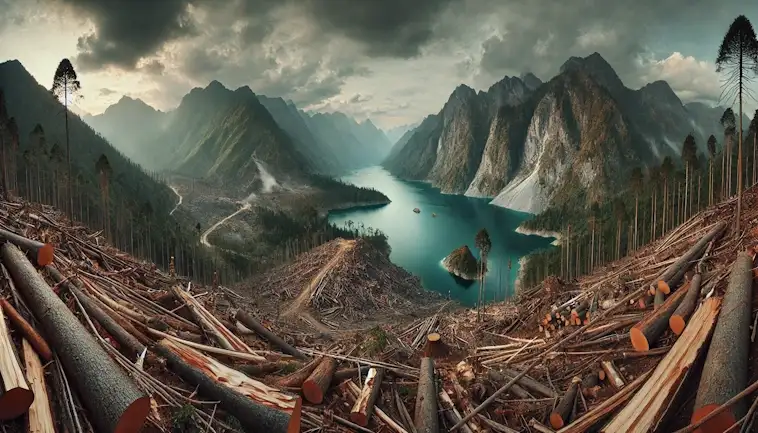
The Domino Effect of Habitat Destruction
Logging, or the process of cutting down trees, leads to the destruction of habitats that many plants and animals call home. When trees are removed, the environment changes drastically. This is not just about losing a few trees—it’s about disrupting the entire ecosystem that thrives under the forest canopy.
Forests are complex systems where every plant and animal plays a crucial role. They are not only living spaces but also breeding grounds for numerous species. When their habitat is destroyed, animals and plants face immediate challenges. Finding food becomes difficult, and places to live and breed become scarce. This can cause animal populations to decline because they struggle to adapt to the sudden changes in their environment.
Moreover, when logging occurs, it often leads to habitat fragmentation. This means the large continuous areas of forest are cut into smaller patches. These patches are isolated by roads, logged areas, or farms. Fragmentation makes it harder for species to interact as they used to. For instance, animals that need large territories to find mates or hunt, like big cats or birds, find it difficult to move across fragmented landscapes. This isolation can lead to reduced genetic diversity, which affects the health and resilience of wildlife populations.
The ripple effects of logging are profound. It doesn’t just affect the trees and the visible wildlife; it impacts the entire ecosystem, including the smaller species that are crucial for the ecological balance, like insects and microorganisms that help decompose organic material and maintain soil fertility. Without them, even the regrowth of the forest can be stunted.
The consequences of logging are long-term and can lead to irreversible changes in the environment. Protecting these natural habitats is crucial, not just for the wildlife that depends on them, but for the health of our planet as a whole.
Species at the Brink: Endangered Animals and Plants
Logging greatly affects many species, especially those that are endangered. Some animals and plants are particularly vulnerable to changes in their environment because they have very specific needs or live only in certain places.
One group of species that is heavily impacted by logging is primates, like orangutans and certain lemurs. These animals rely on large, connected forest areas to survive. Orangutans, for example, spend most of their lives in trees. They need vast stretches of forest to find enough food and to move around. When forests are cut down, they lose both their home and their food source, pushing them closer to extinction.
Amphibians, such as certain kinds of frogs, are also highly sensitive to changes in their habitat. Many amphibians have skin that absorbs water directly from their surroundings, so they need specific conditions to thrive. Logging can alter these conditions drastically. It can change the moisture levels in an area or even lead to pollution, both of which can be deadly for these creatures.
Birds that nest in large, old trees are another group that suffers when logging occurs. The ivory-billed woodpecker, for instance, is often cited as a species that has been driven to the brink of extinction partly because of habitat loss. These birds need old trees with large cavities to nest in, and these are often the first to be cut down because of their size and the quality of wood they provide.
The characteristics that make these species vulnerable are their limited ranges and specialised habitat requirements. Species that can only live in specific environmental conditions or in a narrow geographic area have fewer options when their usual habitats are destroyed or altered. If there’s nowhere else that meets their living requirements, they may not survive. This is why protecting their habitats and managing forests sustainably is so crucial. It helps ensure these species have a fighting chance at survival.
The Ripple Effects on Ecosystem Services
When we lose biodiversity, we also lose many ecosystem services that are crucial for both nature and human communities. These services include pollination, water purification, and carbon sequestration.
First, consider pollination. Many plants depend on birds, bees, bats, and other animals to reproduce and grow. These pollinators help produce many of the fruits and vegetables we eat. When biodiversity declines, there are fewer pollinators. This can lead to lower crop yields and can affect the food available to us.
Next is water purification. Forests, wetlands, and other ecosystems act as natural filters. They help clean the water we drink by breaking down pollutants and absorbing excess nutrients before they reach rivers and lakes. When these ecosystems are damaged or lost due to a decline in biodiversity, more pollutants can end up in our water sources. This makes the water less safe for drinking and can increase the cost of water treatment.
Lastly, there’s carbon sequestration. This is the process by which forests and other natural habitats capture carbon dioxide from the atmosphere. Trees and plants absorb carbon dioxide as they grow, helping to reduce the impact of climate change. When we lose forests or other vegetation, we lose this important service. This not only contributes to climate change but also affects the climate patterns and weather systems on which we all rely.
The loss of biodiversity impacts these crucial services, showing us how interconnected and dependent we are on the natural world. Not only does it affect the wildlife that depends on these habitats, but it also affects human communities. Protecting biodiversity is not just about conserving nature; it’s also about safeguarding the health and well-being of people everywhere.
Climate Change and Carbon Footprints: An Intertwined Impact
Logging doesn’t just reduce biodiversity; it also plays a big part in climate change. When trees are cut down, they release carbon dioxide, a greenhouse gas, back into the atmosphere. This happens because trees store carbon when they grow. Losing trees means not only losing these carbon stores but also losing the ability to capture future carbon dioxide.
Deforestation contributes significantly to climate change. Forests are like the Earth’s lungs, absorbing carbon dioxide and releasing oxygen. When we cut down forests, we’re not just losing trees; we’re losing a natural solution to climate change. The carbon that trees have accumulated over decades is released once they are chopped down and decomposed or burned. This adds to the greenhouse gases warming our planet, leading to changes in climate.
These climate changes then create additional stress on biodiversity. As temperatures rise and weather patterns shift, many species find it hard to survive in their traditional habitats. Some species need specific temperature ranges or environmental conditions to thrive. When their habitats change too quickly due to climate change, they struggle to adapt. This can lead to further declines in biodiversity.
Moreover, warmer temperatures can exacerbate the effects of deforestation. For example, as the climate warms, forest fires become more common and more intense. These fires can sweep through areas already weakened by logging, destroying vast areas of forest and releasing even more carbon dioxide.
Logging harms not only the trees and the ecosystems that depend on them but also contributes to the broader issue of climate change. This, in turn, puts more pressure on all species, including humans, by altering the climates and habitats they rely on. Protecting forests is crucial in combating climate change and preserving the rich biodiversity that sustains our planet.
Invasive Species: Opportunists in a Weakened Ecosystem
When native vegetation is removed, such as through logging or land clearing, it opens the door for invasive species to move in. These are plants or animals that aren’t naturally found in the area but, once introduced, can thrive and take over. Without competition from the original species that have adapted to the local environment over thousands of years, these invaders find it much easier to spread.
Invasive species can dominate a landscape quickly because they often have characteristics that make them especially tough competitors. For instance, some invasive plants grow faster or taller than native plants, blocking their access to sunlight. Others might produce huge numbers of seeds, spread easily by wind or animals, and quickly take over large areas.
As these invaders establish themselves, they start outcompeting the native flora and fauna. This means that native plants and animals struggle to survive because they can’t compete with the new species for resources like light, water, and nutrients. Invasive species can also bring or promote diseases to which native species have no resistance, causing further declines.
The impact on native biodiversity can be severe. With the native plants crowded out, the animals that depend on them either move away or decrease in number. Some may even become extinct if they have nowhere else to go or can’t adapt to the new conditions. This not only affects the species directly involved but also disrupts the whole ecosystem, altering food webs and ecological processes like pollination and soil formation.
Overall, the removal of native vegetation and the subsequent invasion by non-native species can drastically alter landscapes and ecosystems, leading to significant losses in native biodiversity. This highlights the importance of protecting native habitats and managing environments in ways that prevent the spread of invasive species.
Legal and Illegal Logging: Understanding the Scope
Sustainable logging and illegal logging are quite different, both in how they’re carried out and their effects on the environment.
Sustainable logging involves carefully planned tree cutting that aims to minimise environmental impact. This practice follows strict guidelines to ensure that the forest can recover over time. For instance, only certain trees are cut down, and new ones are planted to replace them. Sustainable logging also takes care to protect wildlife habitats and maintain biodiversity. The scale of sustainable logging is regulated to prevent overexploitation, making it a more controlled and environmentally friendly approach.
On the other hand, illegal logging involves cutting down trees without permission, and it often disregards environmental regulations. This type of logging can lead to massive deforestation, which severely impacts biodiversity. Because illegal loggers don’t follow sustainable practices, they can quickly strip an area of its valuable trees, leaving little behind to support the local ecosystem. The scale of illegal logging can be vast, particularly in regions with weak law enforcement or corruption.
Regions where illegal logging is rampant include parts of the Amazon rainforest, Central Africa, and Southeast Asia. These areas are rich in biodiversity but face significant challenges in enforcing forestry laws. Corruption, insufficient funding, and limited resources make it difficult to monitor and control illegal logging activities. The remote nature of many forests also makes it hard to catch and prosecute illegal loggers.
The impact of illegal logging on biodiversity is profound. It not only reduces the number of trees but also destroys habitats for countless species, leading to declines in wildlife populations. In contrast, sustainable logging strives to balance human needs with environmental protection, aiming to preserve forests for future generations.
Addressing illegal logging requires international cooperation and strong local enforcement. It also needs support from communities and the implementation of more effective strategies to monitor forests and enforce laws.
Community and Indigenous Peoples: The Human Cost
Logging can have a big impact on local communities, especially for Indigenous peoples who depend on forests for their livelihoods, culture, and traditions. These communities often have a deep connection to the forest, not just for resources but as a part of their cultural identity and heritage.
When forests are logged, whether legally or illegally, it can disrupt the lives of these communities in several ways. First, the loss of forests means a loss of resources that people rely on. This includes wood for building, plants for medicine, and animals for food. With these resources gone, finding alternatives can be difficult and expensive, impacting the community’s economic stability.
Additionally, many cultural practices and traditions of Indigenous peoples are closely tied to specific features of the forest landscape, like sacred sites, plants, or animals. Logging can damage these sites and diminish the availability of culturally significant species, leading to a loss of cultural heritage.
The social impacts are also significant. Conflict can arise when logging is done without the consent of the local communities, or when it infringes on their land rights. This can lead to disputes and even violence. Furthermore, the arrival of large logging operations can bring an influx of workers from outside, which might disrupt the social fabric of small, close-knit communities.
Economically, while logging might promise jobs and development, these benefits are often temporary and not always equitably shared. Once the trees are gone, the jobs usually leave too. The community is left with degraded land that is less suitable for traditional uses like hunting and agriculture.
Protecting the rights of Indigenous and local communities and involving them in decision-making about the forest can help ensure that logging is done sustainably and fairly, minimising harm and maximising benefits for all involved.
Future Forecasts: Reversing the Trend
Reforestation and sustainable management practices offer a hopeful outlook for the future of our forests and the biodiversity they support. These efforts focus on restoring and protecting forest areas that have been depleted, ensuring that they continue to thrive for generations to come.
Reforestation involves planting trees in areas where forests have been cut down or degraded. This not only helps to restore the original forest cover but also brings back habitat for wildlife and helps in capturing carbon dioxide from the atmosphere, combating climate change. For example, in Costa Rica, large-scale reforestation programs have successfully rejuvenated biodiversity and revitalised local economies through eco-tourism.
Conservation strategies also play a crucial role. These include establishing protected areas where logging is restricted or completely banned, and promoting biodiversity by connecting fragmented habitats to create larger, more viable ecosystems. An example of this is the Yellowstone to Yukon Conservation Initiative, which aims to connect and protect habitats across North America for all native species and ecosystems.
Sustainable management practices are equally important. These practices ensure that forests are used in a way that maintains their health and biodiversity for the future. Sustainable logging, for example, involves selective logging techniques that minimise damage to the surrounding trees and wildlife, and it includes the planting of new trees to replace those that are cut down.
On the policy front, changes like enforcing stricter regulations on logging practices, implementing more robust monitoring and reporting systems, and ensuring fair rights for Indigenous communities can significantly reduce the negative impacts of logging. Additionally, promoting the use of certified wood products can encourage both companies and consumers to support sustainable forestry.
Together, these approaches form a comprehensive strategy to restore and protect our planet’s vital forest ecosystems. By continuing to invest in and improve these strategies, we can ensure a healthier, more biodiverse world.
Conclusion
The impact of logging on biodiversity is a serious concern that cannot be overlooked. Trees are much more than just part of the landscape; they are vital to maintaining the balance of our ecosystems. When forests are cut down, the effects ripple through the environment, affecting everything from tiny soil microbes to large mammals, including humans.
However, there is hope. Through reforestation, conservation strategies, and sustainable management, we can mitigate the negative effects of logging. By investing in these practices, we support a healthier planet. It’s important for everyone, from policymakers to individuals, to work together to protect and restore our forests. This way, we can ensure that future generations inherit a world teeming with rich biodiversity that is not only beautiful but essential for our survival. Let’s keep pushing for a greener, more sustainable future.