

Is Our Planet Warming Faster Than Expected?
Planet Warming and Rising Temperatures: Are We Running Out of Time?
Planet warming is no longer a distant concern tied to future generations. Across the world, heat records are falling more often, glaciers are shrinking faster, and extreme weather events are becoming harder to ignore. Scientists are now questioning whether global temperatures are rising at a pace that climate models underestimated only a decade ago.
At the same time, oceans are absorbing record levels of heat, sea levels continue to climb, and many ecosystems are struggling to adapt. While some changes once seemed gradual, recent data points to a far more rapid shift in Earth’s climate system. As researchers gather new evidence, one question is becoming increasingly urgent: is our planet warming faster than expected, and what could that mean for everyday life in the years ahead?
What You’ll Discover
Planet Warming: Are Scientists Underestimating the Speed?
What Rising Global Temperatures Mean for Everyday Life
Planet Warming and the Growing Risk of Extreme Weather
Why Oceans, Ice Sheets, and Forests Are Changing So Quickly
Can New Climate Solutions Slow the Crisis in Time?
Conclusion: What Planet Warming Means for Our Future
Planet Warming: Are Scientists Underestimating the Speed?
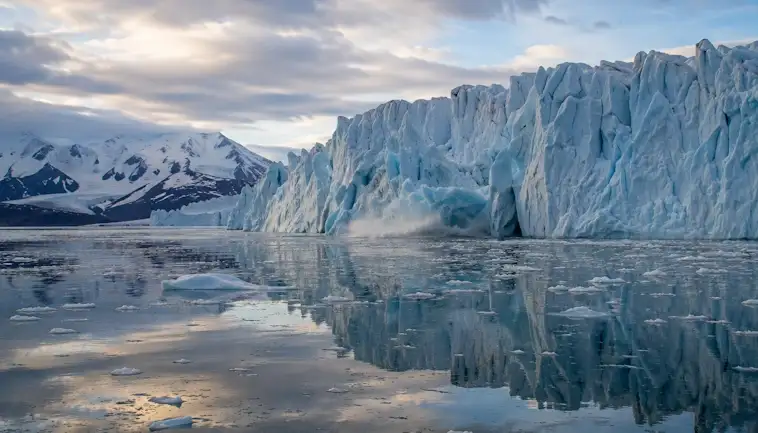
For years, climate scientists have warned that the planet is warming fast. However, many new studies now suggest the pace could be even quicker than earlier predictions. That possibility is raising fresh concerns around the world. From stronger heatwaves to rising sea levels, the signs are becoming harder to ignore.
At the same time, researchers are learning more about how Earth’s climate system reacts under pressure. In the past, some climate models may not have fully captured how fast ice sheets melt, how oceans store heat, or how greenhouse gases trigger feedback loops. As a result, warming could accelerate faster than expected in the coming decades.
What makes this issue especially worrying is that climate change is no longer a distant problem. Instead, it is shaping daily life right now. Crops are struggling in extreme heat. Wildfires are spreading across larger areas. Meanwhile, flooding is becoming more common in coastal cities.
Why Climate Predictions May Be Changing
Scientists rely on complex climate models to forecast future warming. These models improve every year as technology advances and more data becomes available. Yet Earth’s climate is incredibly complicated. Even small changes in temperature can trigger much larger effects over time.
For example, melting Arctic ice reduces the planet’s ability to reflect sunlight back into space. In turn, darker ocean water absorbs more heat, causing even more warming. This process, known as a feedback loop, can speed up climate change beyond earlier estimates.
In addition, researchers are now paying closer attention to methane emissions. Methane is a powerful greenhouse gas that traps far more heat than carbon dioxide over short periods. As frozen permafrost begins to thaw, it could release huge amounts of methane into the atmosphere and push temperatures even higher.
The Growing Gap Between Warnings and Action
Despite stronger scientific evidence, global action still remains uneven. Many countries have announced climate goals, but emissions continue to rise in several major economies. At the same time, energy demand is increasing as populations grow and industries expand.
Because of this, some experts believe the world may be running out of time to avoid the most severe climate impacts. Even so, there is still room for progress. Renewable energy is becoming cheaper. Electric vehicles are growing in popularity. Furthermore, new technologies may help reduce emissions faster than many people expect.
The next few years could prove critical. If warming continues to speed up, governments, businesses, and communities may need to adapt far more quickly than originally planned.
What Rising Global Temperatures Mean for Everyday Life
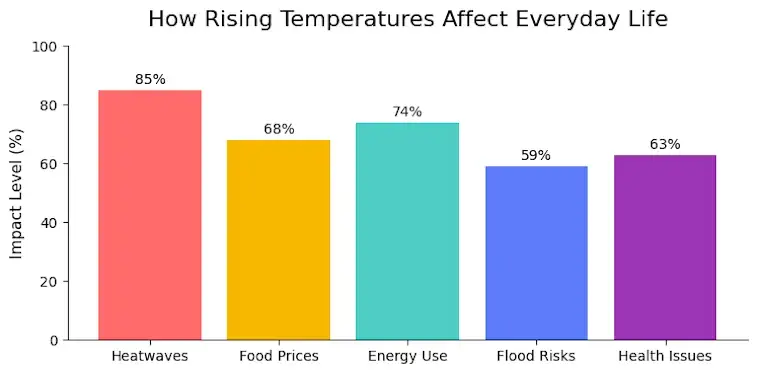
Today, rising global temperatures are shaping daily life in ways many people can already feel. Summers are getting hotter. Energy bills are climbing. In addition, extreme weather events are becoming more common across the world.
For many families, these changes affect simple routines. For example, people now spend more money cooling their homes during heatwaves. At the same time, food prices often rise after droughts or floods damage crops. Even public health systems are under pressure as hotter weather increases the risk of heat exhaustion and respiratory problems.
However, the impact goes beyond weather alone. Rising temperatures are also changing how cities are built, how businesses operate, and how communities prepare for emergencies. As a result, governments and companies are investing more in renewable energy, flood protection, and sustainable infrastructure.
How Hotter Weather Is Changing Daily Habits
Many people are already adjusting their lifestyles because of rising temperatures. In some cities, outdoor activities are now avoided during the hottest hours of the day. Meanwhile, schools and workplaces are introducing cooling measures to protect health and improve comfort.
Travel patterns are changing too. Wildfires, storms, and heatwaves can disrupt flights, rail services, and holidays. Consequently, travelers are becoming more aware of climate risks when planning trips.
Why Food and Energy Costs Continue to Rise
Higher global temperatures can damage crops and reduce water supplies. This often leads to smaller harvests and higher food prices. In addition, hotter weather increases demand for air conditioning, which puts pressure on energy systems and raises electricity costs.
Because of this, many households are looking for ways to save energy and reduce waste. Solar panels, electric vehicles, and energy-efficient appliances are becoming more popular as people search for long-term solutions.
The good news is that awareness is growing quickly. Around the world, communities are adapting, businesses are innovating, and new technologies are helping people respond to climate challenges in smarter ways.
Planet Warming and the Growing Risk of Extreme Weather
The planet is getting warmer. As a result, extreme weather events are becoming more common and more severe. Around the world, people are seeing longer heatwaves, heavier rainfall, stronger storms, and more damaging wildfires. While weather has always changed over time, climate change is now making these events happen more often and with greater force.
At the same time, rising global temperatures are putting pressure on communities, food supplies, water systems, and public health. For many families, extreme weather is no longer a distant threat. Instead, it is becoming part of daily life. Flooded roads, record-breaking summer heat, and powerful storms are affecting millions of people every year.
Scientists continue to warn that warming caused by greenhouse gas emissions is pushing the climate system into dangerous territory. Even so, there is still time to reduce future risks. Cleaner energy, stronger infrastructure, and better planning can all help communities adapt and become more resilient.
How Rising Temperatures Are Fueling Extreme Weather
Warmer oceans and hotter air create the perfect conditions for more intense weather events. In simple terms, a hotter planet holds more energy. Because of this, storms can grow stronger, rainfall can become heavier, and droughts can last longer.
In many regions, heatwaves are now starting earlier and lasting longer than they did in the past. Meanwhile, dry conditions are increasing the risk of wildfires. In coastal areas, rising sea levels are also making flooding more dangerous during storms and high tides.
Key Effects of Planet Warming
- More frequent and intense heatwaves
- Stronger hurricanes and tropical storms
- Increased flooding from heavy rainfall
- Longer drought periods in vulnerable regions
- Higher risk of wildfires and smoke pollution
- Rising sea levels threatening coastal communities
- Damage to crops, wildlife, and ecosystems
- Greater health risks for older adults and children
These changes are already shaping the future of cities, economies, and everyday life. Therefore, many experts believe that climate action today will play a major role in protecting future generations.
Why Oceans, Ice Sheets, and Forests Are Changing So Quickly
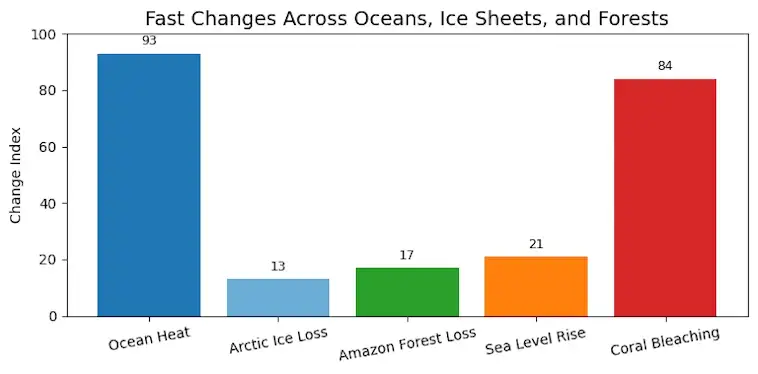
The planet is changing faster than many scientists expected. Oceans are warming at record levels. Ice sheets are melting more quickly each year. At the same time, forests are struggling with heat, drought, and wildfires. Together, these systems help regulate Earth’s climate. However, they are now under growing pressure.
One major reason is the rise in greenhouse gas emissions. As more carbon dioxide builds up in the atmosphere, extra heat becomes trapped near the Earth’s surface. Much of that heat ends up in the oceans. In fact, oceans absorb around 90% of the excess heat linked to global warming. As a result, sea temperatures continue to rise.
Meanwhile, warmer air is speeding up the melting of ice sheets in places like Greenland and Antarctica. This not only raises sea levels but also changes ocean currents and weather patterns around the world. In addition, shrinking ice reflects less sunlight back into space. That creates even more warming over time.
Forests are also facing serious challenges. Longer heatwaves and drier conditions make trees more vulnerable to disease and wildfires. In regions like the Amazon, deforestation is making the problem worse. Trees normally absorb carbon from the atmosphere. Yet when forests are damaged or burned, they release that carbon back into the air.
The Climate System Is More Connected Than Many People Realize
These changes are not happening in isolation. Oceans, ice sheets, and forests are deeply connected. For example, warmer oceans can lead to stronger storms and coral bleaching. At the same time, melting ice can disrupt marine ecosystems and weather systems that forests depend on.
Because of this, scientists are paying close attention to “tipping points.” These are moments when environmental changes become harder to reverse. While there is still time to slow the damage, the pace of change shows why action is becoming more urgent.
Why This Matters for Everyday Life
These shifts affect more than distant landscapes. Rising sea levels threaten coastal cities. Hotter oceans can reduce fish populations and harm food supplies. Forest loss can increase air pollution and reduce rainfall in farming regions.
Even so, there is growing momentum behind clean energy, conservation projects, and climate innovation. Around the world, researchers, businesses, and communities are working on solutions that could help protect these vital systems for future generations.
Can New Climate Solutions Slow the Crisis in Time?
Climate change is happening now, and people can see the effects almost every day. From stronger storms to longer heatwaves, the pressure is growing across the world. As a result, governments, businesses, and scientists are racing to find answers before the damage becomes even harder to control.
The good news is that new climate solutions are arriving faster than many experts expected. Clean energy is becoming cheaper. Electric vehicles are more common on the roads. At the same time, fresh ideas in carbon removal, battery storage, and sustainable farming are creating new hope for the future.
However, there is still one major question. Can these solutions move quickly enough to slow the crisis in time?
Right now, the world is in a critical decade. According to climate scientists, the next few years could shape the future for generations. That means action cannot wait. While innovation is important, speed matters just as much. New technology only works if countries invest in it, companies scale it, and communities adopt it.
Why Clean Energy Growth Matters More Than Ever
One of the biggest success stories in recent years has been renewable energy. Solar and wind power are now expanding across many countries. In some regions, renewable electricity is already cheaper than fossil fuels. Because of this, more governments are increasing their clean energy targets.
At the same time, battery technology is improving rapidly. Better batteries help store renewable power for longer periods. This solves one of the biggest problems with solar and wind energy, which is reliability during cloudy or calm days.
Consumers are also playing a role. Many people are choosing electric cars, energy-efficient homes, and greener products. Small lifestyle changes may seem limited on their own, yet together they can push industries toward cleaner systems.
The Challenge of Scaling Climate Innovation
Even with promising progress, major obstacles remain. Many climate technologies are still expensive or difficult to scale globally. Developing nations often face financial barriers that slow adoption. In addition, political disagreements can delay climate policies for years.
There is also the issue of timing. Scientists warn that reducing emissions slowly may not be enough. The climate system is changing fast, and some impacts could become irreversible if action is delayed too long.
Still, there are reasons for cautious optimism. Private investment in green technology continues to rise. Large companies are under pressure to cut emissions. Meanwhile, younger generations are demanding stronger environmental action from leaders and brands alike.
In the end, no single solution will fix the climate crisis overnight. Instead, progress will likely come from a mix of technology, policy changes, and global cooperation. The challenge is enormous, but the momentum behind climate innovation is stronger than ever before.
Conclusion: What Planet Warming Means for Our Future
Planet warming is no longer a simple debate about the future. It is happening now, and the signs are becoming harder to ignore. From rising global temperatures to stronger storms, longer droughts, and melting ice caps, the evidence continues to grow year after year.
At the same time, scientists are still working to understand just how quickly these changes could accelerate. Some recent studies suggest our planet may be warming faster than earlier predictions. If that proves true, the need for action becomes even more urgent.
However, there is still reason for hope. Cleaner energy, new technology, and growing public awareness are already helping to reduce emissions in many parts of the world. Small changes by individuals, businesses, and governments can add up to a major impact over time.
The challenge of planet warming will not disappear overnight. Yet the choices we make today will shape the future for generations to come. By staying informed and supporting practical solutions, we can still help protect the planet and build a more stable future for everyone.