

Toxic Plastics Are Harming You More Than You Think
You’re Exposed to Toxic Plastics Every Day – Here’s What That Means for You
Toxic plastics are part of everyday life, yet their impact is often overlooked. From food packaging to household items, toxic plastics can release harmful chemicals into the air, water, and even the products you use daily. Over time, this silent exposure may affect your health in ways that are easy to miss but hard to reverse.
At first, the risks may seem small. However, research continues to show links between plastic chemicals and issues like hormone disruption, poor sleep, and long-term illness. As plastic use grows worldwide, so does the concern about what these materials are doing inside the human body.
Understanding where these plastics appear is the first step toward reducing exposure. Small changes can make a real difference, especially as new studies point to risks that could shape future health trends. The more aware you are today, the better prepared you will be for the challenges ahead.
What You’ll Discover
Toxic Plastics: Hidden Dangers in Everyday Products
How Plastic Chemicals Enter Your Body Without You Noticing
Toxic Plastics and Long-Term Health Risks Explained
Simple Ways to Reduce Your Daily Plastic Exposure
The Future of Safer Alternatives to Harmful Plastics
Conclusion: Why Toxic Plastics Deserve Your Attention Now
Toxic Plastics: Hidden Dangers in Everyday Products
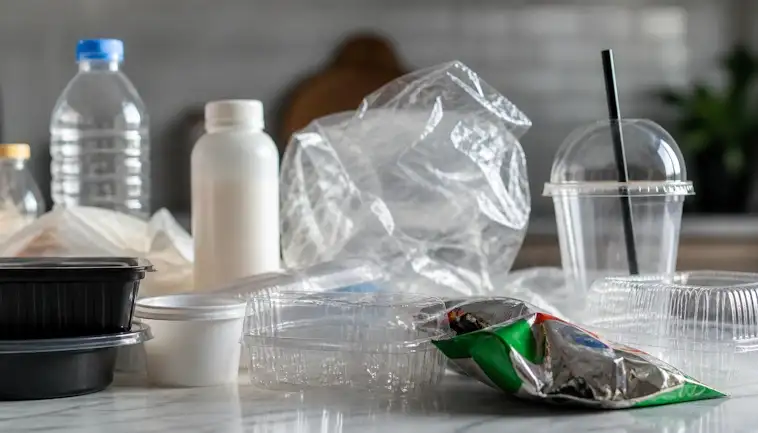
Plastic is everywhere. It wraps our food, lines our water bottles, and even shows up in items we use every day. At first glance, it seems harmless. It’s cheap, flexible, and convenient. However, there’s a hidden side that often gets overlooked.
Many plastics contain chemicals that can slowly leak into our bodies. Over time, this exposure may affect our health in ways we are only beginning to understand. What makes this more concerning is how common these materials are. From kitchen tools to personal care products, toxic plastics can quietly become part of daily life.
So, why does this matter now? As awareness grows, more people are starting to question what they bring into their homes. And rightly so. Small changes today could reduce long-term risks tomorrow.
Where Toxic Plastics Lurk in Daily Life
You might be surprised at how many everyday items contain harmful plastics. Food packaging is a major source. For example, takeaway containers and plastic wraps can release chemicals when heated. In addition, reusable plastic bottles may break down over time, especially when exposed to sunlight or heat.
Beyond the kitchen, plastics also appear in unexpected places. Think about shower curtains, synthetic clothing, and even children’s toys. Each of these can contain additives that are not always safe.
Common Chemicals to Watch Out For
Some chemicals show up more often than others. BPA, for instance, has been linked to hormone disruption. Phthalates are another concern, often used to make plastics more flexible. These substances can interfere with the body’s natural balance.
Because of this, it’s worth checking labels when possible. Look for products marked “BPA-free” or made from safer alternatives like glass or stainless steel. While no solution is perfect, being aware is a strong first step.
In the end, toxic plastics are not always obvious. Yet, with a bit of knowledge and a few mindful choices, you can lower your exposure and create a safer environment over time.
How Plastic Chemicals Enter Your Body Without You Noticing
You might think plastic only affects you when you touch it. However, the reality is far more subtle—and a bit worrying. Every day, small amounts of plastic-related chemicals can enter your body without you seeing, smelling, or tasting them.
So, how does this happen?
First, it often starts with everyday habits. For example, when you heat food in plastic containers or drink from disposable bottles, tiny particles and chemicals can transfer into what you eat and drink. Over time, this exposure adds up.
At the same time, plastic is not just in your kitchen. It is in the air, your clothes, and even the dust in your home. As a result, you may breathe in microscopic plastic particles without realising it.
The Most Common Hidden Sources of Exposure
To make this clearer, here are the main ways plastic chemicals quietly enter your body:
Everyday habits that increase your exposure
- Food packaging: Especially when food is hot or fatty
- Plastic water bottles: More so when reused or left in heat
- Household dust: Contains microplastics from fabrics and furniture
- Personal care products: Some contain microbeads or synthetic compounds
- Cooking tools: Non-stick coatings and plastic utensils
Each of these sources may seem harmless on its own. However, together they create a constant, low-level exposure throughout your day.
To help you visualise this, here is a simple breakdown:
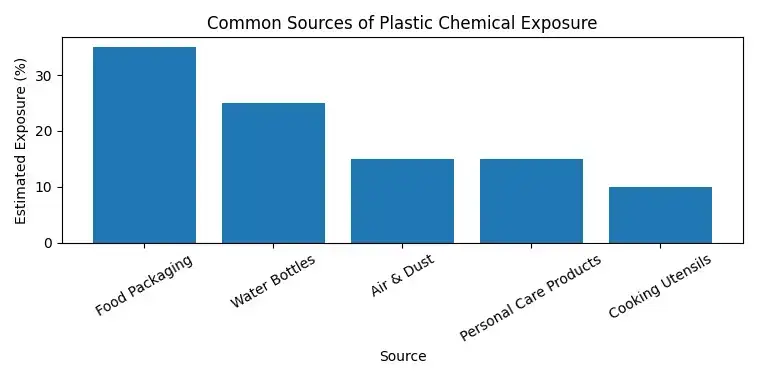
As you can see, food packaging and drink containers lead the way. This highlights how daily routines play a bigger role than many people expect.
Looking ahead, awareness is key. The more you understand these hidden pathways, the easier it becomes to make small changes that reduce your exposure over time.
Toxic Plastics and Long-Term Health Risks Explained
Plastic is everywhere. It wraps our food, stores our drinks, and even lines everyday items at home. At first glance, it feels safe and convenient. However, there is a growing concern that some plastics may quietly affect our health over time.
So, what’s really going on?
Many plastics contain chemicals that can leach into food, water, and even the air we breathe. Over time, small exposures can add up. As a result, researchers are now looking more closely at how these substances may impact the body in the long run.
Let’s break it down in a simple way.
How Toxic Plastics Affect the Body
When certain plastics break down, they release chemicals like BPA and phthalates. These are often called “endocrine disruptors.” In simple terms, they can interfere with how your hormones work.
This matters because hormones control many key functions in your body. For example, they influence growth, mood, metabolism, and reproduction. So, even small disruptions can have wider effects over time.
Common Long-Term Health Concerns
Here are some of the potential risks linked to ongoing exposure to toxic plastics:
- Hormone imbalance, which can affect energy and mood
- Fertility issues in both men and women
- Increased risk of certain cancers
- Developmental problems in children
- Weakened immune system over time
- Metabolic issues, including weight gain and insulin resistance
Of course, research is still evolving. However, the pattern is clear enough to raise concern.
That said, this is not about panic. It’s about awareness. Once you understand the risks, you can start making small, smarter choices. Over time, these changes can reduce exposure and support better long-term health.
Simple Ways to Reduce Your Daily Plastic Exposure
Plastic is everywhere. It shows up in your food, your water, and even the air around you. At first, that can feel overwhelming. However, the good news is this: small, simple changes can make a real difference.
In fact, reducing your daily plastic exposure does not require a complete lifestyle overhaul. Instead, it starts with awareness. Then, it grows through a few easy swaps you can build into your routine.
So, if you are looking for practical ways to cut back, you are in the right place. Let’s break it down into manageable steps you can start today.
Start With Everyday Swaps That Add Up
The easiest place to begin is with items you use every day. These are often the biggest sources of plastic exposure. Therefore, changing them gives you the fastest results.
For example, switching from bottled water to a reusable bottle can reduce a large portion of your plastic contact. Similarly, choosing loose fruits and vegetables instead of pre-packaged ones cuts down unnecessary wrapping.
Over time, these small shifts become habits. And once they do, you will not even think about them.
Focus on High-Impact Habits First
Not all plastic sources are equal. Some contribute far more to your daily exposure than others. That is why it helps to focus on the biggest ones first.
Here are a few areas to prioritize:
- Drinking water – Use a glass or stainless steel bottle
- Food storage – Swap plastic containers for glass alternatives
- Shopping habits – Bring reusable bags
- Takeaway meals – Avoid single-use packaging when possible
- Personal care products – Look for plastic-free or refillable options
By tackling these first, you create quick wins. And importantly, those wins keep you motivated.
To give you a clearer picture, the chart below shows common sources of daily plastic exposure and their estimated impact.
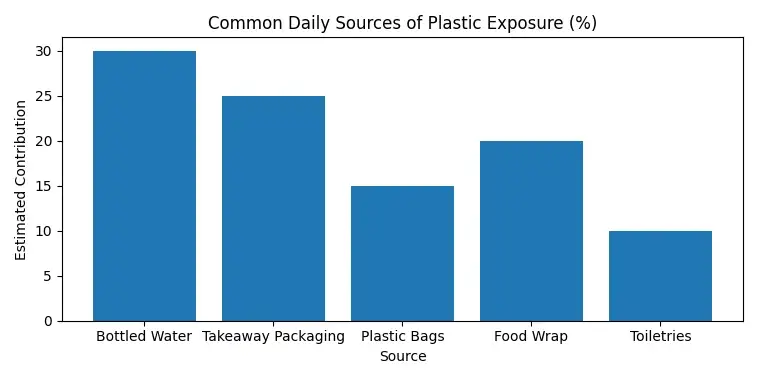
As you can see, bottled water and takeaway packaging are major contributors. So, focusing on these areas first can lead to meaningful change.
In the long run, reducing plastic exposure is about progress, not perfection. Start small. Stay consistent. And little by little, you will build a routine that is better for both your health and the environment.
The Future of Safer Alternatives to Harmful Plastics
Plastic has shaped modern life. It is cheap, flexible, and everywhere. Yet, its downsides are now impossible to ignore. From ocean pollution to health concerns, the pressure to find better options is growing fast. So, what comes next?
The good news is that change is already underway. Scientists, startups, and global brands are all exploring safer materials. At the same time, consumers are asking smarter questions. As a result, the shift away from harmful plastics is no longer a distant idea. It is happening now—and it is picking up speed.
However, this transition is not simple. Replacing plastic means balancing cost, performance, and sustainability. Even so, new solutions are emerging that look promising, both today and in the years ahead.
Smarter Materials Are Leading the Way
One of the biggest trends is the rise of bio-based materials. These are made from natural sources like plants, algae, and even food waste. Unlike traditional plastics, they can break down more easily. This reduces long-term pollution and lowers environmental impact.
At the same time, researchers are improving how these materials perform. Early versions were often weak or expensive. Now, newer designs are stronger, more flexible, and more practical for everyday use. As innovation continues, these materials could soon match—or even beat—traditional plastics.
Why Innovation Alone Is Not Enough
Even with better materials, there are still challenges to solve. For example, infrastructure needs to catch up. Compostable plastics only work if proper composting systems exist. Without them, they may end up in landfills just like regular plastic.
In addition, cost remains a key issue. Many safer alternatives are still more expensive to produce. However, as demand grows and technology improves, prices are expected to fall. This is similar to what happened with renewable energy over the past decade.
Looking ahead, the future will likely involve a mix of solutions. Better materials, improved recycling, and reduced usage will all play a role. Together, they can create a system that is not only safer but also more sustainable.
The shift away from harmful plastics is gaining momentum. While there is still work to do, the direction is clear. And importantly, every step forward brings us closer to a cleaner, healthier world.
Conclusion: Why Toxic Plastics Deserve Your Attention Now
Toxic plastics are no longer a distant concern. They are part of everyday life, from food packaging to household items. Yet, as research grows, so does the evidence that these materials may affect your health in ways we are only beginning to understand.
The good news is that change is possible. By making small, smart choices—like reducing single-use plastics, choosing safer alternatives, and staying informed—you can lower your exposure. At the same time, awareness is building across industries and governments. This could lead to better materials and stronger protections in the near future.
Looking ahead, the conversation around toxic plastics will only grow. Consumers are asking more questions. Brands are starting to respond. And innovation is opening the door to safer, more sustainable options.
So, while the risks are real, so is your ability to act. Start simple. Stay aware. And remember, every step you take today can help reduce the impact of toxic plastics on your health tomorrow.