

Why Are Sea Temperatures Rising Faster Today?
A Simple Look at the Key Forces Heating Our Oceans and What It Means for the Future
Sea temperatures are rising faster today than at any point in modern records, and the pace is starting to reshape oceans in ways that are hard to ignore. From shifting weather patterns to changing marine life, warmer seas are now at the center of many global concerns. As a result, scientists are paying closer attention to how quickly these changes are happening and what they mean for the future.
At the same time, new data shows that the rate of warming is not steady. Instead, it is accelerating. This shift raises important questions. Why are oceans heating up more quickly now than in the past? And what factors are driving this change?
Understanding the causes behind rising sea temperatures is key. It helps explain everything from stronger storms to coral reef decline. Looking ahead, it also offers clues about what may happen next if current trends continue.
What You’ll Discover
Why Sea Temperatures Are Rising at Record Speeds
The Key Drivers Behind Warmer Oceans Today
How Sea Temperatures Impact Weather and Marine Life
Lessons from The Role of Climate Change in Ocean Heating
What Rising Oceans Mean for the Future
Conclusion: The Future of Sea Temperatures
Why Sea Temperatures Are Rising at Record Speeds
Sea temperatures are rising faster than ever before. This is not just a distant environmental issue. It is happening now, and it affects weather, wildlife, and even our daily lives. So, what is driving this rapid change?
To begin with, the main cause is clear. Human activity is releasing large amounts of greenhouse gases into the atmosphere. As a result, more heat gets trapped on Earth. And importantly, the oceans absorb over 90% of this extra heat. Because of this, sea temperatures continue to climb at record-breaking rates.
At the same time, natural systems that once helped regulate ocean heat are under pressure. For example, ocean currents are slowing down in some regions. This means heat is not being distributed as evenly as before. Consequently, certain areas are warming much faster than others.
The Role of Climate Change in Rising Sea Temperatures
Climate change plays a central role in rising sea temperatures. As carbon dioxide levels increase, the atmosphere warms. Then, this heat transfers into the ocean. Over time, this creates a steady rise in sea temperatures.
Moreover, melting ice adds another layer to the problem. When ice sheets and glaciers melt, they release fresh water into the ocean. This can disrupt circulation patterns. In turn, it can accelerate warming in key areas.
A Delicate Balance Under Threat
Marine ecosystems depend on stable conditions. However, rising sea temperatures are pushing many species beyond their limits. Coral reefs, for instance, are especially vulnerable. When waters get too warm, corals bleach and often die.
In addition, fish and other marine animals are forced to move to cooler waters. This shift disrupts food chains and local fishing industries. As a result, both ecosystems and human communities feel the impact.
Looking ahead, the trend is unlikely to slow without meaningful action. However, awareness is growing. By understanding why sea temperatures are rising, we can begin to explore solutions that protect our oceans for future generations.
The Key Drivers Behind Warmer Oceans Today
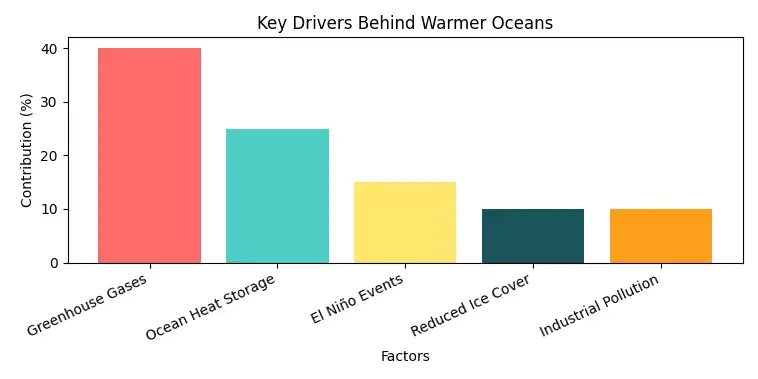
Oceans are warming faster than many people expected. This shift is not random. Instead, it is driven by a mix of human activity and natural processes. Understanding these drivers helps us see the bigger picture. It also shows why the issue is gaining urgency.
To begin with, the biggest factor is the rise in greenhouse gases. When carbon dioxide builds up in the atmosphere, it traps heat. As a result, much of that excess heat ends up in the oceans. In fact, oceans absorb over 90% of the extra heat from global warming. That is a huge share.
How Human Activity Is Heating the Seas
Human actions play a central role here. Burning fossil fuels is the main source of greenhouse gases. At the same time, deforestation reduces the planet’s ability to absorb carbon. Together, these trends push more heat into the climate system.
Moreover, industrial pollution also adds to the problem. Certain particles can change how sunlight interacts with the ocean surface. This can increase heat absorption in some regions.
Natural Factors Still Play a Role
However, natural patterns matter too. Events like El Niño can temporarily raise ocean temperatures. These shifts move warm water across the Pacific, which then affects global weather. Still, these are short-term changes. The long-term warming trend is mostly human-driven.
Another key point is the loss of sea ice. Ice reflects sunlight, but open water absorbs it. So, as ice melts, oceans take in even more heat. This creates a feedback loop that speeds up warming.
Overall, these drivers are closely linked. And looking ahead, their combined impact will likely shape ocean conditions for decades. That is why tracking and understanding them is more important than ever.
How Sea Temperatures Impact Weather and Marine Life
Sea temperatures play a bigger role in our daily lives than many people realise. In fact, they quietly shape weather patterns, influence storms, and support entire ecosystems beneath the surface. As global sea temperatures continue to rise, the effects are becoming easier to see—and harder to ignore.
To begin with, warmer oceans add more moisture to the air. This extra moisture can fuel stronger storms and heavier rainfall. As a result, coastal areas often face more intense weather events. At the same time, shifting sea temperatures can disrupt wind patterns. This change can lead to unusual weather, such as heatwaves or colder-than-normal winters in some regions.
Why Sea Temperatures Matter for Weather Patterns
Sea temperatures act like a control system for the planet’s climate. When they change, everything else starts to shift too.
For example, warmer sea temperatures can:
- Increase the strength of hurricanes and tropical storms
- Cause more frequent and intense rainfall
- Alter ocean currents, which then affect global weather
- Lead to longer and more severe heatwaves
On the other hand, cooler sea temperatures can reduce storm intensity but may also bring drier conditions. So, even small changes can have a big impact over time.
The Hidden Impact on Marine Life
While weather changes are visible, the effects on marine life are often less obvious—but just as serious. Marine species depend on stable sea temperatures to survive. When temperatures rise too quickly, many struggle to adapt.
Coral reefs are one of the most affected ecosystems. Warmer waters can cause coral bleaching, which weakens or even kills the coral. This, in turn, affects the many species that rely on reefs for food and shelter.
In addition, changing sea temperatures can:
- Force fish to move to cooler waters, disrupting fishing industries
- Reduce oxygen levels in the ocean, making it harder for marine life to survive
- Impact breeding cycles and migration patterns
- Increase the spread of harmful algae blooms
Looking ahead, the link between sea temperatures, weather, and marine life will only grow stronger. Therefore, understanding these changes is key. Not only does it help scientists predict future conditions, but it also helps communities prepare and adapt.
In short, sea temperatures are more than just a number on a chart. They are a powerful force shaping both our climate and the life within our oceans.
Lessons from The Role of Climate Change in Ocean Heating
Ocean heating is one of the clearest signs of climate change. It shows how closely our planet’s systems are linked. As greenhouse gases rise, more heat gets trapped in the atmosphere. However, much of that heat does not stay in the air. Instead, it is absorbed by the oceans. And with oceans taking in over 90% of the excess heat that helps change how we understand global warming.
Why ocean heat matters more than you think
At first glance, a small rise in ocean temperature may not seem serious. Yet even slight increases can disrupt marine life. Coral reefs, for example, are very sensitive to heat. When waters warm, coral bleaching becomes more common. As a result, entire ecosystems can collapse.
Moreover, warmer oceans fuel stronger storms. Hurricanes draw energy from warm water. So, as ocean temperatures rise, storms can become more intense and destructive. This creates a direct link between climate change and extreme weather events.
What we can learn moving forward
There is also a broader lesson here. Ocean heating acts like a warning system. It shows long-term trends that are not always visible on land. Therefore, tracking ocean temperatures helps scientists predict future climate risks.
Looking ahead, this insight matters more than ever. If emissions continue to rise, ocean heat will keep building. That means rising sea levels, shifting fish populations, and more pressure on coastal communities.
However, there is still room for action. Reducing emissions can slow down ocean warming. In addition, protecting marine ecosystems can improve resilience. Step by step, these efforts can make a difference.
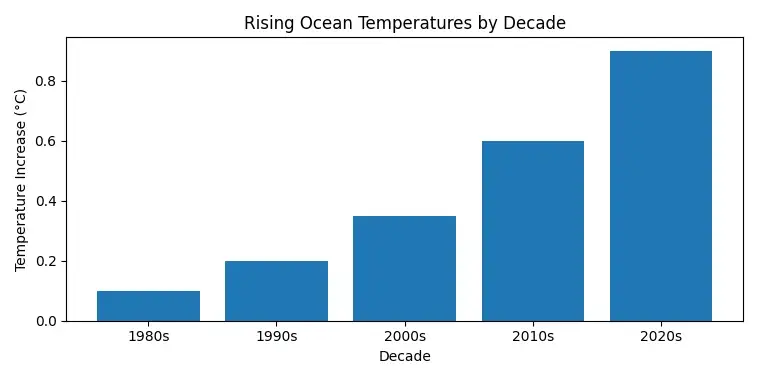
To better understand the trend, the chart below highlights how ocean temperatures have increased over recent decades:
In short, the ocean is not just a victim of climate change. It is also one of our most important sources of insight.
What Rising Oceans Mean for the Future
The world’s oceans are changing faster than many people realise. At the heart of this shift are rising sea temperatures. While this may sound like a distant issue, it is already shaping weather, wildlife, and coastal life today. So, what does this mean for the future?
To begin with, warmer oceans act like fuel for extreme weather. Hurricanes and storms draw energy from heat. As sea temperatures climb, these events can become stronger and more unpredictable. This means heavier rainfall, stronger winds, and a higher risk of flooding in coastal areas.
At the same time, rising heat affects marine life in ways that ripple across the entire planet. Coral reefs, for example, are highly sensitive to temperature changes. When waters get too warm, corals bleach and struggle to survive. This not only threatens biodiversity but also impacts food supplies and local economies that rely on fishing and tourism.
The Link Between Sea Temperatures and Rising Sea Levels
Another major concern is sea level rise. Warmer water expands, and melting ice adds even more volume. As a result, coastlines around the world are slowly being reshaped. Cities near the sea face increased flooding, especially during storms and high tides.
Importantly, this is not just a future problem. Many communities are already dealing with regular flooding. Over time, this could lead to displacement and costly infrastructure changes. Governments and planners are starting to adapt, but the pace of change remains a challenge.
What This Means for Everyday Life
So, how does this connect to daily life? In short, it touches more than you might expect. Food prices can rise as fish stocks shift or decline. Travel plans may change as popular destinations face environmental stress. Even insurance costs can increase in high-risk areas.
However, there is still room for action. Cleaner energy, smarter coastal planning, and better protection of marine ecosystems can all make a difference. Small changes, when combined, can slow the impact of rising sea temperatures.
Looking ahead, the future of our oceans will depend on the choices made today. While the challenges are real, so are the opportunities to protect and adapt. And that makes this a story worth paying attention to.
Conclusion: The Future of Sea Temperatures
Sea temperatures are rising faster than at any point in modern history. This shift is not random. It is driven by clear forces, including greenhouse gas emissions and changing ocean patterns. As a result, the oceans are absorbing more heat than ever before.
However, this trend is not just a scientific concern. It has real effects on daily life. Warmer oceans fuel stronger storms, disrupt marine ecosystems, and impact food supplies. Over time, these changes can reshape coastlines and communities around the world.
At the same time, there is still room for action. Reducing emissions, protecting marine habitats, and investing in clean energy can all help slow the rise in sea temperatures. Small changes today can make a meaningful difference in the future.
In the end, understanding why sea temperatures are rising faster today is the first step toward addressing the problem. The ocean plays a vital role in the health of our planet. Protecting it is not optional. It is essential for the future we all share.