

Ice Erosion: The Powerful Story Written in Stone
How Ice Erosion Shapes Landscapes: The Powerful Story Written in Stone
Ice erosion is one of the most powerful forces shaping the Earth’s surface. Over thousands of years, moving ice has carved valleys, smoothed mountains, and left clear marks in solid rock. These changes may seem slow, yet they have transformed entire landscapes in ways that are still visible today. From deep fjords to wide U-shaped valleys, the effects of ice erosion tell a story that can be read in stone.
As glaciers move, they act like natural tools. They scrape, grind, and carry debris across the land. This process, often called glacial erosion, creates unique landforms that stand apart from those shaped by water or wind. For example, sharp ridges and polished rock surfaces reveal where ice once flowed with immense force. In colder regions, these features remain well preserved, offering clear evidence of past climate conditions.
Understanding ice erosion helps explain how the planet has changed over time. It also gives clues about future shifts, especially as modern glaciers continue to melt. As a result, studying these patterns is not just about the past. It also helps scientists predict how landscapes may evolve in the years ahead.
The marks left behind are more than just geological features. They are records of movement, pressure, and time. Each groove and valley reflects a long process that continues to shape the world today.
What You’ll Discover
Ice Erosion and the Forces That Shape the Land
How Glaciers Carve Deep Valleys and Rugged Peaks
Ice Erosion in Action Across Ancient Rock Landscapes
The Hidden Clues Left Behind in Stone
What Ice-Shaped Terrain Tells Us About Earth’s Past
Conclusion
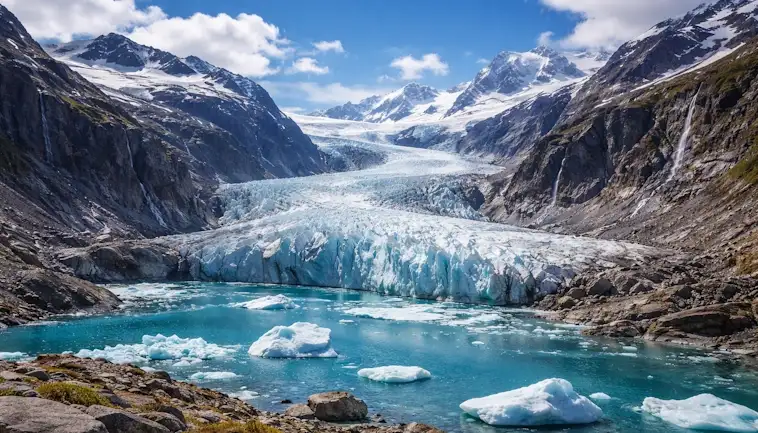
Ice Erosion and the Forces That Shape the Land
Earth is always changing, even when it looks still. Over thousands of years, ice has played a huge role in shaping the land around us. In fact, some of the world’s most striking landscapes were carved by glaciers that moved slowly but powerfully across the ground. Although ice may seem quiet and harmless, it can act like a giant natural tool. As it moves, it cuts, scrapes, and reshapes the surface of the Earth.
So, when we look at deep valleys, smooth hills, or lakes left behind by melting glaciers, we are really seeing the work of ice over time. This process is called ice erosion, and it is one of the most important forces in physical geography. Moreover, it helps explain why many regions look the way they do today. From mountain ranges to northern plains, the marks left by ancient ice are still easy to spot.
How Ice Erosion Works
Ice erosion happens when glaciers move over land and wear it away. Glaciers form when snow builds up, compresses, and turns into dense ice. Then, under its own weight, the ice begins to move. As it slides downhill or spreads outward, it picks up rocks and debris from the ground.
This movement causes two main types of erosion. First, there is abrasion. This happens when rocks trapped in the ice scrape against the land like sandpaper. As a result, the surface becomes smoother and more polished. Second, there is plucking. In this process, the glacier freezes onto pieces of rock and pulls them away as it moves forward. Together, these actions can change the shape of entire landscapes.
Landforms Created by Glaciers
Ice erosion creates some very distinctive landforms. For example, glaciers can carve out U-shaped valleys, which are wider and flatter than the V-shaped valleys made by rivers. They can also form sharp ridges, pointed peaks, and deep basins that later fill with water to become lakes.
In addition, glaciers leave behind features such as cirques, which are bowl-shaped hollows found high in the mountains. Fjords are another dramatic example. These are long, narrow sea inlets formed when glaciers cut deep valleys that later flood with seawater.
Why Ice Erosion Still Matters Today
Even though many glaciers have melted since the last Ice Age, their impact remains all around us. More importantly, modern glaciers are still shaping land in colder parts of the world. At the same time, studying ice erosion helps scientists understand past climates and how Earth has changed over time.
So, ice erosion is not just a story from the distant past. It is a reminder that nature has the power to transform the planet in slow but remarkable ways.
How Glaciers Carve Deep Valleys and Rugged Peaks
Glaciers are some of the most powerful forces in nature. At first glance, they may seem slow and still. However, over thousands of years, they can completely reshape the land. In fact, many of the world’s most dramatic mountain views exist because glaciers once moved through them. From deep valleys to sharp peaks, ice has played a major role in creating the landscapes we admire today.
So, how does this happen? The answer lies in the steady movement of glacial ice. As glaciers grow and slowly slide downhill, they pick up rocks, sand, and debris. Then, like giant sheets of sandpaper, they grind against the land beneath them. At the same time, they also pull rocks away from valley sides and mountain slopes. Little by little, this process transforms the shape of the land in a big way.
Glaciers Slowly Cut Through Solid Rock
Although glaciers move very slowly, they are incredibly powerful. As the ice travels downhill, it erodes the ground below. This happens in two main ways: abrasion and plucking.
Abrasion takes place when rocks trapped in the bottom of the glacier scrape against the earth. As a result, the glacier smooths and wears down the surface. Plucking, on the other hand, happens when meltwater slips into cracks in the rock, freezes, and then breaks pieces loose. When the glacier moves again, it pulls those pieces away.
Together, these two actions allow glaciers to carve through solid rock over long periods of time. That is why glacial landscapes often look bold, steep, and dramatic.
How Deep U-Shaped Valleys Are Formed
One of the clearest signs of past glaciation is a U-shaped valley. Before glaciers move in, river valleys are usually V-shaped. They are narrow and steep because rivers cut mainly through the bottom of the land.
However, glaciers are different. They are much wider and thicker than rivers. Because of this, they erode the valley floor and the sides at the same time. Over time, a narrow V-shaped valley becomes a broad U-shaped one with a flat base and steep walls.
This is why glacial valleys often look larger, deeper, and more dramatic than river valleys.
Why Glaciers Create Sharp Peaks and Rugged Mountains
Glaciers do not just carve valleys. They also shape the peaks around them. When several glaciers erode different sides of the same mountain, they cut back the slopes and leave behind steep ridges. These narrow ridges are called arêtes.
Eventually, if three or more glaciers carve into one mountain from different directions, they can create a sharp, pointed peak known as a horn. The Matterhorn in the Alps is a famous example.
So, while glaciers may move slowly, their impact is enormous. In the end, they help create some of the wildest and most striking mountain landscapes on Earth.
Ice Erosion in Action Across Ancient Rock Landscapes
Ice has shaped some of the oldest landscapes on Earth in quiet but powerful ways. At first glance, these places can look still and timeless. Yet their smooth rock faces, deep grooves, and scattered boulders tell a story of motion, pressure, and change. Over thousands of years, and often much longer, moving ice has acted like a slow but unstoppable sculptor.
In ancient rock landscapes, glaciers did not simply cover the ground. Instead, they reworked it. As ice moved forward, it picked up rock fragments, sand, and debris. Then, as this frozen mass slid across the land, it scraped, polished, and carved the bedrock below. This process, known as ice erosion, helped create many of the dramatic features we still see today in places such as Scotland, Scandinavia, Canada, and parts of northern North America.
How Ice Erosion Changes Solid Rock
Ice erosion works in two main ways. First, there is abrasion. This happens when rocks and sediment trapped in the base of a glacier grind against the land like sandpaper. As a result, hard rock surfaces become smoother and often marked with long scratches called striations.
Second, there is plucking. In this process, meltwater seeps into cracks in the rock and then freezes. When the glacier moves, it can pull loose blocks of rock away from the surface. Over time, this leaves behind rough edges, steep faces, and broken ground. Together, abrasion and plucking can transform entire regions.
Signs You Can Still See Today
Even now, ancient rock landscapes carry clear signs of past ice movement. In fact, many of the most striking landforms in glaciated regions are the result of this slow erosion.
Some of the most common features include:
- Smooth, rounded rock outcrops
- Deep scratches and grooves in bedrock
- U-shaped valleys carved by glaciers
- Isolated boulders left far from their source
- Steep rock faces where ice plucked material away
- Basin-like hollows later filled with water
Why These Landscapes Matter
These ancient rock landscapes are more than scenic backdrops. They are records of Earth’s climate history. By studying them, scientists can better understand where ice once moved, how thick glaciers were, and how landscapes responded to colder periods in the past.
Just as importantly, these places help us see the power of slow natural change. Ice erosion may seem gradual, but its impact is huge. What looks permanent is often the result of constant reshaping over time. That is what makes these landscapes so fascinating. They connect the deep past with the present, and they remind us that even the hardest rock can be changed by moving ice.
The Hidden Clues Left Behind in Stone
Ice erosion may sound like a quiet process. Yet over time, it can completely reshape a landscape. Mountains, valleys, and rocky plains all carry signs of its force. In fact, some of the most striking features on Earth were carved by moving ice. That is what makes this topic so fascinating. The clues are not hidden in books alone. They are written directly into stone.
When glaciers move, they do far more than simply sit on the land. Instead, they grind, scrape, and pull at the ground beneath them. As a result, rocks become polished, scratched, cracked, and displaced. These marks can last for thousands of years. Today, they help scientists piece together the story of ancient climates and shifting landscapes. In other words, stone acts like a record of the past.
How Ice Erosion Shapes the Land
Glaciers are slow, but they are powerful. As they move downhill, they drag rocks and sediment with them. This material acts like sandpaper against the bedrock below. Over time, the glacier smooths some surfaces and carves deep grooves into others. Because of this, the land begins to change in clear and lasting ways.
For example, glaciers often create broad U-shaped valleys. Unlike rivers, which usually cut narrow V-shaped valleys, ice spreads across a wider area. Therefore, the final shape is much broader and steeper at the sides. This is one of the easiest signs of past glacial erosion to spot in mountain regions.
The Scratches, Grooves, and Polished Faces
One of the most important clues left behind in stone is called striation. These are thin scratches etched into rock surfaces by stones trapped under moving ice. Although they may look simple, they reveal a great deal. They can show the direction the glacier once travelled. So, even after the ice has long disappeared, its path can still be traced.
Alongside scratches, glaciers also leave behind polished rock faces. These smooth surfaces form as the ice and debris grind repeatedly over the same area. In some places, the rock may even look shiny. That gentle sheen is actually evidence of intense pressure and movement over long periods of time.
Why These Stone Clues Matter Today
These rocky clues are more than just interesting features in the landscape. They help scientists understand Earth’s history. By studying erosion marks, researchers can learn where glaciers once existed, how large they were, and how they changed the land. This also helps us understand past climate shifts.
Even more importantly, these clues remind us that landscapes are never truly still. Change happens slowly, then suddenly becomes visible. So when we look at scratched and sculpted stone, we are really looking at a message from another age. The ice may be gone. However, its story remains.
What Ice-Shaped Terrain Tells Us About Earth’s Past
Earth keeps a long memory. Even when ice melts, it leaves clues behind. In fact, some of the most striking landscapes on the planet were shaped by moving ice thousands, and sometimes millions, of years ago. These landforms do more than look dramatic. They help scientists piece together Earth’s climate story.
When glaciers move, they grind, scrape, and reshape the land beneath them. Then, when they retreat, they leave behind patterns in rock, soil, and sediment. As a result, these frozen footprints give us a clearer view of past ice ages, shifting weather patterns, and changing sea levels. In other words, ice-shaped terrain acts like a natural archive. It shows us not only where ice once existed, but also how powerful it was and how fast the planet was changing.
Glaciers Leave Clear Signs on the Land
One of the biggest clues is the U-shaped valley. Unlike rivers, which usually carve narrow V-shaped valleys, glaciers create wide, rounded ones. This tells scientists that thick ice once moved slowly through the area, pushing and carving as it went.
At the same time, glaciers also leave behind ridges of rock and debris called moraines. These mark the edges of former glaciers. Because of this, researchers can track how far glaciers advanced and when they began to shrink. That matters, especially when trying to understand colder and warmer periods in Earth’s history.
Scratches, Hills, and Sediment Tell a Bigger Story
Ice does not just shape mountains. It also changes plains and lowlands. For example, long scratches in bedrock, known as striations, show the direction a glacier once traveled. Small hills called drumlins can reveal how ice flowed across a landscape. Meanwhile, layers of sediment left by meltwater can show when warming began.
Together, these features help scientists build a timeline. They can compare landforms with ice cores, ocean records, and fossil evidence. So, the landscape becomes part of a much larger climate puzzle.
Why This Still Matters Today
Studying ice-shaped terrain is not only about the distant past. It also helps us understand the future. By learning how glaciers responded to earlier warming periods, scientists can better predict what may happen as today’s climate changes.
This is especially important now. Modern glaciers and ice sheets are melting in many parts of the world. Therefore, the marks left by ancient ice offer context. They remind us that Earth’s surface changes over time, but they also show that climate shifts can leave lasting effects.
In the end, ice-shaped terrain is more than scenery. It is evidence. And the more closely we read it, the more we learn about where Earth has been and where it may be heading next.
Conclusion
Ice erosion has shaped some of the most striking landscapes on Earth. From deep valleys and rugged mountains to smooth rock surfaces and vast fjords, its mark is both powerful and lasting. These frozen forces may move slowly, but over time, they can transform entire regions in ways that are hard to ignore.
By understanding ice erosion, we gain a clearer view of how our planet has changed through the ages. We also start to see how glaciers and ice sheets have helped write the story of the land beneath our feet. In many ways, every carved cliff and glacial valley is a reminder that nature works on a scale far bigger than our own.
As climate patterns continue to shift, the study of ice erosion matters more than ever. It helps us connect the past with the present while giving us insight into the future of the Earth’s surface. Put simply, ice erosion is not just a feature of geology. It is a powerful force that continues to shape the world, leaving a story in stone that still speaks today.