
How Climate Change Is Warming Our Oceans
Our Oceans Are Heating Up — And the World Is Feeling It
The world’s oceans are getting hotter, and the effects are already being felt across the globe. While much of the climate conversation focuses on rising air temperatures, the oceans are quietly absorbing vast amounts of excess heat caused by human activity. This hidden warming is changing marine ecosystems, driving stronger storms, and raising serious concerns for the future of our planet.
From coral reef loss to shifting fish populations and rising sea levels, warmer oceans are reshaping life both below and above the surface. That is why understanding this growing problem is so important. The more we know about how climate change is warming our oceans, the better prepared we will be to respond.
What You’ll Discover
Why Ocean Temperatures Are Rising Faster Than Ever
How Warmer Seas Are Changing Marine Life
What Ocean Heat Means for Weather Around the World
The Hidden Impact of Warming Waters on Coastal Communities
What We Can Do to Slow the Heat Beneath the Waves
Why Ocean Temperatures Are Rising Faster Than Ever
The ocean has always helped keep Earth’s climate in balance. It absorbs heat, stores carbon, and supports life across the planet. However, that balance is now under growing pressure. Ocean temperatures are rising faster than ever, and the effects are becoming harder to ignore.
So, why is this happening now? The main reason is simple. Human activity is trapping more heat in the atmosphere. As a result, most of that extra heat is being absorbed by the ocean. In fact, the ocean takes in more than 90 percent of the excess heat caused by greenhouse gas emissions. That may sound helpful at first. Yet it comes at a serious cost.
Warmer seas are not just a number on a chart. They affect weather patterns, marine life, sea levels, and coastal communities. Therefore, understanding what is driving this change matters more than ever.
The Ocean Is Absorbing More Heat
Greenhouse gases such as carbon dioxide and methane are building up in the atmosphere. Because of this, more of the sun’s heat is being trapped near the Earth’s surface. While the air is warming, the ocean is taking on most of that extra heat.
This process has sped up in recent decades. The reason is that emissions have continued to rise, especially from burning fossil fuels. So, the ocean has been working harder and harder as a heat buffer. Yet there is a limit to how much strain it can take before major problems begin to show.
Climate Change Is Speeding Up the Trend
Natural climate cycles can influence ocean temperatures for short periods. For example, El Niño can make certain years especially warm. However, these natural shifts do not explain the long-term warming trend.
What makes today different is the speed and consistency of the rise. Year after year, the ocean is staying warmer for longer. That points clearly to human-driven climate change rather than a temporary natural pattern.
Surface Waters Are Heating Marine Ecosystems
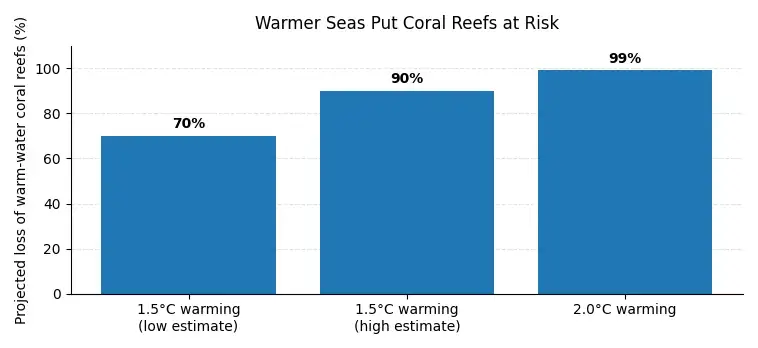
As ocean temperatures rise, marine ecosystems face growing stress. Coral reefs are one of the clearest examples. When waters stay too warm, corals can bleach and struggle to survive. At the same time, fish and other sea life may move to cooler areas, which disrupts food chains and local fishing industries.
In addition, warmer water expands. This adds to sea level rise and increases the risk of coastal flooding. Stronger storms can also draw energy from warmer seas, making extreme weather more damaging.
Why This Matters for Everyone
Even if you live far from the coast, rising ocean temperatures affect your life. They shape weather, food systems, and the health of the planet. That is why this issue is not only about the ocean. It is about all of us.
The good news is that this trend can still be slowed. Cutting emissions, protecting marine ecosystems, and investing in clean energy can all make a difference. The sooner action happens, the better the chances of protecting the ocean for the future.
How Warmer Seas Are Changing Marine Life
The ocean is getting warmer, and marine life is feeling the effects. At first, the change may seem small. However, even a slight rise in sea temperature can disrupt the balance of entire ecosystems. From tiny plankton to large whales, sea creatures depend on stable conditions to feed, breed, and survive.
As ocean temperatures climb, many species are being pushed out of their usual habitats. Some fish are moving toward cooler waters near the poles. Meanwhile, others are heading into deeper parts of the sea. This may sound like a natural shift. Yet it creates serious problems for species that cannot move quickly or adapt fast enough.
Fish Are Moving to New Waters
One of the clearest signs of warming seas is the movement of fish populations. In many regions, species that once thrived in certain coastal waters are now appearing far from their normal range. As a result, local food chains are changing. Fishermen are also noticing different catches, which can affect jobs, food supply, and coastal communities.
Coral Reefs Are Under Stress
At the same time, coral reefs are suffering. Corals are highly sensitive to heat. When waters stay too warm for too long, corals can bleach. This means they lose the tiny algae that help keep them alive. Without those algae, reefs become weak and may die. Since coral reefs support thousands of marine species, the damage can spread quickly through the ecosystem.
Some Species Struggle More Than Others
While some animals can move or adjust, others cannot. Shellfish, sea stars, and cold-water species are especially at risk. In addition, warmer water often holds less oxygen. That makes life even harder for marine animals already under pressure.
The big picture is clear. Warmer seas are changing marine life in ways that are already visible today. Looking ahead, these shifts could reshape ocean life for decades. That is why understanding them now matters so much.
What Ocean Heat Means for Weather Around the World
The ocean does far more than hold water. In fact, it helps control the weather we feel every day. It stores huge amounts of heat, moves it around the planet, and slowly releases it back into the air. Because of that, when the ocean gets warmer, weather patterns can change in big ways.
This matters more than many people realize. Warmer ocean water does not stay neatly in one place. Instead, it can affect storms, rainfall, drought, and even heatwaves thousands of miles away. So, if you want to understand why weather is becoming more intense in many parts of the world, the ocean is a good place to start.
How the Ocean Stores and Spreads Heat
The ocean acts like Earth’s biggest heat bank. It absorbs much of the extra warmth trapped by greenhouse gases. Then, currents carry that heat across the globe. As a result, ocean temperatures can shape weather far beyond the coast.
For example, warm ocean water can add more moisture and energy to the atmosphere. That extra energy helps fuel stronger weather systems. At the same time, changes in ocean heat can shift wind patterns and pressure systems. In turn, that can change where rain falls and where dry conditions settle in.
Put simply, warmer oceans can lead to a more unstable atmosphere. And when the atmosphere becomes more unstable, weather can become harder to predict and more extreme.
Why Warmer Seas Can Mean Stronger Storms
One of the clearest links between ocean heat and weather is tropical storms. Hurricanes, cyclones, and typhoons feed on warm water. When sea surface temperatures rise, these storms often have more fuel available.
That does not always mean there will be more storms overall. However, it can mean the strongest storms become even more powerful. It can also increase the amount of rain they produce, which raises the risk of flooding.
Here are some of the main ways warmer oceans can affect storms:
- increase storm intensity by supplying more heat energy
- lead to heavier rainfall because warm air holds more moisture
- sometimes help storms strengthen more quickly
- raise coastal flood risk when combined with higher sea levels
Because of this, communities near the coast often face a double threat. They may have to deal with stronger winds and more serious flooding at the same time.
The Link Between Ocean Heat, Rainfall, and Drought
Ocean heat also affects where rain falls. When ocean temperatures shift, weather systems can move with them. As a result, some regions may get more rain than usual, while others may become much drier.
This is part of why some parts of the world see longer droughts, while others deal with repeated floods. Large ocean patterns, such as El Niño and La Niña, are well-known examples. They show how changes in ocean temperatures can influence weather across many continents.
For farmers, cities, and water managers, this creates real challenges. Crops depend on reliable rain. Rivers and reservoirs depend on steady seasonal patterns. Yet those patterns can become less dependable when ocean heat changes.
Ocean heat may sound like a distant issue, but its effects are close to home. It can shape the food we grow, the storms we prepare for, and the water we rely on. Above all, it reminds us that the planet’s systems are deeply connected.
That is why ocean warming is not just a marine story. It is a global weather story too. And in the years ahead, understanding that link will become even more important.
The Hidden Impact of Warming Waters on Coastal Communities
Coastal life has always depended on the sea. It shapes local jobs, food, culture, and daily routines. Yet today, warming waters are changing that relationship in ways many people do not see at first. While rising sea levels often get most of the attention, warmer oceans are creating quieter but just as serious problems for coastal communities.
Changing Fish Stocks and Local Livelihoods
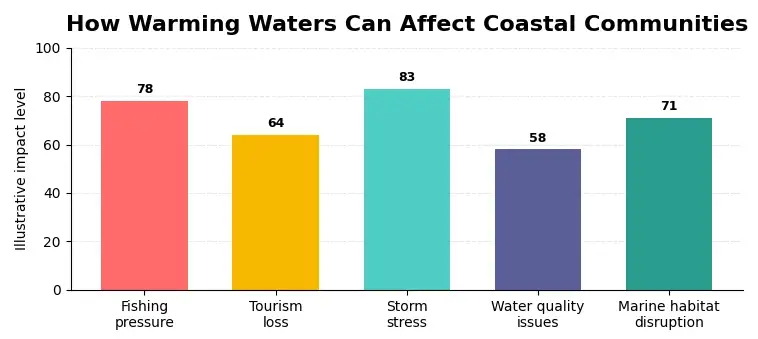
To begin with, warmer water affects where fish live and breed. As temperatures rise, many species move to cooler areas. This means local fishers may need to travel farther, spend more on fuel, and face smaller catches. For families and towns that rely on fishing, that shift can hurt incomes and increase uncertainty.
At the same time, shellfish and other marine life are also under stress. When water stays too warm for too long, ecosystems become less stable. As a result, small businesses, seafood markets, and tourism operators can all feel the pressure.
More Algae, More Risk
In addition, warming waters can lead to more harmful algal blooms. These blooms may damage marine habitats and make seafood unsafe to eat. They can also keep visitors away from beaches and waterfront areas. For coastal towns that depend on summer tourism, even a short-term bloom can bring lasting financial losses.
Health, Homes, and Daily Life
However, the impact is not only economic. Warmer coastal waters can worsen storm intensity, raise humidity, and affect water quality. This puts extra strain on homes, public services, and health systems. People may face higher repair bills, more mold and damp issues, and growing stress about what the future holds.
Even so, coastal communities are not powerless. With better planning, stronger local infrastructure, and smarter marine policies, they can adapt. The first step is awareness. Once people understand the hidden impact of warming waters, it becomes easier to support real action. After all, protecting coastal communities also means protecting the people, industries, and traditions that make them unique.
What We Can Do to Slow the Heat Beneath the Waves
The ocean has been quietly taking in much of the extra heat caused by climate change. That might sound helpful at first. However, it comes at a cost. Warmer seas put coral reefs, fish stocks, kelp forests, and coastal communities under growing pressure. In many places, marine heatwaves are now lasting longer and hitting harder, with serious effects on ocean life and the people who depend on it.
Cut Emissions at the Source
First, we need to deal with the main driver: greenhouse gas emissions. The heat building up beneath the waves does not come from nowhere. It is tied to the same pollution that is warming the air above us. So, the biggest step is also the clearest one. We need to burn less coal, oil, and gas, while moving faster toward clean energy, better public transport, and more efficient homes and industry. The ocean has warmed steadily in recent decades, and that long-term trend is linked to human activity.
Protect the Ocean’s Natural Defenses
At the same time, we need to make the ocean more resilient. Healthy marine ecosystems can cope better with stress. That means protecting mangroves, seagrass meadows, salt marshes, and coral reefs. These places do more than support wildlife. They also store carbon, improve water quality, and help buffer coastlines from storms. In other words, nature can still help us, but only if we give it room to recover.
Fish Smarter, Not Harder
Next, we should rethink how we manage the sea. Overfishing, habitat damage, and pollution make ocean ecosystems weaker before heat even arrives. Smarter fishing rules, stronger marine protected areas, and better local monitoring can all reduce that pressure. When ecosystems are less stressed, they stand a better chance during extreme warming events.
Build Better Coastal Planning
We also need to prepare for what is already happening. Early warning systems for marine heatwaves can help fishing communities, conservation groups, and local governments respond faster. Better planning can protect livelihoods, reduce sudden losses, and support food security. NOAA’s marine heatwave resources are a strong place to learn more about how these events are tracked and why they matter.
Every Action Above the Water Matters Below It
Ultimately, slowing ocean heat is not just an ocean issue. It is an energy issue, a policy issue, and a daily life issue. What we do on land shapes what happens at sea. So, while the problem is huge, the path forward is not a mystery. Cut emissions, protect ecosystems, and plan ahead. That is how we begin to cool the future beneath the waves.
Conclusion: Why Warmer Oceans Matter More Than Ever
Climate change is warming our oceans at a pace we can no longer ignore. As sea temperatures rise, the effects spread far beyond the water. Coral reefs suffer, marine life moves or declines, storms grow stronger, and coastal communities face greater risk. In other words, warmer oceans affect all of us, whether we live by the sea or far inland.
At the same time, this issue is not hopeless. By cutting greenhouse gas emissions, protecting marine ecosystems, and supporting cleaner energy, we can still help slow the damage. Every step matters. The ocean plays a vital role in keeping our planet stable, so protecting it means protecting our future too.
As we look ahead, one thing is clear: understanding how climate change is warming our oceans is the first step toward meaningful action. The more we know, the better prepared we are to protect the seas, the wildlife within them, and the generations that will depend on them.