

Pollinator Crisis: The Urgent Warning We Can’t Ignore
Pollinator Crisis: The Growing Threat to Crops, Ecosystems, and Biodiversity
Pollinators are in trouble, and the pollinator crisis is now too serious to brush aside. Bees, butterflies, moths, beetles, and other vital species support the food we eat, the crops farmers grow, and the wild plants that keep ecosystems healthy. Yet their numbers are falling at an alarming rate. As habitats shrink, pesticide use rises, and climate patterns shift, the warning signs are becoming harder to ignore.
This is not only a wildlife issue. It is a growing threat to food security, biodiversity, and the balance of nature itself. Many of the fruits, vegetables, and nuts people rely on every day depend on pollinators to survive. Without urgent action, the effects could reach far beyond gardens and fields, touching economies, health, and daily life in ways many people still underestimate.
The good news is that awareness is growing. More people are starting to see that small changes, backed by stronger policies and better farming practices, can make a real difference. Still, time is short. The choices made now will shape whether future generations inherit landscapes full of life or a quieter, poorer natural world.
What You’ll Discover
The Pollinator Crisis Is Threatening Food and Nature
Why Bees, Butterflies, and Hoverflies Matter
A Pollinator Crisis Could Reshape Our Future
What Is Driving the Sharp Decline in Pollinators
How We Can Protect Pollinators Before It’s Too Late
The Pollinator Crisis Is Threatening Food and Nature
The natural world is under growing pressure. Yet one of the biggest problems often goes unnoticed. Across farms, gardens, and wild spaces, pollinators are in decline. Bees, butterflies, moths, hoverflies, beetles, and even some birds all help plants reproduce. Without them, many crops and wildflowers would struggle to survive.
This matters more than many people realize. Pollinators support a large share of the food we eat. They also help keep ecosystems healthy and balanced. So, when pollinator numbers fall, the effects spread quickly. Food production becomes more fragile. Wildlife loses important plant species. Landscapes become less rich and less resilient.
In other words, this is not only a nature story. It is also a food security story, an economic story, and a public health story. That is why the pollinator crisis deserves urgent attention now.
Why Pollinators Matter for Everyday Life
Pollinators play a quiet but essential role in daily life. Many fruits, vegetables, nuts, and seeds depend on them. Apples, strawberries, tomatoes, almonds, and blueberries are just a few examples. Without reliable pollination, harvests can shrink, prices can rise, and food variety can decline.
At the same time, pollinators support the wider web of life. They help wild plants reproduce, which then provide food and shelter for birds, insects, and mammals. As a result, healthy pollinator populations help keep entire ecosystems working well.
The Pollinator Crisis Is a Warning Sign
The pollinator crisis is not happening for one single reason. Instead, it is being driven by several pressures at once. Habitat loss is a major factor, especially as meadows, hedgerows, and flower-rich spaces disappear. In addition, pesticide use can harm pollinators directly or reduce the plants they rely on. Climate change is adding even more stress by shifting seasons and disrupting flowering times.
For farmers, fewer pollinators can mean lower yields and less reliable crop production. For nature, it can lead to fewer flowering plants and weaker ecosystems. Over time, that creates a damaging cycle. Fewer pollinators mean fewer plants. Then, fewer plants support even fewer pollinators.
Why This Crisis Needs Attention Now
The good news is that this trend is not hopeless. With better land management, more pollinator-friendly planting, and smarter farming methods, recovery is possible. Small actions can help, but larger policy changes matter too.
Above all, the message is clear. Protecting pollinators is not a niche environmental issue. It is central to the future of food and nature. If we want healthy farms, thriving wildlife, and more resilient communities, we need to respond to the pollinator crisis before the damage goes even further.
Why Bees, Butterflies, and Hoverflies Matter
Pollinators do far more than brighten a garden. In fact, they help hold entire ecosystems together. Bees, butterflies, and hoverflies move pollen from flower to flower, which helps plants reproduce. As a result, more wildflowers, fruits, seeds, and crops can grow. That matters for nature, but it also matters for people.
They Support Food, Flowers, and Healthy Habitats
Bees are often the first insects people think of, and for good reason. They are among the most effective pollinators in the natural world. However, butterflies matter too. They help pollinate a wide range of plants and also act as visible signs of how healthy the environment really is. Then there are hoverflies, which are often overlooked. Yet they are vital pollinators, and many species also help gardeners and farmers by eating pests such as aphids.
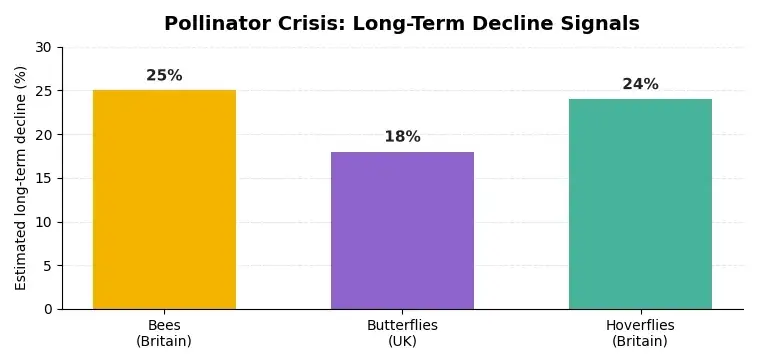
Right now, the bigger story is worrying. Long-term data from Britain found major declines in the occupancy of wild bees and hoverflies. Bee occupancy fell by about 25%, while hoverfly occupancy fell by about 24%. Meanwhile, the UK’s all-species butterfly abundance index has declined by 18% over the long term. These numbers are a clear warning sign, not just for insects, but for the plants, birds, and food systems that depend on them.
Small Insects With A Big Job
Even so, this is not only a story about loss. It is also a story about value. When pollinators thrive, gardens become richer, crops become more productive, and landscapes become more resilient. In other words, protecting pollinators helps protect the wider web of life. That is why bees, butterflies, and hoverflies matter so much. They may be small, but their role is huge. And importantly, when we help them, we help ourselves too. Hoverflies are also under growing pressure beyond Britain, with 37% of European species assessed as threatened with extinction.
A Pollinator Crisis Could Reshape Our Future
Pollinators do far more than brighten our gardens. They help shape the food we eat, the landscapes we enjoy, and the health of our natural world. Yet today, bees, butterflies, hoverflies, moths, and other vital species face rising pressure from habitat loss, pesticides, climate change, and disease. As a result, the pollinator crisis is no longer a distant environmental issue. It is becoming a real challenge that could touch every part of daily life.
When pollinators decline, the effects spread quickly. Crops such as apples, berries, almonds, and tomatoes depend on these hardworking species. Without them, food production can fall, prices can rise, and choice on supermarket shelves can shrink. In other words, this is not only about saving bees. It is also about protecting food security, local economies, and biodiversity for the future.
Why the Pollinator Crisis Matters to Everyone
The pollinator crisis affects more than farmers and conservation groups. In fact, it reaches homes, schools, businesses, and communities everywhere. Pollinators support ecosystems that keep plants growing and wildlife thriving. So, when their numbers fall, the wider environment becomes weaker too.
- Higher costs for fruit, vegetables, nuts, and seeds
- Lower crop yields in many farming regions
- Reduced plant diversity in wild landscapes
- Greater pressure on already fragile ecosystems
- More risk to long-term food security
These changes may seem gradual at first. However, over time, they could reshape how we grow food and manage land. That is why early action matters so much.
The Pollinator Crisis Is Also an Economic Issue
There is also a strong economic side to this story. Pollinators provide enormous value to agriculture, even though their work often goes unnoticed. Farmers rely on healthy pollinator populations to maintain harvest quality and quantity. Meanwhile, businesses across the food chain depend on stable supplies of pollinated crops.
If the pollinator crisis worsens, industries may need to spend more on manual pollination, crop management, and recovery efforts. On the other hand, protecting pollinators now could help create a more resilient future. Better farming methods, more wildflower spaces, and smarter land use can all make a difference.
The good news is that this story is not finished yet. We still have time to respond. By supporting pollinator-friendly gardens, reducing harmful chemicals, and protecting natural habitats, we can help turn concern into action. Above all, the choices we make today could decide whether future generations inherit a richer, healthier world.
What Is Driving the Sharp Decline in Pollinators
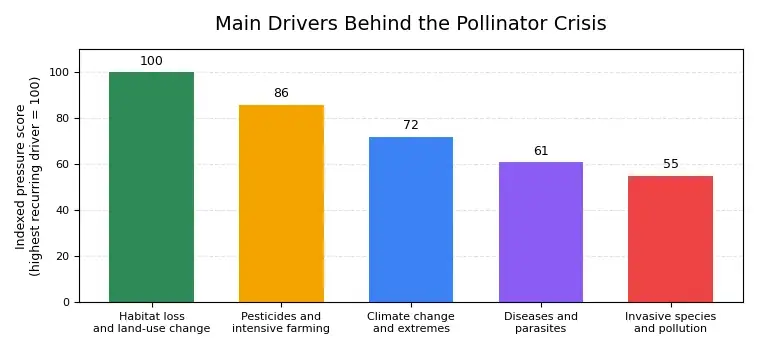
Pollinators are under growing pressure, and the reasons are now much clearer. Across global assessments, the biggest forces behind the decline are habitat loss, intensive land management, pesticide use, climate change, and the spread of pests, pathogens, and invasive species. In one global expert assessment, land cover change and land management ranked as the strongest overall drivers, with pesticide use close behind.
Why Pollinators are Disappearing Faster
First, pollinators are losing the places they need to feed, nest, and reproduce. When wildflower meadows, hedgerows, wetlands, and other natural spaces are cleared or broken up, bees, butterflies, hoverflies, and other species have fewer safe habitats. That makes survival harder, especially in farmed and urban landscapes.
Pollinator Crisis: The Biggest Pressures at Work
At the same time, modern land management can reduce floral diversity and create large areas of monoculture. Even where pollinators are still present, these simplified landscapes often provide food for only a short part of the year. Then pesticide exposure adds another layer of stress, affecting behaviour, survival, and reproduction.
Meanwhile, climate change is shifting flowering seasons, raising heat stress, and increasing weather extremes. That can leave pollinators out of sync with the plants they depend on. On top of that, pests and diseases can spread more easily in stressed populations, while invasive species can disrupt local ecosystems and compete for resources.
Why This Matters Now
This matters because pollinators support crop production and wild plant reproduction on a huge scale. IPBES reports that more than 75% of food crops depend at least partly on animal pollination, while nearly 90% of wild flowering plants do as well. So, when pollinators decline, the impact goes far beyond bees alone. It reaches food security, biodiversity, and the health of whole ecosystems.
How We Can Protect Pollinators Before It’s Too Late
Pollinators keep our world moving. Bees, butterflies, hoverflies, moths, beetles, and even some birds help plants reproduce. In turn, that supports wildflowers, crops, and healthy ecosystems. Yet right now, these species are under growing pressure. Habitat loss, pesticide use, climate shifts, and more intensive land use are all making life harder for them. That is why this matters so much.
The good news, however, is that protecting pollinators does not always require huge change. In fact, small steps at home, in gardens, on balconies, and across local communities can add up fast. When more people make simple choices, the impact can be powerful.
Why the Pollinator Crisis Matters to All of Us
The pollinator crisis is not only a nature story. It is also a food, farming, and future story. Many fruits, vegetables, and flowering plants depend on pollinators to thrive. So, when pollinator numbers fall, the ripple effects can spread far beyond the garden gate.
At the same time, pollinators are part of the beauty and balance of everyday life. They help support richer landscapes, healthier habitats, and stronger biodiversity. Without them, many natural systems become weaker. That is why action now is so important. Waiting only makes the problem harder to fix.
Simple Ways to Help Pollinators at Home
Fortunately, there are practical ways to help. First, grow more nectar-rich flowers that bloom across different seasons. This gives pollinators a steady food supply from spring through autumn. Next, choose a wider mix of plants, because variety helps attract different species.
Also, try to mow less often. A slightly wilder lawn with clover, dandelions, and other low flowers can become a useful feeding stop. In addition, avoid pesticides where possible, especially during flowering periods. Even small reductions can make a real difference.
If you have space, leave a corner of the garden a little messy. Bare soil, hollow stems, and patches of long grass can offer nesting and shelter. Even a few pots on a patio can help when planted with pollinator-friendly flowers.
For practical planting advice, the Royal Horticultural Society offers a trusted guide to plants for pollinators.
A Shared Effort That Starts Now
Of course, bigger change matters too. Schools, councils, farmers, and businesses all have a role to play. Still, personal action is where momentum begins. Every flower planted, every pesticide avoided, and every small habitat created is a step in the right direction.
So, while the challenge is serious, it is not hopeless. If we act now, and act together, we still have time to protect pollinators before it is too late.
Conclusion: Why the Pollinator Crisis Demands Action Now
The pollinator crisis is no longer a distant threat. It is happening now, and the warning signs are too serious to ignore. Bees, butterflies, hoverflies, moths, and other pollinators support our food supply, our wild spaces, and the balance of nature itself. Without them, ecosystems become weaker, crops become harder to grow, and biodiversity continues to decline.
At the same time, this is not a story without hope. The pollinator crisis can still be slowed, and in some places even reversed, when people, farmers, businesses, and governments act together. Small changes matter. Planting more native flowers, reducing pesticide use, protecting habitats, and supporting pollinator-friendly farming can all make a real difference.
So while the challenge is urgent, the path forward is clear. The pollinator crisis should be a wake-up call for all of us. The choices we make today will shape the health of our environment for years to come. If we want a more resilient future, protecting pollinators must start now.