

Nocturnal Animals: Secrets of the Night Revealed
Nocturnal Animals: Discover the Secret Nightlife of Creatures After Dark
When darkness falls, a different world wakes up. Nocturnal animals step into action while most of nature rests. From silent hunters to tiny creatures that rustle through leaves, these species are built for life after sunset. Their sharp senses, clever adaptations, and secretive habits allow them to thrive in the dark. As a result, the night becomes a busy and fascinating ecosystem that many people rarely see.
Many of these animals rely on powerful hearing, keen smell, and eyes that gather even the faintest light. Owls glide silently through forests. Bats navigate using sound. Meanwhile, creatures such as hedgehogs, foxes, and moths move carefully through fields and gardens under cover of darkness. Each species has evolved unique ways to hunt, hide, and survive while avoiding daytime predators.
Night activity also plays an important role in the balance of nature. Pollination, pest control, and seed dispersal often happen while the world sleeps. Because of this, the health of many ecosystems depends on animals that are active after sunset. Yet their hidden lifestyle means they are often misunderstood or overlooked.
Interest in nighttime wildlife is growing. Motion cameras, urban wildlife studies, and new technology are revealing behaviour that scientists once struggled to observe. These discoveries continue to reshape how people understand the rhythms of the natural world.
The secrets of the night are slowly coming to light. And the more people learn about these remarkable creatures, the clearer it becomes that the hours after dark are full of life, strategy, and surprising beauty.
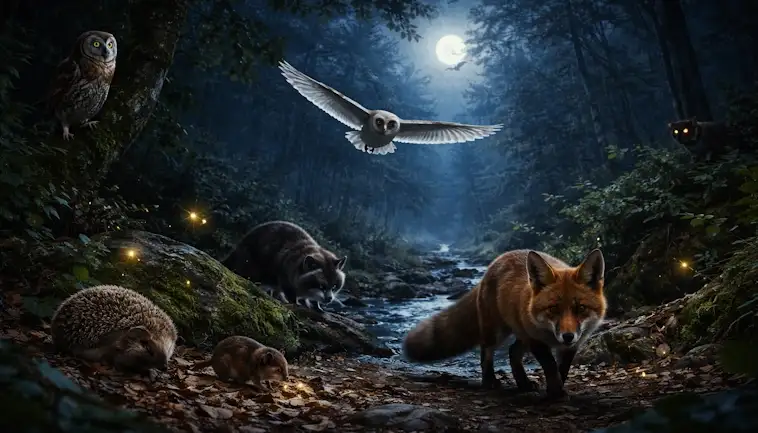
Nocturnal Animals: How They Thrive in the Dark
When the sun sets, in forests, deserts, and even city streets, nocturnal animals begin their daily routines. These creatures are specially adapted to life at night. While darkness can seem limiting to us, it offers many advantages for them.
Nocturnal animals have evolved remarkable abilities. They can hunt, move, and communicate in low light. Some rely on sharp hearing. Others use powerful senses of smell or highly sensitive eyes. These traits help them find food and avoid danger when visibility is low.
Nighttime also brings cooler temperatures and fewer predators. For many species, this makes survival easier. As a result, the dark becomes a safe and productive time to explore, hunt, and socialize.
Why Nocturnal Animals Are Active at Night
There are several reasons why animals adopt a nocturnal lifestyle. The most common reason is survival.
First, the night offers protection. Many predators hunt during the day. By staying active after sunset, nocturnal animals reduce their chances of being seen.
Second, temperatures are often cooler at night. This matters a lot in hot climates such as deserts. Animals can conserve energy and water by avoiding the heat of the day.
Food availability also plays a role. Many insects come out at night. This provides an easy meal for animals like bats, frogs, and small mammals.
In short, the darkness creates opportunities. Animals that adapt to it gain a real advantage.
Key Adaptations That Help Animals See and Move in the Dark
Living in darkness requires special skills. Over time, nocturnal animals have developed features that help them thrive when light is limited.
Enhanced Night Vision
Many nocturnal animals have larger eyes than daytime species. Their eyes gather more light, which improves vision in dim conditions.
Some animals also have a reflective layer behind the retina called the tapetum lucidum. This layer reflects light back through the eye and boosts visibility at night. It is also why some animals’ eyes glow when light shines on them.
Powerful Hearing and Smell
Vision is not the only tool for navigating the night.
Owls, for example, rely heavily on sound. Their facial feathers funnel noise toward their ears. This allows them to detect tiny movements made by prey.
Other animals depend on smell. Creatures such as foxes and raccoons use scent to track food or sense danger nearby.
Silent Movement
Stealth is another important adaptation. Many nocturnal hunters move almost silently.
Owls have soft feathers that reduce noise during flight. Cats and other predators have padded paws that allow them to walk quietly. These features help them sneak up on prey without being detected.
The Hidden World of Nocturnal Wildlife
The world after dark is far more active than many people realize. From bats flying overhead to hedgehogs searching for insects, nighttime ecosystems are full of life.
Understanding nocturnal animals helps us appreciate how nature works around the clock. Every species has its role. Even in darkness, ecosystems stay balanced and thriving.
Next time you step outside at night, listen closely. You might just hear the quiet activity of wildlife that calls the night home.
Why So Many Species Choose the Night
While humans often think of night as a time to rest, many animals are just getting started. In fact, scientists estimate that a large share of wildlife is most active after dark. These creatures have adapted to life in the shadows, using the night to hunt, move, and survive.
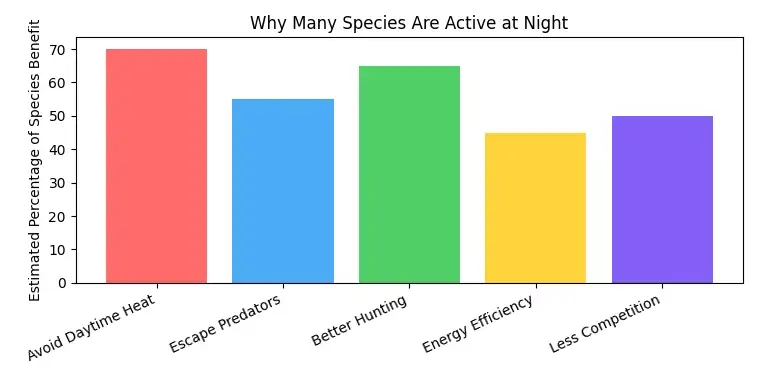
So why does this happen? The answer is simple. Night offers advantages that daytime does not. Cooler air, fewer predators, and less competition all make the dark hours attractive. Over time, many species evolved special traits that help them thrive when the world grows quiet.
From bats and owls to foxes and moths, the night shift is crowded. These animals rely on sharp hearing, strong senses of smell, and excellent low-light vision. Some can even navigate using sound. As ecosystems change and temperatures rise, the number of animals active at night may continue to grow.
Nocturnal Animals and Their Nighttime Advantage
Nocturnal Animals are species that are most active during the night and sleep or rest during the day. This behavior is not random. It often develops as a survival strategy.
For many animals, darkness provides cover. Predators are harder to see. At the same time, prey may be easier to catch if they are less alert.
Temperature also plays a role. In hot regions, daytime heat can be dangerous. By moving and hunting at night, animals conserve water and energy.
Key Reasons Animals Become Nocturnal
Cooler Temperatures
Nighttime air is usually cooler. This helps animals avoid overheating and reduces water loss.
Fewer Predators
Some predators rely on daylight to hunt. Being active at night lowers the risk of being spotted.
Better Hunting Opportunities
Certain prey species are more active after sunset. This gives nighttime hunters an advantage.
Reduced Competition
If daytime animals dominate food sources, shifting to the night creates new opportunities.
These benefits explain why nocturnal behavior appears in many different groups of animals across the planet.
Amazing Senses That Help Nocturnal Animals Survive
When the sun sets for many creatures, it is the busiest time of day. These animals do not rely on daylight to hunt, move, or stay safe. Instead, they use powerful senses that work far better in the dark than ours ever could.
Over time, evolution has shaped these abilities in remarkable ways. Some animals can hear the smallest rustle in the grass. Others can see in near total darkness. A few even navigate using sound waves. Because of these adaptations, nocturnal animals thrive when the rest of the world sleeps.
Understanding these senses helps us see the night in a new way. It also shows just how creative nature can be when survival is on the line.
Why Senses Matter for Nocturnal Animals
Living at night brings clear challenges. There is little light. Food can be harder to find. And predators may be hiding nearby. Because of this, nocturnal animals rely on senses that are stronger or more specialized than those of daytime animals.
These enhanced senses allow them to:
- Locate prey even in total darkness
- Detect predators before they get too close
- Navigate through forests, caves, and dense vegetation
- Communicate with others of their species
- Avoid obstacles while flying or climbing
Without these abilities, many nighttime hunters would struggle to survive.
Super Hearing: Detecting the Smallest Sounds
For some animals, hearing is their most powerful tool. Owls are a perfect example. Their ears are placed slightly unevenly on their heads. This unusual design helps them pinpoint the exact location of a sound.
Even a tiny movement can reveal a hidden meal.
Animals with exceptional hearing include:
- Owls that detect rodents moving under leaves
- Foxes that hear prey digging underground
- Bats that use sound to locate insects
- Bush babies that listen for predators in the trees
This sharp hearing gives them a huge advantage in the dark.
Night Vision That Works in Near Darkness
Many nocturnal animals have excellent night vision. Their eyes contain more rod cells. These cells are very sensitive to low light. As a result, they can detect movement even when the moonlight is faint.
Animals known for strong night vision include:
- Cats and wildcats
- Raccoons
- Leopards
- Tarsiers
Because of these eye adaptations, the night is not nearly as dark for them as it is for us.
Other Unique Senses That Help Animals at Night
Vision and hearing are only part of the story. Some nocturnal animals use completely different sensory systems.
Examples include:
- Echolocation used by bats to map their surroundings
- Sensitive whiskers that detect movement and air changes
- Enhanced smell that tracks food from far away
- Heat detection used by some snakes to locate warm-blooded prey
Each of these abilities helps animals move confidently through the darkness.
As scientists continue to study nocturnal animals, we keep discovering just how advanced these senses really are. And the more we learn, the more impressive the nighttime world becomes.
The Hidden Role Night Creatures Play in Nature
When the sun sets many creatures wake up and start the work that keeps ecosystems healthy and balanced. These night workers often go unnoticed. Yet their impact is huge.
From forests to farmland, animals active after dark help control pests, spread seeds, and pollinate plants. Without them, many natural systems would struggle to function. So while daytime wildlife gets most of the attention, the nighttime world is just as important.
Understanding these hidden helpers can also change how we see the natural world. It reminds us that every hour of the day plays a role in keeping nature running smoothly.
Why Nocturnal Animals Matter in Ecosystems
The term nocturnal animals refers to creatures that are active mainly at night. This includes bats, owls, moths, foxes, and many small mammals. Over time, these animals evolved to hunt, feed, and travel in darkness.
As a result, they fill ecological roles that daytime species cannot.
For example, bats can eat thousands of insects in a single night. This natural pest control protects crops and forests. Owls also help farmers by keeping rodent populations in check.
Meanwhile, moths and bats pollinate plants that bloom after sunset. Some flowers even rely entirely on nighttime visitors to reproduce.
The Quiet Work Happening After Sunset
Pollination and Seed Dispersal
Many plants release their scent or open their flowers only at night. Moths and bats carry pollen between these plants while feeding. This keeps plant populations healthy and diverse.
In addition, night-active mammals spread seeds through forests and grasslands. As they travel and feed, they drop seeds in new locations where plants can grow.
Natural Pest Control
Night hunters play another important role. Owls, bats, and foxes help control insects and rodents. Because of this, ecosystems stay balanced and crops face fewer threats.
Small nighttime predators may seem quiet and hidden. However, their work supports food chains and protects plant life.
Together, these activities show how important the night shift really is. Nature never stops working. It simply changes who is on duty.
Ecosystem Roles of Nighttime Wildlife
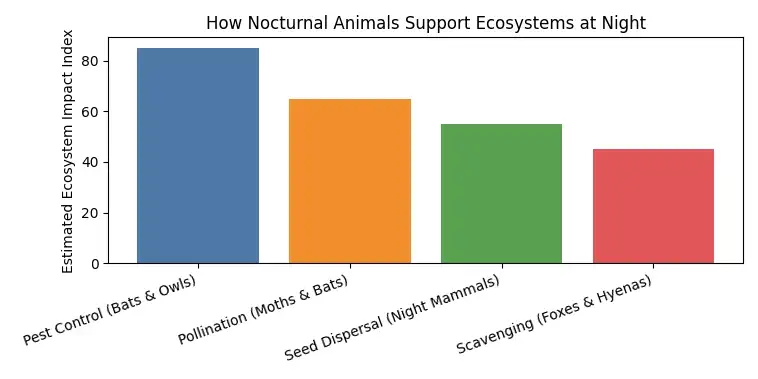
This visual highlights several key ways nighttime species support healthy ecosystems. It shows how different groups of animals contribute to pest control, pollination, seed dispersal, and scavenging.
How Human Activity Is Changing Life After Dark
Night once meant darkness, quiet, and safety for many species. For thousands of years, animals evolved to live, hunt, and move under natural night skies. However, today the night looks very different. Cities glow long after sunset. Roads stay busy. Artificial light spreads into forests, fields, and coastlines.
Because of this, life after dark is changing fast.
Human activity now shapes the nighttime world in ways we are only beginning to understand. Bright lights, traffic noise, and expanding cities all influence how wildlife behaves at night. As a result, many species must adapt quickly. Some succeed. Others struggle.
Understanding these changes matters. After all, the night is not empty. It is full of life, movement, and delicate ecosystems that depend on darkness.
The Growing Impact of Artificial Light
Artificial light at night is one of the biggest changes affecting nighttime environments. Streetlights, illuminated buildings, and vehicle headlights create what scientists call “light pollution.”
This glow can confuse animals that rely on darkness to survive.
For example, some insects use the moon and stars to navigate. When bright lights appear, they often circle around them instead. This simple disruption can reduce insect populations and affect animals that depend on them for food.
Sea turtles offer another example. Hatchlings normally move toward the natural light of the ocean horizon. But when beachfront buildings shine brightly, the young turtles may crawl inland instead.
If you want to learn more about how artificial light affects wildlife, the International Dark-Sky Association provides helpful research and explanations.
How Cities Are Reshaping Nocturnal Behavior
Urban growth is also changing how animals use the night.
As cities expand, many animals shift their daily schedules. Species that were once active during the day now move mostly at night. This helps them avoid people, traffic, and noise.
Coyotes, foxes, and even some deer populations show this pattern. By becoming more active after dark, they reduce the risk of human encounters.
However, this shift is not always easy. Moving activities into nighttime hours can increase competition for food and space. It may also change predator-prey relationships.
Nocturnal Animals Face New Challenges
Why Darkness Still Matters
Nocturnal animals depend on darkness for survival. Their eyes, hearing, and behavior evolved to work in low light.
When artificial lighting spreads into natural habitats, it disrupts those finely tuned systems.
For example, bright light can expose nocturnal hunters to predators. At the same time, it can make prey easier to spot, which shifts the balance within ecosystems.
Over time, these small changes add up.
Scientists now believe that protecting natural darkness may be just as important as protecting forests, wetlands, and oceans. When we reduce unnecessary light and protect nighttime habitats, we give wildlife a better chance to adapt and survive.
And in doing so, we also preserve one of the most overlooked parts of our natural world—the night itself.
Conclusion: Why Nocturnal Animals Matter More Than Ever
The night may seem quiet, but it is full of life. Across forests, deserts, oceans, and cities, nocturnal animals are busy hunting, feeding, and keeping ecosystems in balance. Their hidden world supports the health of our planet in ways many people rarely notice.
Bats help control insect populations. Owls keep rodent numbers in check. Night-active pollinators help plants reproduce. Each species plays a role, and together they form a complex network that works best under natural darkness.
However, the nighttime environment is changing. Artificial lighting, urban growth, and human activity are slowly reshaping the habits and habitats of nocturnal animals. As these pressures increase, many species must adapt quickly. Some manage to adjust. Others struggle to survive in brighter, noisier nights.
Because of this, awareness is becoming more important than ever.
Simple actions can make a difference. Reducing unnecessary outdoor lighting, protecting natural habitats, and supporting conservation efforts can help restore healthier night environments. Even small changes can give wildlife the darkness it needs to thrive.
At the same time, learning about nocturnal animals helps us see the natural world in a new way. What happens after sunset is just as important as what happens during the day. The night is not empty. It is active, complex, and essential for the balance of nature.
So next time darkness falls, remember that an entire hidden ecosystem is waking up. By understanding and protecting nocturnal animals, we help preserve one of the planet’s most fascinating and often overlooked worlds.