

Ice River: A Warning Revealing Urgent Concern Now
Ice River: A Stark Reminder of the Climate Risks Unfolding Now
Ice river has become a powerful signal that something is shifting faster than anyone expected. The once-stable currents of ancient ice are now moving with unsettling speed, revealing fractures in systems long believed to be unshakable. This change isn’t happening far away or out of sight. It’s unfolding in real time, and its effects are starting to reach communities, economies, and ecosystems across the globe.
As temperatures rise, long-frozen structures weaken. New channels open. Water surges into places never shaped to handle it. These rapid transformations raise urgent questions about safety, resilience, and how prepared we are for what comes next. And yet, there is also a growing sense of possibility. Data is improving, awareness is spreading, and solutions—from local adaptation to global policy—are entering the conversation with renewed force.
Understanding the momentum behind these icy shifts helps people make better choices today. It also highlights why the coming years matter so much. The signals are clear. Now the challenge is turning that warning into meaningful action.
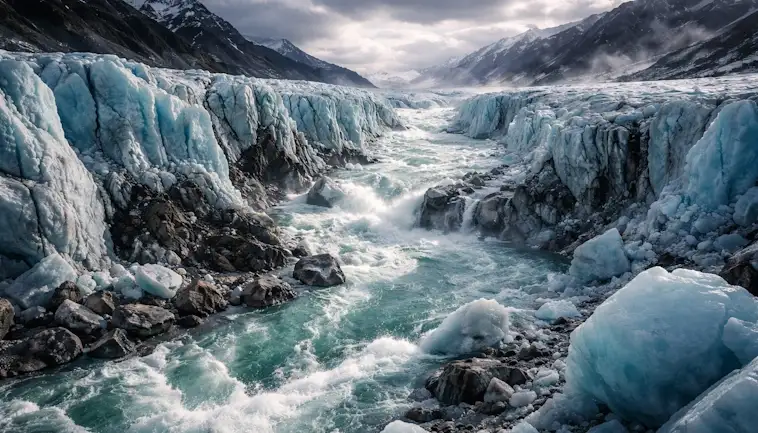
Ice River Signals a Rapid Shift in Our Changing Climate
When we talk about climate change, we often picture melting ice caps far from our daily lives. Yet the story is changing fast. The rise of the ice river—a fast-moving ribbon of meltwater carving through ancient glaciers—is one of the clearest signs that our planet is shifting more quickly than expected. It shows how warming temperatures are reshaping the landscape in real time. And as these rivers grow and speed up, they offer a preview of what a warmer world may bring.
These ice rivers form when surface meltwater pools, breaks through cracks, and races downward. The pressure builds. Then the glacier weakens. And large sections begin sliding faster toward the sea. This isn’t a distant, slow-motion problem anymore. Instead, it is something scientists watch closely because it can speed up sea-level rise and change local ecosystems almost overnight.
What the New Flow Patterns Tell Us
The rapid expansion of ice rivers tells a shared story. It shows how warming is no longer an abstract trend but a daily force shaping the natural world. These channels deepen each summer. They carry more water. And they hint at feedback loops that could accelerate future melting. When darker water replaces bright, reflective ice, more heat is absorbed. As a result, melting increases again.
As we look ahead, these features remind us of something important: our climate system is responsive. It reacts quickly to even small changes. So if warming continues on its current path, ice rivers may become a dominant feature of polar landscapes.
Still, there is room for optimism. Researchers are improving forecasts, satellites are giving us sharper measurements, and communities are taking stronger action. By understanding how an ice river behaves, we get clearer signals about where the climate is heading—and what steps we can take to protect our future.
Why Melting Landscapes Matter More Than Ever
The world is warming fast, and we’re starting to see the ground shift beneath us—literally. Melting landscapes are no longer something that only scientists talk about in distant reports. Instead, they’re becoming part of our everyday reality. And that’s why they matter now more than ever.
Across the globe, ice is thinning, permafrost is softening, and coastlines are wearing away. Each change feels small at first. But together, they point to a much bigger transformation that’s already affecting communities, wildlife, and the places we love. When landscapes melt, they reshape everything around them. They change water systems, alter habitats. And they even influence weather patterns that reach far beyond the Arctic or the mountains.
These shifts also move quickly. That’s why paying attention to them today helps us prepare for tomorrow. It helps us understand what risks are rising and where adaptation needs to happen sooner rather than later. And as you’ll see in the chart below, the consequences ripple across many parts of life.
This moment invites us to stay curious and stay engaged. After all, the more we understand what’s happening, the better we can respond—together.
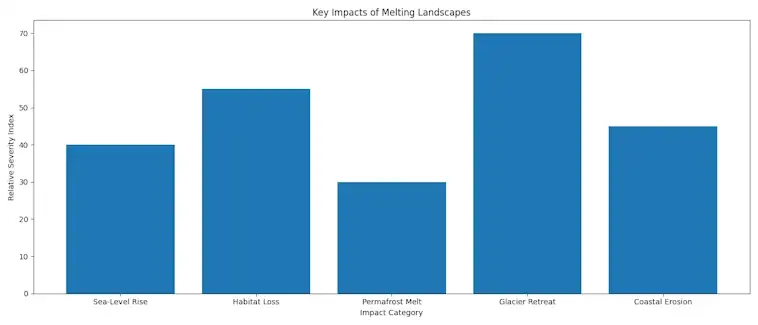
Ice River Impacts That Reach Far Beyond the Frozen North
When people hear the term ice river, they often picture a frozen landscape far from anything familiar. Yet these fast-moving meltwater channels are shaping more than the polar regions. They are influencing coastlines, weather patterns, and even the stability of the ground beneath Arctic communities. And because they react quickly to warming, they give us early clues about what’s coming next for the planet.
As temperatures rise, ice rivers form more often and move faster. They carve deep pathways through glaciers. Push massive ice sheets toward the sea. And they speed up melting in ways scientists didn’t expect a decade ago. This rapid change doesn’t stay contained in the frozen north. Instead, it spreads outward in ways that touch many parts of our world.
Here are a few key ways an ice river can create far-reaching effects:
- It accelerates sea-level rise by flushing large volumes of meltwater into the ocean.
- Destabilizes glaciers, increasing the risk of sudden break-offs.
- Changes ocean circulation patterns that influence weather far from the poles.
- Disrupts ecosystems that depend on predictable cold-season flows.
These impacts highlight a simple truth: what happens in the Arctic doesn’t stay in the Arctic. As ice rivers grow, they serve as a warning system. They show us how climate change can move from quiet shifts to dramatic transformations in a short period of time.
Moving forward, understanding these meltwater channels helps us see the road ahead more clearly. It gives communities and policymakers time to adapt. And it reminds all of us that the frozen north is more connected to our daily lives than we may think.
How Fast-Moving Ice Floes Threaten Communities and Ecosystems
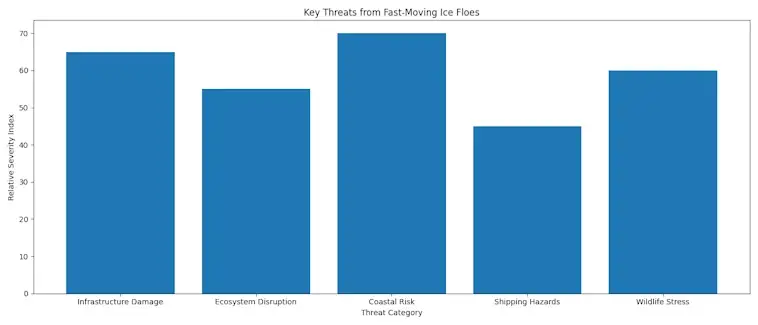
Fast-moving ice floes might look peaceful from a distance. But up close, they behave more like unpredictable forces of nature. As the climate warms, these floating slabs of ice travel faster and break apart more often. And that creates challenges for the people, wildlife, and coastlines that depend on stable conditions.
Today, many northern communities face real risks as ice floes shift sooner in the season. Roads become harder to maintain. Traditional travel routes become unsafe. Even local food sources change as ecosystems struggle to keep up with the pace of melting. These impacts no longer take decades to unfold. Instead, they happen in real time, which puts pressure on communities to adapt faster than ever before.
At the same time, moving ice affects ecosystems in ways we can’t ignore. As floes break apart, they disturb marine habitats. They alter migration patterns, and they even reshape coastlines as they scrape and drag across the seafloor. And because these changes spread outward, they influence regions far beyond the Arctic.
All of this points to one clear truth: fast-moving ice floes are more than icy debris. They are climate signals, showing us how warming shifts the balance between land, ocean, and life itself.
What We Can Do Today to Slow This Alarming Transformation
The pace of environmental change can feel overwhelming. Glaciers are thinning. Seasons are shifting. And landscapes we once thought were permanent are melting faster each year. But even in the face of this rapid transformation, there is a lot we can do right now. Small actions matter. Collective actions matter even more. And together they can slow the trends shaping our planet’s future.
Across communities, people are already taking steps that make a real difference. They’re choosing cleaner energy. Supporting policies that protect fragile environments. And they’re learning how everyday choices—like how we heat our homes or travel—can reduce strain on ecosystems already under pressure. When we build habits that shrink emissions, we give the planet room to recover. We also reduce the speed at which ice, permafrost, and coastlines are transforming.
Why the Ice River Teaches Us to Act Now
The rise of the ice river phenomenon is a reminder that climate systems respond quickly. And while that may sound alarming, it also means they can respond quickly in the other direction—toward stability—when we reduce the heat driving these changes.
One of the most effective steps we can take is to stay informed. Understanding climate science helps us make better decisions at home and in our communities. A helpful, trusted resource for staying updated is the NASA Climate Change Portal, which offers clear explanations and current data.
Today’s actions don’t have to be perfect. They just need to be consistent. Because when millions of people make small, thoughtful choices, the slowdown becomes real. And the transformation we fear becomes one we can shape instead.
Conclusion: Why the Ice River Demands Our Attention Now
The growing presence of the ice river is more than a striking visual in a changing landscape. It is a clear signal that our climate is shifting faster than expected. And while the science can feel complex, the message is simple: the changes happening within these frozen channels offer a preview of what could unfold on a much larger scale.
As ice rivers carve deeper paths through glaciers, they reveal how even small increases in temperature can reshape entire ecosystems. They show us how quickly sea levels may rise. Highlight risks to communities, wildlife, and coastlines. Most importantly, they remind us that these changes are not distant or abstract—they’re happening now.
Yet there is still time to respond. By paying attention to these early signals, we can make smarter choices, support stronger climate policies, and encourage innovations that help slow the pace of warming. The ice river isn’t just a warning. It’s an invitation to act with urgency, clarity, and hope.