

Surging Weather Volatility Will Slowly Destroy Daily Life
Weather Volatility Is Rising – And Your Daily Life Is in the Crosshairs
Surging weather volatility is beginning to show up in ways that are hard to ignore. It disrupts routines, strains local systems, and chips away at the sense of stability people depend on. As temperature swings grow sharper and storms become less predictable, daily life starts to feel more fragile. These shifts are no longer distant warnings. They are here now, shaping decisions at home, at work, and across entire communities.
The pace of change can feel unsettling, yet understanding it offers a path forward. Each season brings new signals that our environment is becoming less steady, and those signals matter. They affect how we plan our days, how cities manage resources, and how businesses keep operations running. By paying attention to these trends, it becomes easier to see why steady preparation is not only wise but essential for long-term well-being.
As the coming years unfold, the stakes will rise. Yet there is room for meaningful action and smarter choices. With the right awareness and a commitment to practical steps, communities can adapt and stay resilient even as the climate shifts around them.
How Weather Volatility Is Quietly Reshaping the Way We Live
Weather used to feel predictable. Seasons followed a rhythm we could trust. But today, weather volatility is changing that rhythm, and it is influencing our daily lives in ways we rarely stop to notice.
You may feel it already. One week is unseasonably warm. The next brings storms that seem more intense than before. These swings can feel unsettling, yet they also shape the choices we make at home, at work, and even in our neighborhoods.
A New Kind of Daily Planning
Because forecasts can shift so quickly, many of us now plan our days with more caution. We check weather apps more often, we rethink travel. And we adjust our homes to stay safe and comfortable. Simple tasks, like running errands or scheduling outdoor time, now require more flexibility.
Beyond that, rising uncertainty pushes communities to rethink what “prepared” really means. Cities invest in stronger infrastructure. Families keep emergency supplies on hand. And as extreme events become more common, people look for ways to stay resilient without feeling overwhelmed.
As you follow these patterns, you start to see a quieter truth: weather volatility is not just about storms or heatwaves. It is slowly reshaping routines, habits, and expectations. And because these changes happen little by little, they can be easy to overlook.
Still, there is an upside. Understanding the new patterns helps us adapt. It encourages smarter planning and opens the door to better solutions for the future. And as we learn to navigate this unpredictable climate, we also learn how to live with more awareness and intention.
If we pay attention to these shifts, we can respond with confidence instead of worry. The more we understand about weather volatility, the better equipped we are to thrive in a world that is changing faster than we once imagined.
The Hidden Pressures Extreme Weather Puts on Everyday Routines
Extreme weather used to feel rare. Now it seems to slip into our week without warning. These shifts do more than change the temperature outside. They place new pressures on the simple routines we depend on every day. And because the changes often creep in slowly, many of us adjust without realizing just how much weather volatility shapes our choices.
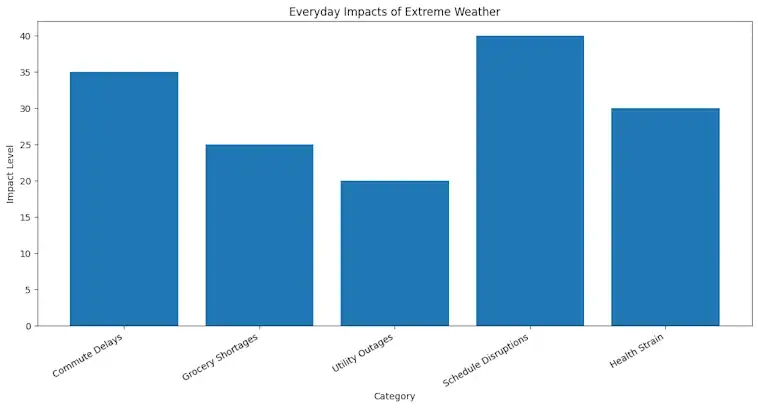
You may have felt it yourself. A sudden storm turns your commute into a maze. Heavy rain disrupts a planned errand. Heat makes outdoor chores harder to finish. These moments feel small, yet together they create a steady strain that reshapes how we move through daily life.
As conditions swing more widely, people check the forecast more often. We buy groceries in bulk to prepare for delays. And we keep backup plans for child care or travel. Also because the weather can shift so quickly, our routines start to feel more fragile than before.
Still, there is a hopeful side. When we see these patterns clearly, we can plan smarter and lighten the stress. Communities are finding new ways to adapt, from cooling centers to improved drainage systems. And at home, simple steps like adjusting schedules or preparing emergency kits help restore a sense of control.
To help visualize some of these everyday pressures, here is a chart.
Why Weather Volatility Threatens the Systems We Depend On
Weather is becoming less predictable. Storms hit harder. Heat spikes come out of nowhere. Seasons swing wildly. This growing weather volatility is more than a climate headline. It is a direct threat to the systems we rely on every single day.
Think about how much depends on stable weather. Our power grid, food supply, roads and bridges. Even the digital networks that keep us connected. When the weather swings faster than these systems were built to handle, the ripple effects can move quickly. And they often catch communities off guard.
As conditions shift, the risks grow. Farmers see crops fail because rain comes too late or too fast. Utilities face blackouts as heat waves push demand to record levels. Transportation slows when storms disrupt shipping routes. These impacts might start small. Yet, over time, they chip away at the reliability we expect.
Here are some of the ways weather volatility puts pressure on critical systems:
- Overwhelms infrastructure that was designed for milder conditions.
- Disrupts supply chains that depend on predictable seasonal patterns.
- Increases operational costs for power, transportation, and emergency services.
- Reduces the resilience of communities already stretched by other challenges.
As we look ahead, the pace of change will matter just as much as the severity. Systems can adapt, but only if they have time. When weather patterns swing quickly, adaptation becomes harder, and the risks spread faster.
The good news is that awareness makes preparation possible. By understanding how weather volatility shapes the world around us, we can strengthen the systems that support us and build a more dependable future.
From Commutes to Food Costs: The Daily Impact of an Unstable Climate
Life feels a little less predictable these days. And much of that comes down to our increasingly unstable climate. You notice it on your morning commute. Perhaps you feel it at the grocery store. And you even see it reflected in your monthly bills. These small disruptions add up, and they touch almost every part of daily life.
This shift is happening because weather patterns are no longer steady. Storms form faster. Heat waves last longer. Rainfall swings from too little to too much. As these shifts continue, they ripple through our routines in ways that often catch us by surprise.
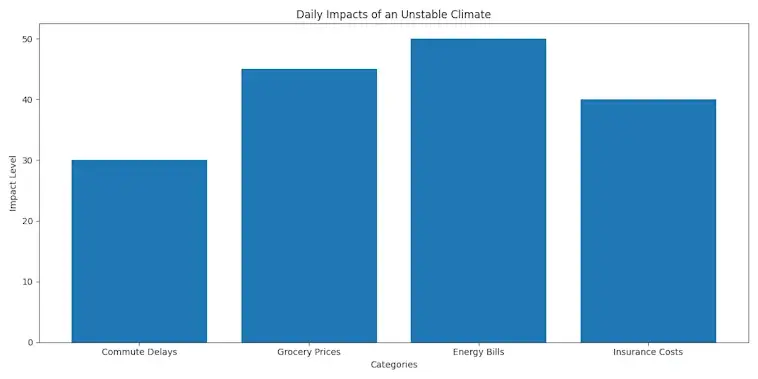
We tend to think of climate impacts as distant or abstract. Yet the real story is personal. It shows up in longer drive times after sudden floods. And it appears in higher food prices when crops struggle through unpredictable seasons. It certainly hits home when energy bills spike during prolonged heat.
As we move forward, understanding these everyday impacts helps us see the bigger picture. It also helps us prepare. When we know what to expect, we can push for smarter planning, stronger infrastructure, and better protections for households already feeling the strain.
Here is a chart that highlights how different areas of daily life feel these disruptions.
What We Can Do Now to Protect Our Communities From Rising Risks
Rising climate risks can feel overwhelming. Yet there is a lot we can do right now to protect the places we love. Small changes add up. Community action grows quickly when people understand what is at stake. So let’s walk through simple, practical steps that help build resilience today and strengthen our future.
Building Local Strength Amid Weather Volatility
Communities thrive when they prepare ahead of time. Start with better access to real-time alerts. Many local authorities now offer free text warnings for severe storms, heatwaves, or flooding. These early signals help families act fast and stay safe.
Next, think about where you live. Improving home insulation, clearing gutters, and securing loose outdoor items reduce damage during extreme events. These steps may seem small. However, they cut risks and lower repair costs.
Neighborhood groups also play a major role. When people share information, check on vulnerable residents, and coordinate supplies, the whole area becomes more resilient. Even hosting a simple preparedness workshop can spark new awareness.
Stronger infrastructure matters too. Local governments often post resilience plans and invite public feedback. Getting involved gives you a voice in decisions that shape safety for decades. For guidance on community-level climate adaptation strategies, the UNDRR offers a helpful overview.
Finally, remember that preparation is not just about reacting. It is about building confidence. When communities invest in stronger systems and informed citizens, they are better positioned to face whatever comes next.
If we start now, we can protect our homes, support our neighbors, and create safer spaces for future generations.
Conclusion: Why Preparing for Weather Volatility Starts Today
Weather volatility is no longer a distant concern. It is shaping our daily lives little by little, often in ways we barely notice until the impact grows too big to ignore. Yet we are not powerless. When we pay attention to the signs, talk openly about the changes we are seeing, and take small steps toward protection and resilience, we give ourselves room to adapt.
As you look ahead, think about how you can strengthen your home, your routines, and your community. Simple actions matter. They help reduce risk and give you more control in an unpredictable world. And as more people act, the collective effort becomes a powerful force.
Weather volatility may surge in the years to come, but early preparation can soften the blow. By staying informed and willing to adjust, we can protect what matters most and safeguard a future that still feels familiar, stable, and full of possibility.